Market Growth Projections
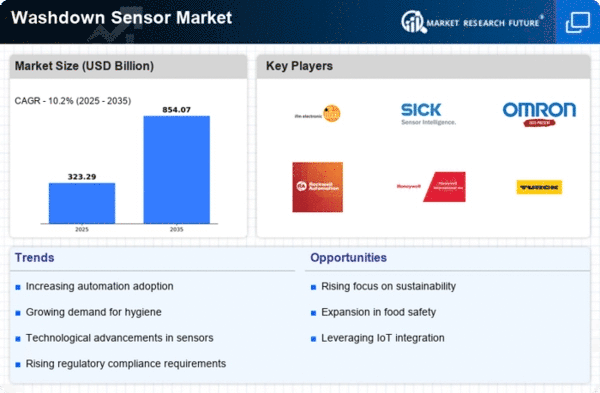
The Global Washdown Sensor Market Industry is poised for substantial growth, with projections indicating a market size of 293.4 USD Billion in 2024 and an anticipated increase to 854.1 USD Billion by 2035. This growth represents a remarkable CAGR of 10.2% from 2025 to 2035, reflecting the increasing adoption of washdown sensors across various industries. Factors such as rising hygiene standards, technological advancements, and the growth of the food and beverage sector are expected to drive this expansion. The market's trajectory suggests a robust future for washdown sensors as industries prioritize cleanliness and efficiency.
Growth of the Food and Beverage Sector
The food and beverage sector is a primary driver of the Global Washdown Sensor Market Industry, as the need for cleanliness and hygiene is paramount in this field. With the increasing production of packaged foods and beverages, manufacturers are investing in advanced cleaning technologies, including washdown sensors. These sensors ensure that production lines remain compliant with health regulations, thereby safeguarding consumer safety. The growth of this sector is expected to contribute significantly to the market, with projections indicating a substantial increase in demand for washdown sensors in the coming years.
Increasing Demand for Hygiene Standards
The Global Washdown Sensor Market Industry is experiencing heightened demand due to stringent hygiene standards across various sectors, particularly in food and beverage processing. As industries strive to comply with regulations, the adoption of washdown sensors is becoming essential. These sensors facilitate effective cleaning processes, ensuring that equipment remains free from contaminants. The market is projected to reach 293.4 USD Billion in 2024, reflecting the growing emphasis on maintaining sanitary conditions. This trend is likely to continue, as companies increasingly recognize the importance of hygiene in safeguarding public health and enhancing product quality.
Rising Automation in Industrial Processes
The Global Washdown Sensor Market Industry is significantly influenced by the increasing automation of industrial processes. As manufacturers seek to enhance productivity and reduce labor costs, the implementation of automated systems becomes more prevalent. Washdown sensors play a crucial role in these automated environments, ensuring that equipment is cleaned effectively without human intervention. This trend is likely to drive market growth, as industries recognize the benefits of integrating washdown sensors into their automated systems. The expected CAGR of 10.2% from 2025 to 2035 further underscores the potential for expansion in this sector.
Technological Advancements in Sensor Technology
Technological innovations are driving the Global Washdown Sensor Market Industry forward, with advancements in sensor technology enhancing performance and reliability. The integration of IoT capabilities allows for real-time monitoring and data collection, enabling industries to optimize their cleaning processes. These innovations not only improve efficiency but also reduce operational costs. As the market evolves, the demand for smart washdown sensors is expected to rise, contributing to the projected growth of the industry. By 2035, the market is anticipated to reach 854.1 USD Billion, indicating a robust trajectory fueled by ongoing technological developments.
Environmental Regulations and Sustainability Initiatives
Environmental regulations and sustainability initiatives are shaping the Global Washdown Sensor Market Industry. As companies strive to minimize their environmental impact, the adoption of efficient cleaning technologies becomes critical. Washdown sensors contribute to sustainable practices by optimizing water and energy usage during cleaning processes. This alignment with environmental goals not only enhances operational efficiency but also meets regulatory requirements. As sustainability continues to gain traction, the demand for washdown sensors is likely to rise, further propelling the market's growth trajectory.