×
Request Free Sample ×

Kindly complete the form below to receive a free sample of this Report

* Please use a valid business email

Leading companies partner with us for data-driven Insights

clients tt-cursor
Hero Background

UK Structural Heart Devices Market

ID: MRFR/HC/55134-HCR
200 Pages
Garvit Vyas
February 2026

UK Structural Heart Devices Market Research Report: Size, Share, Trend Analysis By Types (Heart Valve Devices, Annuloplasty Rings, Occluders, Delivery Systems), By Indication (Valvular Heart Disease, Cardiomyopathy) andBy Procedure (Replacement Procedures, Repair Procedures) - Growth Outlook & Industry Forecast 2025 To 2035

Share:
Download PDF ×

We do not share your information with anyone. However, we may send you emails based on your report interest from time to time. You may contact us at any time to opt-out.

UK Structural Heart Devices Market Infographic
Purchase Options

UK Structural Heart Devices Market Summary

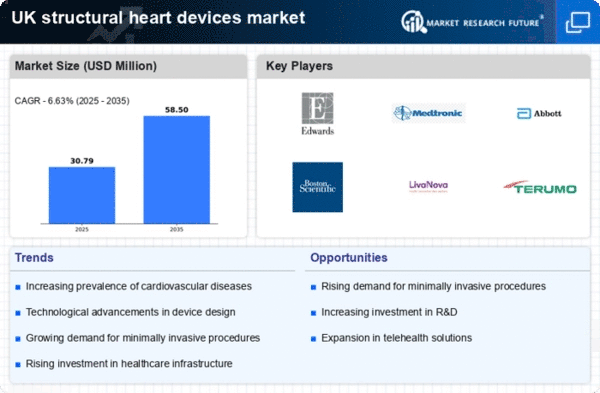
As per Market Research Future analysis, the UK structural heart-devices market size was estimated at 28.88 USD Million in 2024. The UK structural heart-devices market is projected to grow from 30.79 USD Million in 2025 to 58.5 USD Million by 2035, exhibiting a compound annual growth rate (CAGR) of 6.6% during the forecast period 2025 - 2035

Key Market Trends & Highlights

The UK structural heart-devices market is poised for growth driven by technological advancements and increasing healthcare demands.

  • Technological advancements are enhancing the efficacy and safety of structural heart devices.
  • Minimally invasive procedures are gaining traction, appealing to both patients and healthcare providers.
  • The transcatheter heart valve segment is the largest, while the left atrial appendage closure segment is the fastest-growing.
  • Rising prevalence of cardiovascular diseases and increased healthcare expenditure are key drivers of market expansion.

Market Size & Forecast

2024 Market Size 28.88 (USD Million)
2035 Market Size 58.5 (USD Million)
CAGR (2025 - 2035) 6.63%

Major Players

Edwards Lifesciences (US), Medtronic (US), Abbott Laboratories (US), Boston Scientific (US), LivaNova (GB), Terumo Corporation (JP), Cardinal Health (US), AtriCure (US)

Our Impact
Enabled $4.3B Revenue Impact for Fortune 500 and Leading Multinationals
Partnering with 2000+ Global Organizations Each Year
30K+ Citations by Top-Tier Firms in the Industry

UK Structural Heart Devices Market Trends

The structural heart-devices market is currently experiencing notable advancements. These advancements are driven by technological innovations and an increasing prevalence of cardiovascular diseases. The integration of minimally invasive techniques is reshaping treatment protocols, allowing for reduced recovery times and improved patient outcomes. Furthermore, the growing awareness of heart health among the population is likely to enhance demand for these devices. Regulatory bodies are also playing a crucial role in ensuring the safety and efficacy of new products, which may foster a more competitive environment among manufacturers. In addition, the structural heart-devices market is witnessing a shift towards personalized medicine, where treatments are tailored to individual patient needs. This trend is supported by ongoing research and development efforts aimed at creating devices that cater to specific anatomical variations and comorbidities. As healthcare providers increasingly adopt these advanced solutions, the market is poised for sustained growth. The collaboration between industry stakeholders, including hospitals and device manufacturers, appears to be essential in driving innovation and expanding access to these life-saving technologies.

Technological Advancements

The structural heart-devices market is benefiting from rapid technological advancements. Innovations such as bioresorbable materials and advanced imaging techniques are enhancing device performance and patient safety. These developments are likely to improve procedural outcomes and expand the range of treatable conditions.

Minimally Invasive Procedures

There is a growing trend towards minimally invasive procedures within the structural heart-devices market. These techniques reduce recovery times and hospital stays, making them more appealing to both patients and healthcare providers. This shift is expected to drive demand for related devices.

Regulatory Support and Innovation

Regulatory bodies are increasingly supporting innovation in the structural heart-devices market. Streamlined approval processes for new technologies may encourage manufacturers to invest in research and development. This support could lead to a wider array of options for healthcare professionals and patients.

UK Structural Heart Devices Market Drivers

Growing Awareness and Education

There is a notable increase in awareness and education regarding cardiovascular health among both healthcare professionals and the general public in the UK. Campaigns aimed at educating individuals about the risks associated with heart diseases and the benefits of early intervention are gaining traction. This heightened awareness is likely to drive demand for structural heart devices, as patients become more informed about their treatment options. Additionally, healthcare professionals are increasingly trained in the latest technologies and procedures related to structural heart devices, which may lead to more referrals and procedures being performed. As a result, the structural heart-devices market is poised for growth as both patients and providers recognize the importance of timely and effective treatment.

Increased Healthcare Expenditure

The structural heart-devices market is significantly influenced by the rising healthcare expenditure in the UK. Recent reports indicate that the UK government has committed to increasing the NHS budget, which is projected to reach £200 billion by 2024. This financial commitment allows for the adoption of advanced medical technologies, including structural heart devices, which are essential for treating complex cardiovascular conditions. As healthcare providers allocate more resources towards innovative treatments, the market for structural heart devices is expected to expand. Furthermore, increased funding for research and development in this sector may lead to the introduction of new and improved devices, thereby enhancing the overall quality of care for patients with structural heart issues.

Supportive Regulatory Environment

The regulatory environment in the UK is becoming increasingly supportive of innovations in the structural heart-devices market. Regulatory bodies, such as the Medicines and Healthcare products Regulatory Agency (MHRA), are streamlining the approval processes for new devices, which encourages manufacturers to invest in research and development. This supportive framework not only facilitates quicker access to market for new technologies but also enhances patient safety through rigorous evaluation standards. As a result, the structural heart-devices market is likely to benefit from a steady influx of innovative products, which can address the evolving needs of patients and healthcare providers alike. The combination of regulatory support and technological advancements may lead to a more dynamic and competitive market landscape.

Technological Innovations in Device Design

Technological innovations in the design and functionality of structural heart devices are transforming the market landscape in the UK. Advances in materials science and engineering have led to the development of devices that are not only more effective but also safer for patients. For instance, the introduction of bioresorbable materials and improved delivery systems has enhanced the performance of devices used in minimally invasive procedures. These innovations are likely to attract more healthcare providers to adopt structural heart devices, thereby expanding the market. Furthermore, ongoing research and development efforts are expected to yield even more sophisticated devices in the coming years, which could further stimulate growth in the structural heart-devices market.

Rising Prevalence of Cardiovascular Diseases

The increasing incidence of cardiovascular diseases in the UK is a primary driver for the structural heart-devices market. According to recent health statistics, cardiovascular diseases account for approximately 27% of all deaths in the UK, highlighting a critical need for effective treatment options. This growing health concern is prompting healthcare providers to seek advanced solutions, including structural heart devices, to manage conditions such as heart valve disorders and congenital heart defects. The demand for innovative devices is expected to rise as the population ages and the prevalence of risk factors, such as obesity and diabetes, increases. Consequently, The structural heart-devices market is likely to experience substantial growth. This growth will occur as healthcare systems adapt to these challenges and invest in new technologies to improve patient outcomes.


Market Segment Insights

By Type: Transcatheter Aortic Valve Replacement (Largest) vs. Mitral Valve Repair Devices (Fastest-Growing)

In the UK structural heart-devices market, the market share distribution highlights that Transcatheter Aortic Valve Replacement (TAVR) leads as the largest segment, holding a significant portion of the total market share. Mitral Valve Repair Devices follow, showcasing robust performance and increasing adoption rates. Left Atrial Appendage Closure Devices and Transcatheter Pulmonary Valve segments have comparatively smaller shares, indicating niche capabilities within the broader market landscape. Growth trends indicate that Mitral Valve Repair Devices are the fastest-growing segment, driven by advancements in technology and increasing prevalence of mitral valve disorders. The aging population in the UK and rising awareness of minimally invasive procedures are propelling demand for TAVR, while innovations in device designs contribute to the overall growth in the structural heart-devices space. Continued research and development efforts are expected to further enhance these trends moving forward.

Transcatheter Aortic Valve Replacement (Dominant) vs. Mitral Valve Repair Devices (Emerging)

Transcatheter Aortic Valve Replacement (TAVR) is characterized by its dominance in the UK structural heart-devices market, owing to its proven effectiveness and widespread acceptance among healthcare professionals. This segment provides patients with a minimally invasive solution for aortic valve stenosis, making it a preferred choice in clinical practice. Mitral Valve Repair Devices, on the other hand, are emerging rapidly, leveraging innovative technologies that improve patient outcomes and reduce recovery times. The growth of this segment is underpinned by an increase in mitral valve disease diagnoses and the need for effective treatment options. Both segments are vital, yet TAVR remains the stalwart, while Mitral Valve Repair Devices position themselves as a strong contender in the evolving market.

By Procedure Type: Minimally Invasive (Largest) vs. Surgical (Fastest-Growing)

In the UK structural heart-devices market, the procedure type segment has seen varied distribution with Minimally Invasive practices holding the largest market share. Surgical methods also occupy a significant portion of the market; however, they are increasingly being overshadowed by the growing preference for less invasive options. This shift is driven by patient comfort and recovery time, which are critical factors influencing decision-making in clinical settings. The growth trends indicate that Minimally Invasive procedures will continue to dominate in the foreseeable future, while Surgical techniques are noted for their rapid advancements and innovations. The drive towards quicker recovery and lower infection rates has spurred interest and investments in this segment. Furthermore, the rise in geriatric population and associated heart conditions fuels the demand for effective surgical solutions, positioning them as a vital part of the overall market dynamics.

Minimally Invasive (Dominant) vs. Surgical (Emerging)

Minimally Invasive methods are characterized by less trauma to the body, which leads to quicker recovery times and reduced hospital stays, making them an attractive option for patients and healthcare providers alike. These techniques are often performed with smaller incisions and involve advanced imaging technologies, enabling precision in procedures. On the other hand, Surgical methods, albeit slower-growing, are being revitalized through technological innovations such as robotic-assisted surgeries and enhanced surgical techniques. While they traditionally require larger incisions and longer recovery periods, advancements are closing the gap between these two segments, making Surgical approaches more competitive in today's rapidly evolving healthcare landscape.

By Indication: Aortic Stenosis (Largest) vs. Mitral Regurgitation (Fastest-Growing)

The market share distribution for the 'Indication' segment reveals Aortic Stenosis as the largest segment, holding a significant portion of the overall market. In contrast, Mitral Regurgitation is recognized as the fastest-growing segment, showcasing an increasing preference for treatment options. Heart Failure and Pulmonary Valve Stenosis also contribute to the market, but to a lesser extent, highlighting a diverse range of treatment modalities available for clinicians. Growth trends in the UK structural heart-devices market are significantly influenced by technological advancements and an increasing prevalence of cardiovascular diseases. The rise in patient awareness and improvements in diagnostic methods are driving the demand for devices catering to Aortic Stenosis and Mitral Regurgitation, while ongoing clinical studies are expected to further stimulate market growth for these segments. Investment in healthcare infrastructure is also contributing to the expansion of treatment capabilities.

Aortic Stenosis (Dominant) vs. Mitral Regurgitation (Emerging)

Aortic Stenosis remains the dominant indication in the structural heart-devices market, characterized by a well-established treatment regimen and a wide array of innovative devices tailored for its management. This segment benefits from a robust understanding of its pathophysiology, leading to effective surgical and minimally invasive solutions. On the other hand, Mitral Regurgitation, though emerging, is rapidly gaining traction due to increasing awareness and growing clinical evidence supporting new therapies. The expanding options for Mitral Regurgitation devices are enhancing their appeal in the clinical setting, helping to address a significant unmet need in the market. The differentiation in treatment approaches between these two indications signifies the diverse dynamics influencing the overall market landscape.

By End User: Hospitals (Largest) vs. Ambulatory Surgical Centers (Fastest-Growing)

In the UK structural heart-devices market, hospitals represent the largest segment, capturing a significant share of the total market. This dominance can be attributed to their established infrastructure, comprehensive cardiac care services, and the presence of specialized healthcare professionals trained in advanced procedural techniques. Ambulatory surgical centers are rapidly capturing attention, offering enhanced patient convenience and efficiency, thus contributing to a notable increase in their market share. The growth trends indicate a shift towards outpatient procedures, significantly benefiting ambulatory surgical centers, which are seen as an emerging alternative to traditional hospital settings. Factors such as cost-effectiveness, reduced recovery times, and increasing patient preference for minimally invasive interventions are driving this trend. As patient volumes rise and technologies advance, ambulatory surgical centers are positioned as a critical player in the evolving landscape of cardiac care.

Hospitals (Dominant) vs. Ambulatory Surgical Centers (Emerging)

Hospitals are characterized by their comprehensive service offerings, advanced medical technologies, and highly specialized personnel that cater to serious cardiovascular conditions. As the dominant force in the UK structural heart-devices market, they provide a wide range of treatments and interventions for complex heart conditions, ensuring optimal patient outcomes. On the other hand, ambulatory surgical centers represent an emerging segment, focusing on providing swift and efficient procedures with less overhead compared to hospitals. Their increasing popularity stems from the growing trend towards outpatient care, allowing patients to receive high-quality treatment in a less intensive environment. This shift demonstrates a fundamental change in patient care preferences and market dynamics.

Get more detailed insights about UK Structural Heart Devices Market

Key Players and Competitive Insights

The structural heart-devices market is characterized by a dynamic competitive landscape, driven by technological advancements and an increasing prevalence of cardiovascular diseases. Key players such as Edwards Lifesciences (US), Medtronic (US), and Abbott Laboratories (US) are at the forefront, each adopting distinct strategies to enhance their market positioning. Edwards Lifesciences (US) focuses on innovation, particularly in transcatheter heart valves, while Medtronic (US) emphasizes a broad portfolio that includes both surgical and minimally invasive solutions. Abbott Laboratories (US) is leveraging its expertise in imaging and diagnostics to complement its device offerings, thereby creating a comprehensive approach to patient care. Collectively, these strategies foster a competitive environment that prioritizes innovation and patient outcomes.
In terms of business tactics, companies are increasingly localizing manufacturing to reduce costs and enhance supply chain efficiency. This trend is particularly evident in the UK, where firms are optimizing their operations to meet local demand while navigating regulatory landscapes. The market structure appears moderately fragmented, with several players vying for market share, yet the influence of major companies remains substantial. Their collective actions shape pricing strategies and product availability, impacting overall market dynamics.
In October 2025, Edwards Lifesciences (US) announced the launch of its next-generation transcatheter aortic valve replacement (TAVR) system, which is designed to improve patient outcomes through enhanced delivery mechanisms. This strategic move underscores the company's commitment to innovation and positions it to capture a larger share of the growing TAVR market. The introduction of this advanced system is likely to strengthen Edwards' competitive edge, particularly as the demand for minimally invasive procedures continues to rise.
In September 2025, Medtronic (US) expanded its partnership with a leading UK healthcare provider to enhance access to its structural heart devices. This collaboration aims to streamline the distribution of Medtronic's products, ensuring that healthcare professionals have timely access to the latest technologies. Such strategic alliances are crucial in a market where rapid access to innovative solutions can significantly influence patient care and outcomes.
In August 2025, Abbott Laboratories (US) unveiled a new digital platform designed to integrate its structural heart devices with advanced analytics and AI capabilities. This initiative not only enhances the functionality of its devices but also positions Abbott as a leader in the digital transformation of healthcare. By leveraging data analytics, Abbott aims to provide personalized treatment options, thereby improving patient engagement and satisfaction.
As of November 2025, the competitive trends in the structural heart-devices market are increasingly defined by digitalization, sustainability, and the integration of AI technologies. Strategic alliances are becoming more prevalent, as companies recognize the value of collaboration in enhancing their product offerings and market reach. Looking ahead, competitive differentiation is likely to evolve from traditional price-based competition to a focus on innovation, technological advancements, and supply chain reliability. This shift suggests that companies that prioritize these elements will be better positioned to thrive in an increasingly complex market.

Key Companies in the UK Structural Heart Devices Market include

Industry Developments

The UK Structural Heart Devices Market has witnessed significant developments in recent months, particularly with advancements in minimally invasive procedures and the adoption of innovative technologies. Companies like Medtronic and Abbott Laboratories continue to lead in product innovations, focusing on devices such as transcatheter aortic valves and left atrial appendage closure devices. In April 2023, Boston Scientific announced the successful completion of its acquisition of a portfolio of innovative structural heart offerings from a smaller firm, enhancing its market presence in the UK. Additionally, Edwards Lifesciences has expanded its range of heart valve replacement solutions, bolstering its competitive position. 

The growing incidence of heart diseases, supported by statistics from the UK NHS indicating a constant rise in cardiovascular conditions among aging populations, has led to surges in demand for structural heart devices. These developments contribute to a market projected to grow significantly, with analysts citing that the UK market's value will increase notably by 2025. Recent efforts by Terumo Corporation and MicroPort Scientific to collaborate with healthcare providers for streamlining treatment protocols reflect a shift towards improved patient outcomes in structural heart conditions, further underlining the dynamic nature of this sector.

Future Outlook

UK Structural Heart Devices Market Future Outlook

The Structural Heart Devices Market is projected to grow at a 6.63% CAGR from 2025 to 2035, driven by technological advancements, increasing prevalence of heart diseases, and rising healthcare expenditure.

New opportunities lie in:

  • Development of minimally invasive surgical techniques for heart valve repair.
  • Expansion of telehealth services for remote patient monitoring.
  • Investment in AI-driven analytics for personalized treatment plans.

By 2035, the market is expected to achieve substantial growth, driven by innovation and increasing demand.

Market Segmentation

UK Structural Heart Devices Market Type Outlook

  • Transcatheter Aortic Valve Replacement
  • Mitral Valve Repair Devices
  • Left Atrial Appendage Closure Devices
  • Transcatheter Pulmonary Valve

UK Structural Heart Devices Market End User Outlook

  • Hospitals
  • Ambulatory Surgical Centers
  • Cardiology Clinics

UK Structural Heart Devices Market Indication Outlook

  • Aortic Stenosis
  • Mitral Regurgitation
  • Heart Failure
  • Pulmonary Valve Stenosis

UK Structural Heart Devices Market Procedure Type Outlook

  • Minimally Invasive
  • Surgical
  • Percutaneous

Report Scope

MARKET SIZE 2024 28.88(USD Million)
MARKET SIZE 2025 30.79(USD Million)
MARKET SIZE 2035 58.5(USD Million)
COMPOUND ANNUAL GROWTH RATE (CAGR) 6.63% (2025 - 2035)
REPORT COVERAGE Revenue Forecast, Competitive Landscape, Growth Factors, and Trends
BASE YEAR 2024
Market Forecast Period 2025 - 2035
Historical Data 2019 - 2024
Market Forecast Units USD Million
Key Companies Profiled Edwards Lifesciences (US), Medtronic (US), Abbott Laboratories (US), Boston Scientific (US), LivaNova (GB), Terumo Corporation (JP), Cardinal Health (US), AtriCure (US)
Segments Covered Type, Procedure Type, Indication, End User
Key Market Opportunities Advancements in minimally invasive procedures enhance growth potential in the structural heart-devices market.
Key Market Dynamics Technological advancements and regulatory changes drive innovation in the structural heart-devices market.
Countries Covered UK
Leave a Comment

FAQs

What is the expected market size of the UK Structural Heart Devices Market in 2024?

The UK Structural Heart Devices Market is expected to be valued at 47.43 million USD in 2024.

What growth rate is projected for the UK Structural Heart Devices Market from 2025 to 2035?

The market is projected to grow at a CAGR of 7.398% from 2025 to 2035.

What will be the estimated market size by 2035 for the UK Structural Heart Devices Market?

By 2035, the UK Structural Heart Devices Market is expected to reach a valuation of 104.0 million USD.

Which segment is expected to be the largest in the UK Structural Heart Devices Market in 2024?

Heart Valve Devices are anticipated to be the largest segment, valued at 18.5 million USD in 2024.

What will the market size of Annuloplasty Rings be in 2035?

The market size for Annuloplasty Rings is expected to be 22.0 million USD in 2035.

Who are the major players in the UK Structural Heart Devices Market?

Key players include Medtronic, AtriCure, Neovasc, and Abbott Laboratories, among others.

What is the expected market value of Delivery Systems in 2024?

Delivery Systems are projected to hold a market value of 9.93 million USD in 2024.

What opportunity does the UK Structural Heart Devices Market present through 2035?

The market presents substantial growth opportunities, particularly in innovative device development.

What is the projected market size for Occluders in 2035?

By 2035, the market size for Occluders is expected to reach 20.0 million USD.

How does the UK Structural Heart Devices Market contribute to healthcare advancements?

The market plays a critical role in improving patient outcomes through enhanced heart treatment technologies.

Download Free Sample

Kindly complete the form below to receive a free sample of this Report

Compare Licence

×
Features License Type
Single User Multiuser License Enterprise User
Price $4,950 $5,950 $7,250
Maximum User Access Limit 1 User Upto 10 Users Unrestricted Access Throughout the Organization
Free Customization
Direct Access to Analyst
Deliverable Format
Platform Access
Discount on Next Purchase 10% 15% 15%
Printable Versions