×
Request Free Sample ×

Kindly complete the form below to receive a free sample of this Report

* Please use a valid business email

Leading companies partner with us for data-driven Insights

clients tt-cursor
Hero Background

Japan Structural Heart Devices Market

ID: MRFR/HC/55137-HCR
200 Pages
Garvit Vyas
February 2026

Japan Structural Heart Devices Market Research Report: By Type (Heart Valve Devices, Annuloplasty Rings, Occluders, Delivery Systems), By Indication (Valvular Heart Disease, Cardiomyopathy) andBy Procedure (Replacement Procedures, Repair Procedures) - Growth & Industry Forecast 2025 To 2035

Share:
Download PDF ×

We do not share your information with anyone. However, we may send you emails based on your report interest from time to time. You may contact us at any time to opt-out.

Japan Structural Heart Devices Market Infographic
Purchase Options

Japan Structural Heart Devices Market Summary

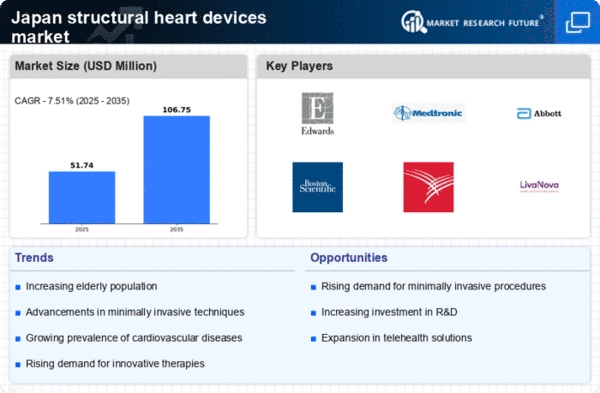
As per Market Research Future analysis, the Japan structural heart-devices market size was estimated at 48.12 USD Million in 2024. The Japan structural heart-devices market is projected to grow from 51.74 USD Million in 2025 to 106.75 USD Million by 2035, exhibiting a compound annual growth rate (CAGR) of 7.5% during the forecast period 2025 - 2035

Key Market Trends & Highlights

The Japan structural heart-devices market is poised for growth driven by technological advancements and demographic shifts.

  • Technological innovation is reshaping the structural heart-devices market, enhancing treatment options and patient outcomes.
  • The aging population in Japan is contributing to an increased demand for structural heart devices, particularly in the largest segment of transcatheter heart valves.
  • Regulatory support is facilitating faster approvals for new devices, thereby accelerating market entry and expansion.
  • Rising prevalence of cardiovascular diseases and advancements in minimally invasive procedures are key drivers propelling market growth.

Market Size & Forecast

2024 Market Size 48.12 (USD Million)
2035 Market Size 106.75 (USD Million)
CAGR (2025 - 2035) 7.51%

Major Players

Edwards Lifesciences (US), Medtronic (US), Abbott Laboratories (US), Boston Scientific (US), Cardinal Health (US), LivaNova (GB), Terumo Corporation (JP), JenaValve Technology (DE), AtriCure (US)

Our Impact
Enabled $4.3B Revenue Impact for Fortune 500 and Leading Multinationals
Partnering with 2000+ Global Organizations Each Year
30K+ Citations by Top-Tier Firms in the Industry

Japan Structural Heart Devices Market Trends

The structural heart-devices market in Japan is experiencing notable advancements, driven by an aging population and increasing prevalence of cardiovascular diseases. The demand for innovative treatment options is rising, as healthcare providers seek to improve patient outcomes through minimally invasive procedures. This shift towards less invasive techniques is likely to enhance recovery times and reduce hospital stays, which may appeal to both patients and healthcare systems alike. Furthermore, the integration of advanced technologies, such as artificial intelligence and robotics, is expected to play a crucial role in the development of new devices, potentially leading to improved precision and efficacy in treatments. In addition, regulatory support from the Japanese government appears to foster innovation within the structural heart-devices market. Initiatives aimed at expediting the approval process for new devices may encourage manufacturers to invest in research and development. As a result, the market could witness a surge in product launches and advancements in existing technologies. Overall, the structural heart-devices market in Japan seems poised for growth, driven by demographic trends, technological advancements, and supportive regulatory frameworks.

Technological Innovation

The structural heart-devices market is witnessing a surge in innovations, particularly in the development of minimally invasive devices. Innovations such as transcatheter heart valves and closure devices are gaining traction, as they offer patients reduced recovery times and lower risks compared to traditional surgical methods. This trend is likely to continue as manufacturers invest in research and development to enhance device performance and patient outcomes.

Regulatory Support

Regulatory bodies in Japan are increasingly focused on streamlining the approval process for new medical devices. This support is expected to encourage manufacturers to introduce innovative products to the market more rapidly. As a result, the structural heart-devices market may experience a wave of new technologies that address unmet clinical needs, ultimately benefiting patients and healthcare providers.

Aging Population

Japan's demographic shift towards an older population is significantly impacting the structural heart-devices market. As the prevalence of cardiovascular diseases rises among the elderly, there is a growing demand for effective treatment options. This trend suggests that healthcare providers will increasingly rely on advanced devices to manage heart conditions, thereby driving market growth.

Japan Structural Heart Devices Market Drivers

Growing Awareness and Education

There is a notable increase in awareness and education regarding cardiovascular health in Japan, which serves as a catalyst for the structural heart-devices market. Public health campaigns and initiatives by healthcare organizations are effectively informing the population about the risks associated with heart diseases and the available treatment options. This heightened awareness is leading to earlier diagnosis and treatment, thereby increasing the demand for structural heart devices. Furthermore, healthcare professionals are receiving enhanced training on the latest technologies and procedures, which is likely to improve patient outcomes. As more individuals seek medical intervention for heart-related issues, the structural heart-devices market is expected to expand, driven by informed patients and skilled practitioners.

Increased Healthcare Expenditure

Japan's healthcare expenditure has been on the rise, which is a significant driver for the structural heart-devices market. The government has been investing heavily in healthcare infrastructure and technology to improve patient care and outcomes. In 2025, healthcare spending is expected to reach approximately ¥42 trillion, reflecting a commitment to enhancing medical services. This increase in funding allows for the procurement of advanced medical devices, including those used in structural heart interventions. As hospitals and clinics upgrade their facilities and equipment, the demand for innovative structural heart devices is likely to grow. This trend indicates a robust market environment, where healthcare providers are better equipped to address the needs of patients with cardiovascular diseases.

Rising Prevalence of Cardiovascular Diseases

The increasing incidence of cardiovascular diseases in Japan is a primary driver for the structural heart-devices market. According to recent health statistics, cardiovascular diseases account for approximately 30% of all deaths in the country. This alarming trend necessitates advanced medical interventions, including structural heart devices, to manage and treat these conditions effectively. The demand for innovative solutions is further fueled by the aging population, which is more susceptible to heart-related ailments. As healthcare providers seek to improve patient outcomes, investments in structural heart devices are likely to rise, thereby expanding the market. The structural heart-devices market is expected to witness substantial growth as hospitals and clinics adopt these technologies to address the growing burden of cardiovascular diseases.

Advancements in Minimally Invasive Procedures

Minimally invasive procedures are transforming the landscape of cardiac interventions in Japan, significantly impacting the structural heart-devices market. These techniques offer numerous advantages, including reduced recovery times, lower risk of complications, and shorter hospital stays. As a result, there is a growing preference among both patients and healthcare providers for these innovative approaches. The introduction of advanced structural heart devices, such as transcatheter aortic valve replacements (TAVR) and left atrial appendage closure devices, aligns with this trend. Market data indicates that the adoption of minimally invasive techniques is projected to increase by 20% over the next five years, further driving the demand for structural heart devices. This shift not only enhances patient care but also encourages the development of new technologies within the market.

Technological Integration in Healthcare Systems

Advanced technologies are significantly influencing the structural heart-devices market in Japan. The adoption of electronic health records (EHRs), telemedicine, and artificial intelligence (AI) is streamlining patient management and enhancing the efficiency of cardiac care. These technologies facilitate better data collection and analysis, allowing for more personalized treatment plans. As healthcare providers increasingly rely on these innovations, the demand for compatible structural heart devices is likely to rise. Market projections suggest that the incorporation of technology in healthcare will grow by 15% annually, further propelling the structural heart-devices market. This trend underscores the importance of technological advancements in improving patient care and outcomes in the realm of cardiovascular health.


Market Segment Insights

By Type: Transcatheter Aortic Valve Replacement (Largest) vs. Mitral Valve Repair Devices (Fastest-Growing)

In the Japan structural heart-devices market, Transcatheter Aortic Valve Replacement (TAVR) holds the largest market share among the various device types, reflecting strong acceptance by healthcare providers and patients. Mitral Valve Repair Devices are gaining traction and rapidly increasing their foothold due to advancements in device design and effectiveness, allowing them to capture the attention of clinicians seeking improved treatment options for mitral valve conditions. Growth trends indicate that the demand for minimally invasive procedures is driving the market forward, with both TAVR and Mitral Valve Repair Devices experiencing significant enhancement in clinical outcomes. The rise of aging populations with heart ailments is a critical factor, as it increases the need for effective treatments. Furthermore, technological advancements and regulatory approvals are enabling faster adoption of these innovative devices, reinforcing their growth trajectory within the market.

Transcatheter Aortic Valve Replacement (Dominant) vs. Mitral Valve Repair Devices (Emerging)

Transcatheter Aortic Valve Replacement (TAVR) is the dominant player in the Japan structural heart-devices market, primarily due to its effectiveness in treating aortic stenosis with minimal invasiveness, leading to shorter recovery times and improved patient outcomes. On the other hand, Mitral Valve Repair Devices are emerging as a preferred option for mitral valve disorders, especially with latest advancements that allow for less invasive approaches. This competition between TAVR and Mitral Valve Repair Devices illustrates a significant shift in treatment paradigms, as healthcare professionals increasingly adopt such technologies for better patient care. These devices not only enhance procedural efficiency but also promise to elevate the overall standard of cardiac care in Japan.

By Procedure Type: Minimally Invasive (Largest) vs. Surgical (Fastest-Growing)

In the Japan structural heart-devices market, the market share distribution among the procedure types illustrates that minimally invasive approaches are the predominant choice, driven by their associated benefits such as reduced recovery times and lower complications. Conversely, percutaneous and surgical procedures occupy smaller portions of the market, with surgical techniques currently gaining momentum due to advancements in technology and surgical methodologies that enhance their safety and effectiveness. Growth trends in the Japan structural heart-devices market indicate a robust rise in minimally invasive procedures, propelled by an increasing preference for less invasive surgical options. The emergence of innovative device designs and improvements in procedural techniques are driving this segment forward, while surgical options are experiencing rapid growth rates as healthcare providers increasingly adopt advanced surgical techniques, further diversifying treatment modalities and catering to a broader patient demographic.

Minimally Invasive: Dominant vs. Surgical: Emerging

The minimally invasive segment in the Japan structural heart-devices market is characterized by its dominance, driven by technological innovations that allow for reduced patient trauma and faster recovery. These procedures typically involve smaller incisions and shorter hospital stays, making them the preferred choice for many patients and doctors. On the other hand, the surgical segment, while historically established, is emerging with renewed vigor due to advancements that enhance procedure safety and success rates. Surgical techniques are evolving with the incorporation of robotics and imaging technologies, promoting better outcomes and positioning surgical interventions as competitive alternatives in the evolving landscape of heart-device procedures.

By Indication: Aortic Stenosis (Largest) vs. Mitral Regurgitation (Fastest-Growing)

In the Japan structural heart-devices market, Aortic Stenosis commands the largest market share, largely driven by the aging population and increasing prevalence of valvular heart diseases. Mitral Regurgitation also represents a significant portion of the market, but its rapid growth can be attributed to advancements in minimally invasive technologies and rising awareness of treatment options. Growth trends indicate that the demand for Mitral Regurgitation devices is accelerating, reflecting a shift towards innovative therapeutic solutions. Factors such as improved patient outcomes and the introduction of new devices are driving market expansion. Aortic Stenosis will likely remain a dominant segment, although its growth will be paced compared to the surging interest in treating Mitral Regurgitation.

Aortic Stenosis (Dominant) vs. Mitral Regurgitation (Emerging)

Aortic Stenosis, as a dominant segment, benefits from established treatment protocols and a robust range of devices aimed at addressing this critical condition. The devices for Aortic Stenosis often show high success rates, making them a preferred choice among clinicians. Conversely, Mitral Regurgitation is considered an emerging segment due to its rapid innovation and the introduction of advanced interventional strategies. The market for Mitral Regurgitation devices is expanding quickly, driven by the desire for less invasive solutions that promise improved recovery times and outcomes. As technology continues to evolve, Mitral Regurgitation may increasingly challenge the dominance of Aortic Stenosis in the near future.

By End User: Hospitals (Largest) vs. Ambulatory Surgical Centers (Fastest-Growing)

In the Japan structural heart-devices market, hospitals account for the largest share of the end-user segment, reflecting their comprehensive capabilities in handling advanced cardiac procedures. Ambulatory surgical centers are rapidly gaining traction, providing a cost-effective alternative with streamlined services, thus increasing their presence within the market. Cardiology clinics, while important, currently hold a smaller share but are beginning to expand their offerings to cater to growing patient needs. The growth trends in this segment are primarily driven by the increasing prevalence of cardiovascular diseases and the rising demand for minimally invasive procedures. Hospitals are leveraging their resources to adopt innovative technologies, while ambulatory surgical centers capitalize on the shift towards outpatient care. Cardiology clinics are also evolving, focusing on specialized care, positioning themselves to compete effectively in the expanding Japan structural heart-devices market.

Hospitals (Dominant) vs. Ambulatory Surgical Centers (Emerging)

Hospitals serve as the dominant force in the end-user segment, characterized by their extensive infrastructure, experienced personnel, and access to advanced medical technologies. They are equipped to handle complex heart surgeries and have a well-established patient base, which enhances their market position. On the other hand, ambulatory surgical centers represent an emerging segment, offering a more flexible, patient-centric approach to treatment. These centers focus on efficiency and cost-effectiveness, making them attractive for patients seeking less invasive options. Their growth is spurred by an increasing shift towards outpatient care, as patients prefer shorter recovery times and lower costs associated with such treatments. As both segments continue to evolve, they are reshaping the competitive landscape of the Japan structural heart-devices market.

Get more detailed insights about Japan Structural Heart Devices Market

Key Players and Competitive Insights

The structural heart-devices market in Japan is characterized by a dynamic competitive landscape, driven by technological advancements and an increasing prevalence of cardiovascular diseases. Major players such as Edwards Lifesciences (US), Medtronic (US), and Terumo Corporation (JP) are at the forefront, each adopting distinct strategies to enhance their market presence. Edwards Lifesciences (US) focuses on innovation, particularly in transcatheter heart valves, while Medtronic (US) emphasizes a broad portfolio that includes both surgical and minimally invasive solutions. Terumo Corporation (JP), leveraging its local manufacturing capabilities, aims to cater to the specific needs of the Japanese market, thereby enhancing its competitive edge. Collectively, these strategies contribute to a moderately fragmented market structure, where innovation and localized approaches are pivotal for success.
Key business tactics employed by these companies include localizing manufacturing and optimizing supply chains to ensure efficiency and responsiveness to market demands. The competitive structure of the market appears to be moderately fragmented, with several key players influencing the overall dynamics. This fragmentation allows for a variety of product offerings, catering to diverse patient needs and preferences, while also fostering a competitive environment that encourages continuous innovation.
In September 2025, Edwards Lifesciences (US) announced the launch of its next-generation transcatheter aortic valve replacement (TAVR) system, which incorporates advanced imaging technology to enhance procedural outcomes. This strategic move is likely to solidify its leadership position in the TAVR segment, as it addresses the growing demand for minimally invasive cardiac procedures in Japan. The integration of cutting-edge imaging technology not only improves patient outcomes but also aligns with the broader trend of digitalization in healthcare.
In October 2025, Medtronic (US) expanded its partnership with a leading Japanese hospital network to enhance the adoption of its cardiac rhythm management devices. This collaboration aims to streamline patient access to innovative therapies, thereby potentially increasing market penetration. By aligning with local healthcare providers, Medtronic is likely to strengthen its foothold in the region, ensuring that its products are readily available to patients in need of advanced cardiac care.
In August 2025, Terumo Corporation (JP) unveiled a new line of structural heart devices designed specifically for the Asian market, emphasizing biocompatibility and ease of use. This strategic initiative reflects Terumo's commitment to addressing regional healthcare challenges and demonstrates its agility in responding to local market needs. By focusing on product development tailored to the unique requirements of the Japanese population, Terumo is positioning itself as a key player in the structural heart-devices market.
As of November 2025, current trends in the competitive landscape include a pronounced shift towards digitalization, sustainability, and the integration of artificial intelligence (AI) in product development and patient management. Strategic alliances among key players are increasingly shaping the market, fostering innovation and enhancing supply chain reliability. Looking ahead, competitive differentiation is expected to evolve, with a greater emphasis on technological advancements and innovative solutions rather than solely on price. This shift underscores the importance of maintaining a robust supply chain and investing in R&D to meet the evolving needs of healthcare providers and patients alike.

Key Companies in the Japan Structural Heart Devices Market include

Industry Developments

The Japan Structural Heart Devices Market has recently seen significant developments. Notably, in August 2023, Medtronic announced the launch of its new heart valve therapy system specifically tailored for the Japanese market, aiming to address the rising prevalence of structural heart diseases. Meanwhile, in July 2023, Terumo launched a cutting-edge catheter that enhances precision in treating heart conditions, reflecting the increasing focus on technological innovation. 

There have also been discussions around mergers, as Boston Scientific and AtriCure have shown interest in potential collaborations to strengthen their offerings in cardiac therapies. In the valuation landscape, the market has grown steadily, with a reported increase of 5.7% in market size from January 2022 to January 2023, influenced by the aging population in Japan and rising healthcare expenditures. Furthermore, Johnson and Johnson's acquisition of a smaller venture focused on heart pump technology in September 2022 has been a pivotal move, boosting their presence in the market.

Recent trends indicate a shifting focus toward minimally invasive procedures, which align with the larger global movement in the medical device sector. The Japan Structural Heart Devices Market is adapting rapidly to these evolving demands and technological advancements.

Future Outlook

Japan Structural Heart Devices Market Future Outlook

The Structural Heart Devices Market in Japan is projected to grow at a 7.51% CAGR from 2025 to 2035, driven by technological advancements and increasing patient demand.

New opportunities lie in:

  • Development of minimally invasive surgical techniques for heart valve repair.
  • Expansion of telehealth services for remote patient monitoring and follow-up.
  • Investment in R&D for innovative biomaterials in device manufacturing.

By 2035, the market is expected to achieve substantial growth, driven by innovation and strategic investments.

Market Segmentation

Japan Structural Heart Devices Market Type Outlook

  • Transcatheter Aortic Valve Replacement
  • Mitral Valve Repair Devices
  • Left Atrial Appendage Closure Devices
  • Transcatheter Pulmonary Valve

Japan Structural Heart Devices Market End User Outlook

  • Hospitals
  • Ambulatory Surgical Centers
  • Cardiology Clinics

Japan Structural Heart Devices Market Indication Outlook

  • Aortic Stenosis
  • Mitral Regurgitation
  • Heart Failure
  • Pulmonary Valve Stenosis

Japan Structural Heart Devices Market Procedure Type Outlook

  • Minimally Invasive
  • Surgical
  • Percutaneous

Report Scope

MARKET SIZE 2024 48.12(USD Million)
MARKET SIZE 2025 51.74(USD Million)
MARKET SIZE 2035 106.75(USD Million)
COMPOUND ANNUAL GROWTH RATE (CAGR) 7.51% (2025 - 2035)
REPORT COVERAGE Revenue Forecast, Competitive Landscape, Growth Factors, and Trends
BASE YEAR 2024
Market Forecast Period 2025 - 2035
Historical Data 2019 - 2024
Market Forecast Units USD Million
Key Companies Profiled Edwards Lifesciences (US), Medtronic (US), Abbott Laboratories (US), Boston Scientific (US), Cardinal Health (US), LivaNova (GB), Terumo Corporation (JP), JenaValve Technology (DE), AtriCure (US)
Segments Covered Type, Procedure Type, Indication, End User
Key Market Opportunities Advancements in minimally invasive procedures enhance growth potential in the structural heart-devices market.
Key Market Dynamics Technological advancements and regulatory changes drive growth in the structural heart-devices market in Japan.
Countries Covered Japan
Leave a Comment

FAQs

What is the expected market size of the Japan Structural Heart Devices Market in 2024?

The Japan Structural Heart Devices Market is expected to be valued at 48.12 million USD in 2024.

What will be the projected market value of the Japan Structural Heart Devices Market in 2035?

By 2035, the Japan Structural Heart Devices Market is projected to reach a value of 109.0 million USD.

What is the expected compound annual growth rate (CAGR) for the Japan Structural Heart Devices Market from 2025 to 2035?

The expected CAGR for the Japan Structural Heart Devices Market from 2025 to 2035 is 7.715%.

Which type of structural heart device is expected to have the highest market value in 2035?

Heart Valve Devices are expected to have the highest market value, projected at 45.0 million USD in 2035.

What market value is anticipated for Occluders in the Japan Structural Heart Devices Market in 2024?

Occluders are anticipated to have a market value of 10.8 million USD in 2024.

Who are the major players in the Japan Structural Heart Devices Market?

Major players in the market include Medtronic, Terumo, Boston Scientific, and Abbott.

What is the expected market size for Annuloplasty Rings in 2035?

The expected market size for Annuloplasty Rings in 2035 is projected to be 21.0 million USD.

What are the projected market values for Delivery Systems in 2024 and 2035?

Delivery Systems are projected to have values of 8.52 million USD in 2024 and 18.5 million USD in 2035.

What are the key growth drivers in the Japan Structural Heart Devices Market?

Key growth drivers include increasing prevalence of heart diseases and advancements in medical technology.

How will the Japan Structural Heart Devices Market perform in the coming years?

The market is expected to witness steady growth fueled by innovation and rising healthcare expenditure.

Download Free Sample

Kindly complete the form below to receive a free sample of this Report

Compare Licence

×
Features License Type
Single User Multiuser License Enterprise User
Price $4,950 $5,950 $7,250
Maximum User Access Limit 1 User Upto 10 Users Unrestricted Access Throughout the Organization
Free Customization
Direct Access to Analyst
Deliverable Format
Platform Access
Discount on Next Purchase 10% 15% 15%
Printable Versions