×
Request Free Sample ×

Kindly complete the form below to receive a free sample of this Report

* Please use a valid business email

Leading companies partner with us for data-driven Insights

clients tt-cursor
Hero Background

Pharmacovigilance Market

ID: MRFR/HC/6979-HCR
200 Pages
Rahul Gotadki
February 2026

Pharmacovigilance Market Research Report: Size, Share, Trend Analysis By Service Type (Adverse Event Reporting, Risk Assessment, Data Mining, Pharmacovigilance Consulting), By Deployment Mode (Cloud-Based, On-Premise), By Source (Spontaneous Reporting, Literature Reports, Scheduled Reporting), By End Users (Pharmaceutical Companies, Biotechnology Companies, Contract Research Organizations) and By Regional (North America, Europe, South America, Asia Pacific, Middle East and Africa) - Growth Outlook & Industry Forecast 2025 To 2035

Share:
Download PDF ×

We do not share your information with anyone. However, we may send you emails based on your report interest from time to time. You may contact us at any time to opt-out.

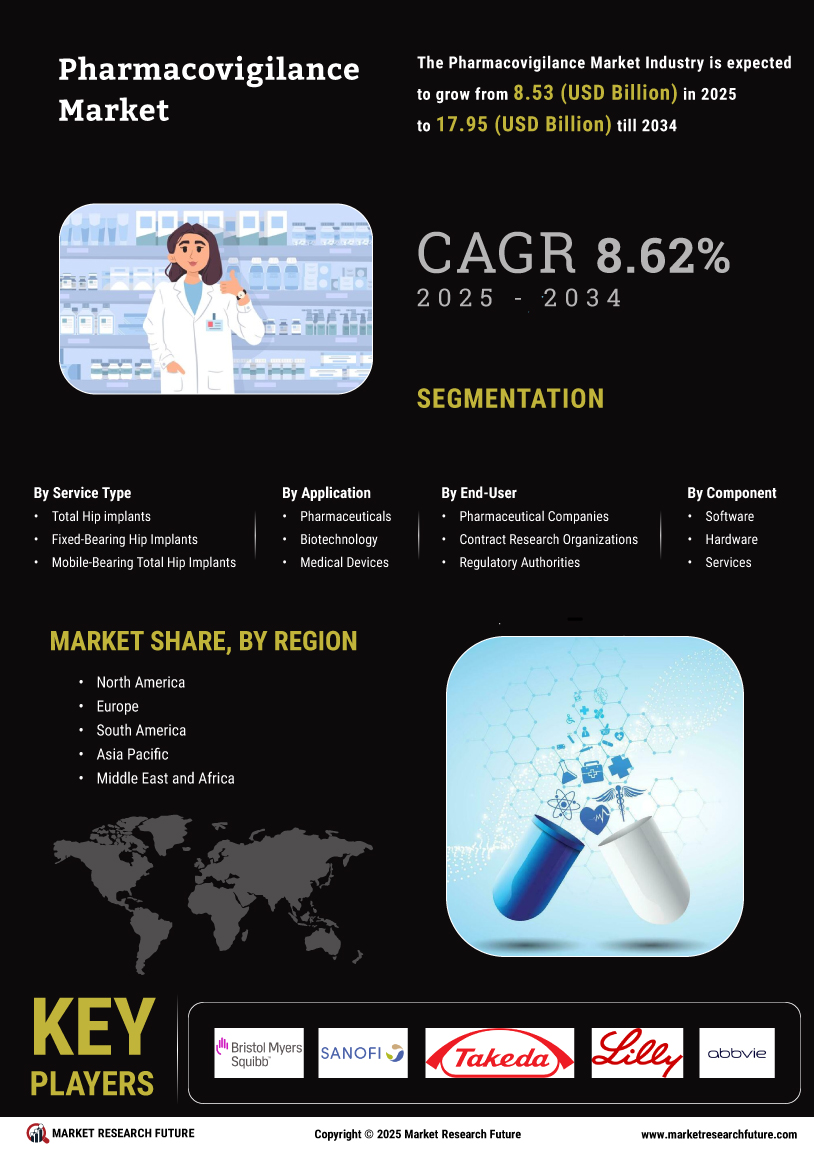
Pharmacovigilance Market Infographic
Purchase Options

Pharmacovigilance Market Summary

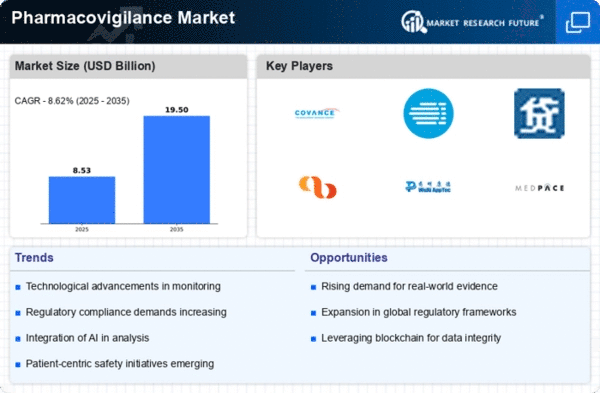
As per MRFR analysis, the Pharmacovigilance Market Size was estimated at 7.85 USD Billion in 2024. The Pharmacovigilance industry is projected to grow from 8.53 USD Billion in 2025 to 19.5 USD Billion by 2035, exhibiting a compound annual growth rate (CAGR) of 8.62 during the forecast period 2025 - 2035.

Key Market Trends & Highlights

The Pharmacovigilance Market is poised for substantial growth driven by technological advancements and regulatory changes.

  • North America remains the largest market for pharmacovigilance, driven by stringent regulatory requirements and a robust healthcare infrastructure.
  • The Asia-Pacific region is emerging as the fastest-growing market, fueled by increasing investments in healthcare and rising awareness of drug safety.
  • Adverse Event Reporting continues to dominate the market, while Signal Detection is rapidly gaining traction as a critical segment.
  • Key market drivers include the rising demand for drug safety monitoring and the integration of artificial intelligence and big data in pharmacovigilance processes.

Market Size & Forecast

2024 Market Size 7.85 (USD Billion)
2035 Market Size 19.5 (USD Billion)
CAGR (2025 - 2035) 8.62%

Major Players

Covance (US), IQVIA (US), PPD (US), Syneos Health (US), Wuxi AppTec (CN), Medpace (US), Charles River (US), PRA Health Sciences (US), ArisGlobal (US)

Our Impact
Enabled $4.3B Revenue Impact for Fortune 500 and Leading Multinationals
Partnering with 2000+ Global Organizations Each Year
30K+ Citations by Top-Tier Firms in the Industry

Pharmacovigilance Market Trends

The Pharmacovigilance Market is currently experiencing a transformative phase, driven by the increasing emphasis on drug safety and regulatory compliance. As pharmaceutical companies and regulatory bodies prioritize patient safety, the demand for robust pharmacovigilance systems is on the rise. This market encompasses a wide range of activities, including the detection, assessment, understanding, and prevention of adverse effects or any other drug-related problems. The integration of advanced technologies, such as artificial intelligence and big data analytics, is reshaping how organizations monitor drug safety, leading to more efficient and effective processes. Moreover, The Pharmacovigilance is evolving due to the growing complexity of drug development and the need for real-time data analysis. Regulatory agencies are increasingly mandating stringent reporting requirements, which compels companies to enhance their pharmacovigilance capabilities. This trend is further fueled by the rising number of clinical trials and the introduction of novel therapies, which necessitate comprehensive safety monitoring. As a result, stakeholders in the pharmaceutical industry are likely to invest in innovative solutions to ensure compliance and improve patient outcomes, indicating a promising future for the Pharmacovigilance Market.

Technological Advancements

The integration of cutting-edge technologies, such as artificial intelligence and machine learning, is revolutionizing the Pharmacovigilance Market. These innovations facilitate the analysis of vast datasets, enabling quicker identification of adverse drug reactions and enhancing overall safety monitoring.

Regulatory Changes

Evolving regulatory frameworks are shaping the Pharmacovigilance Market. Stricter guidelines and requirements from health authorities compel pharmaceutical companies to adopt more rigorous safety monitoring practices, thereby increasing the demand for comprehensive pharmacovigilance solutions.

Increased Focus on Patient Safety

There is a growing awareness and emphasis on patient safety within the healthcare sector. This heightened focus drives pharmaceutical companies to prioritize pharmacovigilance activities, ensuring that potential risks associated with medications are effectively managed and communicated.

Pharmacovigilance Market Drivers

Market Growth Projections

The Global Pharmacovigilance Market Industry is on a trajectory of substantial growth, with projections indicating a market size of 7.9 USD Billion in 2024 and an anticipated increase to 15 USD Billion by 2035. This growth is underpinned by a compound annual growth rate (CAGR) of 6.0% from 2025 to 2035. The expansion is driven by various factors, including increasing regulatory requirements, technological advancements, and a growing focus on patient safety. As the industry evolves, stakeholders are likely to invest in innovative pharmacovigilance solutions to enhance drug safety monitoring and compliance.

Expansion of Biopharmaceuticals

The expansion of biopharmaceuticals is reshaping the Global Pharmacovigilance Market Industry. As the biopharmaceutical sector continues to grow, the complexity of monitoring these products increases. Biologics often have unique safety profiles that require specialized pharmacovigilance approaches. Regulatory agencies are emphasizing the need for rigorous safety monitoring of biopharmaceuticals, leading to increased investments in pharmacovigilance systems. This trend is expected to drive market growth, as companies seek to ensure compliance with regulatory requirements and safeguard patient health. The market's trajectory indicates a robust future, with significant contributions from the biopharmaceutical sector.

Growing Focus on Patient Safety

The emphasis on patient safety is a significant driver of the Global Pharmacovigilance Market Industry. As healthcare stakeholders prioritize the well-being of patients, there is an increasing demand for effective monitoring of drug safety profiles. Initiatives aimed at improving patient safety, such as the establishment of patient registries and safety surveillance programs, are gaining traction. This focus is reflected in the growing investments in pharmacovigilance systems by pharmaceutical companies. The market is expected to grow at a CAGR of 6.0% from 2025 to 2035, underscoring the commitment to enhancing patient safety through rigorous pharmacovigilance practices.

Increasing Regulatory Requirements

The Global Pharmacovigilance Market Industry is experiencing heightened scrutiny from regulatory bodies worldwide. Governments and health authorities are mandating stricter reporting and monitoring of adverse drug reactions. This regulatory landscape compels pharmaceutical companies to enhance their pharmacovigilance systems, ensuring compliance and patient safety. For instance, the European Medicines Agency has implemented stringent guidelines that necessitate comprehensive risk management plans. As a result, the market is projected to reach 7.9 USD Billion in 2024, reflecting the growing need for robust pharmacovigilance frameworks to meet these evolving regulatory demands.

Rising Incidence of Adverse Drug Reactions

The rising incidence of adverse drug reactions (ADRs) is a critical factor driving the Global Pharmacovigilance Market Industry. With the increasing complexity of drug therapies and polypharmacy, the occurrence of ADRs is becoming more prevalent. This trend necessitates robust pharmacovigilance systems to monitor and manage these reactions effectively. For instance, reports indicate that ADRs account for a significant percentage of hospital admissions, highlighting the urgent need for improved safety monitoring. Consequently, the market is poised for growth as healthcare providers and pharmaceutical companies invest in comprehensive pharmacovigilance strategies to mitigate the risks associated with ADRs.

Technological Advancements in Data Management

Technological innovations are transforming the Global Pharmacovigilance Market Industry, particularly in data management and analysis. Advanced software solutions and artificial intelligence are being integrated into pharmacovigilance processes, enabling real-time monitoring of drug safety. These technologies facilitate the efficient collection, analysis, and reporting of adverse events, thereby improving decision-making. For example, machine learning algorithms can identify potential safety signals from vast datasets, enhancing the overall effectiveness of pharmacovigilance. This trend is likely to contribute to the market's growth, with projections indicating a rise to 15 USD Billion by 2035, driven by the demand for more sophisticated data management tools.

Market Segment Insights

By Application: Adverse Event Reporting (Largest) vs. Signal Detection (Fastest-Growing)

The Pharmacovigilance Market is characterized by a diverse range of applications, with Adverse Event Reporting commanding the largest share. This segment is crucial for collecting and analyzing data on adverse effects caused by pharmaceutical products, ensuring patient safety and regulatory compliance. Following closely is Risk Management, which plays a critical role in ensuring that medications have an acceptable risk-benefit profile. Other significant applications include Data Mining, Pharmacovigilance System Master File, and Signal Detection, each contributing to a rigorous monitoring framework that supports safe pharmaceutical practices.

Adverse Event Reporting (Dominant) vs. Signal Detection (Emerging)

Adverse Event Reporting serves as the backbone of the pharmacovigilance framework, enabling healthcare professionals to document and analyze the impact of drug-related adverse effects. This segment's dominance stems from its essential role in patient safety and regulatory mandates, making it a priority for pharmaceutical companies. On the other hand, Signal Detection is emerging as a key area of focus, driven by advancements in data analytics and artificial intelligence, allowing for early identification of potential safety issues. This application is vital for proactive risk assessment and contributes to the continuous monitoring of drug safety profiles, thus aligning well with current trends in healthcare technology and regulatory requirements.

By End Use: Pharmaceutical Companies (Largest) vs. Contract Research Organizations (Fastest-Growing)

In the Pharmacovigilance Market, Pharmaceutical Companies represent the largest end use segment, capturing a significant portion of the market share due to their extensive research and development activities. They rely heavily on pharmacovigilance to ensure the safety and efficacy of their drug products, thereby driving the demand for related services. Conversely, Contract Research Organizations (CROs) are experiencing rapid growth as they provide essential services to pharmaceutical and biotechnology companies. This upward trend is fueled by the increasing outsourcing of pharmacovigilance activities by these firms, leading to a burgeoning market segment.

Pharmaceutical Companies: Dominant vs. Regulatory Authorities: Emerging

Pharmaceutical Companies dominate the Pharmacovigilance Market, leveraging their substantial resources and expertise in drug safety to maintain regulatory compliance and enhance patient safety. They are continuously investing in advanced technologies and systems to streamline adverse event reporting and analysis. On the other hand, Regulatory Authorities are emerging as pivotal players within the space, tasked with ensuring drug safety and effectiveness through stringent monitoring and guidelines. They are enhancing their capabilities by adopting innovative approaches, thereby fostering a more robust pharmacovigilance framework. This growing interaction between pharmaceutical companies and regulatory bodies signifies a collaborative effort to improve drug safety and patient outcomes.

By Type: Clinical Trials (Largest) vs. Post-Marketing Surveillance (Fastest-Growing)

In the pharmacovigilance market, Clinical Trials command the largest share, largely due to their pivotal role in drug development and safety assessment. This segment focuses on the identification and analysis of adverse events during trials, presenting a comprehensive overview of drug safety before market approval. Meanwhile, Post-Marketing Surveillance is rapidly gaining traction, driven by the need for ongoing safety assessment of drugs once they are available to the public, thus playing an enhanced role in healthcare.

Post-Marketing Surveillance: Dominant vs. Risk Assessment: Emerging

Post-Marketing Surveillance has established itself as a dominant force in the pharmacovigilance market, essential for monitoring the safety of pharmaceuticals after their release to the market. This segment is characterized by its systematic collection and analysis of adverse effects reported by users, which informs regulatory decisions and ensures patient safety. Emerging on the other side, Risk Assessment plays a critical role in the evaluation of potential risks associated with pharmaceutical products before they are launched. This proactive approach helps in minimizing adverse effects and is increasingly recognized for its importance in regulatory frameworks, contributing to overall drug safety.

By Service Type: Consulting Services (Largest) vs. Data Management Services (Fastest-Growing)

In the Pharmacovigilance Market, the service type segment is characterized by a diverse range of offerings including consulting services, data management services, safety database services, and medical writing services. Consulting services hold the largest market share, primarily due to their critical role in providing strategic guidance to pharmaceutical companies in navigating regulatory compliance and risk management. Data management services, while currently a smaller segment, are experiencing rapid growth as companies increasingly recognize the importance of efficient data handling and analysis in ensuring drug safety and efficacy. The growth trends within the service type segment of pharmacovigilance are driven by several factors including regulatory changes, technological advancements, and the increasing emphasis on patient safety. As pharmaceuticals face more stringent regulations, the demand for expert consulting services is expected to surge. On the other hand, data management services are emerging as a rapidly growing area due to the demand for robust data systems that support proactive safety monitoring and real-time reporting, catering to the needs of an evolving healthcare landscape.

Consulting Services (Dominant) vs. Safety Database Services (Emerging)

Consulting services are the dominant force within the Pharmacovigilance Market, recognized for their ability to provide essential insights and expertise to pharmaceutical companies. These services not only help manage compliance with regulatory agencies but also offer strategic solutions to mitigate risks throughout a drug's lifecycle. In contrast, safety database services represent an emerging segment that is gaining traction as organizations increasingly invest in sophisticated systems to manage and analyze safety data. Safety databases facilitate the collection and reporting of adverse events, ensuring that companies can respond promptly to safety concerns. While consulting services focus on strategic oversight, safety database services are essential for operational efficiency and compliance, making both segments critical to the overall effectiveness of pharmacovigilance.

Get more detailed insights about Pharmacovigilance Market

Regional Insights

North America : Market Leader in Pharmacovigilance

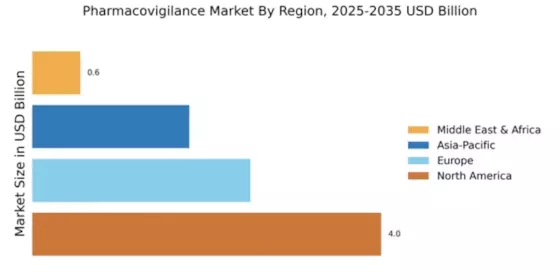
North America continues to lead The Pharmacovigilance, holding a significant share of 4.0 in 2025. The region's growth is driven by stringent regulatory frameworks, increasing drug approvals, and a rising focus on patient safety. The demand for advanced pharmacovigilance solutions is further fueled by the growing complexity of drug development and the need for compliance with regulatory standards. The United States is the primary contributor to this market, hosting key players such as Covance, IQVIA, and PPD. The competitive landscape is characterized by a mix of established firms and emerging players, all striving to enhance their service offerings. The presence of advanced technology and a robust healthcare infrastructure further solidifies North America's position as a hub for pharmacovigilance services.

Europe : Regulatory Frameworks Drive Growth

Europe's pharmacovigilance market is projected to reach 2.5 by 2025, driven by comprehensive regulatory frameworks and a strong emphasis on drug safety. The European Medicines Agency (EMA) plays a crucial role in ensuring compliance and fostering innovation in pharmacovigilance practices. The increasing number of clinical trials and the demand for real-time monitoring of drug safety are key factors propelling market growth in this region. Leading countries such as Germany, France, and the UK are at the forefront of this market, supported by a robust network of pharmaceutical companies and research organizations. Major players like Syneos Health and ArisGlobal are actively contributing to the competitive landscape, enhancing their capabilities to meet regulatory requirements and improve patient safety. The collaboration between public and private sectors further strengthens the pharmacovigilance ecosystem in Europe.

Asia-Pacific : Emerging Market with Potential

The Asia-Pacific region is witnessing significant growth in the pharmacovigilance market, projected to reach 1.8 by 2025. This growth is driven by increasing healthcare expenditures, a rising number of clinical trials, and a growing awareness of drug safety among healthcare professionals. Regulatory bodies in countries like India and China are enhancing their pharmacovigilance frameworks, which is expected to further boost market demand. Countries such as China, India, and Japan are leading the charge in this emerging market. The competitive landscape is evolving, with both local and international players like Wuxi AppTec and Medpace expanding their operations. The region's diverse healthcare landscape and the increasing adoption of advanced technologies in drug monitoring are key factors contributing to the growth of pharmacovigilance services in Asia-Pacific.

Middle East and Africa : Developing Market with Challenges

The Middle East and Africa (MEA) pharmacovigilance market is projected to reach 0.55 by 2025, reflecting a developing landscape with unique challenges. The growth in this region is driven by increasing healthcare investments and a rising focus on patient safety. However, regulatory frameworks are still evolving, which can hinder the rapid adoption of pharmacovigilance practices. The demand for effective monitoring systems is growing as healthcare systems modernize. Countries like South Africa and the UAE are leading the market, with a growing number of pharmaceutical companies establishing operations in the region. The competitive landscape is characterized by a mix of local firms and international players, all striving to enhance their pharmacovigilance capabilities. Collaboration between governments and private sectors is essential to address the challenges and improve the overall pharmacovigilance framework in MEA.

Pharmacovigilance Market Regional Image

Key Players and Competitive Insights

The Pharmacovigilance Market is characterized by a dynamic competitive landscape, driven by the increasing emphasis on drug safety and regulatory compliance. Key players are actively engaging in strategies that enhance their operational capabilities and market presence. For instance, Covance (US) has been focusing on expanding its global footprint through strategic partnerships and collaborations, which appear to bolster its service offerings in pharmacovigilance. Similarly, IQVIA (US) is leveraging advanced analytics and artificial intelligence to optimize its pharmacovigilance processes, thereby enhancing efficiency and accuracy in drug safety monitoring. These strategic initiatives collectively shape a competitive environment that is increasingly focused on innovation and technological advancement.In terms of business tactics, companies are adopting localized approaches to better serve regional markets, which may involve optimizing supply chains and enhancing customer engagement. The market structure is moderately fragmented, with several key players exerting influence over various segments. This fragmentation allows for a diverse range of services and solutions, catering to the specific needs of pharmaceutical companies and regulatory bodies.

In November PPD (US) announced a significant investment in its pharmacovigilance capabilities by integrating machine learning technologies into its safety reporting systems. This move is likely to enhance the speed and accuracy of adverse event reporting, positioning PPD as a leader in innovative pharmacovigilance solutions. The integration of such technologies not only streamlines operations but also aligns with the industry's shift towards data-driven decision-making.

In October Syneos Health (US) launched a new platform aimed at improving real-time data collection and analysis for pharmacovigilance. This initiative is indicative of the growing trend towards digital transformation within the market. By providing clients with enhanced visibility into safety data, Syneos Health is likely to strengthen its competitive edge and foster deeper client relationships.

In September Wuxi AppTec (CN) expanded its pharmacovigilance services to include comprehensive risk management solutions. This strategic expansion reflects a broader industry trend towards holistic safety management, which is becoming increasingly critical as regulatory requirements evolve. By offering a more integrated approach, Wuxi AppTec may enhance its value proposition to clients, thereby solidifying its market position.

As of December the competitive trends in the Pharmacovigilance Market are heavily influenced by digitalization, sustainability, and the integration of artificial intelligence. Strategic alliances are becoming more prevalent, as companies seek to combine resources and expertise to navigate the complexities of drug safety. The competitive differentiation is likely to evolve from traditional price-based competition to a focus on innovation, technological advancements, and supply chain reliability. This shift underscores the importance of adaptability and forward-thinking strategies in maintaining a competitive advantage in the ever-evolving landscape.

Key Companies in the Pharmacovigilance Market include

Industry Developments

Recent developments in the Pharmacovigilance Market indicate a significant focus on technological advancements and regulatory compliance. Companies such as Veeva Systems and IQVIA are investing heavily in cloud-based solutions to streamline drug safety reporting, which has become increasingly vital due to the surge in pharmacovigilance activities post-COVID-19. In terms of mergers and acquisitions, Medpace announced in August 2023 its acquisition of a biotech firm to enhance its drug safety services, while Clinigen Group and Veristat expanded their services, facilitating better access to data analytics and reporting.

The market has witnessed a growth in valuations, driven by rising demand for safety monitoring services fueled by the increasing complexity of regulatory requirements and the need for real-time data analytics in drug development processes. Over the past two to three years, companies like PharmaLex and Syneos Health have also significantly expanded their service offerings in response to higher demand for comprehensive support in post-marketing surveillance. This evolving landscape underscores the need for collaboration among industry leaders such as Accenture, Cognizant, and PAREXEL International to leverage innovative solutions for enhanced patient safety and drug efficacy monitoring.

Future Outlook

Pharmacovigilance Market Future Outlook

The Pharmacovigilance Market is projected to grow at an 8.62% CAGR from 2025 to 2035, driven by technological advancements, regulatory changes, and increasing patient safety awareness.

New opportunities lie in:

  • Integration of AI-driven analytics for real-time adverse event detection.
  • Expansion of cloud-based pharmacovigilance solutions for global compliance.
  • Development of mobile applications for patient-reported outcomes and safety monitoring.

By 2035, the Pharmacovigilance Market is expected to be robust, driven by innovation and regulatory demands.

Market Segmentation

Pharmacovigilance Market Type Outlook

  • Clinical Trials
  • Post-Marketing Surveillance
  • Pre-Marketing Surveillance
  • Risk Assessment

Pharmacovigilance Market End Use Outlook

  • Pharmaceutical Companies
  • Contract Research Organizations
  • Regulatory Authorities
  • Biotechnology Companies

Pharmacovigilance Market Application Outlook

  • Adverse Event Reporting
  • Risk Management
  • Data Mining
  • Pharmacovigilance System Master File
  • Signal Detection

Pharmacovigilance Market Service Type Outlook

  • Consulting Services
  • Data Management Services
  • Safety Database Services
  • Medical Writing Services

Report Scope

MARKET SIZE 20247.85(USD Billion)
MARKET SIZE 20258.53(USD Billion)
MARKET SIZE 203519.5(USD Billion)
COMPOUND ANNUAL GROWTH RATE (CAGR)8.62% (2025 - 2035)
REPORT COVERAGERevenue Forecast, Competitive Landscape, Growth Factors, and Trends
BASE YEAR2024
Market Forecast Period2025 - 2035
Historical Data2019 - 2024
Market Forecast UnitsUSD Billion
Key Companies ProfiledCovance (US), IQVIA (US), PPD (US), Syneos Health (US), Wuxi AppTec (CN), Medpace (US), Charles River (US), PRA Health Sciences (US), ArisGlobal (US)
Segments CoveredApplication, End Use, Type, Service Type
Key Market OpportunitiesIntegration of artificial intelligence enhances efficiency in the Pharmacovigilance Market.
Key Market DynamicsRising regulatory scrutiny and technological advancements drive growth in the Pharmacovigilance Market.
Countries CoveredNorth America, Europe, APAC, South America, MEA

Market Highlights

Author
Rahul Gotadki
Assistant Manager

He holds an experience of about 7+ years in Market Research and Business Consulting, working under the spectrum of Life Sciences and Healthcare domains. Rahul conceptualizes and implements a scalable business strategy and provides strategic leadership to the clients. His expertise lies in market estimation, competitive intelligence, pipeline analysis, customer assessment, etc. In addition to the above, his other responsibility includes strategic tracking of high growth markets & advising clients on the potential areas of focus they could direct their business initiatives

Leave a Comment

FAQs

What is the projected growth of the Pharmacovigilance market?

The Pharmacovigilance market is the expected increase in total market value of 19.5 USD billion over a defined forecast period 2025–2035. It is driven by factors such as demand trends, technological advances, regulatory changes, and geographic expansion.

What is the size of the Pharmacovigilance market?

Pharmacovigilance market size was valued at approximately 7.85 billion USD in 2024. This figure will reach 19.5 billion USD covering all regions (America, Europe, Asia, MEA and ROW), focusing its segments / services / distribution channels till 2035.

What is the CAGR of the Pharmacovigilance market?

Pharmacovigilance market is expected to grow at a CAGR of 8.62% between 2025 and 2035.

How much will the Pharmacovigilance market be worth by 2035?

Pharmacovigilance market is expected to be worth of 19.5 billion USD, reflecting growth driven by usage, technology and global demands by the end of 2035.

How will the Pharmacovigilance market perform over the next 10 years?

Over the next 10 years the Pharmacovigilance market is expected to shift from usd billion 7.85 to 19.5 billion USD, led by adoption of advanced tech, demographic trends, regulatory approvals, with potential headwinds from 2025 to 2035.

What was the market size of the Pharmacovigilance Market in 2024?

The expected market size of the Pharmacovigilance Market in 2024 was valued at 7.9 USD Billion.

What will be the projected value of the Pharmacovigilance Market by 2035?

The projected value of the Pharmacovigilance Market by 2035 is expected to reach 15.0 USD Billion.

Which region dominated the Pharmacovigilance Market in 2024?

North America dominated the Pharmacovigilance Market with a value of 3.5 USD Billion in 2024.

What will be the market size of the Asia Pacific region in the Pharmacovigilance Market by 2035?

The market size of the Asia Pacific region in the Pharmacovigilance Market is projected to be 2.5 USD Billion by 2035.

What is the market value for Adverse Event Reporting in the Pharmacovigilance Market by 2035?

The market value for Adverse Event Reporting is expected to reach 4.7 USD Billion by 2035.

Download Free Sample

Kindly complete the form below to receive a free sample of this Report

Compare Licence

×
Features License Type
Single User Multiuser License Enterprise User
Price $4,950 $5,950 $7,250
Maximum User Access Limit 1 User Upto 10 Users Unrestricted Access Throughout the Organization
Free Customization
Direct Access to Analyst
Deliverable Format
Platform Access
Discount on Next Purchase 10% 15% 15%
Printable Versions