Expansion of Global Markets
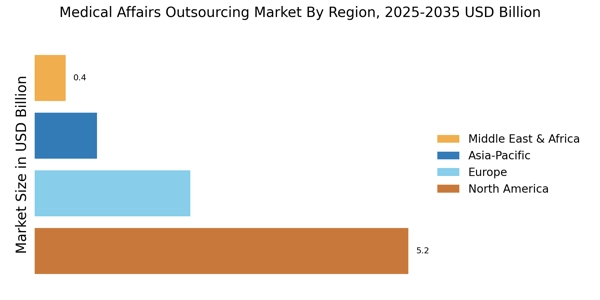
The expansion of markets beyond traditional boundaries is a key driver in the Medical Affairs Outsourcing Market. As companies seek to penetrate emerging markets, the need for localized medical affairs strategies becomes paramount. Outsourcing allows organizations to leverage local expertise and insights, facilitating smoother entry into these diverse markets. The potential for growth in regions such as Asia-Pacific and Latin America is substantial, with estimates indicating that these markets could account for over 25% of the total medical affairs outsourcing revenue by 2030. This trend highlights the strategic importance of outsourcing in navigating the complexities of international regulations and cultural nuances, thereby enhancing the effectiveness of medical affairs initiatives.
Increased Regulatory Complexity
The Medical Affairs Outsourcing Market is significantly influenced by the increasing complexity of regulatory requirements. As regulations evolve, pharmaceutical and biotechnology companies face challenges in maintaining compliance while managing their medical affairs. Outsourcing to specialized firms that possess expertise in navigating these regulatory landscapes can mitigate risks associated with non-compliance. The demand for regulatory affairs services is expected to rise, with estimates indicating a market growth of around 15% in this segment alone. This trend underscores the necessity for companies to adapt to changing regulations efficiently, thereby driving the outsourcing of medical affairs functions to ensure adherence to legal and ethical standards.
Focus on Data-Driven Decision Making
The emphasis on data-driven decision making is reshaping the Medical Affairs Outsourcing Market. Companies are increasingly relying on data analytics to inform their medical strategies, necessitating the expertise of external partners who can provide advanced analytical capabilities. This shift is indicative of a broader trend towards evidence-based practices in the healthcare sector. As organizations seek to enhance their understanding of market dynamics and patient needs, the demand for outsourced medical affairs services that offer robust data analysis is likely to grow. Projections suggest that the market for data analytics in medical affairs could expand by approximately 20% over the next few years, reflecting the critical role of data in shaping effective medical strategies.
Rising Demand for Specialized Expertise
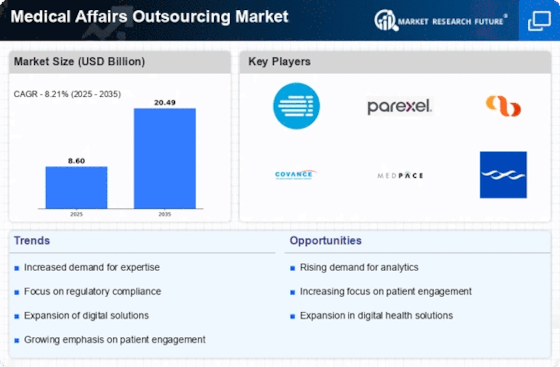
The Medical Affairs Outsourcing Market is experiencing a notable increase in demand for specialized expertise. As pharmaceutical and biotechnology companies seek to enhance their product offerings, they are increasingly outsourcing medical affairs functions to specialized firms. This trend is driven by the need for in-depth knowledge in therapeutic areas, regulatory requirements, and market access strategies. According to recent data, the market for outsourced medical affairs services is projected to grow at a compound annual growth rate of approximately 12% over the next five years. This growth indicates a shift towards leveraging external expertise to navigate complex medical landscapes, thereby allowing companies to focus on core competencies while ensuring compliance and effective communication with healthcare professionals.
Cost Efficiency and Resource Optimization
Cost efficiency remains a pivotal driver in the Medical Affairs Outsourcing Market. Companies are increasingly recognizing the financial benefits of outsourcing medical affairs functions, which can lead to significant cost savings. By engaging external partners, organizations can reduce overhead costs associated with hiring and training in-house staff. Furthermore, outsourcing allows for better resource allocation, enabling companies to invest in research and development or other strategic initiatives. Market analysis suggests that firms that adopt outsourcing strategies can achieve up to 30% reduction in operational costs. This financial incentive is compelling, particularly in an environment where budget constraints are prevalent, thus propelling the growth of the medical affairs outsourcing sector.