×
Request Free Sample ×

Kindly complete the form below to receive a free sample of this Report

* Please use a valid business email

Leading companies partner with us for data-driven Insights

clients tt-cursor
Hero Background

Italy Sparkling Wine Market

ID: MRFR/FnB/46104-HCR
128 Pages
Snehal Singh
February 2026

Italy Sparkling Wine Market Size, Share, Industry Trend & Analysis Research Report: By Type (Champagne, Cava, Others), By Category (White, Rosé, Red) andBy Distribution Channel (Foodservice, Retail)- Forecast to 2035

Share:
Download PDF ×

We do not share your information with anyone. However, we may send you emails based on your report interest from time to time. You may contact us at any time to opt-out.

Italy Sparkling Wine Market Infographic
Purchase Options

Italy Sparkling Wine Market Summary

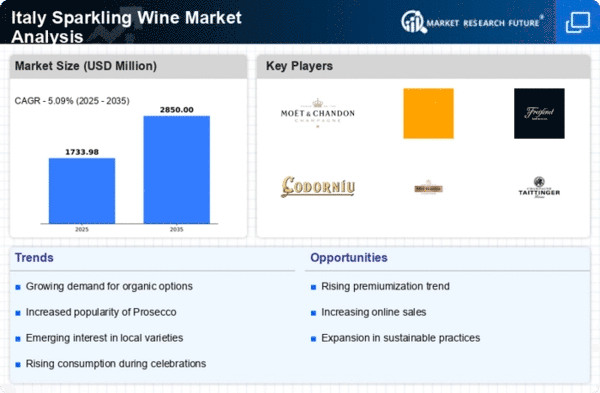
As per Market Research Future analysis, the Italy Sparkling Wine Market Size was estimated at 1650.0 USD Million in 2024. The Italy sparkling wine market is projected to grow from 1733.98 USD Million in 2025 to 2850.0 USD Million by 2035, exhibiting a compound annual growth rate (CAGR) of 5.0% during the forecast period 2025 - 2035

Key Market Trends & Highlights

The Italy The sparkling wine market. is experiencing a notable shift towards premiumization and sustainability.

  • The premiumization trend is driving consumers towards higher-quality sparkling wines, particularly in the Prosecco segment, which remains the largest.
  • Sustainability is becoming increasingly important, with consumers showing a preference for eco-friendly production methods in the fastest-growing organic sparkling wine segment.
  • Digital engagement is on the rise, as e-commerce and online sales channels expand, facilitating access to a broader range of products.
  • Rising consumer preference for quality and the influence of Italian culture and traditions are key drivers propelling market growth.

Market Size & Forecast

2024 Market Size 1650.0 (USD Million)
2035 Market Size 2850.0 (USD Million)
CAGR (2025 - 2035) 5.09%

Major Players

Moet & Chandon (FR), Veuve Clicquot (FR), Freixenet (ES), Codorniu (ES), Piper-Heidsieck (FR), Taittinger (FR), Chandon (US), Nicolas Feuillatte (FR), G.H. Mumm (FR)

Our Impact
Enabled $4.3B Revenue Impact for Fortune 500 and Leading Multinationals
Partnering with 2000+ Global Organizations Each Year
30K+ Citations by Top-Tier Firms in the Industry

Italy Sparkling Wine Market Trends

The The sparkling wine market in Italy. exhibits a dynamic landscape characterized by evolving consumer preferences and innovative production techniques. The country, renowned for its rich viticultural heritage, continues to attract both domestic and international consumers. Recent trends indicate a growing inclination towards premium and organic offerings, as consumers increasingly seek quality and sustainability in their beverage choices. This shift is likely influenced by a heightened awareness of health and environmental issues, prompting producers to adapt their practices accordingly. Furthermore, the rise of e-commerce platforms has transformed the way consumers access sparkling wines, allowing for greater convenience and variety. In addition, the sparkling wine market is witnessing a surge in popularity among younger demographics, who are drawn to the versatility and celebratory nature of these beverages. This demographic shift suggests that producers may need to tailor their marketing strategies to engage this audience effectively. Overall, the sparkling wine market in Italy appears poised for continued growth, driven by innovation, changing consumer behaviors, and a commitment to quality and sustainability.

Premiumization Trend

There is a noticeable shift towards premium products within the sparkling wine market. Consumers are increasingly willing to invest in higher-quality offerings, which often feature unique production methods and distinctive flavor profiles. This trend reflects a broader movement towards luxury consumption, where individuals prioritize experiences over mere products.

Sustainability Focus

Sustainability has become a central theme in the sparkling wine market, with producers adopting eco-friendly practices. This includes organic farming, reduced carbon footprints, and sustainable packaging solutions. Consumers are more inclined to support brands that demonstrate a commitment to environmental stewardship.

Digital Engagement

The rise of digital platforms has transformed consumer engagement in the sparkling wine market. Brands are leveraging social media and e-commerce to connect with consumers, offering personalized experiences and direct-to-consumer sales. This trend enhances accessibility and fosters a deeper connection between producers and their audience.

Italy Sparkling Wine Market Drivers

Emergence of New Wine Regions

The The sparkling wine market. in Italy is experiencing diversification as new wine regions emerge, contributing to a broader array of offerings. Regions such as Trentino and Abruzzo are gaining recognition for their high-quality sparkling wines, which are often produced using traditional methods. This expansion is likely to enhance competition within the market, as established regions like Veneto and Lombardy face new challengers. In 2025, it is estimated that the contribution of these emerging regions to the overall sparkling wine market will increase by 20%, indicating a shift in consumer preferences towards exploring wines from lesser-known areas. This trend not only enriches the market landscape but also encourages innovation and experimentation among producers, ultimately benefiting consumers with a wider selection of sparkling wines.

Growth of E-commerce and Online Sales

The The sparkling wine market. in Italy is witnessing a transformation due to the rise of e-commerce platforms, which facilitate easier access to a diverse range of products. As consumers increasingly turn to online shopping, the market is projected to see a 25% increase in online sales by the end of 2025. This shift is particularly beneficial for smaller producers who may lack the resources for extensive distribution networks. E-commerce allows them to reach a broader audience, thereby enhancing their visibility in a competitive market. Additionally, online platforms often provide consumers with detailed product information and reviews, which can influence purchasing decisions. Consequently, the growth of e-commerce is reshaping the dynamics of the sparkling wine market, making it more accessible and convenient for consumers.

Rising Consumer Preference for Quality

The The sparkling wine market. in Italy experiences a notable shift towards premium products, as consumers increasingly prioritize quality over quantity. This trend is reflected in the growing demand for high-end sparkling wines, particularly Prosecco and Franciacorta, which are perceived as symbols of luxury and sophistication. In 2025, the market for premium sparkling wines is projected to account for approximately 35% of total sales, indicating a significant increase from previous years. This consumer preference is driven by a desire for unique flavors and artisanal production methods, which enhance the overall drinking experience. As a result, producers are focusing on small-batch production and traditional methods to cater to this discerning clientele, thereby shaping the landscape of the sparkling wine market in Italy.

Influence of Italian Culture and Traditions

Italian culture plays a pivotal role in shaping the The sparkling wine market., as sparkling wines are integral to various celebrations and social gatherings. Events such as weddings, holidays, and festivals often feature sparkling wines, particularly Prosecco, which is synonymous with Italian conviviality. The market benefits from this cultural significance, as it fosters a strong emotional connection between consumers and sparkling wines. In 2025, it is estimated that around 60% of sparkling wine sales in Italy are attributed to social occasions, highlighting the importance of tradition in driving consumption. This cultural affinity not only sustains demand but also encourages innovation among producers, who strive to create products that resonate with Italian heritage while appealing to modern tastes.

Health Consciousness and Low-Alcohol Options

The The sparkling wine market. in Italy is adapting to the rising health consciousness among consumers, leading to an increased demand for low-alcohol and alcohol-free options. As more individuals seek to moderate their alcohol intake, producers are responding by developing innovative products that cater to this trend. In 2025, it is anticipated that low-alcohol sparkling wines will represent approximately 15% of total sales, reflecting a growing segment within the market. This shift not only aligns with consumer preferences for healthier lifestyles but also opens new avenues for growth in the sparkling wine market. By offering a variety of options, producers can attract a wider audience, including those who may have previously avoided traditional sparkling wines due to alcohol content.


Market Segment Insights

By Type: Prosecco (Largest) vs. Sparkling Rosé (Fastest-Growing)

In the Italy The sparkling wine market., Prosecco holds a significant share, constituting the largest segment due to its popularity and favorable perception among consumers. Champagne follows, recognized for its premium status, while Cava and Sparkling Rosé are less prevalent but important in niche segments. Other types also contribute marginally, showcasing a diverse range of preferences within the market. Growth trends in this segment are largely driven by changing consumer preferences towards lighter, fresh wines, with Prosecco as a preferred choice. Sparkling Rosé is emerging rapidly, attracting younger demographics seeking vibrant and Instagram-worthy options. This trend reflects broader lifestyle shifts and an increasing inclination for casual, celebratory drinking occasions, fostering innovation in the segment.

Prosecco (Dominant) vs. Sparkling Rosé (Emerging)

Prosecco stands as the dominant force in the market, celebrated for its approachable taste and versatility, making it suitable for various occasions. Its production process, which preserves the fresh flavors through the Charmat method, appeals to those aspiring for quality at a reasonable price. On the other hand, Sparkling Rosé is gaining traction, primarily amongst younger consumers looking for a stylish beverage that pairs well with casual dining and social events. The trend towards health-conscious choices, where consumers favor wines with lower alcohol content and vibrant flavors, positions Sparkling Rosé as an emerging player, promising to capture a more significant market share in the coming years.

By Production Method: Traditional Method (Largest) vs. Tank Method (Fastest-Growing)

In the Italy The sparkling wine market., the production method segment showcases a diverse array of techniques. The Traditional Method dominates with the largest market share, reflecting its esteemed reputation in crafting high-quality sparkling wines. This method's time-honored approach resonates well with both consumers and producers, thus cementing its position. Conversely, the Tank Method is gaining traction rapidly due to its efficiency and ability to produce sparkling wines swiftly without compromising quality, making it the fastest-growing segment in the market. As consumer preferences shift towards more innovative and accessible options, the Tank Method is expected to flourish, driven by the increasing demand for sparklers that provide both affordability and consistency. Furthermore, the exposure of sparkling wines to a wider audience through digital marketing strategies further propels the growth of this segment. In contrast, while the Traditional Method continues to thrive, it faces competition from emerging production methods that resonate with younger consumers looking for new experiences.

Traditional Method (Dominant) vs. Tank Method (Emerging)

The Traditional Method is renowned for its meticulous process that encompasses second fermentation in the bottle, resulting in rich complexity and depth of flavor. It's preferred by connoisseurs and often associated with luxury brands in the sparkling wine industry, securing its dominant market position. On the other hand, the Tank Method, which utilizes large pressurized tanks for fermentation, is emerging rapidly as it caters to the demand for cost-effective and high-volume production. This method allows producers to generate more consistent products, thereby appealing to a broader market segment. Both methods represent the diverse landscape of the Italy sparkling wine market, catering to varying consumer tastes and preferences.

By Flavor Profile: Brut (Largest) vs. Fruity (Fastest-Growing)

In the Italy The sparkling wine market., the flavor profile segment displays a diverse range of preferences among consumers. Brut currently holds the largest share, becoming the staple choice for many sparkling wine enthusiasts who appreciate its dry taste. Following closely are Extra Dry and Sweet profiles, which cater to those seeking a subtly sweet experience. Floral and Fruity flavors have developed a niche following, appealing particularly to younger audiences looking for innovative flavors. The growth trends for flavor profiles indicate a significant shift towards Fruity varieties, which have shown the fastest growth rate in recent years. This shift is driven by evolving consumer palates and a rising interest in unique, refreshing tastes among millennials and Gen Z. Additionally, the desire for versatile options for various occasions has further propelled the Fruity segment's expansion within the market.

Brut (Dominant) vs. Fruity (Emerging)

Brut sparkling wines are characterized by their crisp, dry taste, making them the preferred choice among purists and traditionalists. This segment is well-established and commands a loyal following due to its classic appeal and versatility, often being used in toasting ceremonies and celebrations. In contrast, the Fruity segment is emerging rapidly, attracting consumers with its vibrant and approachable flavor profiles. Fruity wines often feature notes of berries, tropical fruits, and citrus, making them desirable for casual gatherings and summer events. The appeal of easily accessible, refreshing options is driving the growth of the Fruity category, especially among younger demographics seeking new experiences in sparkling wines.

By Packaging: Bottle (Largest) vs. Can (Fastest-Growing)

The packaging segment of the Italy The sparkling wine market. displays a diverse distribution of segment values. Bottles dominate this market category, capturing the largest market share and enjoying a strong association with traditional wine consumption. Cans, while currently holding a smaller share, are experiencing robust growth driven by changing consumer preferences towards convenient and portable options. This trend is gradually resonating with younger demographics that prioritize on-the-go consumption. Growth trends within the packaging segment are largely influenced by evolving consumer lifestyles and sustainability concerns. The shift towards more eco-friendly options has led to increased interest in Bag-in-Box and Pouch formats, which are often perceived as being more sustainable. Additionally, the convenience offered by can packaging is propelling its rapid adoption, highlighting a significant shift in consumption patterns in the sparkling wine market. As consumers seek innovative solutions, the market is likely to see an expansion in diverse packaging options.

Bottle (Dominant) vs. Can (Emerging)

Bottles remain the dominant packaging choice in the Italy sparkling wine market, being synonymous with quality and tradition. The classic design not only preserves the integrity of the wine but also enhances the overall consumer experience during festivities and celebrations. Conversely, cans have emerged as a compelling alternative, particularly among younger consumers seeking convenience without compromising quality. Cans offer portability and are lightweight, making them ideal for outdoor activities and casual gatherings. With their growing prevalence, cans are challenging traditional perceptions and are likely to continue gaining traction as consumers become more adventurous in their wine choices and seek out formats that suit their dynamic lifestyles.

Get more detailed insights about Italy Sparkling Wine Market

Key Players and Competitive Insights

The sparkling wine market in Italy exhibits a dynamic competitive landscape characterized by a blend of traditional craftsmanship and modern innovation. Key growth drivers include an increasing consumer preference for premium products, a burgeoning interest in organic and sustainable offerings, and the rise of e-commerce platforms facilitating direct-to-consumer sales. Major players such as Moet & Chandon (FR), Freixenet (ES), and Taittinger (FR) are strategically positioned to leverage these trends. Moet & Chandon (FR) focuses on enhancing brand prestige through limited-edition releases, while Freixenet (ES) emphasizes sustainability in its production processes. Taittinger (FR) is investing in digital marketing strategies to engage younger consumers, collectively shaping a competitive environment that prioritizes quality and brand experience.In terms of business tactics, companies are increasingly localizing manufacturing to reduce costs and enhance supply chain efficiency. The market structure appears moderately fragmented, with a mix of established brands and emerging players. This fragmentation allows for diverse consumer choices but also intensifies competition among key players. The collective influence of these companies is significant, as they drive innovation and set quality standards that smaller brands often strive to meet.

In October Freixenet (ES) announced a partnership with a leading Italian organic vineyard to produce a new line of organic sparkling wines. This strategic move not only aligns with the growing consumer demand for organic products but also enhances Freixenet's brand image as a sustainable choice in the market. The collaboration is expected to attract environmentally conscious consumers and expand Freixenet's market share in Italy.

In September Taittinger (FR) launched a digital campaign targeting millennials, utilizing social media influencers to promote its latest vintage. This initiative reflects a broader trend of digital transformation within the industry, as brands seek to connect with younger demographics through innovative marketing strategies. The campaign's success could potentially redefine Taittinger's engagement approach, making it more relevant in a rapidly evolving market.

In August Moet & Chandon (FR) unveiled a new production facility in Italy, aimed at increasing its output and enhancing quality control. This investment signifies a commitment to maintaining high standards while meeting growing demand. The facility is expected to streamline operations and reduce lead times, positioning Moet & Chandon favorably against competitors in the region.

As of November current competitive trends indicate a strong emphasis on digitalization, sustainability, and the integration of AI technologies in production and marketing. Strategic alliances are increasingly shaping the landscape, allowing companies to pool resources and expertise. Looking ahead, competitive differentiation is likely to evolve from traditional price-based strategies to a focus on innovation, technological advancements, and supply chain reliability. This shift underscores the importance of adaptability in a market that is continuously influenced by changing consumer preferences and technological advancements.

Key Companies in the Italy Sparkling Wine Market include

Industry Developments

Recent developments in the Italy Sparkling Wine Market showcase a thriving and evolving industry with a significant focus on quality and sustainability. Cantina Ruffino has emphasized innovative winemaking techniques to enhance flavor profiles, while Valdo has been expanding its eco-friendly practices to attract environmentally conscious consumers. In March 2023, Bottega announced an investment to increase production capacity, reflecting growth in demand. Currently, Ferrari has been recognized for maintaining high standards of quality, reinforcing its position in the premium segment.

No notable mergers or acquisitions involving the specified companies such as Martini and Rossi, Nino Franco, or Mionetto have been reported in the past months. However, market valuation has shown positive growth backed by increased exports and consumer interest in Prosecco and other sparkling wines. For instance, Gancia has reported a boost in sales due to enhanced brand visibility and marketing initiatives. Over the past two years, the demand for Italian sparkling wines has significantly risen globally, with major events in 2022 showcasing the craftsmanship of brands like Cavit and Cinzano, further enhancing Italy's reputation in the wine industry.

Future Outlook

Italy Sparkling Wine Market Future Outlook

The Sparkling Wine Market in Italy is projected to grow at a 5.09% CAGR from 2025 to 2035, driven by premiumization, innovative marketing strategies, and increasing consumer interest in unique flavors.

New opportunities lie in:

  • Expansion of e-commerce platforms for direct-to-consumer sales.
  • Development of premium sparkling wine subscription services.
  • Investment in sustainable vineyard practices to attract eco-conscious consumers.

By 2035, the sparkling wine market is expected to achieve robust growth, reflecting evolving consumer preferences and innovative business strategies.

Market Segmentation

Italy Sparkling Wine Market Type Outlook

  • Champagne
  • Prosecco
  • Cava
  • Sparkling Rosé
  • Other

Italy Sparkling Wine Market Packaging Outlook

  • Bottle
  • Can
  • Bag-in-Box
  • Pouch
  • Other

Italy Sparkling Wine Market Flavor Profile Outlook

  • Brut
  • Extra Dry
  • Sweet
  • Floral
  • Fruity

Italy Sparkling Wine Market Production Method Outlook

  • Traditional Method
  • Tank Method
  • Caribbean Method
  • Carbonic Maceration
  • Other

Report Scope

MARKET SIZE 2024 1650.0(USD Million)
MARKET SIZE 2025 1733.98(USD Million)
MARKET SIZE 2035 2850.0(USD Million)
COMPOUND ANNUAL GROWTH RATE (CAGR) 5.09% (2025 - 2035)
REPORT COVERAGE Revenue Forecast, Competitive Landscape, Growth Factors, and Trends
BASE YEAR 2024
Market Forecast Period 2025 - 2035
Historical Data 2019 - 2024
Market Forecast Units USD Million
Key Companies Profiled Moet & Chandon (FR), Veuve Clicquot (FR), Freixenet (ES), Codorniu (ES), Piper-Heidsieck (FR), Taittinger (FR), Chandon (US), Nicolas Feuillatte (FR), G.H. Mumm (FR)
Segments Covered Type, Production Method, Flavor Profile, Packaging
Key Market Opportunities Growing consumer preference for premium sparkling wines presents opportunities for innovative product development.
Key Market Dynamics Rising consumer preference for premium sparkling wines drives innovation and competition among local producers.
Countries Covered Italy
Leave a Comment

FAQs

What is the projected market size of the Italy Sparkling Wine Market in 2024?

The Italy Sparkling Wine Market is expected to be valued at 2.76 billion USD in 2024.

What will the market value of the Italy Sparkling Wine Market be in 2035?

By 2035, the Italy Sparkling Wine Market is projected to reach a value of 7.03 billion USD.

What is the expected compound annual growth rate (CAGR) for the Italy Sparkling Wine Market from 2025 to 2035?

The expected CAGR for the market during the forecast period from 2025 to 2035 is 8.889%.

Which segment is projected to have the largest market share by type in 2024?

The Champagne segment is anticipated to have the largest market share, valued at 1.38 billion USD in 2024.

What is the expected market value for the Cava segment in 2035?

The Cava segment is expected to reach a market value of 1.74 billion USD by 2035.

Who are the major players in the Italy Sparkling Wine Market?

Key players in the market include Cantina Ruffino, Fritz Casagrande, Valdo, and Ferrari, among others.

What is the market size for the Others segment in 2024?

The Others segment is valued at 0.69 billion USD in 2024.

How is the market for Champagne expected to grow from 2024 to 2035?

The Champagne market is expected to grow significantly, reaching 3.51 billion USD by 2035.

What are some key trends affecting the growth of the Italy Sparkling Wine Market?

Emerging trends include increasing consumer demand for premium sparkling wines and innovative flavor combinations.

What challenges are currently influencing the Italy Sparkling Wine Market?

Challenges include competition from other alcoholic beverages and fluctuating raw material costs affecting production.

Download Free Sample

Kindly complete the form below to receive a free sample of this Report

Compare Licence

×
Features License Type
Single User Multiuser License Enterprise User
Price $4,950 $5,950 $7,250
Maximum User Access Limit 1 User Upto 10 Users Unrestricted Access Throughout the Organization
Free Customization
Direct Access to Analyst
Deliverable Format
Platform Access
Discount on Next Purchase 10% 15% 15%
Printable Versions