×
Request Free Sample ×

Kindly complete the form below to receive a free sample of this Report

* Please use a valid business email

Leading companies partner with us for data-driven Insights

clients tt-cursor
Hero Background

France Sparkling Wine Market

ID: MRFR/FnB/46103-HCR
128 Pages
Snehal Singh
February 2026

France Sparkling Wine Market Size, Share, Industry Trend & Analysis Research Report: By Type (Champagne, Cava, Others), By Category (White, Rosé, Red) andBy Distribution Channel (Foodservice, Retail)- Forecast to 2035

Share:
Download PDF ×

We do not share your information with anyone. However, we may send you emails based on your report interest from time to time. You may contact us at any time to opt-out.

France Sparkling Wine Market Infographic
Purchase Options

France Sparkling Wine Market Summary

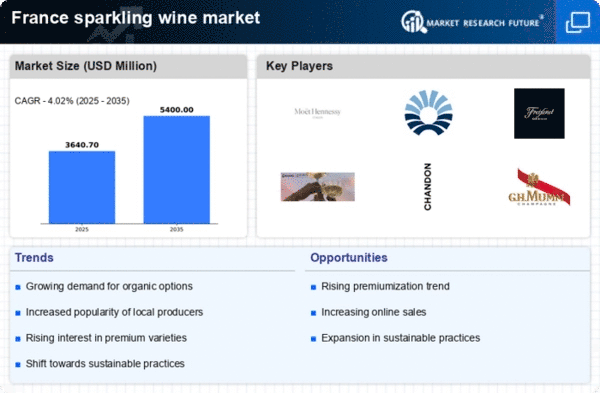
As per Market Research Future analysis, the France sparkling wine market Size was estimated at 3500.0 USD Million in 2024. The France sparkling wine market is projected to grow from 3640.7 USD Million in 2025 to 5400.0 USD Million by 2035, exhibiting a compound annual growth rate (CAGR) of 4.0% during the forecast period 2025 - 2035

Key Market Trends & Highlights

The France sparkling wine market is experiencing a dynamic shift towards premiumization and sustainability.

  • The market is witnessing a rise in premium offerings, reflecting a growing consumer preference for high-quality products.
  • Sustainability and organic production practices are becoming increasingly important to consumers, influencing purchasing decisions.
  • Innovative flavors and styles are emerging, catering to diverse consumer tastes and enhancing market appeal.
  • Key drivers such as growing consumer interest in sparkling wine and the impact of tourism are significantly shaping market dynamics.

Market Size & Forecast

2024 Market Size 3500.0 (USD Million)
2035 Market Size 5400.0 (USD Million)
CAGR (2025 - 2035) 4.02%

Major Players

Moet Hennessy (FR), Pernod Ricard (FR), Freixenet (ES), Cava Codorníu (ES), Chandon (FR), G.H. Mumm (FR), Veuve Clicquot (FR), Taittinger (FR), Nicolas Feuillatte (FR)

Our Impact
Enabled $4.3B Revenue Impact for Fortune 500 and Leading Multinationals
Partnering with 2000+ Global Organizations Each Year
30K+ Citations by Top-Tier Firms in the Industry

France Sparkling Wine Market Trends

The sparkling wine market in France exhibits a dynamic landscape characterized by evolving consumer preferences and innovative production techniques. The country, renowned for its rich viticultural heritage, continues to attract both domestic and international consumers. Notably, the demand for premium and organic sparkling wines appears to be on the rise, reflecting a broader trend towards sustainability and quality. This shift may be driven by an increasing awareness of health and environmental issues among consumers, who are seeking products that align with their values. Furthermore, the market seems to be benefiting from a growing interest in wine tourism, where visitors engage with local producers and experience the unique terroir of various regions. In addition, the sparkling wine market is likely influenced by changing social dynamics, with younger generations showing a preference for diverse and innovative offerings. This demographic shift may lead to the emergence of new brands and styles, catering to the tastes of millennials and Generation Z. As a result, traditional producers may need to adapt their strategies to remain competitive. Overall, the sparkling wine market in France is poised for continued growth, driven by a combination of quality, sustainability, and evolving consumer preferences.

Rise of Premium Offerings

There is a noticeable trend towards premium sparkling wines, as consumers increasingly seek high-quality products. This shift may be attributed to a growing appreciation for craftsmanship and unique flavor profiles, prompting producers to focus on quality over quantity.

Sustainability and Organic Production

Sustainability is becoming a key consideration in the sparkling wine market. Many producers are adopting organic practices, which resonate with environmentally conscious consumers. This trend suggests a potential shift in production methods and marketing strategies.

Innovative Flavors and Styles

The market is witnessing a surge in innovative flavors and styles, appealing to younger consumers. This trend indicates a departure from traditional offerings, as brands experiment with unique blends and creative marketing approaches to attract a diverse audience.

France Sparkling Wine Market Drivers

Rise of Online Retail Channels

The sparkling wine market in France is witnessing a transformation due to the rise of online retail channels, which provide consumers with greater access to a diverse range of products. E-commerce platforms have become increasingly popular, with sales through online channels growing by approximately 25% in the past year. This trend indicates a shift in consumer behavior, as more individuals prefer the convenience of purchasing sparkling wine online. The sparkling wine market is adapting to this change by enhancing its digital presence and investing in online marketing strategies. As a result, producers and retailers may find new opportunities for growth and customer engagement in the expanding online marketplace.

Evolving Social Drinking Culture

The sparkling wine market in France is influenced by the evolving social drinking culture, where sparkling wine is increasingly viewed as a versatile beverage suitable for various occasions. This shift is reflected in the rising popularity of sparkling wine at social gatherings, celebrations, and casual dining experiences. Recent surveys indicate that nearly 60% of consumers now consider sparkling wine an essential part of their social interactions. The sparkling wine market is responding to this trend by diversifying its product range, offering options that cater to different tastes and preferences. This adaptability may enhance market penetration and attract a broader consumer base, ultimately driving sales growth.

Influence of Food Pairing Trends

Food pairing trends significantly impact the sparkling wine market in France, as consumers become more discerning about the beverages they choose to complement their meals. The increasing popularity of gourmet dining experiences has led to a greater emphasis on pairing sparkling wine with various cuisines. Data suggests that approximately 30% of consumers actively seek recommendations for food pairings when selecting sparkling wine. The sparkling wine market is likely to capitalize on this trend by collaborating with chefs and culinary experts to promote specific pairings, thereby enhancing the overall dining experience. This strategic approach may not only boost sales but also elevate the status of sparkling wine as a sophisticated choice for food enthusiasts.

Impact of Tourism on Sparkling Wine Sales

Tourism plays a crucial role in the sparkling wine market in France, particularly in regions renowned for their wine production, such as Champagne. The influx of international tourists contributes significantly to local economies and boosts sales of sparkling wine. In 2023, it was reported that approximately 10 million tourists visited Champagne, leading to a 20% increase in sparkling wine sales in the region. This trend suggests that the sparkling wine market is likely to benefit from continued investment in tourism infrastructure and promotional activities that highlight the unique qualities of French sparkling wines. As tourism continues to thrive, the market may see further growth opportunities, particularly in the premium segment.

Growing Consumer Interest in Sparkling Wine

The sparkling wine market in France experiences a notable increase in consumer interest, driven by a shift in preferences towards premium and high-quality products. Recent data indicates that the consumption of sparkling wine has risen by approximately 15% over the past five years, reflecting a growing appreciation for this category. This trend is particularly evident among younger consumers, who are increasingly seeking unique and sophisticated drinking experiences. The sparkling wine market is thus adapting to these changing preferences by introducing innovative marketing strategies and product offerings that cater to this demographic. As a result, producers are likely to invest more in branding and quality assurance to meet the evolving demands of the market.


Market Segment Insights

By Type: Champagne (Largest) vs. Prosecco (Fastest-Growing)

In the France sparkling wine market, Champagne continues to hold the largest market share among various types of sparkling wines, signaling its established presence and premium status. Prosecco, on the other hand, has seen notable market penetration, successfully appealing to a broader consumer base with its more affordable price point and versatile taste. The popularity of Cava and sparkling rosé is relatively lesser, but they contribute to the diversification of the market. Growth trends indicate that while Champagne remains a symbol of luxury and celebration, the rise of Prosecco is markedly driven by changing consumer preferences towards lighter, fruitier options at accessible price points. The increasing trend of casual gatherings and informal celebrations is further bolstering Prosecco's market presence. Other types like Cava and sparkling rosé are also experiencing gradual growth, particularly among younger demographics seeking new flavors and experiences.

Champagne: Dominant vs. Prosecco: Emerging

Champagne stands as the dominant force in the sparkling wine sector, synonymous with luxury and quality. It is often the go-to choice for celebrations and special occasions, reinforcing its premium image. With its traditional production methods, Champagne appeals to connoisseurs and collectors. Conversely, Prosecco is emerging as a favorite among younger consumers and casual drinkers due to its lighter taste and affordability. Its quick transition from niche to mainstream highlights the shift in consumer behavior, where value and experience trump tradition. The vibrant branding and marketing strategies employed by Prosecco producers further amplify its appeal, positioning it as a trendy choice for various occasions.

By Production Method: Traditional Method (Largest) vs. Tank Method (Fastest-Growing)

The market share distribution within the production method segment reveals that the Traditional Method holds the largest share, maintaining its reputation for crafting high-quality sparkling wines richly steeped in heritage and artisanal skill. Following closely is the Tank Method, which has gained popularity for its efficiency and ability to produce fresh, fruity wines, appealing to a broader audience. Other methods such as the Caribbean Method, Carbonic Maceration, and Others collectively occupy a smaller market share, yet each contributes unique characteristics that cater to niche tastes and preferences. Growth trends indicate that the Tank Method is emerging as the fastest-growing production technique in the market, driven by an increasing demand for accessible and affordable sparkling wines. This rise is supported by innovative production technologies and changing consumer preferences that lean towards modern and versatile wine styles. Contrarily, the Traditional Method, while dominant, faces challenges from this rapid shift towards quicker production methods, necessitating adaptations to maintain its esteemed position in the highly competitive landscape.

Traditional Method (Dominant) vs. Tank Method (Emerging)

The Traditional Method, synonymous with quality and craftsmanship, dominates the production method segment in the France sparkling wine market, characterized by its prolonged fermentation process that enhances complexity and flavor depth. This method is often preferred for premium offerings and is known for producing iconic wines that appeal to connoisseurs. Conversely, the Tank Method is emerging as a robust contender, appealing to a younger demographic seeking approachable and crisp sparkling wines. Its faster production cycle allows for greater innovation and experimentation, making it an attractive option for producers looking to meet evolving consumer demands. As both methods cater to different segments of the market, they underscore the dynamic nature of consumer preferences in wine production.

By Flavor Profile: Brut (Largest) vs. Fruity (Fastest-Growing)

The flavor profile segmentation in the France sparkling wine market displays a diverse distribution, with Brut leading as the largest segment. It captures a significant portion of consumer preference due to its crisp, dry taste that pairs well with various cuisines. Extra Dry and Sweet follow as popular choices, catering to different palates, while Floral and Fruity flavors, though smaller in share, contribute to a dynamic market landscape. In recent years, the Fruity profile has emerged as the fastest-growing segment. This growth is driven by changing consumer tastes seeking sweeter and fruitier options, particularly among younger demographics. The trend towards innovative flavor combinations and premiumization has also encouraged producers to develop more enticing fruity blends, attracting a broader audience and enhancing market diversity.

Brut (Dominant) vs. Fruity (Emerging)

Brut has established itself as the dominant flavor profile in the France sparkling wine market, valued for its elegant dryness and versatility. Often enjoyed as an aperitif or paired with meals, its appeal lies in its ability to cater to both traditional and contemporary tastes. In contrast, Fruity is an emerging profile gaining traction among consumers looking for sweeter, more accessible wine options. Its vibrant flavors resonate well with younger wine drinkers and casual consumers, making it an attractive choice for social occasions. As producers innovate with different fruit varieties and blends, the Fruity segment is poised to challenge traditional dominance, offering exciting new experiences in the sparkling wine category.

By Packaging: Bottle (Largest) vs. Can (Fastest-Growing)

In the France sparkling wine market, the distribution of packaging types reveals that bottles dominate significantly, holding the largest market share. Cans, while smaller in overall share, are increasingly capturing attention among consumers seeking convenient options. Other segments, including Bag-in-Box and pouches, contribute to the packaging mix but with less prominence compared to these two key formats. Growth trends indicate a shift towards more innovative and convenient packaging solutions, particularly with cans being perceived as the fastest-growing segment. This shift is fueled by changing consumer preferences for portable and ready-to-drink formats, along with sustainability initiatives that influence packaging choices. As a result, the can segment is expected to witness robust expansion in the coming years.

Bottle (Dominant) vs. Can (Emerging)

Bottles remain the dominant packaging format in the France sparkling wine market, valued for their traditional appeal and ability to enhance the wine's aging process. Bottles are often associated with premium offerings, thus capturing the attention of consumers looking for quality experiences. In contrast, the can packaging format is emerging as a popular choice, particularly among younger consumers who appreciate its portability and convenience. Cans generally offer efficient packaging for casual settings and outdoor events, aligning with current lifestyle trends. Both packaging types are vital for the market, with bottles retaining a stronghold while cans are progressively redefining consumer engagement in sparkling wine consumption.

Get more detailed insights about France Sparkling Wine Market

Key Players and Competitive Insights

The sparkling wine market in France exhibits a dynamic competitive landscape characterized by a blend of traditional craftsmanship and modern innovation. Key growth drivers include a rising consumer preference for premium products, the increasing popularity of sparkling wines in social settings, and a growing trend towards sustainability. Major players such as Moet Hennessy (FR), Pernod Ricard (FR), and G.H. Mumm (FR) are strategically positioned to leverage these trends. Moet Hennessy (FR) focuses on brand prestige and luxury experiences, while Pernod Ricard (FR) emphasizes diversification and global reach. G.H. Mumm (FR) is enhancing its digital presence to engage younger consumers, collectively shaping a competitive environment that prioritizes brand loyalty and consumer engagement.In terms of business tactics, companies are increasingly localizing manufacturing to reduce costs and enhance supply chain efficiency. The market structure appears moderately fragmented, with several key players holding substantial market shares. This fragmentation allows for niche brands to thrive, while larger companies benefit from economies of scale. The collective influence of these key players fosters a competitive atmosphere where innovation and consumer preferences dictate market dynamics.

In October Moet Hennessy (FR) announced a partnership with a leading tech firm to develop an AI-driven platform aimed at enhancing customer experience through personalized recommendations. This strategic move underscores the importance of technology in modern marketing and consumer engagement, potentially setting a new standard for customer interaction in the sparkling wine sector.

In September Pernod Ricard (FR) launched a sustainability initiative aimed at reducing its carbon footprint by 30% by 2030. This initiative not only aligns with global sustainability trends but also positions the company as a leader in environmentally responsible practices, appealing to eco-conscious consumers. Such actions may enhance brand loyalty and attract a broader customer base.

In August G.H. Mumm (FR) unveiled a new marketing campaign targeting millennials, utilizing social media influencers to promote its products. This approach reflects a shift towards digital marketing strategies that resonate with younger demographics, potentially increasing market share in a competitive landscape that increasingly values social media presence.

As of November current competitive trends indicate a strong emphasis on digitalization, sustainability, and technological integration within the sparkling wine market. Strategic alliances are becoming more prevalent, allowing companies to pool resources and expertise to enhance product offerings. Looking ahead, competitive differentiation is likely to evolve from traditional price-based strategies to a focus on innovation, technology, and supply chain reliability, as companies strive to meet the changing demands of consumers.

Key Companies in the France Sparkling Wine Market include

Industry Developments

Recent developments in the France Sparkling Wine Market indicate a robust recovery following the pandemic, with consumption levels rebounding significantly. In September 2023, Nicolas Feuillatte announced an increase in production to meet the rising demand for Champagne, which is experiencing a resurgence in popularity, particularly among younger consumers. Additionally, Taittinger revealed plans to expand its vineyard holdings in the Champagne region to enhance its production capacity. There has also been a notable shift towards sustainable practices, with companies like Laurent-Perrier implementing organic farming methods.

In terms of mergers, no major acquisitions among the key companies like Veuve Clicquot, LVMH, or Bollinger have been reported recently. However, growth in market valuation for established brands such as Champagnes Louis Roederer and Piper Heidsieck has been driven by premiumization trends, leading to increased investments in marketing and distribution. Over the past two to three years, the market has seen innovations, with Chandon introducing new sparkling varietals to cater to evolving consumer tastes. Overall, the France Sparkling Wine Market is dynamic, with established brands adapting to market demands while exploring sustainability initiatives.

Future Outlook

France Sparkling Wine Market Future Outlook

The Sparkling Wine Market in France is projected to grow at 4.02% CAGR from 2025 to 2035, driven by premiumization, innovative marketing, and evolving consumer preferences.

New opportunities lie in:

  • Expansion of e-commerce platforms for direct-to-consumer sales.
  • Development of organic and biodynamic sparkling wine lines.
  • Collaboration with luxury brands for exclusive product launches.

By 2035, the market is expected to exhibit robust growth and increased consumer engagement.

Market Segmentation

France Sparkling Wine Market Type Outlook

  • Champagne
  • Prosecco
  • Cava
  • Sparkling Rosé
  • Other

France Sparkling Wine Market Packaging Outlook

  • Bottle
  • Can
  • Bag-in-Box
  • Pouch
  • Other

France Sparkling Wine Market Flavor Profile Outlook

  • Brut
  • Extra Dry
  • Sweet
  • Floral
  • Fruity

France Sparkling Wine Market Production Method Outlook

  • Traditional Method
  • Tank Method
  • Caribbean Method
  • Carbonic Maceration
  • Other

Report Scope

MARKET SIZE 2024 3500.0(USD Million)
MARKET SIZE 2025 3640.7(USD Million)
MARKET SIZE 2035 5400.0(USD Million)
COMPOUND ANNUAL GROWTH RATE (CAGR) 4.02% (2025 - 2035)
REPORT COVERAGE Revenue Forecast, Competitive Landscape, Growth Factors, and Trends
BASE YEAR 2024
Market Forecast Period 2025 - 2035
Historical Data 2019 - 2024
Market Forecast Units USD Million
Key Companies Profiled Moet Hennessy (FR), Pernod Ricard (FR), Freixenet (ES), Cava Codorníu (ES), Chandon (FR), G.H. Mumm (FR), Veuve Clicquot (FR), Taittinger (FR), Nicolas Feuillatte (FR)
Segments Covered Type, Production Method, Flavor Profile, Packaging
Key Market Opportunities Growing consumer preference for premium sparkling wines presents opportunities for innovative product development.
Key Market Dynamics Shifting consumer preferences towards premium sparkling wines drive innovation and competition in the market.
Countries Covered France
Leave a Comment

FAQs

What is the expected market size of the France Sparkling Wine Market in 2024?

The France Sparkling Wine Market is expected to be valued at 3.6 USD Billion in 2024.

What is the projected market size for the France Sparkling Wine Market by 2035?

By 2035, the market is expected to reach a valuation of 9.0 USD Billion.

What is the CAGR for the France Sparkling Wine Market from 2025 to 2035?

The expected CAGR for the France Sparkling Wine Market from 2025 to 2035 is 8.687%.

Which type of sparkling wine is projected to dominate the market in 2035?

Champagne is projected to dominate the market with a value of 5.3 USD Billion in 2035.

What will be the market value of Cava in 2035?

The market value of Cava is expected to be 2.5 USD Billion by 2035.

Who are the major players in the France Sparkling Wine Market?

Major players include Nicolas Feuillatte, Taittinger, Veuve Clicquot, and Moet Hennessy.

What is the anticipated market size for 'Others' in the sparkling wine segment by 2035?

The 'Others' segment is projected to reach a market size of 1.2 USD Billion by 2035.

What factors are driving the growth of the France Sparkling Wine Market?

Key growth drivers include rising consumer preferences for premium sparkling wines and increasing market availability.

What are the key trends currently shaping the France Sparkling Wine Market?

Emerging trends include a growing interest in organic and biodynamic wines along with innovative sparkling wine offerings.

How is the competitive landscape evolving in the France Sparkling Wine Market?

The competitive landscape is evolving with both established brands and new entrants focusing on quality and brand differentiation.

Download Free Sample

Kindly complete the form below to receive a free sample of this Report

Compare Licence

×
Features License Type
Single User Multiuser License Enterprise User
Price $4,950 $5,950 $7,250
Maximum User Access Limit 1 User Upto 10 Users Unrestricted Access Throughout the Organization
Free Customization
Direct Access to Analyst
Deliverable Format
Platform Access
Discount on Next Purchase 10% 15% 15%
Printable Versions