×
Request Free Sample ×

Kindly complete the form below to receive a free sample of this Report

* Please use a valid business email

Leading companies partner with us for data-driven Insights

clients tt-cursor
Hero Background

Vegetable Fats Market

ID: MRFR/FnB/39370-HCR
128 Pages
Varsha More
February 2026

Vegetable Fats Market Size, Share, Industry Trend & Analysis Research Report By Type (Palm Oil, Soybean Oil, Sunflower Oil, Canola Oil, Olive Oil), By Application (Food Processing, Bakery and Confectionery, Cosmetics and Personal Care, Animal Feed, Biodiesel), By Source (Plant-Based, Animal-Based), By Refining Process (Physical Refining, Chemical Refining, Interesterification) and By Regional (North America, Europe, South America, Asia Pacific, Middle East and Africa) - Forecast to 2035

Share:
Download PDF ×

We do not share your information with anyone. However, we may send you emails based on your report interest from time to time. You may contact us at any time to opt-out.

Vegetable Fats Market Infographic
Purchase Options

Vegetable Fats Market Summary

As per Market Research Future analysis, the Vegetable Fats Market Size was estimated at 151.51 USD Billion in 2024. The Vegetable Fats industry is projected to grow from 157.61 USD Billion in 2025 to 233.79 USD Billion by 2035, exhibiting a compound annual growth rate (CAGR) of 4.0% during the forecast period 2025 - 2035

Key Market Trends & Highlights

The Vegetable Fats Market is experiencing a dynamic shift towards plant-based and sustainable solutions.

  • The rise of plant-based diets is significantly influencing consumer preferences in North America, the largest market for vegetable fats.
  • Sustainability and ethical sourcing practices are becoming increasingly important in the Asia-Pacific region, which is the fastest-growing market.
  • Innovation in product development is driving growth in the sunflower oil segment, which is currently the fastest-growing within the market.
  • Health consciousness and the rising demand for vegan products are key drivers propelling the expansion of the food processing segment.

Market Size & Forecast

2024 Market Size 151.51 (USD Billion)
2035 Market Size 233.79 (USD Billion)
CAGR (2025 - 2035) 4.02%

Major Players

Cargill (US), Bunge (US), Archer Daniels Midland (US), Wilmar International (SG), Olam International (SG), IOI Corporation (MY), Musim Mas (ID), Sime Darby (MY), Kuala Lumpur Kepong Berhad (MY)

Our Impact
Enabled $4.3B Revenue Impact for Fortune 500 and Leading Multinationals
Partnering with 2000+ Global Organizations Each Year
30K+ Citations by Top-Tier Firms in the Industry

Vegetable Fats Market Trends

The Vegetable Fats Market is currently experiencing a dynamic evolution, driven by shifting consumer preferences and increasing awareness regarding health and sustainability. As individuals become more conscious of their dietary choices, there is a noticeable shift towards plant-based alternatives. This trend is not merely a fleeting phase; it appears to be a fundamental change in how consumers perceive fats in their diets. The demand for vegetable fats is likely to rise as they are often viewed as healthier options compared to traditional animal fats. Furthermore, the market is witnessing innovations in product formulations, with manufacturers exploring new sources of vegetable fats to cater to diverse culinary needs. In addition to health considerations, environmental factors play a crucial role in shaping the Vegetable Fats Market. Consumers are increasingly seeking products that align with their values, particularly those that promote sustainability and ethical sourcing. This has led to a surge in the popularity of organic and non-GMO vegetable fats. Companies are responding by enhancing transparency in their supply chains and adopting eco-friendly practices. As the market continues to evolve, it is essential for stakeholders to remain agile and responsive to these trends, ensuring that they meet the changing demands of consumers while also addressing broader environmental concerns.

Rise of Plant-Based Diets

The growing inclination towards plant-based diets is significantly influencing the Vegetable Fats Market. Consumers are increasingly opting for fats derived from plants, perceiving them as healthier and more sustainable alternatives to animal-based fats.

Sustainability and Ethical Sourcing

Sustainability has emerged as a pivotal factor in consumer decision-making. The demand for vegetable fats that are sourced ethically and produced sustainably is on the rise, prompting companies to adopt more transparent practices.

Innovation in Product Development

Innovation is at the forefront of the Vegetable Fats Market, with manufacturers exploring new sources and formulations. This trend aims to meet diverse culinary needs while enhancing the nutritional profile of vegetable fats.

Vegetable Fats Market Drivers

Health Consciousness

The increasing awareness of health and wellness among consumers appears to be a pivotal driver for the Vegetable Fats Market. As individuals become more informed about the benefits of plant-based fats, there is a noticeable shift away from saturated fats found in animal products. This trend is reflected in market data, which indicates that the demand for vegetable oils, such as olive and canola, has surged by approximately 15% over the past few years. Consumers are actively seeking healthier alternatives, which has led to a proliferation of products featuring vegetable fats. Consequently, manufacturers are adapting their offerings to align with this health-centric mindset, thereby enhancing their market presence in the Vegetable Fats Market.

Sustainability Initiatives

Sustainability has emerged as a crucial factor influencing consumer choices, thereby impacting the Vegetable Fats Market. As environmental concerns grow, consumers are increasingly favoring products that are sustainably sourced. This shift is evident in the rising popularity of certified organic vegetable oils, which have seen a market growth of approximately 20% in recent years. Companies are now prioritizing sustainable practices in their supply chains, from sourcing raw materials to production processes. This commitment to sustainability not only appeals to eco-conscious consumers but also enhances brand loyalty. As a result, the Vegetable Fats Market is likely to witness a continued emphasis on sustainable sourcing and production methods, aligning with broader environmental goals.

Technological Advancements

Technological innovations in extraction and processing methods are playing a transformative role in the Vegetable Fats Market. Advances in technology have led to more efficient extraction processes, resulting in higher yields and improved quality of vegetable oils. For instance, cold-press extraction techniques are gaining traction, as they preserve the nutritional integrity of the oils. Market data indicates that the adoption of such technologies has contributed to a 10% increase in the overall quality of vegetable fats available in the market. Furthermore, these advancements enable manufacturers to create specialized products tailored to specific consumer needs, such as high-oleic oils for frying. Consequently, technological advancements are likely to continue driving growth and innovation within the Vegetable Fats Market.

Regulatory Support and Standards

Regulatory frameworks and standards are increasingly shaping the Vegetable Fats Market. Governments are implementing policies that promote the use of healthier fats in food products, which is encouraging manufacturers to reformulate their offerings. For example, regulations aimed at reducing trans fats in food have led to a shift towards vegetable fats as a healthier alternative. This regulatory support is reflected in market trends, where the consumption of vegetable oils has risen by approximately 12% in response to these changes. Additionally, compliance with food safety standards is becoming paramount, prompting companies to invest in quality assurance measures. As such, regulatory support is likely to play a crucial role in the ongoing evolution of the Vegetable Fats Market.

Rising Demand for Vegan Products

The surge in veganism and vegetarianism is significantly influencing the Vegetable Fats Market. As more consumers adopt plant-based diets, the demand for vegan-friendly products has escalated. Market analysis suggests that the plant-based food sector is projected to grow at a compound annual growth rate of around 10% over the next five years. This growth is largely driven by the increasing availability of vegetable fats in various food products, including dairy alternatives and meat substitutes. Manufacturers are responding to this trend by innovating and expanding their product lines to include vegetable fats, which are essential for creating appealing textures and flavors in vegan offerings. Thus, the rising demand for vegan products is likely to continue shaping the Vegetable Fats Market.


Market Segment Insights

By Type: Palm Oil (Largest) vs. Sunflower Oil (Fastest-Growing)

In the Vegetable Fats Market, palm oil holds a significant share due to its diverse applications ranging from food production to cosmetics. It is distinguished by its versatility and cost-effectiveness, which contribute to its widespread use. On the other hand, sunflower oil is gaining traction, particularly in health-oriented segments, known for its light flavor and higher health benefits compared to other oils. This increasing health consciousness among consumers boosts sunflower oil's appeal and market share.

Palm Oil (Dominant) vs. Soybean Oil (Emerging)

Palm oil remains the dominant player in the Vegetable Fats Market, recognized for its high yield and economic viability across numerous industries. Its strong market position is driven by its use in processed foods, frying fats, and margarine. In contrast, soybean oil is emerging as a competitive alternative, favored for its lower saturated fat content and growing incorporation into healthier diets. As more consumers gravitate toward plant-based alternatives, soybean oil's presence in the market is expected to grow, underscoring its potential to capture a larger share in the coming years.

By Application: Food Processing (Largest) vs. Biodiesel (Fastest-Growing)

The vegetable fats market showcases significant differentiation across various application segments. The Food Processing segment holds the largest market share, driven by its extensive use in oils, margarine, and sauces. This application is crucial for food manufacturers aiming for quality and stability in their products. Following closely, Bakery and confectionery also plays a vital role, leveraging vegetable fats for their functional and sensory properties, which enhance the taste and texture of baked goods. Cosmetics and Personal Care, Animal Feed, and Biodiesel collectively contribute to a diverse market landscape with varying shares.

Biodiesel: Fastest-Growing vs. Animal Feed: Dominant

The Biodiesel segment has emerged as the fastest-growing area in the vegetable fats market, reflecting the global shift towards sustainable energy sources. As the demand for renewable energy increases, vegetable fats, particularly palm and soybean oils, are being repurposed into biodiesel, aligning with government mandates on biofuel usage. On the other hand, the Animal Feed segment remains dominant due to its extensive application, providing essential fatty acids that support animal health and growth. This segment ensures a steady demand for vegetable fats, driven by the growing livestock industry and the need for high-quality feed solutions.

By Source: Plant-Based (Largest) vs. Animal-Based (Fastest-Growing)

In the Vegetable Fats Market, the Plant-Based segment holds the largest share, driven by a growing consumer preference for plant-derived products and increasing awareness of health benefits associated with a plant-based diet. This segment is characterized by its diverse applications in food products, cosmetics, and pharmaceuticals, which enhances its market dominance. On the other hand, the Animal-Based segment has been gaining traction, appealing to consumers who seek traditional flavors and culinary experiences that are distinct to animal-derived fats.

Plant-Based (Dominant) vs. Animal-Based (Emerging)

The Plant-Based segment in the Vegetable Fats Market is recognized as the dominant force, appealing to environmentally conscious consumers and health enthusiasts. These fats include oils derived from sources such as avocado, coconut, and olive, renowned for their nutritional benefits and versatile applications in cooking and food production. Conversely, the Animal-Based segment represents an emerging trend, often utilized in gourmet food formulations and traditional recipes. Products from this segment, such as lard and butter, are experiencing a revival as consumers seek rich flavors and authentic culinary experiences, highlighting a niche market that coexists alongside the growing preference for plant-based alternatives.

By Refining Process: Physical Refining (Largest) vs. Chemical Refining (Fastest-Growing)

In the Vegetable Fats Market, Physical Refining stands out as the largest segment, capturing a significant portion of the market share. This method is preferred for its ability to retain the natural flavor and nutritional properties of the fats, appealing to health-conscious consumers. Chemical Refining, while smaller in share, has gained traction due to its efficiency and cost-effectiveness, making it an attractive option for large-scale production. The growth trends within the refining process segment are driven by increasing consumer demand for healthier and more natural products, which favor Physical Refining. However, Chemical Refining is experiencing rapid growth, particularly in the food manufacturing sector, owing to advancements in refining technologies that allow for higher efficiency. Additionally, interesterification is slowly gaining attention as manufacturers seek innovative ways to enhance fat properties, further diversifying the refining landscape.

Physical Refining (Dominant) vs. Chemical Refining (Emerging)

Physical Refining is the dominant method in the Vegetable Fats Market, praised for preserving the quality of fats while minimizing chemical residues. This method relies on physical processes such as high-temperature steam distillation, making it a preferred choice for consumers seeking natural products. In contrast, Chemical Refining is an emerging technique, gaining popularity for its rapid processing times and ability to produce fats with specific properties. While it offers benefits such as reduced impurities, concerns regarding chemical residues can affect its acceptance among health-oriented consumers. Both methods play essential roles in the market, with Physical Refining maintaining a strong hold due to its consumer-friendly advantages.

Get more detailed insights about Vegetable Fats Market

Regional Insights

North America : Market Leader in Innovation

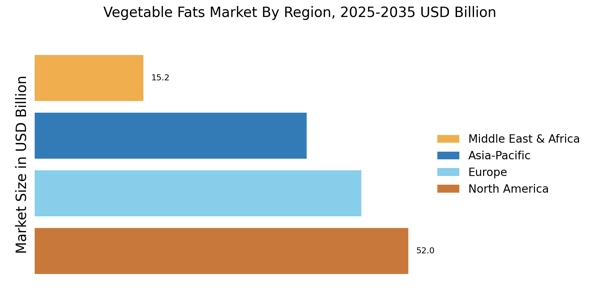
North America is the largest market for vegetable fats, holding approximately 35% of the global share. The region's growth is driven by increasing health consciousness among consumers, leading to a shift towards plant-based fats. Regulatory support for sustainable practices and innovations in food technology further catalyze this trend. The demand for organic and non-GMO products is also on the rise, contributing to market expansion. The United States is the dominant player in this region, with significant contributions from Canada. Key players like Cargill, Bunge, and Archer Daniels Midland are at the forefront, leveraging advanced technologies to enhance production efficiency. The competitive landscape is characterized by a focus on sustainability and health benefits, with companies investing in research and development to meet evolving consumer preferences.

Europe : Regulatory Framework Driving Growth

Europe is the second-largest market for vegetable fats, accounting for around 30% of the global market share. The region's growth is propelled by stringent regulations promoting sustainable sourcing and health-oriented products. The European Union's policies on food safety and environmental sustainability are significant drivers, encouraging the adoption of plant-based fats in various food applications. Leading countries in this market include Germany, France, and the Netherlands, where consumer demand for healthier alternatives is rising. The competitive landscape features major players like Wilmar International and Olam International, who are adapting to regulatory changes and consumer preferences. The focus on innovation and sustainability is evident, with companies investing in eco-friendly production methods to enhance their market position.

Asia-Pacific : Rapid Growth and Demand Surge

Asia-Pacific is witnessing rapid growth in the vegetable fats market, holding approximately 25% of the global share. The region's demand is driven by increasing urbanization, rising disposable incomes, and a growing preference for plant-based diets. Countries like China and India are leading this trend, supported by favorable government policies promoting health and nutrition. China and India are the largest markets in this region, with significant contributions from Indonesia and Malaysia. The competitive landscape is marked by the presence of key players such as IOI Corporation and Musim Mas, who are expanding their operations to meet the surging demand. The focus on innovation and product diversification is crucial as companies strive to capture a larger market share in this dynamic environment.

Middle East and Africa : Emerging Market with Potential

The Middle East and Africa region is emerging as a potential market for vegetable fats, holding about 10% of the global share. The growth is driven by increasing health awareness and a shift towards healthier cooking oils. The region's diverse culinary practices are also contributing to the rising demand for various vegetable fats, supported by government initiatives promoting local production. Leading countries include South Africa and Egypt, where the market is gradually expanding. The competitive landscape features local players alongside international companies like Sime Darby and Kuala Lumpur Kepong Berhad. The focus on enhancing local production capabilities and meeting consumer preferences for healthier options is shaping the market dynamics in this region.

Vegetable Fats Market Regional Image

Key Players and Competitive Insights

The Vegetable Fats Market is currently characterized by a dynamic competitive landscape, driven by increasing consumer demand for plant-based products and a growing awareness of health and sustainability. Major players such as Cargill (US), Bunge (US), and Wilmar International (SG) are strategically positioning themselves through innovation and regional expansion. Cargill (US) has been focusing on enhancing its product portfolio with healthier options, while Bunge (US) emphasizes sustainability in its sourcing practices. Wilmar International (SG) is leveraging its extensive distribution network to penetrate emerging markets, thereby shaping a competitive environment that is increasingly focused on sustainability and health-conscious offerings.The market structure appears moderately fragmented, with a mix of large multinational corporations and regional players. Key business tactics include localizing manufacturing to reduce costs and optimize supply chains. This approach not only enhances operational efficiency but also allows companies to respond swiftly to regional market demands. The collective influence of these key players fosters a competitive atmosphere where innovation and sustainability are paramount, potentially leading to a more consolidated market in the future.

In August Cargill (US) announced a partnership with a leading plant-based food company to develop new vegetable fat products aimed at the health-conscious consumer segment. This strategic move underscores Cargill's commitment to innovation and aligns with the growing trend towards plant-based diets. By collaborating with a specialized partner, Cargill (US) is likely to enhance its market position and cater to evolving consumer preferences.

In September Bunge (US) launched a new line of sustainable vegetable oils, sourced from certified sustainable farms. This initiative not only reflects Bunge's dedication to environmental stewardship but also positions the company favorably in a market increasingly driven by sustainability concerns. The introduction of these products may enhance Bunge's competitive edge, appealing to consumers who prioritize eco-friendly options.

In July Wilmar International (SG) expanded its operations in Africa by establishing a new processing facility in Nigeria. This expansion is significant as it allows Wilmar to tap into the growing demand for vegetable fats in the region, while also optimizing its supply chain. The strategic establishment of local processing capabilities may enhance Wilmar's responsiveness to market needs and strengthen its foothold in the African market.

As of October the Vegetable Fats Market is witnessing trends such as digitalization, sustainability, and the integration of artificial intelligence in production processes. Strategic alliances are increasingly shaping the competitive landscape, enabling companies to leverage shared resources and expertise. Looking ahead, competitive differentiation is likely to evolve from traditional price-based competition to a focus on innovation, technology, and supply chain reliability, as companies strive to meet the demands of a more discerning consumer base.

Key Companies in the Vegetable Fats Market include

Industry Developments

The vegetable fats market is projected to reach USD 199.7 billion by 2032, exhibiting a CAGR of 4.02% during the forecast period (2024-2032). The increasing demand for vegetable fats in food beverages, cosmetics, and personal care products is driving market growth. Rising health consciousness among consumers is also contributing to the market's expansion, as vegetable fats are perceived as healthier alternatives to animal fats.Recent news developments include the launch of new vegetable fat products by major players such as Cargill and Archer Daniels Midland. 

These companies are investing in research and development to create innovative products that meet the evolving needs of consumers. Additionally, the growing popularity of plant-based diets is expected to further boost the demand for vegetable fats in the coming years.

Future Outlook

Vegetable Fats Market Future Outlook

The Vegetable Fats Market is projected to grow at a 4.02% CAGR from 2025 to 2035, driven by rising health consciousness, demand for plant-based products, and sustainable sourcing practices.

New opportunities lie in:

  • Expansion into emerging markets with tailored product lines
  • Investment in innovative processing technologies for enhanced quality
  • Development of premium organic vegetable fat products for health-focused consumers

By 2035, the Vegetable Fats Market is expected to achieve robust growth and diversification.

Market Segmentation

Vegetable Fats Market Type Outlook

  • Palm Oil
  • Soybean Oil
  • Sunflower Oil
  • Canola Oil
  • Olive Oil

Vegetable Fats Market Source Outlook

  • Plant-Based
  • Animal-Based

Vegetable Fats Market Application Outlook

  • Food Processing
  • Bakery and Confectionery
  • Cosmetics and Personal Care
  • Animal Feed
  • Biodiesel

Vegetable Fats Market Refining Process Outlook

  • Physical Refining
  • Chemical Refining
  • Interesterification

Report Scope

MARKET SIZE 2024151.51(USD Billion)
MARKET SIZE 2025157.61(USD Billion)
MARKET SIZE 2035233.79(USD Billion)
COMPOUND ANNUAL GROWTH RATE (CAGR)4.02% (2025 - 2035)
REPORT COVERAGERevenue Forecast, Competitive Landscape, Growth Factors, and Trends
BASE YEAR2024
Market Forecast Period2025 - 2035
Historical Data2019 - 2024
Market Forecast UnitsUSD Billion
Key Companies ProfiledCargill (US), Bunge (US), Archer Daniels Midland (US), Wilmar International (SG), Olam International (SG), IOI Corporation (MY), Musim Mas (ID), Sime Darby (MY), Kuala Lumpur Kepong Berhad (MY)
Segments CoveredType, Application, Source, Refining Process, Regional
Key Market OpportunitiesGrowing demand for plant-based alternatives drives innovation in the Vegetable Fats Market.

Key Market DynamicsRising consumer preference for plant-based diets drives demand for vegetable fats, influencing market dynamics and competitive strategies.
Countries CoveredNorth America, Europe, APAC, South America, MEA
Leave a Comment

FAQs

What is the current valuation of the Vegetable Fats Market as of 2024?

The Vegetable Fats Market was valued at 151.51 USD Billion in 2024.

Download Free Sample

Kindly complete the form below to receive a free sample of this Report

Compare Licence

×
Features License Type
Single User Multiuser License Enterprise User
Price $4,950 $5,950 $7,250
Maximum User Access Limit 1 User Upto 10 Users Unrestricted Access Throughout the Organization
Free Customization
Direct Access to Analyst
Deliverable Format
Platform Access
Discount on Next Purchase 10% 15% 15%
Printable Versions