×
Request Free Sample ×

Kindly complete the form below to receive a free sample of this Report

* Please use a valid business email

Leading companies partner with us for data-driven Insights

clients tt-cursor
Hero Background

US Event Tourism Market

ID: MRFR/CG/19723-HCR
128 Pages
Garvit Vyas
February 2026

US Event Tourism Market Size, Share, Industry Trend & Analysis Research Report: By Type (Exhibitions and Conferences, Festivals, Corporate Events, Music Concert, Sports, Others), By Channel (Virtual Channel, Physical Channel), By Revenue Source (On-line registration, Off-line registration, Sponsorship, Others) andBy Age Group (Below 18 Years, 18-50 Years, Above 50 Years)- Forecast to 2035

Share:
Download PDF ×

We do not share your information with anyone. However, we may send you emails based on your report interest from time to time. You may contact us at any time to opt-out.

US Event Tourism Market Infographic
Purchase Options

US Event Tourism Market Summary

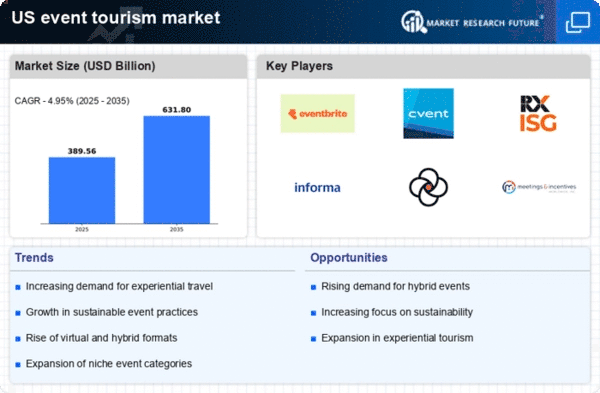
As per Market Research Future analysis, the US event tourism market size was estimated at 371.19 USD Billion in 2024. The US event tourism market is projected to grow from 389.56 USD Billion in 2025 to 631.8 USD Billion by 2035, exhibiting a compound annual growth rate (CAGR) of 4.9% during the forecast period 2025 - 2035

Key Market Trends & Highlights

The US The US event tourism market is experiencing a transformative shift. This shift is towards more immersive and sustainable experiences.

  • The rise of experiential events is reshaping consumer expectations and preferences in the US event tourism market.
  • Sustainability is becoming a central theme, with many events prioritizing eco-friendly practices and materials.
  • Technological integration is enhancing attendee engagement and streamlining event management processes.
  • The growing demand for unique experiences and increased investment in infrastructure are key drivers propelling market growth.

Market Size & Forecast

2024 Market Size 371.19 (USD Billion)
2035 Market Size 631.8 (USD Billion)
CAGR (2025 - 2035) 4.95%

Major Players

Eventbrite (US), Cvent (US), Reed Exhibitions (GB), Informa (GB), MCI Group (CH), Meetings & Incentives Worldwide (GB), GL Events (FR), Tarsus Group (GB), Clarion Events (GB)

Our Impact
Enabled $4.3B Revenue Impact for Fortune 500 and Leading Multinationals
Partnering with 2000+ Global Organizations Each Year
30K+ Citations by Top-Tier Firms in the Industry

US Event Tourism Market Trends

The event tourism market in the United States is experiencing a dynamic evolution, driven by a confluence of factors that shape consumer preferences and industry practices. As individuals increasingly seek unique experiences, the demand for diverse events, ranging from cultural festivals to sporting competitions, appears to be on the rise. This shift suggests a growing inclination towards immersive experiences that foster community engagement and personal connection. Furthermore, advancements in technology are likely enhancing the way events are marketed and experienced, with digital platforms playing a pivotal role in reaching wider audiences. In addition, sustainability has emerged as a crucial consideration within the event tourism market. Stakeholders are increasingly recognizing the importance of eco-friendly practices, which may influence event planning and execution. This trend indicates a potential shift towards greener initiatives, as organizers strive to minimize environmental impact while maximizing attendee satisfaction. Overall, The market is poised for continued growth, reflecting changing consumer behaviors and a commitment to innovation and sustainability.

Rise of Experiential Events

There is a noticeable trend towards experiential events that prioritize engagement and interaction. Attendees are increasingly drawn to activities that offer hands-on experiences, allowing them to connect more deeply with the event's theme and purpose.

Emphasis on Sustainability

Sustainability is becoming a focal point for many organizers within the event tourism market. This trend reflects a growing awareness of environmental issues, prompting event planners to adopt eco-friendly practices and promote responsible tourism.

Technological Integration

The integration of technology into events is transforming the landscape. From virtual reality experiences to mobile applications for event navigation, technology is enhancing attendee engagement and streamlining event management.

US Event Tourism Market Drivers

Emergence of Hybrid Events

The emergence of hybrid events is reshaping the landscape of the event tourism market. These events combine in-person and virtual experiences, allowing for greater flexibility and accessibility. This model caters to a broader audience, as it enables participation from those unable to travel. Data shows that hybrid events can increase overall attendance by up to 40%, as they attract both local and remote participants. This trend is likely to continue evolving, as technology advances and consumer preferences shift towards more inclusive event formats. The integration of hybrid models may enhance the resilience and adaptability of the event tourism market.

Rise of Social Media Influence

Social media has emerged as a powerful driver in the event tourism market, shaping how events are marketed and experienced. Platforms such as Instagram and Facebook allow event organizers to reach wider audiences and engage potential attendees through visually appealing content. Data suggests that events promoted via social media can see attendance increases of up to 30%. Additionally, user-generated content from attendees can enhance the visibility and attractiveness of events, creating a cycle of promotion that benefits the event tourism market. This influence encourages organizers to invest in social media strategies, further integrating digital marketing into their overall event planning.

Focus on Health and Safety Standards

In the event tourism market, a heightened focus on health and safety standards has become increasingly important. Organizers are implementing rigorous protocols to ensure the safety of attendees, which in turn builds consumer confidence. This trend is particularly relevant for large gatherings, where concerns about health can deter attendance. Recent surveys indicate that 75% of potential attendees consider health and safety measures when deciding to participate in events. As a result, event organizers are likely to prioritize these standards, which may enhance the reputation of the event tourism market and encourage more visitors to attend.

Growing Demand for Unique Experiences

There is a notable increase in demand for unique and immersive experiences in the event tourism market. Travelers are increasingly seeking events that offer more than just entertainment; they desire memorable interactions that resonate on a personal level. This trend is reflected in the rise of niche festivals and themed events, which cater to specific interests such as food, music, and culture. According to recent data, approximately 60% of event tourists prioritize unique experiences over traditional attractions. This shift in consumer preference is driving event organizers to innovate and diversify their offerings, thereby enhancing the overall appeal of the event tourism market.

Increased Investment in Infrastructure

Investment in infrastructure plays a crucial role in the growth of the event tourism market. Cities across the US are recognizing the economic potential of hosting large-scale events and are investing heavily in transportation, accommodation, and venue facilities. For instance, recent reports indicate that cities like Las Vegas and Orlando have allocated over $1 billion towards upgrading their event infrastructure. This investment not only improves the experience for attendees but also attracts more events, thereby creating a positive feedback loop that benefits the event tourism market. Enhanced infrastructure is likely to facilitate smoother logistics and increase accessibility, making it easier for tourists to attend various events.


Market Segment Insights

By Type: Exhibitions and Conferences (Largest) vs. Festivals (Fastest-Growing)

The US event tourism market showcases a diverse landscape with significant contributions from various segments. Exhibitions and conferences dominate the market, capturing a substantial share due to their ability to attract large audiences and facilitate networking opportunities. Meanwhile, festivals have emerged strongly, appealing to younger demographics and providing unique experiences that enhance engagement and attendance. Growth trends indicate a robust increase in festivals, driven by cultural diversification and the rising popularity of experiential travel. The corporate events segment also shows resilience as businesses seek innovative ways to connect with clients and employees post-pandemic. Furthermore, music concerts and sports events remain staples of the tourism market, consistently drawing crowds and sustaining high attendance levels, thereby solidifying their market presence.

Exhibitions and Conferences: Dominant vs. Festivals: Emerging

Exhibitions and conferences serve as the cornerstone of the US event tourism market, characterized by their structured format and focus on professional networking and education. They draw significant attendance from industry leaders and professionals seeking to exchange knowledge, making them a vital event type for fostering innovation and collaboration. Conversely, festivals represent the emerging force in this market, reflecting a shift towards more dynamic, entertainment-oriented experiences. They often feature a mix of food, arts, and music, attracting diverse crowds and creating vibrant social atmospheres. The contrast between these segments showcases a blend of tradition and modernity in the sector, with both fulfilling different consumer demands within the US event tourism market.

By Channel: Virtual Channel (Largest) vs. Physical Channel (Fastest-Growing)

In the US event tourism market, the Virtual Channel currently holds the largest share, capitalizing on the increasing shift towards online engagement and accessibility. Physical Channel, while smaller in comparison, is rapidly gaining traction as hybrid events gain popularity, blending in-person interactions with virtual experiences. The convenience offered by virtual platforms has enabled a broader audience reach, reinforcing their dominance in the market. The growth trends within this segment are driven by the ongoing digital transformation and an increased appetite for immersive experiences. Companies are investing in innovative technologies to enhance virtual offerings, while the Physical Channel is witnessing a resurgence as more travelers prioritize experiential events. The demand for unique, in-person experiences is projected to accelerate the growth of the Physical Channel, making it a pivotal player in the evolving landscape of event tourism.

Virtual Channel: Dominant vs. Physical Channel: Emerging

The Virtual Channel is characterized by its ability to connect audiences across vast geographical distances, providing flexibility and convenience that traditional event formats cannot match. It allows event organizers to leverage technology for greater engagement and interaction, thus appealing to tech-savvy audiences seeking accessible experiences. In contrast, the Physical Channel, while currently seen as emerging, is experiencing remarkable growth due to a renewed interest in face-to-face events that foster deeper connections and interactions. Attendees are craving the tangible experiences offered by in-person events, contributing to the resurgence of this traditional channel. As both channels evolve, they complement each other, enabling a more dynamic and inclusive approach to event tourism in the market.

By Revenue Source: On-line registration (Largest) vs. Sponsorship (Fastest-Growing)

In the US event tourism market, the revenue distribution is notably skewed towards on-line registration, which holds a significant share due to the evolving digital preferences of consumers. Off-line registration, while still relevant, has seen a decline in market share as more attendees prefer the convenience of online options. Sponsorship has gained attention as well, reflecting the growing trend of businesses looking to associate their brand with successful events. The growth trends within this segment are driven by advancements in technology and the increasing importance of digital engagement. As organizers capitalize on the internet's reach to promote events and facilitate registrations, on-line registration is expected to continue dominating. Meanwhile, sponsorship is emerging rapidly, propelled by brands recognizing the value of experiential marketing and audience engagement, leading to higher investments in event collaborations.

On-line registration (Dominant) vs. Off-line registration (Emerging)

On-line registration has become the dominant revenue source in the US event tourism market, characterized by its ease of access and streamlined user experience. This method allows event organizers to efficiently manage registrations and gather crucial attendee data, enhancing their marketing strategies. In contrast, off-line registration, while still used, represents an emerging aspect with limited growth potential as trends shift towards digital solutions. The preference for on-line registration is further solidified by the increasingly mobile-savvy population, which values the functionality of completing registrations on-the-go. As a result, while off-line methods continue to hold some relevance, on-line registration's advantages firmly establish its leading position.

By Age Group: 18-50 Years (Largest) vs. Above 50 Years (Fastest-Growing)

In the US event tourism market, the age group of 18-50 years commands the largest share, accounting for a significant portion of overall participation. This demographic is characterized by high engagement levels, as they are typically in their professional and active life stages, seeking various events for networking, enjoyment, and leisure. Meanwhile, the 'Below 18 Years' group has a smaller share, indicating limited involvement possibly due to restrictions or fewer suitable events, while the 'Above 50 Years' segment is carving a notable presence in the market. Growth trends indicate that the 'Above 50 Years' age group is emerging as the fastest-growing segment, fueled by an increase in disposable income and leisure time. This demographic is increasingly seeking tailored event experiences that cater to their interests, such as cultural festivals, travel expos, and wellness retreats. Conversely, the '18-50 Years' group continues to dominate due to greater accessibility to events via digital platforms and the rise of experiential tourism. The dynamic between these age groups shapes the evolving landscape of the US event tourism market.

18-50 Years: Dominant vs. Above 50 Years: Emerging

The '18-50 Years' age group is the dominant force in the US event tourism market, as they possess the highest participation rate and show a preference for diverse event types, including music festivals, conferences, and sports events. This age group is technology-savvy, utilizing digital tools to discover and book events, significantly influencing market trends. On the other hand, the 'Above 50 Years' group, while emerging, is gaining traction due to a marked increase in interest in leisure activities that combine travel and experiences. This segment is often looking for more curated and meaningful events, indicating a shift in market demand that event organizers are beginning to recognize and cater to.

Get more detailed insights about US Event Tourism Market

Key Players and Competitive Insights

The event tourism market in the US is characterized by a dynamic competitive landscape, driven by factors such as technological advancements, evolving consumer preferences, and a growing emphasis on sustainability. Major players like Eventbrite (US), Cvent (US), and Reed Exhibitions (GB) are strategically positioned to leverage these trends. Eventbrite (US) focuses on enhancing user experience through innovative digital solutions, while Cvent (US) emphasizes comprehensive event management software that integrates seamlessly with various platforms. Reed Exhibitions (GB), on the other hand, is expanding its portfolio through strategic acquisitions, thereby enhancing its market presence and operational capabilities. Collectively, these strategies contribute to a competitive environment that is increasingly shaped by technological integration and customer-centric approaches.Key business tactics within the event tourism market include localized service offerings and supply chain optimization, which are essential for meeting diverse consumer needs. The market appears moderately fragmented, with a mix of established players and emerging startups. This fragmentation allows for a variety of service offerings, yet the influence of key players remains substantial, as they set industry standards and drive innovation.

In October Eventbrite (US) launched a new suite of tools aimed at enhancing virtual and hybrid event experiences. This strategic move is significant as it aligns with the growing demand for flexible event formats, allowing organizers to reach broader audiences while maintaining engagement. The introduction of these tools may position Eventbrite (US) as a leader in the digital transformation of event management, potentially increasing its market share.

In September Cvent (US) announced a partnership with a leading AI technology firm to integrate advanced analytics into its event management platform. This collaboration is likely to enhance data-driven decision-making for event planners, providing them with insights that could optimize attendee engagement and improve overall event outcomes. Such strategic partnerships may strengthen Cvent's (US) competitive edge in a market increasingly reliant on data analytics.

In August Reed Exhibitions (GB) acquired a regional event management company, which appears to be a strategic effort to expand its footprint in the North American market. This acquisition not only broadens Reed's (GB) portfolio but also enhances its ability to offer localized services, thereby catering to specific regional demands. The move suggests a proactive approach to capturing market share in a competitive landscape.

As of November current trends in the event tourism market include a pronounced shift towards digitalization, sustainability, and the integration of AI technologies. Strategic alliances are increasingly shaping the competitive landscape, enabling companies to pool resources and expertise. Looking ahead, competitive differentiation is likely to evolve, with a focus on innovation and technology rather than solely on price. Companies that prioritize supply chain reliability and technological advancements may emerge as leaders in this rapidly changing environment.

Key Companies in the US Event Tourism Market include

Industry Developments

The US Event Tourism Market has seen significant developments recently, especially in the wake of recovery from the COVID-19 pandemic. Major players like Expedia Group and American Airlines are experiencing growth in bookings, suggesting a resurgence in travel-related events. Hilton Worldwide has expanded its offerings with enhanced health protocols to attract corporate events, while Eventbrite reported increased user engagement in event planning. In terms of mergers and acquisitions, Marriott International announced its acquisition of a boutique hotel chain in August 2023 to enhance its portfolio, alongside growth strategies emphasizing personalized guest experiences.

Additionally, Airbnb has been focusing on unique event spaces, which has boosted occupancy rates. Market valuation assessments indicate significant growth potential, driven by increased consumer interest and a shift towards experiential travel. Over the past couple of years, significant trends include the rise of hybrid events, as evidenced by Live Nation Entertainment's expansion into virtual experiences. The US Travel Association has noted that event attendance is expected to rise, contributing to the overall economic recovery in tourism, predicting a 20% increase in event-related travel in 2023 compared to previous years.

This environment facilitates new partnerships and innovation in service offerings, further shaping the future of event tourism in the US.

Future Outlook

US Event Tourism Market Future Outlook

The Event Tourism Market is projected to grow at a 4.95% CAGR from 2025 to 2035, driven by technological advancements, increased consumer spending, and a rise in experiential travel.

New opportunities lie in:

  • Development of immersive virtual reality experiences for event attendees.
  • Implementation of sustainable practices to attract eco-conscious travelers.
  • Creation of tailored travel packages for niche events and audiences.

By 2035, the event tourism market is expected to be robust, reflecting dynamic growth and innovation.

Market Segmentation

US Event Tourism Market Type Outlook

  • Exhibitions and Conferences
  • Festivals
  • Corporate Events
  • Music Concert
  • Sports
  • Others

US Event Tourism Market Channel Outlook

  • Virtual Channel
  • Physical Channel

US Event Tourism Market Age Group Outlook

  • Below 18 Years
  • 18-50 Years
  • Above 50 Years

US Event Tourism Market Revenue Source Outlook

  • On-line registration
  • Off-line registration
  • Sponsorship
  • Others

Report Scope

MARKET SIZE 2024 371.19(USD Billion)
MARKET SIZE 2025 389.56(USD Billion)
MARKET SIZE 2035 631.8(USD Billion)
COMPOUND ANNUAL GROWTH RATE (CAGR) 4.95% (2025 - 2035)
REPORT COVERAGE Revenue Forecast, Competitive Landscape, Growth Factors, and Trends
BASE YEAR 2024
Market Forecast Period 2025 - 2035
Historical Data 2019 - 2024
Market Forecast Units USD Billion
Key Companies Profiled Eventbrite (US), Cvent (US), Reed Exhibitions (GB), Informa (GB), MCI Group (CH), Meetings & Incentives Worldwide (GB), GL Events (FR), Tarsus Group (GB), Clarion Events (GB)
Segments Covered Type, Channel, Revenue Source, Age Group
Key Market Opportunities Integration of immersive technologies enhances attendee experiences in the event tourism market.
Key Market Dynamics Evolving consumer preferences drive innovation and competition in the event tourism market, reshaping experiences and offerings.
Countries Covered US
Leave a Comment

FAQs

What is the projected market size of the US Event Tourism Market in 2024?

The US Event Tourism Market is projected to be valued at 397.71 billion USD in 2024.

What will be the estimated market size of the US Event Tourism Market by 2035?

By 2035, the US Event Tourism Market is expected to reach a value of 652.37 billion USD.

What is the expected compound annual growth rate (CAGR) for the US Event Tourism Market from 2025 to 2035?

The expected CAGR for the US Event Tourism Market from 2025 to 2035 is 4.602%.

Which segment of the US Event Tourism Market holds the largest market share in 2024?

The Corporate Events segment holds the largest market share in 2024, valued at 100.0 billion USD.

What are the market values of the Festivals and Exhibitions and Conferences segments in 2024?

In 2024, the Festivals segment is valued at 90.0 billion USD, while the Exhibitions and Conferences segment is valued at 80.0 billion USD.

Which players are leading the US Event Tourism Market?

Key players in the US Event Tourism Market include Tripadvisor, Hilton Worldwide, and Eventbrite among others.

What is the expected market value of the Music Concert segment in 2035?

The Music Concert segment is expected to reach a market value of 120.0 billion USD by 2035.

What is the projected market size for the Sports segment in 2024?

The Sports segment is projected to be valued at 62.71 billion USD in 2024.

How much is the Corporate Events segment expected to grow by 2035?

The Corporate Events segment is expected to grow to a value of 165.0 billion USD by 2035.

What challenges and opportunities are present in the US Event Tourism Market?

The market presents opportunities in leveraging technology for enhanced experiences while facing challenges such as competition and changing consumer behaviors.

Download Free Sample

Kindly complete the form below to receive a free sample of this Report

Compare Licence

×
Features License Type
Single User Multiuser License Enterprise User
Price $4,950 $5,950 $7,250
Maximum User Access Limit 1 User Upto 10 Users Unrestricted Access Throughout the Organization
Free Customization
Direct Access to Analyst
Deliverable Format
Platform Access
Discount on Next Purchase 10% 15% 15%
Printable Versions