×
Request Free Sample ×

Kindly complete the form below to receive a free sample of this Report

* Please use a valid business email

Leading companies partner with us for data-driven Insights

clients tt-cursor
Hero Background

Japan Anticoagulation Market

ID: MRFR/HC/47896-HCR
200 Pages
Garvit Vyas
February 2026

Japan Anticoagulation Market Research Report By Drug Type (Vitamin K Antagonists, Direct Oral Anticoagulants, Heparin), By Route of Administration (Oral, Injectable, Transdermal), By Indication (Atrial Fibrillation, Deep Vein Thrombosis, Pulmonary Embolism, Myocardial Infarction) andBy End Use (Hospitals, Home Care, Clinics) - Growth & Industry Forecast 2025 To 2035

Share:
Download PDF ×

We do not share your information with anyone. However, we may send you emails based on your report interest from time to time. You may contact us at any time to opt-out.

Japan Anticoagulation Market Infographic
Purchase Options

Japan Anticoagulation Market Summary

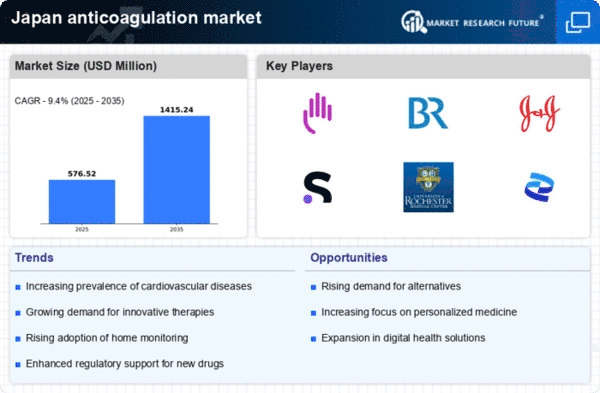
As per Market Research Future analysis, the Japan anticoagulation market Size was estimated at 526.98 USD Million in 2024. The Japan anticoagulation market is projected to grow from 576.52 USD Million in 2025 to 1415.24 USD Million by 2035, exhibiting a compound annual growth rate (CAGR) of 9% during the forecast period 2025 - 2035

Key Market Trends & Highlights

The Japan anticoagulation market is experiencing robust growth driven by innovation and increasing healthcare needs.

  • The demand for novel anticoagulants is rising, reflecting a shift towards more effective treatment options.
  • Regulatory support for innovation is fostering the development of advanced anticoagulation therapies.
  • Patient education initiatives are increasing awareness and understanding of thromboembolic disorders among the population.
  • The aging population and rising incidence of cardiovascular diseases are major drivers propelling market growth.

Market Size & Forecast

2024 Market Size 526.98 (USD Million)
2035 Market Size 1415.24 (USD Million)
CAGR (2025 - 2035) 9.4%

Major Players

Bristol-Myers Squibb (US), Bayer (DE), Johnson & Johnson (US), Sanofi (FR), Roche (CH), Pfizer (US), AstraZeneca (GB), Daiichi Sankyo (JP), Merck & Co. (US)

Our Impact
Enabled $4.3B Revenue Impact for Fortune 500 and Leading Multinationals
Partnering with 2000+ Global Organizations Each Year
30K+ Citations by Top-Tier Firms in the Industry

Japan Anticoagulation Market Trends

The anticoagulation market in Japan is currently experiencing notable developments, driven by an increasing prevalence of thromboembolic disorders and a growing awareness of the importance of anticoagulation therapy. The aging population in Japan, coupled with a rise in lifestyle-related diseases, has led to a heightened demand for effective anticoagulant medications. Furthermore, advancements in drug formulations and delivery systems are contributing to the market's expansion. Healthcare providers are increasingly adopting novel oral anticoagulants, which offer advantages over traditional therapies, such as improved safety profiles and ease of use. In addition, the regulatory environment in Japan appears to be supportive of innovation in the anticoagulation market. The Pharmaceuticals and Medical Devices Agency (PMDA) has been facilitating the approval process for new anticoagulant therapies, which may enhance patient access to cutting-edge treatments. Moreover, educational initiatives aimed at healthcare professionals and patients are likely to improve adherence to anticoagulation therapy, thereby optimizing treatment outcomes. Overall, the anticoagulation market in Japan seems poised for growth, driven by demographic trends, regulatory support, and ongoing advancements in therapeutic options.

Rising Demand for Novel Anticoagulants

The shift towards novel oral anticoagulants is becoming increasingly evident in the anticoagulation market. These medications are preferred due to their ease of administration and favorable safety profiles compared to traditional options. As healthcare providers recognize the benefits of these newer therapies, the demand is expected to rise.

Regulatory Support for Innovation

The regulatory landscape in Japan is fostering innovation within the anticoagulation market. The PMDA's efforts to streamline the approval process for new therapies may lead to quicker access for patients to advanced treatment options, potentially enhancing overall market growth.

Increased Patient Education Initiatives

Educational programs aimed at both healthcare professionals and patients are gaining traction. These initiatives are designed to improve understanding and adherence to anticoagulation therapy, which could result in better health outcomes and increased market engagement.

Japan Anticoagulation Market Drivers

Technological Advancements in Anticoagulation Therapies

Technological innovations in anticoagulation therapies are reshaping the landscape of the anticoagulation market in Japan. The introduction of novel oral anticoagulants (NOACs) has revolutionized treatment protocols, offering patients more convenient options with fewer dietary restrictions and monitoring requirements. The market for NOACs in Japan is expected to grow at a CAGR of around 8% through 2025, driven by their efficacy and safety profiles. Additionally, advancements in drug delivery systems and personalized medicine approaches are likely to enhance patient outcomes, further stimulating market growth. These technological advancements not only improve treatment adherence but also expand the therapeutic options available to healthcare providers, thereby influencing the overall dynamics of the anticoagulation market.

Increased Healthcare Expenditure and Access to Treatments

Japan's healthcare expenditure has been on the rise, which positively impacts the anticoagulation market. The government has been investing significantly in healthcare infrastructure, aiming to improve access to essential medications and treatments. In 2025, healthcare spending is projected to reach approximately $500 billion, reflecting a commitment to enhancing patient care. This increase in expenditure facilitates better access to anticoagulant therapies, particularly for patients with chronic conditions requiring long-term management. Moreover, the expansion of health insurance coverage for anticoagulants is likely to further drive market growth, as more patients gain access to these critical therapies, thereby enhancing the overall landscape of the anticoagulation market.

Regulatory Environment Favoring Anticoagulant Innovations

The regulatory environment in Japan appears to be increasingly supportive of innovations in the anticoagulation market. The Pharmaceuticals and Medical Devices Agency (PMDA) has streamlined the approval process for new anticoagulant therapies, encouraging pharmaceutical companies to invest in research and development. This regulatory support is crucial for bringing novel therapies to market, which could address unmet medical needs and improve patient outcomes. As a result, the anticoagulation market is likely to witness a surge in new product launches, enhancing competition and providing patients with a broader range of treatment options. The favorable regulatory landscape may also attract foreign investments, further stimulating growth in the sector.

Growing Awareness and Education on Thromboembolic Disorders

The growing awareness and education regarding thromboembolic disorders among healthcare professionals and patients are pivotal drivers for the anticoagulation market in Japan. Initiatives aimed at educating both the public and medical community about the risks associated with conditions like atrial fibrillation are gaining momentum. This increased awareness is likely to lead to earlier diagnosis and treatment, thereby expanding the patient base for anticoagulant therapies. Furthermore, educational campaigns are expected to enhance patient compliance with prescribed anticoagulant regimens, ultimately improving health outcomes. As awareness continues to rise, the demand for effective anticoagulation solutions is anticipated to grow, positively influencing the market dynamics.

Aging Population and Rising Incidence of Cardiovascular Diseases

The aging population in Japan is a critical driver for the anticoagulation market. As individuals age, the risk of developing cardiovascular diseases, such as atrial fibrillation and venous thromboembolism, increases significantly. According to recent statistics, approximately 30% of the Japanese population is projected to be over 65 years by 2030, leading to a higher demand for anticoagulant therapies. This demographic shift necessitates effective management of thromboembolic disorders, thereby propelling the growth of the anticoagulation market. Furthermore, the increasing prevalence of lifestyle-related diseases, such as hypertension and diabetes, further exacerbates the need for anticoagulation treatments, indicating a robust market potential in Japan.


Market Segment Insights

By Type: Direct Oral Anticoagulants (Largest) vs. Heparin (Fastest-Growing)

In the Japan anticoagulation market, the market share distribution among different types reveals that Direct Oral Anticoagulants hold the largest share, reflecting a strong preference among healthcare providers and patients for ease of use and effective management of anticoagulation therapy. Vitamin K Antagonists, while established, are gradually being overshadowed by these newer agents, suggesting a shift in prescribing habits. Heparin, traditionally used in hospitals, maintains a significant role due to its effectiveness in acute care settings, but its growth shows signs of acceleration as it adapts to new treatment protocols. The growth trends within this segment point towards a notable increase in the adoption of Direct Oral Anticoagulants, driven by their convenience and reduced need for monitoring compared to Vitamin K Antagonists. Additionally, the rising awareness of thromboembolic disorders in Japan is contributing to an increase in anticoagulation therapies, positioning Heparin as the fastest-growing segment as its versatility in treatment options is sought after, especially in surgical and hospital settings. These dynamics reflect an evolving market landscape, where innovation and patient-centric approaches are key drivers of adoption.

Direct Oral Anticoagulants (Dominant) vs. Heparin (Emerging)

Direct Oral Anticoagulants dominate the Japan anticoagulation market due to their favorable patient adherence and predictable pharmacokinetics, making them a preferred choice among physicians and patients alike. Their ability to provide effective anticoagulation without routine monitoring further enhances their appeal, particularly in outpatient settings. Meanwhile, Heparin, though traditionally a longstanding treatment option in hospitals, is becoming an emerging choice for various applications, especially in patients requiring rapid anticoagulation during surgical procedures or those with specific acute medical conditions. Both segments reflect distinct roles in the landscape of anticoagulation therapy, balancing robustness in clinical settings with modern treatment paradigms.

By Route of Administration: Oral (Largest) vs. Injectable (Fastest-Growing)

In the Japan anticoagulation market, the route of administration is significantly influenced by segment values such as oral, injectable, and transdermal. Currently, oral administration holds a major share in the market, given its convenience and patient preference. As patients increasingly opt for self-administration, the demand for oral anticoagulants continues to grow, providing this segment with a substantial advantage over others that require more complex methods. Conversely, the injectable segment is experiencing rapid growth, primarily driven by advancements in technology and the development of new biologically-based treatments. The increasing prevalence of conditions such as thromboembolism necessitates effective and immediate solutions, propelling injectables into a competitive space. Enhanced formulations and delivery systems further stimulate this growth, positioning injectables as a critical component in the evolving anticoagulant landscape.

Oral (Dominant) vs. Injectable (Emerging)

Oral anticoagulants dominate the market due to their ease of use and established patient acceptance. They enable consistent dosing without requiring specialized knowledge or settings, making them accessible for long-term management of conditions requiring anticoagulation. On the other hand, injectable anticoagulants, while historically seen as more complex, are emerging due to innovations such as pre-filled syringes and auto-injectors, which address previous concerns regarding usability. The injectable segment is being viewed as a viable alternative, especially in acute care scenarios where rapid anticoagulation is essential. Consequently, these segments represent distinct yet complementing approaches within the Japan anticoagulation market.

By Indication: Atrial Fibrillation (Largest) vs. Deep Vein Thrombosis (Fastest-Growing)

In the Japan anticoagulation market, the Atrial Fibrillation segment captures the largest share due to its prevalence among the aging population, contributing significantly to healthcare costs. This segment benefits from advancements in treatment options and increased awareness, making it a critical focus for healthcare providers and pharmaceutical companies. Conversely, the Deep Vein Thrombosis segment is on the rise, driven by a growing base of risk factors such as prolonged immobility and the increasing incidence of major surgeries. The growth in the Deep Vein Thrombosis segment is fueled by innovative therapies and enhanced diagnostic approaches, placing it in an advantageous position for further expansion. An increase in preventive measures and educational programs aimed at risk factor management is expected to bolster this segment. Meanwhile, Atrial Fibrillation remains dominant due to established treatment pathways and a solid patient base, maintaining sustained interest from both clinicians and stakeholders.

Atrial Fibrillation: Dominant vs. Deep Vein Thrombosis: Emerging

The Atrial Fibrillation segment stands as the dominant force in the Japan anticoagulation market, primarily due to its wide-ranging impact on public health and ongoing developments in management strategies. Characterized by its complex treatment landscape, the segment sees significant investments in research and new product launches. On the other hand, the Deep Vein Thrombosis segment is emerging rapidly, driven by increasing awareness and proactive treatment measures. This segment is marked by a rise in anticoagulant usage for prevention and management. As healthcare professionals prioritize the identification and treatment of DVT risk factors, this segment is quickly becoming a prominent player in the overall anticoagulation landscape.

By End Use: Hospitals (Largest) vs. Home Care (Fastest-Growing)

In the Japan anticoagulation market, hospitals currently dominate the end-use segment, accounting for a significant share due to their robust infrastructure and capacity to manage complex cases. Home care, however, is experiencing rapid growth as patients increasingly prefer treatment options that allow them to manage their health in the comfort of their own homes. Clinics also contribute to the market, but their share remains smaller compared to hospitals and home care. The growth trends in the Japan anticoagulation market are largely driven by advancements in technology and an increased focus on patient-centered care. Home care is expected to grow faster due to the aging population and the rising preference for self-administration of anticoagulants. Hospitals are evolving to adopt more anticoagulation management systems, while clinics are adapting to the changing landscape by providing more accessible treatment options, although they lag behind in market share.

Hospitals (Dominant) vs. Home Care (Emerging)

Hospitals play a dominant role in the Japan anticoagulation market, characterized by their extensive resources, specialist staff, and the ability to provide comprehensive care for patients requiring anticoagulation therapy. Their established protocols and infrastructure ensure that they remain the preferred choice for more severe cases. On the other hand, home care is emerging as a key player in this market, appealing to patients who seek convenience and flexibility in managing their treatment. Home care solutions, bolstered by technology and remote monitoring capabilities, are becoming increasingly popular, particularly among aging patients or those with chronic conditions, allowing them to maintain their independence while receiving necessary treatment.

Get more detailed insights about Japan Anticoagulation Market

Key Players and Competitive Insights

The anticoagulation market in Japan is characterized by a competitive landscape that is increasingly shaped by innovation, strategic partnerships, and a focus on patient-centric solutions. Key players such as Bristol-Myers Squibb (US), Bayer (DE), and Daiichi Sankyo (JP) are actively engaged in enhancing their product offerings and expanding their market presence. Bristol-Myers Squibb (US) has positioned itself as a leader in novel anticoagulants, emphasizing research and development to introduce advanced therapies. Meanwhile, Bayer (DE) is focusing on strategic collaborations to enhance its portfolio, particularly in the area of direct oral anticoagulants (DOACs). Daiichi Sankyo (JP) is leveraging its strong local presence to drive growth through innovative solutions tailored to the Japanese market, thereby shaping the competitive dynamics significantly.The business tactics employed by these companies reflect a concerted effort to optimize supply chains and localize manufacturing processes. The market structure appears moderately fragmented, with several players vying for market share. However, the collective influence of major companies like Johnson & Johnson (US) and Sanofi (FR) is notable, as they engage in aggressive marketing strategies and product differentiation to capture a larger segment of the market. This competitive structure fosters an environment where innovation and strategic positioning are paramount for success.

In October Bayer (DE) announced a strategic partnership with a leading Japanese healthcare provider to enhance the distribution of its anticoagulant products. This collaboration is expected to streamline supply chains and improve access to innovative therapies for patients, thereby reinforcing Bayer's commitment to patient care in Japan. The strategic importance of this partnership lies in its potential to increase market penetration and enhance brand loyalty among healthcare professionals.

In September Daiichi Sankyo (JP) launched a new digital platform aimed at improving patient adherence to anticoagulation therapy. This initiative reflects a growing trend towards digital health solutions, which are becoming increasingly vital in managing chronic conditions. The strategic significance of this move is underscored by the potential to enhance patient outcomes and reduce healthcare costs, positioning Daiichi Sankyo as a forward-thinking leader in the market.

In November Johnson & Johnson (US) unveiled a new line of anticoagulant products specifically designed for the Asian market, including Japan. This launch is indicative of the company's strategy to cater to regional needs and preferences, thereby enhancing its competitive edge. The importance of this development lies in its alignment with the growing demand for tailored healthcare solutions, which could significantly boost Johnson & Johnson's market share in the region.

As of November the competitive trends in the anticoagulation market are increasingly defined by digitalization, sustainability, and the integration of artificial intelligence (AI) in product development and patient management. Strategic alliances are playing a crucial role in shaping the current landscape, as companies seek to leverage each other's strengths to enhance their offerings. Looking ahead, it is likely that competitive differentiation will evolve from traditional price-based strategies to a focus on innovation, technology, and supply chain reliability, reflecting the changing dynamics of the healthcare market.

Key Companies in the Japan Anticoagulation Market include

Industry Developments

The Japan Anticoagulation Market has seen significant activity in recent months, particularly in relation to advancements in therapeutic products from key players such as Bristol Myers Squibb, Novartis, and Daiichi Sankyo. In June 2023, AstraZeneca launched a new anticoagulant agent aimed at improving patient outcomes, which has been well-received in clinical settings.

Additionally, growing investments in Research and Development by Merck and Gilead Sciences are expected to drive innovation and expand treatment options. The market is witnessing a surge in demand due to an increasing elderly population and a rise in conditions like atrial fibrillation, which impacts many Japanese citizens.

Regarding mergers and acquisitions, while no recent announcements have emerged specifically for the mentioned companies in Japan, historical activity indicates a trend toward consolidation aimed at enhancing product portfolios and market reach. Moreover, the approval of new therapeutic agents by authorities such as the Pharmaceuticals and Medical Devices Agency has contributed positively to market growth. Overall, the interplay between company initiatives, governmental support, and an aging demographic is shaping the Japan Anticoagulation Market landscape.

Future Outlook

Japan Anticoagulation Market Future Outlook

The Anticoagulation Market in Japan is projected to grow at a 9.4% CAGR from 2025 to 2035, driven by technological advancements and increasing patient awareness.

New opportunities lie in:

  • Development of personalized anticoagulation management software solutions.
  • Expansion of telehealth services for anticoagulation monitoring.
  • Investment in point-of-care testing devices for rapid INR results.

By 2035, the market is expected to achieve substantial growth, reflecting evolving healthcare needs.

Market Segmentation

Japan Anticoagulation Market Type Outlook

  • Vitamin K Antagonists
  • Direct Oral Anticoagulants
  • Heparin

Japan Anticoagulation Market End Use Outlook

  • Hospitals
  • Home Care
  • Clinics

Japan Anticoagulation Market Indication Outlook

  • Atrial Fibrillation
  • Deep Vein Thrombosis
  • Pulmonary Embolism
  • Myocardial Infarction

Japan Anticoagulation Market Route of Administration Outlook

  • Oral
  • Injectable
  • Transdermal

Report Scope

MARKET SIZE 2024 526.98(USD Million)
MARKET SIZE 2025 576.52(USD Million)
MARKET SIZE 2035 1415.24(USD Million)
COMPOUND ANNUAL GROWTH RATE (CAGR) 9.4% (2025 - 2035)
REPORT COVERAGE Revenue Forecast, Competitive Landscape, Growth Factors, and Trends
BASE YEAR 2024
Market Forecast Period 2025 - 2035
Historical Data 2019 - 2024
Market Forecast Units USD Million
Key Companies Profiled Bristol-Myers Squibb (US), Bayer (DE), Johnson & Johnson (US), Sanofi (FR), Roche (CH), Pfizer (US), AstraZeneca (GB), Daiichi Sankyo (JP), Merck & Co. (US)
Segments Covered Type, Route of Administration, Indication, End Use
Key Market Opportunities Emergence of novel anticoagulants addressing unmet medical needs in Japan's aging population.
Key Market Dynamics Rising demand for novel anticoagulants driven by regulatory support and evolving patient treatment protocols in Japan.
Countries Covered Japan
Leave a Comment

FAQs

What is the projected market size of the Japan Anticoagulation Market in 2024?

The Japan Anticoagulation Market is expected to be valued at 527.1 USD Million in 2024.

What is the expected market size for the Japan Anticoagulation Market by 2035?

By 2035, the market is anticipated to reach approximately 1064.2 USD Million.

What is the compound annual growth rate (CAGR) for the Japan Anticoagulation Market between 2025 and 2035?

The market is projected to grow at a CAGR of 6.596% during the period from 2025 to 2035.

Which drug type is projected to have the highest market value in Japan Anticoagulation Market by 2035?

Direct Oral Anticoagulants are expected to have the highest market value at 450.0 USD Million by 2035.

What was the market value for Vitamin K Antagonists in the Japan Anticoagulation Market in 2024?

The market value for Vitamin K Antagonists is projected to be 150.0 USD Million in 2024.

Who are the major players in the Japan Anticoagulation Market?

Key players include Bristol Myers Squibb, Novartis, Daiichi Sankyo, and AstraZeneca among others.

What is the expected market value for Heparin in the Japan Anticoagulation Market by 2035?

The market value for Heparin is anticipated to reach 314.2 USD Million by 2035.

Are there any emerging trends in the Japan Anticoagulation Market?

Yes, the increasing adoption of Direct Oral Anticoagulants represents an emerging trend in the market.

What challenges does the Japan Anticoagulation Market currently face?

The market faces challenges such as competition among established players and potential regulatory changes.

What market growth rate can we expect for the Japan Anticoagulation Market in the coming decade?

The market is expected to exhibit robust growth driven by the aging population and increased awareness of anticoagulation therapies.

Download Free Sample

Kindly complete the form below to receive a free sample of this Report

Compare Licence

×
Features License Type
Single User Multiuser License Enterprise User
Price $4,950 $5,950 $7,250
Maximum User Access Limit 1 User Upto 10 Users Unrestricted Access Throughout the Organization
Free Customization
Direct Access to Analyst
Deliverable Format
Platform Access
Discount on Next Purchase 10% 15% 15%
Printable Versions