×
Request Free Sample ×

Kindly complete the form below to receive a free sample of this Report

* Please use a valid business email

Leading companies partner with us for data-driven Insights

clients tt-cursor
Hero Background

France Anticoagulation Market

ID: MRFR/HC/47897-HCR
200 Pages
Rahul Gotadki
February 2026

France Anticoagulation Market Research Report By Drug Type (Vitamin K Antagonists, Direct Oral Anticoagulants, Heparin), By Route of Administration (Oral, Injectable, Transdermal), By Indication (Atrial Fibrillation, Deep Vein Thrombosis, Pulmonary Embolism, Myocardial Infarction) and By End Use (Hospitals, Home Care, Clinics) - Growth & Industry Forecast 2025 To 2035

Share:
Download PDF ×

We do not share your information with anyone. However, we may send you emails based on your report interest from time to time. You may contact us at any time to opt-out.

France Anticoagulation Market Infographic
Purchase Options

France Anticoagulation Market Summary

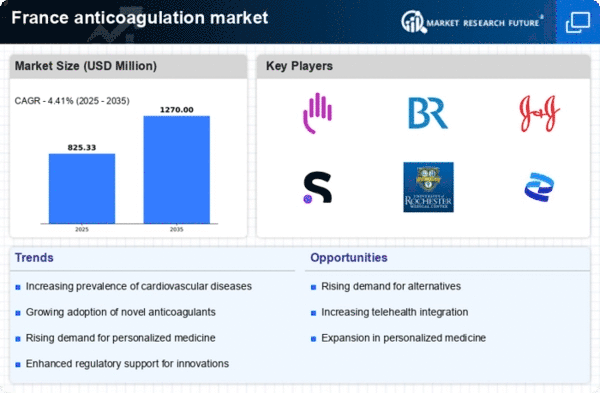
As per Market Research Future analysis, the France anticoagulation market Size was estimated at 790.47 USD Million in 2024. The France anticoagulation market is projected to grow from 825.33 USD Million in 2025 to 1270.0 USD Million by 2035, exhibiting a compound annual growth rate (CAGR) of 4.4% during the forecast period 2025 - 2035

Key Market Trends & Highlights

The France anticoagulation market is experiencing growth driven by increasing prevalence of thromboembolic disorders and advancements in drug formulations.

  • The market is witnessing a rising prevalence of thromboembolic disorders, which is driving demand for anticoagulants.
  • Advancements in drug formulations are enhancing treatment options and improving patient outcomes in the anticoagulation sector.
  • The largest segment in the market is the direct oral anticoagulants (DOACs), while the fastest-growing segment is the injectable anticoagulants.
  • Key market drivers include the increasing aging population and regulatory support for anticoagulants, which are likely to propel market growth.

Market Size & Forecast

2024 Market Size 790.47 (USD Million)
2035 Market Size 1270.0 (USD Million)
CAGR (2025 - 2035) 4.41%

Major Players

Bristol-Myers Squibb (US), Bayer (DE), Johnson & Johnson (US), Sanofi (FR), Roche (CH), Pfizer (US), AstraZeneca (GB), Daiichi Sankyo (JP), Merck & Co. (US)

Our Impact
Enabled $4.3B Revenue Impact for Fortune 500 and Leading Multinationals
Partnering with 2000+ Global Organizations Each Year
30K+ Citations by Top-Tier Firms in the Industry

France Anticoagulation Market Trends

The anticoagulation market in France is currently experiencing notable developments, driven by an increasing prevalence of thromboembolic disorders and a growing awareness of the importance of anticoagulation therapy. The rise in conditions such as atrial fibrillation and venous thromboembolism has led to a heightened demand for effective anticoagulant medications. Furthermore, advancements in drug formulations and delivery methods are contributing to the expansion of treatment options available to healthcare providers. This evolving landscape suggests that stakeholders in the anticoagulation market must remain vigilant in adapting to changing patient needs and regulatory requirements. In addition, the French healthcare system is increasingly focusing on personalized medicine, which may influence the anticoagulation market. Tailored treatment plans that consider individual patient characteristics are becoming more prevalent, potentially enhancing therapeutic outcomes. The integration of technology, such as digital health solutions for monitoring and managing anticoagulation therapy, is also gaining traction. As these trends unfold, the anticoagulation market is likely to witness further innovation and growth, positioning it as a critical component of cardiovascular care in France.

Rising Prevalence of Thromboembolic Disorders

The increasing incidence of conditions like atrial fibrillation and venous thromboembolism is driving demand for anticoagulant therapies. This trend indicates a need for effective management strategies to address these health issues.

Advancements in Drug Formulations

Innovations in anticoagulant medications, including new formulations and delivery methods, are enhancing treatment options. These advancements may improve patient adherence and therapeutic outcomes.

Focus on Personalized Medicine

The shift towards personalized treatment plans is influencing the anticoagulation market. Tailoring therapies to individual patient needs could lead to better management of anticoagulation therapy.

France Anticoagulation Market Drivers

Increasing Aging Population

The aging population in France is a critical driver for the anticoagulation market. As individuals age, the risk of thromboembolic disorders, such as atrial fibrillation and deep vein thrombosis, escalates. According to recent statistics, approximately 20% of the French population is over 65 years old, a demographic that is particularly susceptible to these conditions. This demographic shift necessitates a greater demand for anticoagulant therapies, thereby propelling the market forward. Furthermore, the healthcare system in France is adapting to this trend by increasing awareness and screening for thromboembolic risks among older adults. Consequently, the anticoagulation market is likely to experience substantial growth as healthcare providers focus on managing the health of this vulnerable population.

Rising Awareness and Education

There is a growing awareness and education regarding thromboembolic disorders in France, which serves as a significant driver for the anticoagulation market. Healthcare campaigns aimed at educating both patients and healthcare professionals about the risks and management of these conditions have gained momentum. This increased awareness is reflected in the rising number of patients seeking anticoagulant therapies, as they become more informed about their health options. Additionally, healthcare providers are receiving enhanced training on the importance of anticoagulation management, which is crucial for preventing complications. As a result, the anticoagulation market is likely to see a surge in demand, with an estimated increase of 10% in patient enrollment for anticoagulant treatments over the next few years.

Shift Towards Value-Based Care

The shift towards value-based care in the French healthcare system is influencing the anticoagulation market. This model emphasizes patient outcomes and cost-effectiveness, prompting healthcare providers to focus on delivering high-quality care while managing expenses. As a result, there is a growing emphasis on anticoagulant therapies that demonstrate clear clinical benefits and cost savings. Payers are increasingly interested in therapies that reduce hospitalizations and complications associated with thromboembolic disorders. This trend is likely to drive the development and adoption of innovative anticoagulant solutions that align with value-based care principles, potentially leading to a market growth of around 8% in the coming years.

Regulatory Support for Anticoagulants

Regulatory bodies in France are increasingly supportive of anticoagulant therapies, which significantly influences the anticoagulation market. The French National Authority for Health (HAS) has been proactive in evaluating and approving new anticoagulant medications, ensuring that patients have access to the latest treatments. This regulatory environment fosters innovation and encourages pharmaceutical companies to invest in research and development. For instance, the approval of novel oral anticoagulants has expanded treatment options for patients, leading to a projected market growth of approximately 15% over the next five years. The supportive regulatory framework not only enhances patient access to effective therapies but also stimulates competition among manufacturers, ultimately benefiting the anticoagulation market.

Technological Advancements in Monitoring

Technological advancements in monitoring anticoagulation therapy are transforming the anticoagulation market in France. Innovations such as point-of-care testing devices and mobile health applications are enabling more efficient management of anticoagulant therapies. These technologies allow for real-time monitoring of patients' coagulation levels, facilitating timely adjustments to medication dosages. The integration of technology into patient care is expected to enhance adherence to treatment protocols, thereby reducing the incidence of adverse events. As a result, the anticoagulation market is projected to grow by approximately 12% as healthcare providers increasingly adopt these advanced monitoring solutions to improve patient outcomes.


Market Segment Insights

By Type: Direct Oral Anticoagulants (Largest) vs. Heparin (Fastest-Growing)

In the France anticoagulation market, the segment distribution is notably led by Direct Oral Anticoagulants (DOACs), which claim the largest market share due to their ease of use and reduced need for monitoring compared to traditional therapies. Vitamin K Antagonists follow, providing a more established but declining alternative, while Heparin remains a critical component in hospital settings, particularly in acute care situations. The growth trends in this market segment are significantly influenced by the increasing prevalence of thromboembolic disorders and the expanding applications of anticoagulants in various medical practices. With advancements in DOACs enhancing patient compliance and offering convenience, they represent a steady growth path. Conversely, Heparin's growth is propelled by its emerging use in novel therapeutic protocols and broader acceptance in clinical applications.

Vitamin K Antagonists (Dominant) vs. Direct Oral Anticoagulants (Emerging)

Vitamin K Antagonists are well-established in the France anticoagulation market, mainly utilized for long-term management of conditions like atrial fibrillation and venous thromboembolism. Their dominance is attributed to extensive clinical experience and established guidelines. However, Direct Oral Anticoagulants are swiftly becoming an emerging competitor, gaining traction for their advantages, including fixed dosing and no requirement for routine monitoring. This shift indicates a changing landscape in treatment preferences, pushing Vitamin K Antagonists to innovate and remain relevant amid the evolving therapeutic environment.

By Route of Administration: Oral (Largest) vs. Injectable (Fastest-Growing)

In the France anticoagulation market, the route of administration is a critical segment showcasing diverse options. Among these, oral administration holds the largest share, appealing to patients due to convenience and ease of use. In contrast, injectable forms, while smaller in share, are rapidly gaining traction, particularly among patients requiring more immediate effects or those managing complex conditions. Recent growth trends indicate a robust increase in the utilization of injectable anticoagulants, driven by innovations in drug delivery systems and heightened awareness regarding their benefits. Additionally, the oral segment continues to thrive, catering to the demand for at-home treatment options. This dual trajectory illustrates a dynamic market where both administration routes play vital roles in patient outcomes and adherence rates.

Oral (Dominant) vs. Injectable (Emerging)

The oral route of administration remains the dominant choice in the France anticoagulation market, primarily because of its user-friendly nature and the preference for self-administration among patients. Oral anticoagulants typically offer a more comfortable treatment experience, which enhances treatment adherence. On the other hand, injectable anticoagulants are recognized as an emerging option, especially in acute care settings where rapid anticoagulation is necessary. Their growth is propelled by advances in formulations and delivery methods, which reduce the frequency of injections and improve patient compliance. As such, both oral and injectable forms are essential in addressing differing patient needs and therapeutic goals within the market.

By Indication: Atrial Fibrillation (Largest) vs. Deep Vein Thrombosis (Fastest-Growing)

In the France anticoagulation market, Atrial Fibrillation holds the largest share among the indication segments due to the high prevalence of this arrhythmia, leading to increased demand for anticoagulant therapies. Deep Vein Thrombosis, while smaller in share, is rapidly gaining traction as awareness of the condition grows, resulting in greater utilization of anticoagulation treatments among at-risk populations. Growth trends within these segments are fueled by factors such as an aging population, leading to a higher incidence of Atrial Fibrillation and its associated complications. Meanwhile, initiatives for early detection and management of Deep Vein Thrombosis are driving its fastest growth, as healthcare providers focus on preventive strategies and patient education to reduce the risk of thromboembolic events.

Atrial Fibrillation (Dominant) vs. Deep Vein Thrombosis (Emerging)

Atrial Fibrillation is the dominant segment within the France anticoagulation market, characterized by its widespread recognition and treatment regimen due to its significant impact on stroke risk. The rise in diagnoses and treatment options has paved the way for various anticoagulants catering specifically to this indication. On the other hand, Deep Vein Thrombosis is considered an emerging segment, marked by increasing awareness and improved diagnostic capabilities. The market is seeing a shift as patients and physicians become more proactive in addressing this condition, thus pushing growth. Both segments demonstrate unique challenges and opportunities, illustrating the dynamic nature of the anticoagulation landscape in France.

By End Use: Hospitals (Largest) vs. Home Care (Fastest-Growing)

In the France anticoagulation market, the distribution of market share among end-use segments illustrates a significant leaning towards hospitals, which account for the largest share due to their extensive resources, specialized staff, and comprehensive care capabilities. Home care is emerging strongly, attracting attention for its convenience and cost-effectiveness, particularly for patients requiring long-term management of anticoagulation therapies. Clinics follow, providing an important intermediary option for certain treatments and patient follow-ups. Growth trends within the end-use segments primarily reflect the ongoing shift towards home care solutions, fueled by advancements in telemedicine and patient monitoring technologies. As the preferences for at-home treatment increase, the market experiences a notable block of growth through innovations in home-based anticoagulation management. Meanwhile, hospitals continue to adopt new technologies and protocols to maintain their leading status, driven by the necessity to provide high-quality, efficient care.

Hospitals: Dominant vs. Home Care: Emerging

Hospitals hold a dominant position in the France anticoagulation market due to their capacity to provide comprehensive treatment options and access to advanced medical technology. They play a crucial role in managing complex cases and offer a supportive environment for patients receiving anticoagulant therapies. On the other hand, home care is emerging as a viable alternative, appealing particularly to patients seeking greater autonomy and flexibility. This segment benefits from innovations that allow for remote monitoring and easy medication management. As patients increasingly prefer the comfort of receiving care at home, home care's growth is expected to continue rising, challenging hospitals to adapt and integrate home care strategies into their service offerings.

Get more detailed insights about France Anticoagulation Market

Key Players and Competitive Insights

The anticoagulation market in France is characterized by a dynamic competitive landscape, driven by increasing prevalence of thromboembolic disorders and a growing emphasis on innovative treatment options. Major players such as Sanofi (FR), Bayer (DE), and Bristol-Myers Squibb (US) are strategically positioned to leverage their extensive research capabilities and established market presence. Sanofi (FR) focuses on enhancing its product portfolio through innovation, particularly in the development of novel oral anticoagulants, while Bayer (DE) emphasizes partnerships to expand its reach in the market. Bristol-Myers Squibb (US) appears to be concentrating on strategic acquisitions to bolster its therapeutic offerings, thereby intensifying competition among these key players.The business tactics employed by these companies include localizing manufacturing and optimizing supply chains to enhance efficiency and reduce costs. The market structure is moderately fragmented, with a mix of established pharmaceutical giants and emerging players. This fragmentation allows for diverse strategies, as companies seek to differentiate themselves through unique product offerings and tailored marketing approaches. The collective influence of these key players shapes the competitive environment, fostering innovation and driving market growth.

In October Sanofi (FR) announced a strategic partnership with a leading biotechnology firm to co-develop a next-generation anticoagulant aimed at improving patient outcomes. This collaboration is significant as it not only enhances Sanofi's research capabilities but also positions the company to capture a larger market share in the evolving landscape of anticoagulation therapies. The partnership underscores the importance of innovation in maintaining competitive advantage.

In September Bayer (DE) launched a digital health platform designed to support patients on anticoagulation therapy, providing personalized management tools and real-time monitoring. This initiative reflects Bayer's commitment to integrating technology into patient care, potentially improving adherence and outcomes. The move is indicative of a broader trend towards digitalization in healthcare, which may redefine patient engagement strategies in the anticoagulation market.

In August Bristol-Myers Squibb (US) completed the acquisition of a smaller biotech firm specializing in anticoagulant research, enhancing its pipeline of innovative therapies. This acquisition is likely to strengthen Bristol-Myers Squibb's position in the market, allowing for accelerated development of new products that could meet unmet medical needs. Such strategic actions highlight the ongoing trend of consolidation within the industry, as companies seek to enhance their competitive edge through expanded capabilities.

As of November current trends in the anticoagulation market include a pronounced shift towards digitalization, sustainability, and the integration of artificial intelligence in drug development and patient management. Strategic alliances are increasingly shaping the competitive landscape, enabling companies to pool resources and expertise. Looking ahead, competitive differentiation is expected to evolve, with a greater emphasis on innovation and technology rather than solely on price. Companies that can effectively leverage these trends will likely emerge as leaders in the market.

Key Companies in the France Anticoagulation Market include

Industry Developments

Recent developments in the France Anticoagulation Market indicate a dynamic landscape driven by innovation and strategic movements among key players. Bristol Myers Squibb and Merck have focused on enhancing their product portfolios, which has led to significant growth in market valuation. Regulatory approvals granted in mid-2023 for newer anticoagulants have been positively impacting sales for companies like Pfizer and Boehringer Ingelheim, pushing their market share upward. In terms of mergers and acquisitions, there has been notable activity, including the acquisition of a specialty anticoagulant company by Daiichi Sankyo in March 2023, enhancing its product line within France.

Additionally, in January 2023, Novartis announced a strategic alliance with Roche aimed at optimizing the research potential in anticoagulant therapies. The increasing prevalence of thromboembolic disorders in the French population has further fueled demand for anticoagulation therapies, prompting Astellas and AbbVie to invest significantly in Research and Development to address evolving patient needs. France’s healthcare system remains focused on integrating advanced therapeutic options, thereby positioning itself as a key market for innovation in the anticoagulation sector. These current affairs highlight a robust shift that companies are adapting to in the competitive landscape of France's anticoagulation market.

Future Outlook

France Anticoagulation Market Future Outlook

The Anticoagulation Market in France is projected to grow at a 4.41% CAGR from 2025 to 2035, driven by technological advancements, increasing patient awareness, and rising prevalence of thromboembolic disorders.

New opportunities lie in:

  • Development of personalized anticoagulation management software solutions.
  • Expansion of telehealth services for anticoagulation monitoring.
  • Investment in point-of-care testing devices for rapid INR assessment.

By 2035, the anticoagulation market is expected to achieve robust growth and enhanced service delivery.

Market Segmentation

France Anticoagulation Market Type Outlook

  • Vitamin K Antagonists
  • Direct Oral Anticoagulants
  • Heparin

France Anticoagulation Market End Use Outlook

  • Hospitals
  • Home Care
  • Clinics

France Anticoagulation Market Indication Outlook

  • Atrial Fibrillation
  • Deep Vein Thrombosis
  • Pulmonary Embolism
  • Myocardial Infarction

France Anticoagulation Market Route of Administration Outlook

  • Oral
  • Injectable
  • Transdermal

Report Scope

MARKET SIZE 2024 790.47(USD Million)
MARKET SIZE 2025 825.33(USD Million)
MARKET SIZE 2035 1270.0(USD Million)
COMPOUND ANNUAL GROWTH RATE (CAGR) 4.41% (2025 - 2035)
REPORT COVERAGE Revenue Forecast, Competitive Landscape, Growth Factors, and Trends
BASE YEAR 2024
Market Forecast Period 2025 - 2035
Historical Data 2019 - 2024
Market Forecast Units USD Million
Key Companies Profiled Bristol-Myers Squibb (US), Bayer (DE), Johnson & Johnson (US), Sanofi (FR), Roche (CH), Pfizer (US), AstraZeneca (GB), Daiichi Sankyo (JP), Merck & Co. (US)
Segments Covered Type, Route of Administration, Indication, End Use
Key Market Opportunities Integration of digital health solutions enhances patient management in the anticoagulation market.
Key Market Dynamics Rising demand for novel anticoagulants driven by regulatory support and evolving patient treatment preferences in France.
Countries Covered France
Leave a Comment

FAQs

What is the expected market size of the France Anticoagulation Market in 2024?

The France Anticoagulation Market is expected to be valued at approximately 658.88 million USD in 2024.

What is the projected market value for the France Anticoagulation Market by 2035?

By 2035, the market is projected to grow to around 1036.25 million USD.

What is the expected compound annual growth rate (CAGR) for the France Anticoagulation Market from 2025 to 2035?

The CAGR for the France Anticoagulation Market is expected to be 4.203% from 2025 to 2035.

Which drug type is expected to dominate the France Anticoagulation Market in 2024?

Direct Oral Anticoagulants are expected to dominate the market, valued at 350.0 million USD in 2024.

What market share is attributed to Vitamin K Antagonists in 2024?

Vitamin K Antagonists are valued at 150.0 million USD in the France Anticoagulation Market in 2024.

What are the key players in the France Anticoagulation Market?

Major players in the market include Bristol Myers Squibb, Novartis, Merck, and Bayer among others.

What will be the market value of Heparin by 2035?

The market value of Heparin is expected to reach approximately 238.25 million USD by 2035.

How much is the France Anticoagulation Market expected to grow for Direct Oral Anticoagulants by 2035?

The market for Direct Oral Anticoagulants is expected to grow to around 560.0 million USD by 2035.

What are the growth drivers for the France Anticoagulation Market?

Key growth drivers include increasing prevalence of cardiovascular diseases and advancements in anticoagulant therapies.

What challenges might the France Anticoagulation Market face in the coming years?

Challenges may include strict regulatory frameworks and the potential side effects associated with anticoagulant drugs.

Download Free Sample

Kindly complete the form below to receive a free sample of this Report

Compare Licence

×
Features License Type
Single User Multiuser License Enterprise User
Price $4,950 $5,950 $7,250
Maximum User Access Limit 1 User Upto 10 Users Unrestricted Access Throughout the Organization
Free Customization
Direct Access to Analyst
Deliverable Format
Platform Access
Discount on Next Purchase 10% 15% 15%
Printable Versions