×
Request Free Sample ×

Kindly complete the form below to receive a free sample of this Report

* Please use a valid business email

Leading companies partner with us for data-driven Insights

clients tt-cursor
Hero Background

Germany Anticoagulation Market

ID: MRFR/HC/47895-HCR
200 Pages
Rahul Gotadki
February 2026

Germany Anticoagulation Market Research Report By Drug Type (Vitamin K Antagonists, Direct Oral Anticoagulants, Heparin), By Route of Administration (Oral, Injectable, Transdermal), By Indication (Atrial Fibrillation, Deep Vein Thrombosis, Pulmonary Embolism, Myocardial Infarction) and By End Use (Hospitals, Home Care, Clinics) - Growth & Industry Forecast 2025 To 2035

Share:
Download PDF ×

We do not share your information with anyone. However, we may send you emails based on your report interest from time to time. You may contact us at any time to opt-out.

Germany Anticoagulation Market Infographic
Purchase Options

Germany Anticoagulation Market Summary

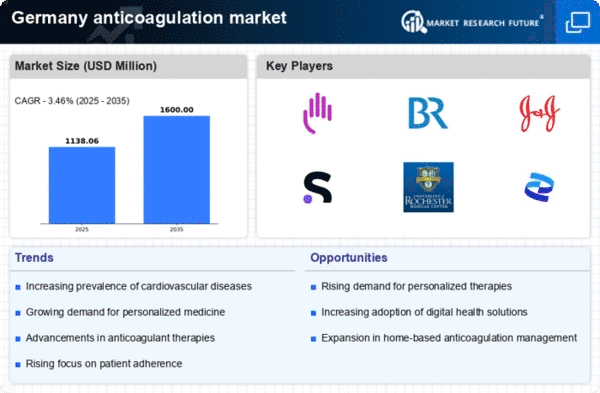
As per Market Research Future analysis, the Germany anticoagulation market Size was estimated at 1100.0 USD Million in 2024. The Germany anticoagulation market is projected to grow from 1138.06 USD Million in 2025 to 1600.0 USD Million by 2035, exhibiting a compound annual growth rate (CAGR) of 3.4% during the forecast period 2025 - 2035

Key Market Trends & Highlights

The Germany anticoagulation market is experiencing a transformative shift towards innovative therapies and digital integration.

  • The largest segment in the Germany anticoagulation market is the novel anticoagulants, driven by their increasing adoption in clinical settings.
  • The fastest-growing segment is personalized medicine, reflecting a shift towards tailored treatment approaches for patients.
  • Integration of digital health technologies is enhancing patient management and adherence to anticoagulation therapies.
  • Key market drivers include the increasing incidence of cardiovascular diseases and advancements in anticoagulant therapies.

Market Size & Forecast

2024 Market Size 1100.0 (USD Million)
2035 Market Size 1600.0 (USD Million)
CAGR (2025 - 2035) 3.46%

Major Players

Bristol-Myers Squibb (US), Bayer (DE), Johnson & Johnson (US), Sanofi (FR), Roche (CH), Pfizer (US), AstraZeneca (GB), Daiichi Sankyo (JP), Merck & Co. (US)

Our Impact
Enabled $4.3B Revenue Impact for Fortune 500 and Leading Multinationals
Partnering with 2000+ Global Organizations Each Year
30K+ Citations by Top-Tier Firms in the Industry

Germany Anticoagulation Market Trends

The anticoagulation market in Germany is currently experiencing notable developments, driven by an increasing prevalence of thromboembolic disorders and a growing awareness of the importance of anticoagulation therapy. The aging population, coupled with lifestyle factors, has led to a rise in conditions such as atrial fibrillation and venous thromboembolism. Consequently, healthcare providers are focusing on improving patient outcomes through effective anticoagulation management. Innovations in drug formulations and delivery methods are also contributing to the market's evolution, as they offer enhanced safety profiles and improved patient adherence. Moreover, regulatory frameworks in Germany are adapting to accommodate new anticoagulants, which may further stimulate market growth. The integration of digital health solutions, such as telemedicine and mobile health applications, is likely to enhance patient monitoring and education, thereby optimizing treatment regimens. As the anticoagulation market continues to evolve, stakeholders must remain vigilant to emerging trends and adapt their strategies accordingly. This dynamic landscape presents both challenges and opportunities for pharmaceutical companies, healthcare providers, and patients alike.

Rising Demand for Novel Anticoagulants

The anticoagulation market is witnessing a shift towards novel anticoagulants, which are perceived to offer advantages over traditional therapies. These newer agents often require less monitoring and have a more predictable pharmacokinetic profile, making them appealing to both healthcare providers and patients. As awareness of these benefits grows, the adoption of novel anticoagulants is likely to increase, potentially reshaping treatment paradigms.

Integration of Digital Health Technologies

The incorporation of digital health technologies into the anticoagulation market is becoming increasingly prevalent. Tools such as mobile applications and telehealth platforms are facilitating better patient engagement and adherence to therapy. This trend may lead to improved outcomes, as patients can receive timely reminders and education about their treatment, thus enhancing overall management of anticoagulation therapy.

Focus on Personalized Medicine

There is a growing emphasis on personalized medicine within the anticoagulation market. Tailoring anticoagulation therapy to individual patient profiles, including genetic factors and comorbidities, appears to enhance treatment efficacy and safety. This trend suggests a shift towards more individualized approaches, which may improve patient outcomes and reduce the risk of adverse events.

Germany Anticoagulation Market Drivers

Growing Awareness of Thrombosis Risks

Public awareness campaigns regarding the risks associated with thrombosis are gaining traction in Germany, thereby impacting the anticoagulation market. Educational initiatives by health organizations aim to inform the population about the dangers of blood clots and the importance of anticoagulation therapy. This heightened awareness is expected to lead to an increase in diagnoses and subsequent treatment, potentially boosting the market by 6% annually. As more individuals recognize the symptoms and seek medical advice, the demand for anticoagulants is likely to rise, further driving market growth.

Advancements in Anticoagulant Therapies

Innovations in anticoagulant therapies are significantly influencing the anticoagulation market in Germany. The introduction of direct oral anticoagulants (DOACs) has transformed treatment protocols, offering patients more convenient options with fewer monitoring requirements. Recent studies indicate that DOACs have gained a market share of over 50% in the anticoagulation segment, reflecting their growing acceptance among healthcare providers. These advancements not only improve patient outcomes but also enhance adherence to treatment regimens. As pharmaceutical companies continue to invest in research and development, the anticoagulation market is poised for further growth, driven by the demand for safer and more effective therapies.

Increasing Incidence of Cardiovascular Diseases

The rising prevalence of cardiovascular diseases in Germany is a primary driver for the anticoagulation market. According to recent health statistics, cardiovascular diseases account for approximately 40% of all deaths in the country. This alarming trend necessitates effective anticoagulation therapies to manage conditions such as atrial fibrillation and venous thromboembolism. As the population ages, the demand for anticoagulants is expected to grow, with estimates suggesting a market expansion of around 8% annually. The increasing incidence of these diseases highlights the critical need for innovative treatment options, thereby propelling the anticoagulation market forward.

Regulatory Support for Anticoagulant Innovations

Regulatory bodies in Germany are increasingly supportive of innovations in the anticoagulation market. The European Medicines Agency (EMA) has streamlined the approval process for new anticoagulant drugs, facilitating quicker access to the market. This regulatory environment encourages pharmaceutical companies to invest in research and development, leading to a wider array of treatment options for patients. The potential for expedited approvals may result in a market growth rate of approximately 7% over the next few years. As new therapies emerge, the anticoagulation market is likely to benefit from enhanced competition and improved patient care.

Integration of Anticoagulation Management Programs

The establishment of anticoagulation management programs in healthcare settings across Germany is a notable driver for the anticoagulation market. These programs aim to optimize patient outcomes through regular monitoring and personalized treatment plans. By implementing structured management protocols, healthcare providers can enhance the safety and efficacy of anticoagulation therapies. Recent data suggests that hospitals with such programs have reported a 20% reduction in adverse events related to anticoagulant use. This trend not only improves patient safety but also encourages the adoption of anticoagulants, thereby contributing to the overall growth of the market.

Market Segment Insights

By Type: Direct Oral Anticoagulants (Largest) vs. Heparin (Fastest-Growing)

In the Germany anticoagulation market, Direct Oral Anticoagulants dominate the segment with significant market share, favored for their ease of administration and predictable pharmacokinetics. Vitamin K Antagonists, while still relevant, have seen a decline as newer alternatives gain traction. Heparin, traditionally used in various medical settings, is experiencing a resurgence due to rising surgical procedures and increased awareness around DVT and PE prevention. The growth trajectory in this segment is primarily driven by the adoption of Direct Oral Anticoagulants, which offer convenience and safety for patients. Heparin’s growth is fueled by its established role in acute settings and the increasing number of patients undergoing surgical treatments. Innovative formulations and enhanced safety profiles are also contributing to the appeal of these anticoagulants.

Direct Oral Anticoagulants (Dominant) vs. Heparin (Emerging)

Direct Oral Anticoagulants are the dominant players in the Germany anticoagulation market, recognized for their efficacy and patient-friendly dosing schedules, reducing the need for routine monitoring. Their popularity is influenced by favorable clinical outcomes and patient adherence, aligning with healthcare providers' goals for effective anticoagulation therapy. On the other hand, Heparin, although an established anticoagulant, is emerging with renewed interest due to its versatility in various clinical scenarios, including surgical and thromboembolic management. With ongoing innovations to improve its efficacy and safety, Heparin is finding a new position alongside newer anticoagulants, appealing to both physicians and patients.

By Route of Administration: Oral (Largest) vs. Injectable (Fastest-Growing)

In the Germany anticoagulation market, the route of administration plays a crucial role in defining the therapeutic options available to patients. Among the segment values, oral anticoagulants hold the largest market share, favored by patients for their ease of use and convenience. Injectable anticoagulants, while currently less prevalent, are witnessing notable growth, driven by their effectiveness in acute care settings. Growth trends indicate a shift towards injectable forms, particularly due to advancements in drug delivery technologies and an increasing preference for rapid-action therapies among healthcare providers. This trend is particularly relevant in the context of emerging clinical indications and the growing patient population requiring anticoagulation therapy. The demand for convenience and adherence is expected to keep oral administration as a staple, but injectable forms will capture a larger share over time.

Oral (Dominant) vs. Injectable (Emerging)

Oral anticoagulants are characterized by their patient-friendly administration, allowing for self-administration at home, which significantly enhances adherence. Primarily used for long-term management, they offer a variety of options, appealing to a broad patient demographic. On the other hand, injectable anticoagulants are primarily utilized in hospital settings for their rapid onset of action and greater control over dosing. Although currently regarded as an emerging segment within the Germany anticoagulation market, their growth is supported by increasing incidences of conditions requiring immediate anticoagulation, thus catering to a niche yet critical market.

By Indication: Atrial Fibrillation (Largest) vs. Deep Vein Thrombosis (Fastest-Growing)

The Germany anticoagulation market shows a clearly defined distribution among its key indications. Atrial Fibrillation represents the largest share, significantly surpassing other indications such as Deep Vein Thrombosis and Pulmonary Embolism. Each indication contributes uniquely to the overall market, but Atrial Fibrillation remains the primary focus for many healthcare providers due to its prevalence and the critical need for effective anticoagulation therapy to prevent stroke and other complications. On the other hand, Deep Vein Thrombosis, though smaller in share, is gaining traction and expanding its footprint in the market as awareness and diagnosis improve. Growth trends in the Germany anticoagulation market reflect a dynamic landscape driven by advancements in treatment options and increasing patient awareness. Factors such as an aging population and rising incidences of cardiovascular diseases are propelling Atrial Fibrillation as the dominant segment. Meanwhile, the Deep Vein Thrombosis segment is emerging rapidly, driven by enhancements in diagnostic procedures and growing emphasis on preventive healthcare measures. As healthcare providers adapt to evolving patient needs, we can expect further segmentation and innovation in treatment methodologies, broadening the scope for all indications.

Atrial Fibrillation (Dominant) vs. Deep Vein Thrombosis (Emerging)

Atrial Fibrillation stands out as the dominant indication in the Germany anticoagulation market, characterized by its high prevalence and significant impact on patient morbidity. This segment benefits from well-established treatment protocols and a range of anticoagulants specifically designed to manage this condition effectively. As therapies continue to evolve and new entrants join the market, Atrial Fibrillation remains a focal point for both pharmaceutical companies and healthcare providers. In contrast, Deep Vein Thrombosis is recognized as an emerging indication, experiencing rapid development in treatment options and diagnostic technologies. Enhanced public awareness and improved screening practices have led to increased diagnosis, which in turn drives demand for anticoagulation therapies in this segment. The growing recognition of the condition's risks is expected to foster further growth, making it a crucial area of focus in the coming years.

By End Use: Hospitals (Largest) vs. Home Care (Fastest-Growing)

In the Germany anticoagulation market, hospitals represent the largest share of end use, significantly outpacing home care and clinics in terms of demand and volume. This dominance is largely due to the extensive use of anticoagulants in inpatient settings, where monitoring and administration are critical. Patients receiving complex treatment regimens, including surgeries and high-risk procedures, have driven hospitals to be the primary end user of anticoagulants. Home care, however, is emerging rapidly as the fastest-growing segment, largely fueled by the increasing preference for at-home therapies and advancements in anticoagulation management technologies. This shift is encouraging providers to develop innovative home care programs that allow patients to manage their conditions more effectively while reducing hospital readmissions. The growing aging population and prevalence of chronic diseases are additional factors propelling this segment's growth.

Hospitals (Dominant) vs. Home Care (Emerging)

Hospitals, as the dominant end-use segment within the Germany anticoagulation market, are characterized by their rigorous protocols and need for comprehensive treatment methodologies. The infrastructure in hospitals allows for real-time monitoring and the administration of anticoagulants via various modes, which is crucial for high-risk patients. On the other hand, home care is emerging as a viable alternative, offering convenience and flexibility to patients. This segment is increasingly favored by those seeking to manage their conditions independently while benefiting from technological advances in telehealth and remote monitoring systems. As more healthcare services shift to home settings, the dynamics between hospitals and home care will continue to evolve, shaping patient care strategies.

Get more detailed insights about Germany Anticoagulation Market

Key Players and Competitive Insights

The anticoagulation market in Germany is characterized by a competitive landscape that is increasingly shaped by innovation, strategic partnerships, and a focus on patient-centric solutions. Key players such as Bayer (DE), Bristol-Myers Squibb (US), and Johnson & Johnson (US) are actively engaged in enhancing their product offerings and expanding their market presence. Bayer (DE) has positioned itself as a leader in the development of novel anticoagulants, emphasizing research and development to maintain its competitive edge. Bristol-Myers Squibb (US) focuses on strategic collaborations to enhance its portfolio, while Johnson & Johnson (US) is leveraging digital health technologies to improve patient outcomes and streamline treatment protocols. Collectively, these strategies contribute to a dynamic competitive environment, where innovation and collaboration are paramount.The business tactics employed by these companies reflect a nuanced understanding of the market's structure, which is moderately fragmented yet dominated by a few key players. Localizing manufacturing and optimizing supply chains are critical strategies that enhance operational efficiency and responsiveness to market demands. The collective influence of these major companies shapes the market dynamics, as they navigate regulatory landscapes and adapt to evolving healthcare needs.

In October Bayer (DE) announced a strategic partnership with a leading digital health company to integrate AI-driven analytics into its anticoagulation management solutions. This move is significant as it not only enhances Bayer's product offerings but also positions the company at the forefront of digital transformation in healthcare. By leveraging AI, Bayer aims to improve patient adherence and outcomes, thereby solidifying its market leadership.

In September Bristol-Myers Squibb (US) launched a new clinical trial aimed at evaluating the long-term safety and efficacy of its anticoagulant therapy in diverse patient populations. This initiative underscores the company's commitment to evidence-based medicine and its strategic focus on expanding the therapeutic indications of its products. The results of this trial could potentially reshape treatment guidelines and enhance the company's competitive positioning.

In August Johnson & Johnson (US) unveiled a new digital platform designed to facilitate remote monitoring of patients on anticoagulation therapy. This innovative approach not only addresses the growing demand for telehealth solutions but also reflects the company's strategic emphasis on enhancing patient engagement and adherence. By integrating technology into its treatment protocols, Johnson & Johnson is likely to improve patient outcomes and strengthen its market presence.

As of November the competitive trends in the anticoagulation market are increasingly defined by digitalization, sustainability, and the integration of advanced technologies such as AI. Strategic alliances are becoming more prevalent, as companies recognize the value of collaboration in driving innovation and improving patient care. Looking ahead, competitive differentiation is expected to evolve, with a shift from price-based competition to a focus on innovation, technology, and supply chain reliability. This transition may redefine market dynamics, as companies strive to deliver superior value through enhanced therapeutic solutions and patient-centric approaches.

Key Companies in the Germany Anticoagulation Market include

Industry Developments

In recent months, the Germany Anticoagulation Market has seen notable developments. A significant boost in market valuation is attributed to the increasing prevalence of atrial fibrillation and venous thromboembolism, pushing companies such as Bayer and Boehringer Ingelheim to expand their product lines and enhance their Research and Development activities. In July 2023, Bristol Myers Squibb introduced new safety data for its anticoagulant, which is expected to shift treatment paradigms in Germany, further enhancing the competitive landscape.

In terms of mergers and acquisitions, in August 2023, Novartis pursued a strategic acquisition of a smaller biotech firm known for its innovative anticoagulant therapies, aiming to bolster its market position. The market has also witnessed the entry of new players focusing on direct oral anticoagulants.

Furthermore, in 2022, several companies, including Pfizer and Eli Lilly, sought partnerships that have accelerated the development and distribution of novel anticoagulant drugs, reflecting a trend towards collaboration in the dynamic pharmaceutical space. As these developments continue to unfold, Germany remains at the forefront of innovations in anticoagulation therapies, with companies keenly investing in advanced solutions to meet the growing healthcare demands.

Future Outlook

Germany Anticoagulation Market Future Outlook

The Anticoagulation Market in Germany is projected to grow at a 3.46% CAGR from 2025 to 2035, driven by technological advancements, increasing patient awareness, and rising prevalence of thromboembolic disorders.

New opportunities lie in:

  • Development of personalized anticoagulation management software solutions.
  • Expansion of telehealth services for remote patient monitoring.
  • Investment in point-of-care testing devices for rapid INR assessment.

By 2035, the anticoagulation market is expected to achieve robust growth, reflecting evolving healthcare needs.

Market Segmentation

Germany Anticoagulation Market Type Outlook

  • Vitamin K Antagonists
  • Direct Oral Anticoagulants
  • Heparin

Germany Anticoagulation Market End Use Outlook

  • Hospitals
  • Home Care
  • Clinics

Germany Anticoagulation Market Indication Outlook

  • Atrial Fibrillation
  • Deep Vein Thrombosis
  • Pulmonary Embolism
  • Myocardial Infarction

Germany Anticoagulation Market Route of Administration Outlook

  • Oral
  • Injectable
  • Transdermal

Report Scope

MARKET SIZE 2024 1100.0(USD Million)
MARKET SIZE 2025 1138.06(USD Million)
MARKET SIZE 2035 1600.0(USD Million)
COMPOUND ANNUAL GROWTH RATE (CAGR) 3.46% (2025 - 2035)
REPORT COVERAGE Revenue Forecast, Competitive Landscape, Growth Factors, and Trends
BASE YEAR 2024
Market Forecast Period 2025 - 2035
Historical Data 2019 - 2024
Market Forecast Units USD Million
Key Companies Profiled Bristol-Myers Squibb (US), Bayer (DE), Johnson & Johnson (US), Sanofi (FR), Roche (CH), Pfizer (US), AstraZeneca (GB), Daiichi Sankyo (JP), Merck & Co. (US)
Segments Covered Type, Route of Administration, Indication, End Use
Key Market Opportunities Emerging digital health technologies enhance patient monitoring and adherence in the anticoagulation market.
Key Market Dynamics Rising demand for novel anticoagulants drives innovation and competition in the anticoagulation market.
Countries Covered Germany
Leave a Comment

FAQs

What is the expected market size of the Germany Anticoagulation Market in 2024?

The Germany Anticoagulation Market is expected to be valued at 1.1 billion USD in 2024.

What will the Germany Anticoagulation Market be valued at by 2035?

By 2035, the market is projected to reach approximately 2.19 billion USD.

What is the expected CAGR for the Germany Anticoagulation Market from 2025 to 2035?

The expected compound annual growth rate for the market from 2025 to 2035 is 6.495%.

Which drug type is expected to dominate the Germany Anticoagulation Market by 2035?

By 2035, Direct Oral Anticoagulants are expected to dominate the market with a value of around 1.05 billion USD.

What is the market value for Vitamin K Antagonists in the Germany Anticoagulation Market in 2024?

The market value for Vitamin K Antagonists in 2024 is projected at 0.35 billion USD.

What companies are regarded as key players in the Germany Anticoagulation Market?

Key players in the market include Bristol Myers Squibb, Novartis, Merck, Eli Lilly, and Daiichi Sankyo.

What is the market forecast for Heparin in the Germany Anticoagulation Market by 2035?

The market for Heparin is expected to reach approximately 0.45 billion USD by 2035.

What are the growth drivers for the Germany Anticoagulation Market?

The growth drivers include rising prevalence of thromboembolic disorders and increased awareness of anticoagulation therapy.

How is the global landscape affecting the Germany Anticoagulation Market?

Current global dynamics and competition are pushing advancements, influencing product development and market entry strategies.

What is the growth outlook for Direct Oral Anticoagulants from 2024 to 2035?

The market for Direct Oral Anticoagulants is expected to grow from 0.47 billion USD in 2024 to 1.05 billion USD by 2035.

Download Free Sample

Kindly complete the form below to receive a free sample of this Report

Compare Licence

×
Features License Type
Single User Multiuser License Enterprise User
Price $4,950 $5,950 $7,250
Maximum User Access Limit 1 User Upto 10 Users Unrestricted Access Throughout the Organization
Free Customization
Direct Access to Analyst
Deliverable Format
Platform Access
Discount on Next Purchase 10% 15% 15%
Printable Versions