×
Request Free Sample ×

Kindly complete the form below to receive a free sample of this Report

* Please use a valid business email

Leading companies partner with us for data-driven Insights

clients tt-cursor
Hero Background

Instrumentation Cable Market

ID: MRFR/EnP/28931-CR
100 Pages
Snehal Singh
February 2026

Instrumentation Cable Market Research Report Information By Type (Twisted Pair Shielded, Twisted Pair Unshielded, Coaxial Cable, Multiconductor Cable, Fiber Optic Cable), By Application (Industrial Automation, Process Control, Power Generation and Distribution, Oil and Gas, Aerospace and Defense, Others), By Conductor Material (Copper, Aluminum, Steel, Silver-Plated Copper, Tinned Copper), By Shielding (Braid, Foil, Combination of Braid and Foil), By Jacket Material (PVC, XLPE, FR-PVC, TPE, FEP), By Region (North America, Europe, Asia Pacific, South America, Middle East & Africa) - Forecast to 2035

Share:
Download PDF ×

We do not share your information with anyone. However, we may send you emails based on your report interest from time to time. You may contact us at any time to opt-out.

Instrumentation Cable Market Infographic
Purchase Options

Instrumentation Cable Market Summary

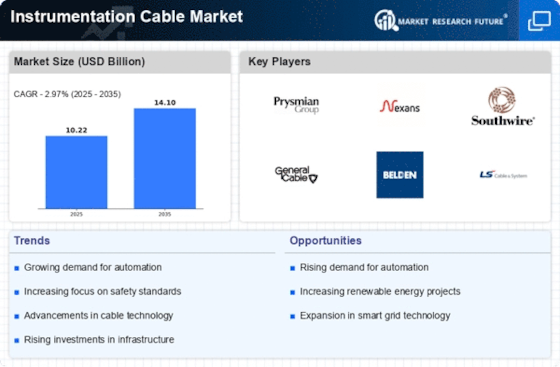
As per Market Research Future analysis, the Instrumentation Cable Market Size was valued at USD 6,330.7 million in 2024. The Instrumentation Cable Industry is projected to grow from USD 6,577.6 million in 2025 to USD 10,007.3 Million by 2035, exhibiting a compound annual growth rate (CAGR) of 4.3% during the forecast period (2025 - 2035).

Key Market Trends & Highlights

The Instrumentation Cable Market exhibits dynamic trends shaped by regulatory pressures, technological innovations, and expanding applications across automotive sectors.

  • Industrial automation accelerates demand for high-performance cables in process control. Sectors like oil & gas, chemicals, and pharmaceuticals adopt these for real-time monitoring.
  • Fiber optic cables lead due to high bandwidth and immunity to electromagnetic interference. They outperform traditional copper in speed and distance for signal transmission, dominating market share amid IoT expansion.
  • Twisted pair shielded cables emerge fastest-growing, ideal for noisy industrial settings with enhanced noise rejection. Hybrid designs combining fiber and copper gain traction for versatile applications.
  • Rising renewable projects boost specialized cables for solar farms, wind turbines, and smart grids. Power generation end-use sees heightened needs for durable, weather-resistant options amid global energy transitions.
  • Industrial Internet of Things (IIoT) drives cables with advanced connectivity for remote analytics. Demand surges for IoT-enabled monitoring in utilities, oil & gas, and aerospace, supporting data-heavy networks.

Market Size & Forecast

2024 Market Size 6,330.7 (USD Million)
2035 Market Size 10,007.3 (USD Million)
CAGR (2025 - 2035) 4.3%

Major Players

Belden Inc, Prysmian S.p.A, NEXANS, KEI Industries Limited, Thermo Cables, Tratos, Eland Cables, Top Cable, Allied Wire & Cable, Inc, Bahra Electric, Southwire Company, LLC and LS Cable & System Ltd.
Our Impact
Enabled $4.3B Revenue Impact for Fortune 500 and Leading Multinationals
Partnering with 2000+ Global Organizations Each Year
30K+ Citations by Top-Tier Firms in the Industry

Instrumentation Cable Market Trends

According to Market Research Future (MRFR), the global drive monitoring system market has been experiencing significant growth in recent years and is projected to reach USD 10,007.3 million by 2035, growing at a compound annual growth rate (CAGR) of 4.3 % during the forecast period from 2025 to 2035. According to authoritative sources such as the International Renewable Energy Agency (IRENA), global renewable power capacity reached 4,448 gigawatts (GW) in 2024, with renewables accounting for over 90% of total power expansion and a record annual growth rate of 15.1%.

This unprecedented growth is underpinned by major policy initiatives and investments, with countries like China, India, and those in the European Union leading the charge. India, for example, achieved a record annual capacity addition of 29.52 GW in the financial year 2024–25, bringing its total installed renewable energy capacity to 220.10 GW as of March 31, 2025. The Ministry of New and Renewable Energy (MNRE) reports that solar energy contributed the most to this expansion, with 23.83 GW added in a single year, underscoring the sector’s dynamic growth and its reliance on advanced infrastructure. 

Additionally, data from Ember further highlights the rapid growth of renewables: since 2000, their share of global electricity has risen from 19% to over 30%, with solar and wind power expanding from 0.2% to a record 13.4% in 2023. Solar has become the main driver of electricity growth, adding more than twice as much new electricity generation as coal in 2023. For the nineteenth consecutive year, solar maintained its status as the fastest-growing electricity source and, for the second year running, surpassed wind as the largest contributor to new electricity generation.

Government-backed initiatives and international commitments are further amplifying the demand for specialized instrumentation cables. The Indian government’s ‘Panchamrit’ goals aim to achieve 500 GW of non-fossil fuel-based capacity by 2030, while the European Union’s REPowerEU Plan and China’s 14th Five-Year Plan for Renewable Energy set ambitious targets for renewable deployment. These policies not only encourage investment in new renewable projects but also emphasize the need for advanced automation and digitalization, both of which rely on high-performance instrumentation cabling.

Instrumentation Cable Market Drivers

Increased Investments in Infrastructure Development Driving the Need For Advanced Cabling Solutions

Increased investments in infrastructure development are acting as a powerful catalyst for the growth of the Instrumentation Cable Market, as they drive the need for sophisticated and reliable cabling solutions across sectors such as power, transport, industrial automation, and telecommunications. As both public and private entities channel extensive resources into upgrading traditional and digital infrastructure, the demand for high-performance instrumentation cables has intensified. In Europe, for instance, the G20’s Global Infrastructure Outlook projects an infrastructure investment gap of up to USD 2 trillion by 2040. Efforts to close this gap are well underway. The European Investment Bank’s 2023 Market Update notes that the transport sector led public-private partnership (PPP) activity, contributing around Euro 9.1 billion in transactions, up from Euro 5.2 billion in 2022. France, alone, has over 50 infrastructure projects in the pipeline, with the environmental sector accounting for 45% and transport 36%.

Moreover, the European Union’s Cohesion Policy has allocated Euro 392 billion, with substantial funding routed through the European Regional Development Fund (ERDF) and the Cohesion Fund for infrastructure development. In parallel, the Connecting Europe Facility (CEF) has earmarked Euro 33.71 billion (2021–2027) to enhance transport, energy, and digital service networks across the region. India, too, is ramping up infrastructure development to become a USD 26 trillion economy, according to IBEF. The government’s National Infrastructure Pipeline (NIP), in synergy with Make in India and Production-Linked Incentive (PLI) schemes, is driving this growth. In the Interim Budget 2024–25, the capital investment outlay for infrastructure rose by 11.1% to Rs. 11.11 lakh crore (USD133.86 billion), or 3.4% of GDP. Railways alone received Rs. 2.55 lakh crore (USD30.72 billion), a 5.8% increase over the previous year. The NIP now covers 9,142 projects across 34 sub-sectors, with approximately 2,476 projects under development worth USD 1.9 trillion, half of which are in transportation, including 3,906 focused on roads and bridges.

Rising Adoption of Automation in Manufacturing Processes Boosting the Demand For Instrumentation Cables

The rising adoption of automation in manufacturing processes is emerging as a crucial driving force for the Instrumentation Cable Market. As industries across the globe strive to enhance efficiency, productivity, and operational precision, automation technologies such as distributed control systems (DCS), programmable logic controllers (PLC), SCADA systems, and IoT-based smart sensors are becoming integral components of modern production environments. Instrumentation cables form the essential nervous system of these systems, enabling seamless data transmission between sensors, controllers, and final control elements. Their role in facilitating real-time monitoring, control, and feedback mechanisms is critical to achieving the precision and responsiveness that automation demands. Industries such as oil & gas, pharmaceuticals, chemicals, food & beverages, pulp & paper, and water treatment are increasingly automating their processes to reduce human error, lower operational costs, and comply with stringent safety and environmental standards. In these sectors, instrumentation cables are essential for ensuring uninterrupted signal integrity and resistance to electromagnetic interference, extreme temperatures, and corrosive environments. For example, in a pharmaceutical manufacturing unit, accurate temperature, pressure, and flow control are paramount to maintaining product quality and regulatory compliance—instrumentation cables enable this precision by connecting sophisticated monitoring and control devices.

Market Segment Insights

By shielding: Braid (Largest) vs. Combination of Braid and Foil (Fastest-Growing)

Based on Shielding, the Instrumentation Cable Market has been segmented into Braid, Foil and Combination of Braid and Foil. The Instrumentation Cable Market segmentation, based on Shielding, has been segmented into Braid, Foil and Combination of Braid and Foil. In, the Foil segment drove the Instrumentation Cable Market by holding a substantial market share. Foil shielding is another prevalent approach in the Instrumentation Cable Market, particularly valued for its ability to provide nearly 100% coverage against electromagnetic interference. This shielding is typically constructed from a thin layer of aluminum foil laminated to a polyester backing, which is wrapped around the cable conductors. Foil shielding is lightweight, easy to produce, and offers excellent flexibility, making it suitable for applications where cable weight and diameter are critical considerations. Its primary advantage lies in its effectiveness at attenuating high-frequency EMI, which is crucial in environments with significant radio frequency interference. However, foil shields have limited mechanical strength and flex life, which can make them less suitable for applications involving frequent bending or physical stress. Termination of foil shielding requires the use of a drain wire to ensure proper grounding, which can complicate installation compared to braid shields. Despite these limitations, foil shielding remains a cost-effective and reliable solution for many instrumentation cable applications, especially in fixed or low-stress environments.

By Application: Industrial Automation (largest) vs. Power Generation and Distribution (Fastest-Growing)

Based on applications, the Instrumentation Cable Market has been segmented into Industrial Automation, Process Control, Power Generation and Distribution, Oil and Gas, Aerospace and Defense and Others. In the Industrial Automation segment drove the Instrumentation Cable Market by holding a substantial market share. Industrial automation is the largest and fastest-growing application segment for instrumentation cables, driven by the global push toward smart manufacturing and Industry 4.0 initiatives. Instrumentation cables are essential for connecting sensors, actuators, and control systems within automated production lines, enabling real-time data acquisition, monitoring, and process optimization. The demand for reliable, interference-resistant cabling has surged as factories adopt robotics, IoT devices, and advanced control systems to improve efficiency, reduce human error, and enhance safety. The robust growth in this segment is supported by significant investments in automation across industries such as automotive, electronics, and consumer goods manufacturing’s.

By Conductor: Copper, Aluminum vs. Silver-Plated Copper (Fastest-Growing)

Based on Conductor, the Instrumentation Cable Market has been segmented into Copper, Aluminum, Steel, Silver-Plated Copper and Tinned Copper. In the Copper segment drove the Instrumentation Cable Market by holding a substantial market share. Copper is the most widely used conductor material in the Instrumentation Cable Market, prized for its exceptional electrical conductivity, mechanical strength, and durability. Its high conductivity ensures efficient signal transmission with minimal loss, making it ideal for applications where reliable data and control signals are critical, such as industrial automation, process control, and oil and gas operations. Copper conductors are available in both solid and stranded forms, with stranded copper offering greater flexibility for installations that require frequent bending or movement.

By Jacket: PVC vs. TPE and FEP (Fastest-Growing)

Based on Jacket, the Instrumentation Cable Market has been segmented into PVC, XLPE, FR-PVC, TPE and FEP. In, the PVC segment drove the Instrumentation Cable Market by holding a substantial market share. Polyvinyl Chloride (PVC) is the most widely used jacket material in the Instrumentation Cable Market due to its affordability, versatility, and robust protection against environmental hazards. PVC jackets offer excellent resistance to oils, acids, moisture, sunlight, and abrasion, making them suitable for a broad range of indoor and outdoor applications, including direct burial, street lighting, and industrial control systems. While PVC is inherently flame retardant, it can become brittle in extremely cold environments and produces toxic smoke and corrosive gases when burned, which limits its suitability for confined or public spaces. Despite these drawbacks, its cost-effectiveness and reliable performance ensure its continued dominance in general-purpose instrumentation cables. PVC-jacketed cables are commonly found in process control, building automation, and manufacturing, where robust protection and moderate environmental resistance are sufficient.

By Type: Twisted Pair Shielded (Largest) vs. Multiconductor Cable (Fastest-Growing)

Based on Type, the Instrumentation Cable Market has been segmented into Twisted Pair Shielded, Twisted Pair Unshielded, Coaxial Cable, Multiconductor Cable and Fiber Optic Cable. The Twisted Pair Shielded segment drove the Instrumentation Cable Market by holding a substantial market share. Twisted pair shielded instrumentation cables are widely used in industrial environments where reliable signal transmission is critical and where electromagnetic interference (EMI) is a concern. These cables consist of two insulated conductors twisted together, with an additional conductive shield, typically made of aluminum foil or braided copper, surrounding the pair. The shield provides robust protection against external noise and crosstalk, making these cables ideal for applications in oil and gas, chemical processing, and power generation plants, where electrical interference from heavy machinery and high-voltage equipment is common. The versatility and reliability of twisted pair shielded cables make them a staple in instrumentation and control systems, ensuring stable communication between sensors, controllers, and monitoring devices.

Get more detailed insights about Instrumentation Cable Market

Regional Insights

North America: Growth in Automation

North America shows a significant growth in Automation, IIoT adoption, and infrastructure spending in sectors like oil & gas, petrochemicals, and mining are fueling cable demand. Regional players (e.g, KEI Industries, LS Cable & Systems) are expanding capacity and technology partnerships to supply both domestic and export markets. While commodity pricing pressures are common, the scale of business, cost competitiveness, and policy support make APAC the most dynamic region around instrumentation cabling. The industry is rapidly evolving as OEMs and fleet operators prioritize lowering accidents caused by weariness and distraction while improving overall in-cabin safety.

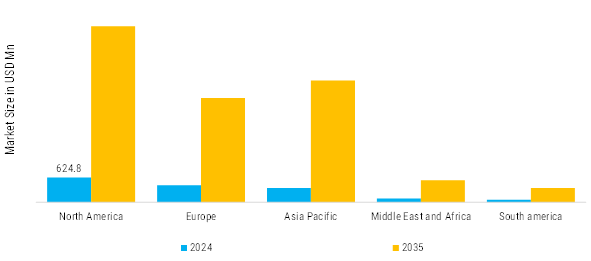
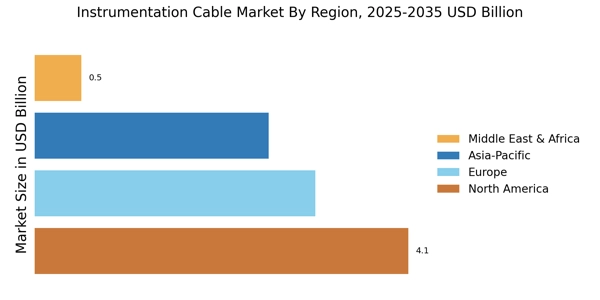
Instrumentation Cable Market Segment Insights Regional Insights

Europe: Emerging Automation

The European instrumentation cable market thrives on automation, renewable energy, and smart infrastructure. Digital technologies and automation fuel needs for reliable signal transmission in refineries, power plants, and smart factories. Renewable energy integration, including wind and solar grids, demands durable cables for monitoring. EU regulations like REACH and RoHS push low-smoke zero-halogen (LSZH) options for safety. Germany leads via its Renewable Energy Act, boosting smart grids and industrial parks. UK market nears USD 600 million by 2034, powered by smart cities and manufacturing upgrades. France and Nordics emphasize green tech, while Eastern Europe like Poland grows through nearshoring

Asia-Pacific: Rapidly Growing Industrialization Sector

The Asia Pacific dominates the Instrumentation Cable Market with the largest regional share. Rapid industrialization and infrastructure growth in China and India propel this leadership, fueled by power, oil & gas, and manufacturing expansions. The region commands around 41.6% of global demand in 2025. China's Belt and Road Initiative and India's Make in India campaign accelerate demand via power plants, smart grids, and renewables. Heavy investments in solar, wind, and petrochemicals require reliable signal cables for monitoring. Automation in automotive and electronics sectors, especially Japan and South Korea, boosts high-performance needs.

Middle East and Africa: Emerging Instrumentation

The Middle East & Africa area is Middle East & Africa (MEA) represents a growing yet smaller segment of the Instrumentation Cable Market, anchored by oil & gas infrastructure and emerging industrialization. The MEA region also has high potential in adopting DMS in the market, given increasing market volume with more and more vehicle sales, urbanization, and the fact that people are becoming more aware of safety. MEA instrumentation cable demand reached USD 373.88 million in 2024, with forecasts emphasizing steady revenue gains through 2033. Standard cables dominate as the largest segment, supporting utilities and extraction industries.

South America: Modernization of energy Infrastructure

South America holds the second-largest share in the Latin America instrumentation cable market after the broader region. Oil & gas dominance, particularly in Brazil and Venezuela, drives demand for robust signal transmission in extraction and refining. Growth aligns with foreign investments in energy infrastructure and power grids. Brazil leads via Petrobras' operations and pre-salt oil fields, commanding significant market tables for conductors and applications. Argentina follows with projections for product types and end-uses through 2030. Mexico adds volume in cables, though focused northward.

Instrumentation Cable Market Regional Image

Key Players and Competitive Insights

Many global, regional, and local vendors characterize the Instrumentation Cable Market. The market is highly competitive, with all the players competing to gain market share. Intense competition, rapid advances in technology, frequent changes in government policies, and environmental regulations are key factors that confront market growth. The vendors compete based on cost, product quality, reliability, and government regulations. Vendors must provide cost-efficient, high-quality products to survive and succeed in an intensely competitive market.
The major players in the market include Belden Inc, Prysmian S.p.A, NEXANS, KEI Industries Limited, Thermo Cables, Tratos, Eland Cables, Top Cable, Allied Wire & Cable, Inc, Bahra Electric, Southwire Company, LLC and LS Cable & System Ltd. The Instrumentation Cable Market is a consolidated market due to increasing competition, acquisitions, mergers, and other strategic market developments and decisions to improve operational effectiveness.
Key Companies in the Instrumentation Cable Market include

Industry Developments

In 2021, Prysmian's global manufacturing network includes dedicated facilities for instrumentation cable production in key markets, ensuring proximity to major industrial clusters and enabling customized solutions for regional requirements.

Future Outlook

Instrumentation Cable Market Future Outlook

The Instrumentation Cable Market is projected to grow at a 4.3% CAGR from 2025 to 2035, driven by growing geriatric population and technological advancements.
The future of the Instrumentation Cable Market is defined by Industry 4.0 and the transition to renewable energy. Increasing demand for precise signal transmission in automated factories, smart grids, and oil and gas refineries is driving the shift toward high-performance, interference-resistant cabling solutions.

New opportunities lie in:

  • Growing Renewable Energy Sector Creating Demand for Specialized Instrumentation Cables
  • Technological Advancements Leading to the Development of Innovative Cabling Solutions

By 2035, the market is expected to achieve robust growth, reflecting evolving technological demands.

Market Segmentation

Instrumentation Cable Market Type Outlook

  • Twisted Pair Shielded
  • Twisted Pair Unshielded
  • Coaxial Cable
  • Multiconductor Cable
  • Fiber Optic Cable

Instrumentation Cable Market Shielding Outlook

  • Braid
  • Foil
  • Combination of Braid and Foil

Instrumentation Cable Market Application Outlook

  • Industrial Automation
  • Process Control
  • Power Generation and Distribution
  • Oil and Gas
  • Aerospace and Defense

Instrumentation Cable Market Jacket Material Outlook

  • PVC
  • XLPE
  • FR-PVC
  • TPE
  • FEP

Instrumentation Cable Market Conductor Material Outlook

  • Copper
  • Aluminum
  • Steel
  • Silver-Plated Copper
  • Tinned Copper

Report Scope

Market Size 2024

6,330.7 (USD Million)

Market Size 2025

6,577.6 (USD Million)

Market Size 2035

10,007.34 (USD Million)

Compound Annual Growth Rate (CAGR)

4.3% (2025 - 2035)

Report Coverage

Revenue Forecast, Competitive Landscape, Growth Factors, and Trends

Base Year

2024

Market Forecast Period

2025 - 2035

Historical Data

2019 - 2023

Market Forecast Units

USD Million

Key Companies Profiled

Belden Inc, Prysmian S.p.A, NEXANS, KEI Industries Limited, Thermo Cables, Tratos, Eland Cables, Top Cable, Allied Wire & Cable, Inc, Bahra Electric, Southwire Company, LLC, LS Cable & System Ltd

Segments Covered

By Cable Type, By Application, By Conductor Material, By Shielding, By Jacket Material

Key Market Opportunities

·         Growing Renewable Energy Sector Creating Demand for Specialized Instrumentation Cables

·         Technological Advancements Leading to the Development of Innovative Cabling Solutions

Key Market Dynamics

·         Increased Investments in Infrastructure Development Driving the Need for Advanced Cabling Solutions

·         Rising Adoption of Automation in Manufacturing Processes Boosting the Demand for Instrumentation Cables

Region Covered

North America, Europe, Asia-Pacific, South America, Middle East & Africa.


Leave a Comment

FAQs

How much is the Instrumentation Cable Market?

The Instrumentation Cable Market size is expected to be valued at USD 6,577.6 Million in 2023.

What is the growth rate of the Instrumentation Cable Market?

The global market is projected to grow at a CAGR of 4.3% during the forecast period, 2025-2035.

Which region held the largest market share in the Instrumentation Cable Market?

North America had the largest share of the global market.

Who are the key players in the Instrumentation Cable Market?

The key players in the market are Belden Inc, Prysmian S.p.A, NEXANS, KEI Industries Limited, Thermo Cables, Tratos, Eland Cables, Top Cable, Allied Wire & Cable, Inc, Bahra Electric, Southwire Company, LLC, LS Cable & System Ltd.

Which component segment led the Instrumentation Cable Market?

The Automotive dominated the market in 2025

Download Free Sample

Kindly complete the form below to receive a free sample of this Report

Compare Licence

×
Features License Type
Single User Multiuser License Enterprise User
Price $4,950 $5,950 $7,250
Maximum User Access Limit 1 User Upto 10 Users Unrestricted Access Throughout the Organization
Free Customization
Direct Access to Analyst
Deliverable Format
Platform Access
Discount on Next Purchase 10% 15% 15%
Printable Versions