×
Request Free Sample ×

Kindly complete the form below to receive a free sample of this Report

* Please use a valid business email

Leading companies partner with us for data-driven Insights

clients tt-cursor
Hero Background

Germany Streaming Media Device Market

ID: MRFR/ICT/61333-HCR
200 Pages
Aarti Dhapte
February 2026

Germany Streaming Media Device Market Size, Share and Trends Analysis Report By Device Type (Gaming Consoles, Media Streamers), By Resolution (720p, 1080p, 4K), By Application (Gaming, Audio/Video Entertainment, E-learning, Others) and By End-Use (Commercial, Residential)- Forecast to 2035

Share:
Download PDF ×

We do not share your information with anyone. However, we may send you emails based on your report interest from time to time. You may contact us at any time to opt-out.

Germany Streaming Media Device Market Infographic
Purchase Options

Germany Streaming Media Device Market Summary

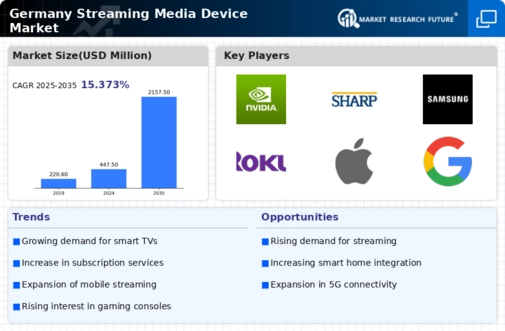
As per MRFR analysis, the Germany streaming media device market is projected to grow from USD 0.647 Billion in 2025 to USD 2.22 Billion by 2035, exhibiting a compound annual growth rate (CAGR) of 13.09% during the forecast period (2025 - 2035).

Key Market Trends & Highlights

The Germany streaming media device market is experiencing a dynamic shift towards integration and user-centric features.

  • Smart TVs remain the largest segment, driven by their advanced features and integration capabilities.
  • Streaming sticks are the fastest-growing segment, appealing to consumers seeking affordable and portable options.
  • Wireless streaming devices dominate the market, while wired devices are witnessing rapid growth due to their reliability.
  • Increased internet penetration and a shift towards subscription-based models are key drivers propelling market expansion.

Market Size & Forecast

2024 Market Size 0.573 (USD Billion)
2035 Market Size 2.22 (USD Billion)
CAGR (2025 - 2035) 13.09%

Major Players

Amazon (DE), Apple (DE), Google (DE), Roku (US), Samsung (KR), Sony (JP), Xiaomi (CN), LG (KR), Philips (NL)

Our Impact
Enabled $4.3B Revenue Impact for Fortune 500 and Leading Multinationals
Partnering with 2000+ Global Organizations Each Year
30K+ Citations by Top-Tier Firms in the Industry

Germany Streaming Media Device Market Trends

The germany streaming media device market is currently experiencing a dynamic evolution, characterized by a growing consumer preference for on-demand content and the increasing integration of smart technologies. As more households adopt high-speed internet, the demand for streaming devices has surged, enabling users to access a plethora of entertainment options from various platforms. This shift in viewing habits appears to be driven by a desire for convenience and flexibility, allowing individuals to curate their own viewing experiences. Furthermore, the proliferation of original content from streaming services has likely contributed to the appeal of these devices, as consumers seek exclusive programming that aligns with their interests. In addition to changing consumer preferences, the market is also witnessing advancements in technology that enhance user experience. The introduction of features such as voice control, personalized recommendations, and seamless connectivity with other smart home devices indicates a trend towards more integrated and user-friendly solutions. As competition intensifies among streaming service providers, the emphasis on innovative features may become a key differentiator in attracting and retaining customers. Overall, the germany streaming media device market seems poised for continued growth, driven by evolving consumer demands and technological advancements.

Rise of Smart Home Integration

The integration of streaming media devices with smart home ecosystems is becoming increasingly prevalent. Consumers are seeking devices that not only provide access to streaming content but also seamlessly connect with other smart appliances. This trend suggests a shift towards a more interconnected home environment, where entertainment options are easily accessible and controllable through a single interface.

Emphasis on Original Content

There is a noticeable focus on original content production among streaming platforms in Germany. As competition escalates, providers are investing heavily in exclusive programming to attract subscribers. This trend indicates that consumers are drawn to unique offerings that cannot be found elsewhere, thereby influencing their choice of streaming device.

Growing Demand for User-Friendly Interfaces

The demand for intuitive and user-friendly interfaces is on the rise within the germany streaming media device market. Consumers are increasingly favoring devices that offer easy navigation and personalized experiences. This trend highlights the importance of design and functionality in enhancing user satisfaction and engagement.

Germany Streaming Media Device Market Drivers

Diverse Content Offerings

The Germany streaming media device market is significantly influenced by the diverse content offerings available to consumers. With a plethora of streaming platforms such as Netflix, Amazon Prime Video, and local services like Joyn, viewers are presented with an extensive range of options. As of January 2026, the number of streaming subscriptions in Germany has surpassed 30 million, reflecting a growing appetite for varied content. This diversity not only attracts new users but also encourages existing users to upgrade their devices for enhanced viewing experiences. The competition among streaming services to provide exclusive content further fuels the demand for advanced streaming media devices, indicating a vibrant landscape for the Germany streaming media device market.

Increased Internet Penetration

The Germany streaming media device market is experiencing growth due to the increasing penetration of high-speed internet. As of January 2026, approximately 90 percent of households in Germany have access to broadband internet, facilitating seamless streaming experiences. This widespread connectivity enables consumers to access a variety of streaming services, thereby driving demand for streaming media devices. The availability of affordable data plans and advancements in network infrastructure further support this trend. Consequently, the market for streaming devices is likely to expand as more consumers seek to utilize their internet connections for entertainment purposes. This trend indicates a robust future for the Germany streaming media device market, as internet accessibility continues to improve.

Growing Popularity of Mobile Streaming

The Germany streaming media device market is also influenced by the growing popularity of mobile streaming. With the proliferation of smartphones and tablets, consumers are increasingly consuming content on-the-go. As of January 2026, mobile streaming accounts for nearly 40 percent of total streaming consumption in Germany. This trend has prompted manufacturers to develop devices that integrate seamlessly with mobile platforms, enhancing user convenience. The ability to cast content from mobile devices to larger screens further drives the demand for compatible streaming media devices. As mobile streaming continues to gain traction, it is likely to shape the future landscape of the Germany streaming media device market.

Shift Towards Subscription-Based Models

The Germany streaming media device market is witnessing a notable shift towards subscription-based models. As consumers increasingly prefer on-demand content, subscription services have gained traction, with over 60 percent of German households subscribing to at least one streaming service as of January 2026. This trend has led to a corresponding rise in the demand for streaming media devices that support these services. The convenience of accessing a wide array of content through a single device appeals to consumers, prompting them to invest in advanced streaming technologies. This shift not only enhances user experience but also positions the Germany streaming media device market for sustained growth as subscription models continue to evolve.

Technological Advancements in Streaming Devices

The Germany streaming media device market is propelled by rapid technological advancements in streaming devices. Innovations such as 4K resolution, HDR support, and voice control capabilities are becoming standard features in new devices. As of January 2026, the market has seen a surge in the adoption of smart TVs and streaming sticks that offer these advanced functionalities. Consumers are increasingly inclined to upgrade their devices to enjoy superior picture quality and enhanced user interfaces. This technological evolution not only enriches the viewing experience but also drives competition among manufacturers, leading to a dynamic and rapidly evolving Germany streaming media device market.

Market Segment Insights

By Device Type: Smart TV (Largest) vs. Streaming Stick (Fastest-Growing)

In the Germany streaming media device market, Smart TVs hold the largest share as consumers increasingly opt for built-in streaming capabilities. These devices have become a central part of entertainment systems, driven by their user-friendly interfaces and smooth integration with various streaming services. Meanwhile, Streaming Sticks are gaining traction, appealing to those looking for affordable and portable solutions to access streaming content, making them a popular choice among consumers. Growth in this market segment is being propelled by several factors, including the rising preference for on-demand content and the shift away from traditional cable subscriptions. Additionally, advancements in technology and user experience are making devices like Streaming Sticks more appealing to a broader audience, thus stimulating significant market growth. This trend indicates a robust competition among device types as they vie for consumer attention in the ever-evolving landscape of digital media consumption.

Smart TV (Dominant) vs. Streaming Stick (Emerging)

Smart TVs are the dominant force in the Germany streaming media device market, characterized by their seamless integration of internet connectivity and rich streaming content. They cater to consumers seeking convenience and an all-in-one entertainment solution, featuring various apps and services that enhance user experiences. On the other hand, Streaming Sticks represent an emerging segment that offers portability and cost-effectiveness, appealing particularly to budget-conscious consumers. This category caters to users who may not have a Smart TV but desire access to streaming services through their existing television sets. The versatility and ease of use of Streaming Sticks make them an attractive option for many households, complementing the established presence of Smart TVs.

By Connectivity Type: Wireless (Largest) vs. Wired (Fastest-Growing)

In the Germany streaming media device market, the distribution among connectivity types reveals that wireless connectivity dominates, benefiting from widespread Wi-Fi availability and consumer preference for convenience. Wired connections, while traditionally strong due to their stability and speed, are witnessing a resurgence in popularity as users look for reliable streaming experiences for high-definition content. Hybrid options are also gaining traction, providing flexibility and the best of both worlds.

Connectivity: Wireless (Dominant) vs. Wired (Emerging)

Wireless connectivity has established itself as the dominant choice among German consumers seeking streaming media devices, primarily due to its ease of setup and the growing ubiquity of wireless networks in homes. This segment offers a user-friendly experience but may face challenges such as inconsistent performance in area with poor signal strength. On the other hand, wired connectivity is emerging as a preferred option for discerning consumers who prioritize stability and faster data transmission rates, especially for activities like online gaming or streaming 4K content. This segment is witnessing a rebound, spurred by users’ reassessment of their connectivity needs in the context of increased home digital activities.

By User Demographics: Age Group (Largest) vs. Income Level (Fastest-Growing)

In the Germany streaming media device market, the user demographics reflect a diverse audience with significant engagement. The largest age group utilizing these devices is between 25 to 34 years, reflecting a tech-savvy cohort that values high-quality streaming options. Close behind are the 35 to 44-year-olds, indicating a broad appeal of streaming services across adult age brackets. Additionally, the income level segment reveals a noteworthy divide, with middle-income households accounting for a substantial portion of users, leveraging affordability for media consumption.

Age Group: 25-34 (Dominant) vs. Income Level: Middle-Income (Emerging)

The age group of 25-34 years stands as the dominant segment in the Germany streaming media device market, characterized by their familiarity with technology and preference for on-demand content. This demographic values high-speed internet and high-definition streaming capabilities, leading to their robust consumption rates. On the other hand, middle-income households represent an emerging segment, showcasing a penchant for versatile streaming options that align with budgetary constraints. This group is increasingly adopting devices that offer both affordability and access to a wide range of content, indicating a shift towards value-based decisions in the streaming landscape.

By Content Type: Video Streaming (Largest) vs. Music Streaming (Fastest-Growing)

In the German streaming media device market, video streaming holds a significant portion of the overall content type segment, reflecting consumer preference for a diverse range of video content including films, television shows, and original programming. Music streaming, while smaller in market share, is rapidly gaining traction as platforms expand their offerings and improve user experience, responding to increased consumer demand for on-the-go music consumption.

Content Type: Video Streaming (Dominant) vs. Live Broadcasting (Emerging)

Video streaming continues to dominate the German streaming media device segment, characterized by established platforms offering extensive libraries and user-friendly interfaces. This segment thrives on the popularity of binge-watching and exclusive content, driving subscriptions and engagement. In contrast, live broadcasting is emerging as a significant player, appealing particularly to younger audiences and sports fans seeking real-time interaction. As technology evolves, live broadcasting's unique ability to provide spontaneous, engaging content is attracting new users, albeit from a smaller base compared to video streaming.

Get more detailed insights about Germany Streaming Media Device Market

Key Players and Competitive Insights

The competitive dynamics within the streaming media device market in Germany are characterized by a blend of innovation, strategic partnerships, and a focus on user experience. Key players such as Amazon (DE), Apple (DE), and Google (DE) are at the forefront, each leveraging their unique strengths to capture market share. Amazon (DE) emphasizes its ecosystem integration, particularly through its Fire TV devices, which are designed to seamlessly connect with its broader suite of services. Apple (DE) continues to focus on premium offerings with its Apple TV, enhancing user engagement through exclusive content and a robust app ecosystem. Meanwhile, Google (DE) is pushing the boundaries of smart technology with its Chromecast devices, integrating AI capabilities to enhance user interaction and personalization. Collectively, these strategies foster a competitive environment that prioritizes innovation and customer-centric solutions.

In terms of business tactics, companies are increasingly localizing manufacturing and optimizing supply chains to enhance efficiency and responsiveness to market demands. The competitive structure of the market appears moderately fragmented, with several players vying for dominance. However, the influence of major companies like Amazon (DE) and Apple (DE) is substantial, as they set benchmarks for quality and innovation that smaller competitors strive to meet.

In December 2025, Amazon (DE) announced a strategic partnership with local content providers to enhance its streaming offerings, aiming to diversify its content library and attract a broader audience. This move is significant as it not only strengthens Amazon's position in the market but also reflects a growing trend towards localized content that resonates with German consumers. By aligning with local creators, Amazon (DE) is likely to enhance user loyalty and engagement, which are critical in a competitive landscape.

In November 2025, Apple (DE) launched a new feature for its Apple TV that integrates advanced AI-driven recommendations, personalizing content suggestions based on user behavior. This strategic enhancement is crucial as it positions Apple (DE) as a leader in user experience, potentially increasing viewer retention and satisfaction. The integration of AI into streaming services is becoming a key differentiator, and Apple (DE) appears to be capitalizing on this trend effectively.

In October 2025, Google (DE) unveiled a new version of its Chromecast device, which includes enhanced smart home integration capabilities. This strategic move is indicative of a broader trend towards interconnected devices, allowing users to control their smart home environments seamlessly through their streaming devices. By expanding its product functionality, Google (DE) is likely to attract tech-savvy consumers who value convenience and integration.

As of January 2026, the competitive landscape is increasingly defined by trends such as digitalization, sustainability, and AI integration. Strategic alliances are becoming more prevalent, as companies recognize the value of collaboration in enhancing their service offerings. Looking ahead, competitive differentiation is expected to evolve, with a shift from price-based competition to a focus on innovation, technology, and supply chain reliability. This transition suggests that companies will need to invest in cutting-edge technologies and sustainable practices to maintain their competitive edge in the dynamic streaming media device market.


Key Companies in the Germany Streaming Media Device Market include

Industry Developments

In recent months, the Germany Streaming Media Device Market has witnessed significant activity, particularly with companies like Amazon and Google launching new devices tailored to German consumers. The market continues to grow, with device sales increasing due to the rising demand for streaming services. For instance, in October 2023, Samsung introduced advanced features in its smart TVs, enhancing accessibility to various streaming platforms. Additionally, Nvidia announced advancements in their streaming technology, aiming to improve game streaming experiences, which is especially relevant given the growing popularity of cloud gaming in Germany.

On the mergers and acquisitions front, there have not been any notable activity specifically involving the companies of interest, such as Sony or Microsoft, related to the German market. 

Nevertheless, overall market valuations are rising, with estimates projecting further growth driven by an increased consumer shift to subscription-based services. Notably, in September 2022, Apple expanded its offerings in Germany by adding more local content options on Apple TV, appealing to a broader audience and contributing to competitive dynamics in the market. The Germany Streaming Media Device Market remains vibrant and competitive, fueled by technological advancements and evolving consumer preferences.

Future Outlook

Germany Streaming Media Device Market Future Outlook

The Germany streaming media device market is projected to grow at a 13.09% CAGR from 2025 to 2035, driven by increasing consumer demand and technological advancements.

New opportunities lie in:

  • Expansion of subscription-based content services
  • Development of integrated smart home streaming solutions
  • Partnerships with telecom providers for bundled offerings

By 2035, the market is expected to be robust, reflecting substantial growth and innovation.

Market Segmentation

Germany Streaming Media Device Market Device Type Outlook

  • Streaming Stick
  • Smart TV
  • Set-Top Box
  • Gaming Console

Germany Streaming Media Device Market Content Type Outlook

  • Video Streaming
  • Music Streaming
  • Gaming
  • Live Broadcasting

Germany Streaming Media Device Market Connectivity Type Outlook

  • Wired
  • Wireless
  • Hybrid

Germany Streaming Media Device Market User Demographics Outlook

  • Age Group
  • Income Level
  • Family Size

Report Scope

MARKET SIZE 20240.573(USD Billion)
MARKET SIZE 20250.647(USD Billion)
MARKET SIZE 20352.22(USD Billion)
COMPOUND ANNUAL GROWTH RATE (CAGR)13.09% (2024 - 2035)
REPORT COVERAGERevenue Forecast, Competitive Landscape, Growth Factors, and Trends
BASE YEAR2024
Market Forecast Period2025 - 2035
Historical Data2019 - 2024
Market Forecast UnitsUSD Billion
Key Companies ProfiledAmazon (DE), Apple (DE), Google (DE), Roku (US), Samsung (KR), Sony (JP), Xiaomi (CN), LG (KR), Philips (NL)
Segments CoveredDevice Type, Connectivity Type, User Demographics, Content Type
Key Market OpportunitiesGrowing demand for smart home integration in the germany streaming media device market.
Key Market DynamicsRising consumer demand for smart home integration drives competition among streaming media device manufacturers in Germany.
Countries CoveredGermany
Leave a Comment

FAQs

What is the current valuation of the Germany streaming media device market?

The market valuation was 0.573 USD Billion in 2024.

What is the projected market size for the Germany streaming media device market by 2035?

The projected valuation for 2035 is 2.22 USD Billion.

What is the expected CAGR for the Germany streaming media device market during the forecast period?

The expected CAGR from 2025 to 2035 is 13.09%.

Which companies are the key players in the Germany streaming media device market?

Key players include Amazon (DE), Apple (DE), Google (DE), Roku (US), Samsung (KR), Sony (JP), Xiaomi (CN), LG (KR), and Philips (NL).

How do streaming sticks perform in terms of market valuation?

Streaming sticks had a valuation of 0.143 USD Billion in 2024 and are projected to reach 0.56 USD Billion.

What is the market performance of smart TVs in the Germany streaming media device market?

Smart TVs were valued at 0.215 USD Billion in 2024 and are expected to grow to 0.88 USD Billion.

What are the connectivity types in the Germany streaming media device market?

The market segments include wired, wireless, and hybrid connectivity types.

How does the user demographic segmentation impact the market?

User demographics, including age group, income level, and family size, are crucial for market segmentation.

What is the valuation of video streaming content in the Germany streaming media device market?

Video streaming content was valued at 0.3 USD Billion in 2024 and is projected to reach 1.2 USD Billion.

What trends are emerging in the gaming console segment of the market?

Gaming consoles had a valuation of 0.1 USD Billion in 2024 and are expected to grow to 0.32 USD Billion.

Download Free Sample

Kindly complete the form below to receive a free sample of this Report

Compare Licence

×
Features License Type
Single User Multiuser License Enterprise User
Price $4,950 $5,950 $7,250
Maximum User Access Limit 1 User Upto 10 Users Unrestricted Access Throughout the Organization
Free Customization
Direct Access to Analyst
Deliverable Format
Platform Access
Discount on Next Purchase 10% 15% 15%
Printable Versions