×
Request Free Sample ×

Kindly complete the form below to receive a free sample of this Report

* Please use a valid business email

Leading companies partner with us for data-driven Insights

clients tt-cursor
Hero Background

GCC Streaming Media Device Market

ID: MRFR/ICT/61055-HCR
200 Pages
Aarti Dhapte
February 2026

GCC Streaming Media Device Market Research Report By Device Type (Gaming Consoles, Media Streamers), By Resolution (720p, 1080p, 4K), By Application (Gaming, Audio/Video Entertainment, E-learning, Others), and By End-Use (Commercial, Residential)-Forecast to 2035

Share:
Download PDF ×

We do not share your information with anyone. However, we may send you emails based on your report interest from time to time. You may contact us at any time to opt-out.

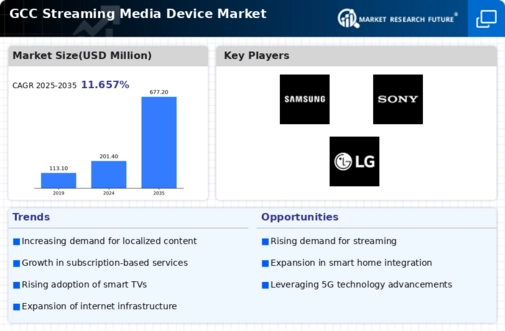
GCC Streaming Media Device Market Infographic
Purchase Options

GCC Streaming Media Device Market Summary

As per analysis, the GCC streaming media device market is projected to grow from USD 0.206 Billion in 2024 to USD 0.799 Billion by 2035, exhibiting a compound annual growth rate (CAGR) of 13.09% during the forecast period (2025 - 2035).

Key Market Trends & Highlights

The GCC streaming media device market is poised for substantial growth driven by technological advancements and evolving consumer preferences.

  • Video streaming remains the largest segment, reflecting a robust demand for diverse content offerings.
  • Smart TVs dominate the market, yet streaming sticks are emerging as the fastest-growing segment due to their affordability and convenience.
  • Integration with smart home technology enhances user experience, making devices more appealing to consumers.
  • Rising internet penetration and a shift in consumer behavior are key drivers propelling market expansion.

Market Size & Forecast

2024 Market Size 0.206 (USD Billion)
2035 Market Size 0.799 (USD Billion)
CAGR (2025 - 2035) 13.09%

Major Players

Amazon (AE), Apple (AE), Google (AE), Roku (US), Samsung (KR), Sony (JP), Xiaomi (CN), LG (KR), Huawei (CN)

Our Impact
Enabled $4.3B Revenue Impact for Fortune 500 and Leading Multinationals
Partnering with 2000+ Global Organizations Each Year
30K+ Citations by Top-Tier Firms in the Industry

GCC Streaming Media Device Market Trends

The gcc streaming media device market is currently experiencing a dynamic evolution, driven by a confluence of technological advancements and shifting consumer preferences. As digital content consumption continues to rise, there is a noticeable increase in demand for devices that facilitate seamless streaming experiences. This trend is further amplified by the proliferation of high-speed internet access across the region, enabling users to engage with a diverse array of content. Moreover, the growing popularity of smart home ecosystems appears to be influencing consumer choices, as individuals seek devices that integrate effortlessly with their existing technology. In addition, the gcc streaming media device market is characterized by a competitive landscape, with numerous players vying for market share. This competition fosters innovation, leading to the introduction of new features and functionalities that enhance user experience. Furthermore, the emphasis on localized content and services suggests that companies are increasingly tailoring their offerings to meet the unique preferences of consumers in the GCC region. As a result, the market is poised for continued growth, with potential opportunities for both established brands and new entrants to capitalize on emerging trends.

Integration with Smart Home Technology

The gcc streaming media device market is witnessing a trend towards integration with smart home technology. Consumers are increasingly seeking devices that can seamlessly connect with their home automation systems, allowing for enhanced control and convenience. This integration not only simplifies user experience but also encourages the adoption of streaming devices as central hubs for managing various smart home functionalities.

Localized Content Offerings

There is a growing emphasis on localized content within the gcc streaming media device market. Companies are recognizing the importance of catering to regional tastes and preferences, leading to the development of content libraries that resonate with local audiences. This trend not only enhances user engagement but also fosters brand loyalty as consumers find value in content that reflects their cultural context.

Enhanced User Experience through Innovation

Innovation plays a crucial role in shaping the gcc streaming media device market. Manufacturers are focusing on enhancing user experience by introducing advanced features such as voice control, personalized recommendations, and improved user interfaces. These innovations aim to simplify navigation and make content discovery more intuitive, ultimately driving consumer satisfaction and retention.

GCC Streaming Media Device Market Drivers

Diverse Content Offerings

The availability of diverse content offerings is a crucial driver for the GCC streaming media device market. As streaming platforms expand their libraries to include localized content, international films, and original programming, consumer interest in streaming devices grows. In January 2026, major streaming services are increasingly investing in regional content, recognizing the unique cultural preferences of GCC audiences. This strategy not only attracts subscribers but also encourages the purchase of streaming devices that provide access to these platforms. The GCC streaming media device market is thus poised for growth as content diversity continues to enhance the appeal of streaming services.

Shift in Consumer Behavior

The GCC streaming media device market is witnessing a paradigm shift in consumer behavior, with an increasing preference for on-demand content over traditional television. This trend is particularly pronounced among younger demographics, who favor flexibility and personalization in their viewing experiences. As of January 2026, surveys indicate that over 70 percent of consumers in the GCC region prefer streaming services for their entertainment needs. This shift is prompting manufacturers to innovate and enhance their streaming devices, ensuring compatibility with various platforms and services. Consequently, the GCC streaming media device market is likely to expand as more consumers opt for devices that cater to their evolving preferences.

Rising Internet Penetration

The GCC streaming media device market is experiencing a notable surge in demand, primarily driven by the increasing penetration of high-speed internet across the region. As of January 2026, internet penetration in GCC countries has reached approximately 99 percent, facilitating seamless access to streaming services. This connectivity enables consumers to engage with a plethora of content, thereby propelling the adoption of streaming media devices. The proliferation of affordable data plans further enhances this trend, allowing users to stream high-definition content without significant financial burden. Consequently, the GCC streaming media device market is likely to witness sustained growth as more households gain access to reliable internet services, fostering a culture of on-demand viewing.

Government Initiatives and Regulations

Government policies in the GCC region are increasingly supportive of the digital economy, which significantly impacts the streaming media device market. Initiatives aimed at enhancing digital infrastructure and promoting local content production are becoming more prevalent. For instance, the Saudi Vision 2030 and UAE Vision 2021 emphasize the importance of digital transformation, which includes the expansion of streaming services. These initiatives not only encourage investment in technology but also create a favorable environment for the growth of local streaming platforms. As a result, the GCC streaming media device market is likely to benefit from increased competition and innovation, ultimately enhancing consumer choice and experience.

Technological Advancements in Streaming Devices

Technological advancements play a pivotal role in shaping the GCC streaming media device market. Innovations such as 4K resolution, voice control, and integration with artificial intelligence are becoming standard features in new devices. As of January 2026, consumers are increasingly seeking devices that offer superior performance and enhanced user experiences. The introduction of smart features, such as personalized recommendations and seamless connectivity with other smart home devices, is likely to drive further adoption. Consequently, the GCC streaming media device market is expected to thrive as manufacturers continue to innovate and meet the growing demands of tech-savvy consumers.


Market Segment Insights

By Application: Video Streaming (Largest) vs. Gaming (Fastest-Growing)

In the GCC streaming media device market, video streaming emerges as the largest application segment, capturing the majority of user interest and device utilization. This is largely driven by the region's increasing preference for on-demand content and the growing availability of diverse streaming platforms. In comparison, gaming is considered the fastest-growing segment, fueled by a surge in interest in interactive entertainment and a rise in multiplayer platforms that attract a younger audience.

Content Consumption: Video Streaming (Dominant) vs. Gaming (Emerging)

Video streaming remains the dominant force in the GCC streaming media device market, characterized by a vast library of content available from various platforms like Netflix, Amazon Prime, and regional services. Its appeal lies in the convenience and a wide range of viewing options available to users. Conversely, gaming is rapidly emerging, surpassing traditional views as cloud gaming services gain traction. The increasing accessibility of advanced technology in devices also enhances user experiences while tapping into the competitive landscape of e-sports, drawing in a demographic keen on interactive entertainment.

By Device Type: Smart TV (Largest) vs. Streaming Stick (Fastest-Growing)

In the GCC streaming media device market, Smart TVs hold the largest market share, driven by the increasing demand for larger screens and integrated smart features. They are popular among households due to their convenience and enhanced viewing experience, enabling direct access to various streaming services without the need for additional devices. Following closely is the Streaming Stick, which has gained momentum and is quickly becoming a favorite for consumers seeking an affordable and flexible solution to access streaming platforms. Streamlined design and ease of use make them appealing, especially for those who prefer portability and simplicity in their setup. Growth in the segment is evident as consumers increasingly prioritize on-demand content consumption. Driving this trend are factors such as rising internet penetration, the proliferation of high-speed broadband services, and changing consumer preferences for customized viewing experiences. Moreover, the affordability and range of options in Streaming Sticks are attracting tech-savvy consumers looking for budget-friendly alternatives. Smart TVs continue to dominate due to their advanced features and brand loyalty; however, Streaming Sticks' rapid growth indicates a shift towards more accessible streaming solutions.

Smart TV (Dominant) vs. Streaming Stick (Emerging)

Smart TVs remain the dominant category within the GCC streaming media device market, thanks to their integration of advanced features like voice control, high-definition displays, and built-in access to popular streaming services. With major manufacturers continually upgrading technology, Smart TVs provide users with a comprehensive entertainment system at home, promoting longer viewing times and enhancing user engagement. In comparison, Streaming Sticks are emerging as a viable alternative, appealing particularly to millennials and consumers who value simplicity and affordability. Their small size, easy connectivity to existing televisions, and access to a plethora of apps make them an attractive option for casual viewers and individuals seeking to upgrade older TVs without incurring high costs. This dichotomy between the Dominant Smart TVs and the Emerging Streaming Sticks underscores the diversity in consumer preferences within the GCC streaming landscape.

By Connectivity Type: Wi-Fi (Largest) vs. Ethernet (Fastest-Growing)

In the GCC streaming media device market, Wi-Fi remains the dominant connectivity type, significantly leading in market share due to its widespread adoption and consumer convenience. Ethernet follows as a vital segment, although it maintains a smaller share in comparison. Other connectivity types like Bluetooth, Cellular, and Satellite, while important, account for a minor portion, reflecting niche usage scenarios within specific customer segments.

Wi-Fi (Dominant) vs. Ethernet (Emerging)

Wi-Fi technology has established its dominance in the GCC streaming media device market, favored for its ease of use and flexibility in connecting multiple devices without the need for physical cables. It is ideal for consumers seeking user-friendly solutions for streaming content at home. On the other hand, Ethernet is rapidly emerging as an alternative choice for streaming due to its reliability and speed, appealing to a segment of users who prioritize stable connections, especially for high-definition streaming and gaming. This growth is driven by increasing demand for high-bandwidth applications and the importance of latency-sensitive content delivery.

By User Demographics: Age Group (Largest) vs. Income Level (Fastest-Growing)

In the GCC streaming media device market, the user demographics reveal distinct preferences across age groups and income levels. Consumers aged 18-34 represent the largest segment, comprising a significant portion of streaming device users. This age group is characterized by a strong inclination toward digital consumption, leading the way in adoption rates for new technologies. Meanwhile, the income level segment displays varying interests, with higher-income households rapidly adopting streaming devices as they seek entertainment alternatives amid rising costs of traditional media.

Age Group: 18-34 (Dominant) vs. Income Level: High Income (Emerging)

The 18-34 age group remains dominant in the GCC streaming media device market, driven by their familiarity with technology and inclination toward on-demand content. This demographic, often referred to as 'digital natives,' values seamless streaming experiences and personalized content offerings. Conversely, the high-income segment is emerging as a critical market force. As disposable incomes rise, these consumers exhibit a willingness to invest in premium streaming devices and subscriptions, seeking enhanced features and better quality. Their rapid adoption is influenced by changing lifestyles and preferences for high-quality entertainment, presenting opportunities for manufacturers to cater to their unique demands.

By Content Type: Subscription-Based (Largest) vs. Ad-Supported (Fastest-Growing)

In the GCC streaming media device market, the content type segment is primarily dominated by Subscription-Based services, which capture a significant portion of the market share. This model attracts consumers with its promise of ad-free viewing and exclusive content. Meanwhile, Ad-Supported services are rapidly gaining traction, appealing to budget-conscious viewers, thus allowing advertisers access to a large audience. These two segments indicate the dual nature of content consumption preferences in the region.

Subscription-Based (Dominant) vs. Live Streaming (Emerging)

Subscription-Based services dominate the GCC streaming media device market, characterized by a well-established infrastructure and a loyal customer base. They offer extensive libraries of exclusive and original content, which entices consumers willing to pay for quality viewing experiences. In contrast, Live Streaming is an emerging segment that leverages real-time content delivery, appealing to audiences seeking immediacy, such as live sports events and news. While Subscription-Based services maintain market leadership, Live Streaming is capturing consumer interest quickly, as it offers dynamic and interactive viewing options, especially among younger demographics.

Get more detailed insights about GCC Streaming Media Device Market

Key Players and Competitive Insights

The GCC streaming media device market is characterized by a dynamic competitive landscape, driven by rapid technological advancements and shifting consumer preferences. Key players such as Amazon (AE), Apple (AE), and Google (AE) are strategically positioned to leverage their extensive ecosystems, focusing on innovation and regional expansion. Amazon (AE) emphasizes its Prime Video service, integrating it with its Fire TV devices, while Apple (AE) continues to enhance its Apple TV offerings with a focus on exclusive content and seamless integration with its other products. Google (AE) is enhancing its Chromecast devices, aiming to capitalize on the growing demand for smart home integration. Collectively, these strategies foster a competitive environment that prioritizes user experience and content accessibility.

In terms of business tactics, companies are increasingly localizing manufacturing and optimizing supply chains to enhance efficiency and reduce costs. The market structure appears moderately fragmented, with a mix of established brands and emerging players. This fragmentation allows for diverse consumer choices but also intensifies competition among key players, as they vie for market share through differentiated offerings and localized strategies.

In December 2025, Amazon (AE) announced a partnership with a leading regional telecommunications provider to bundle its Fire TV devices with high-speed internet packages. This strategic move is likely to enhance Amazon's market penetration by making its devices more accessible to consumers, particularly in areas with limited internet connectivity. By aligning with local service providers, Amazon (AE) not only expands its customer base but also strengthens its position against competitors by offering a more integrated service.

In November 2025, Apple (AE) launched a new version of its Apple TV, featuring enhanced gaming capabilities and a subscription model for exclusive content. This initiative appears to be a response to the growing trend of gaming on streaming devices, indicating Apple's intent to diversify its offerings and attract a broader audience. The integration of gaming could potentially redefine user engagement, positioning Apple (AE) as a leader in the convergence of gaming and streaming media.

In October 2025, Google (AE) unveiled a new version of its Chromecast, which includes advanced AI features for personalized content recommendations. This development suggests a strategic focus on leveraging artificial intelligence to enhance user experience, making content discovery more intuitive. By prioritizing AI integration, Google (AE) aims to differentiate its product in a crowded market, potentially increasing user retention and satisfaction.

As of January 2026, current trends in the GCC streaming media device market indicate a strong emphasis on digitalization, sustainability, and AI integration. Strategic alliances are increasingly shaping the competitive landscape, as companies recognize the value of collaboration in enhancing service offerings and expanding market reach. Looking ahead, competitive differentiation is likely to evolve from traditional price-based competition to a focus on innovation, technology, and supply chain reliability. This shift underscores the importance of creating unique value propositions that resonate with consumers in an increasingly digital world.

Key Companies in the GCC Streaming Media Device Market include

Industry Developments

With a focus on improved voice control and regional Arabic assistants, Samsung introduced its 2024 Smart TV lineup in June 2024, featuring 8K Neo QLED and Neo QLED 8K models, in Gulf markets like the United Arab Emirates and Saudi Arabia.

With the help of bundled programs like Netflix and Shahid, Samsung was positioned as a leading streaming entry point. With compatibility for regional app stores and Arabic-language interfaces, Amazon released the Fire TV Stick 4K Max in November 2024 throughout the GCC, including Saudi Arabia and the United Arab Emirates.

New BRAVIA XR Mini LED and OLED versions with built-in Xbox Game Pass streaming and enhanced picture processing for entertainment were added to Sony's GCC Smart TV lineup in February 2025. In the meantime, LG debuted their 2025 OLED evo TV lineup at GITEX Dubai in September 2024, emphasizing cloud gaming and smart home connectivity designed for GCC customers.

Future Outlook

GCC Streaming Media Device Market Future Outlook

The GCC streaming media device market is projected to grow at a 13.09% CAGR from 2025 to 2035, driven by increasing internet penetration, consumer demand for diverse content, and technological advancements.

New opportunities lie in:

  • Expansion of subscription-based streaming services targeting niche audiences.
  • Development of integrated smart home streaming solutions.
  • Partnerships with telecom providers for bundled streaming device offers.

By 2035, the market is expected to be robust, reflecting substantial growth and innovation.

Market Segmentation

GCC Streaming Media Device Market Application Outlook

  • Video Streaming
  • Gaming
  • Music Streaming
  • Social Media
  • Education

GCC Streaming Media Device Market Device Type Outlook

  • Smart TV
  • Streaming Stick
  • Set-Top Box
  • Gaming Console
  • Mobile Device

GCC Streaming Media Device Market Content Type Outlook

  • Subscription-Based
  • Ad-Supported
  • Pay-Per-View
  • Free Content
  • Live Streaming

GCC Streaming Media Device Market Connectivity Type Outlook

  • Wi-Fi
  • Ethernet
  • Bluetooth
  • Cellular
  • Satellite

GCC Streaming Media Device Market User Demographics Outlook

  • Age Group
  • Income Level
  • Family Size
  • Tech Savviness
  • Geographic Location

Report Scope

MARKET SIZE 20240.206(USD Billion)
MARKET SIZE 20250.233(USD Billion)
MARKET SIZE 20350.799(USD Billion)
COMPOUND ANNUAL GROWTH RATE (CAGR)13.09% (2024 - 2035)
REPORT COVERAGERevenue Forecast, Competitive Landscape, Growth Factors, and Trends
BASE YEAR2024
Market Forecast Period2025 - 2035
Historical Data2019 - 2024
Market Forecast UnitsUSD Billion
Key Companies ProfiledAmazon (AE), Apple (AE), Google (AE), Roku (US), Samsung (KR), Sony (JP), Xiaomi (CN), LG (KR), Huawei (CN)
Segments CoveredApplication, Device Type, Connectivity Type, User Demographics, Content Type
Key Market OpportunitiesGrowing demand for localized content and enhanced user experience in the gcc streaming media device market.
Key Market DynamicsRising consumer demand for diverse content drives competition among GCC streaming media device providers.
Countries CoveredGCC
Leave a Comment

FAQs

What is the current valuation of the GCC streaming media device market?

The market valuation was 0.206 USD Billion in 2024.

What is the projected market size for the GCC streaming media device market by 2035?

The market is projected to reach 0.799 USD Billion by 2035.

What is the expected CAGR for the GCC streaming media device market during the forecast period?

The expected CAGR for the market from 2025 to 2035 is 13.09%.

Which companies are the key players in the GCC streaming media device market?

Key players include Amazon, Apple, Google, Roku, Samsung, Sony, Xiaomi, LG, and Huawei.

What are the primary applications driving the GCC streaming media device market?

The primary applications include video streaming, gaming, music streaming, social media, and education.

How does the market segment by device type in the GCC streaming media device market?

The market segments by device type include Smart TVs, streaming sticks, set-top boxes, gaming consoles, and mobile devices.

What connectivity types are prevalent in the GCC streaming media device market?

Prevalent connectivity types include Wi-Fi, Ethernet, Bluetooth, cellular, and satellite.

How does user demographics influence the GCC streaming media device market?

User demographics such as age group, income level, family size, tech savviness, and geographic location influence market dynamics.

What content types are shaping the GCC streaming media device market?

Content types shaping the market include subscription-based, ad-supported, pay-per-view, free content, and live streaming.

What was the valuation of the video streaming segment in 2024?

The video streaming segment was valued at 0.086 USD Billion in 2024 and is expected to grow significantly.

Download Free Sample

Kindly complete the form below to receive a free sample of this Report

Compare Licence

×
Features License Type
Single User Multiuser License Enterprise User
Price $4,950 $5,950 $7,250
Maximum User Access Limit 1 User Upto 10 Users Unrestricted Access Throughout the Organization
Free Customization
Direct Access to Analyst
Deliverable Format
Platform Access
Discount on Next Purchase 10% 15% 15%
Printable Versions