×
Request Free Sample ×

Kindly complete the form below to receive a free sample of this Report

* Please use a valid business email

Leading companies partner with us for data-driven Insights

clients tt-cursor
Hero Background

US Tomato Powder Market

ID: MRFR/FnB/19568-HCR
200 Pages
Snehal Singh
February 2026

US Tomato Powder Market Size, Share, Industry Trend & Analysis Research Report: By Process (Hot break, Cold break), By Category (Organic, Conventional) andBy Application (Bakery & Confectionary, Diary & Frozen Desserts, Beverages, Infant Nutrition, Sweet & Savory Snacks, Curries Gravies & Soups, Others)- Forecast to 2035

Share:
Download PDF ×

We do not share your information with anyone. However, we may send you emails based on your report interest from time to time. You may contact us at any time to opt-out.

US Tomato Powder Market Infographic
Purchase Options

US Tomato Powder Market Summary

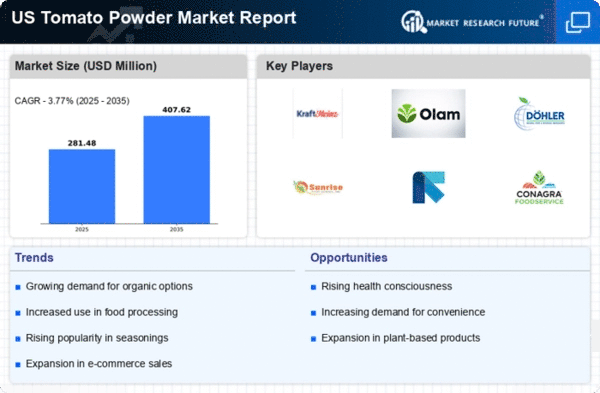
As per Market Research Future analysis, the US tomato powder market size was estimated at $271.25 Million in 2024. The US tomato powder market is projected to grow from 281.48 $ Million in 2025 to 407.62 $ Million by 2035, exhibiting a compound annual growth rate (CAGR) of 3.7% during the forecast period 2025 - 2035

Key Market Trends & Highlights

The US tomato powder market is experiencing robust growth driven by evolving consumer preferences and industry dynamics.

  • The demand for convenience foods is propelling the growth of the US tomato powder market.
  • Health and wellness trends are influencing consumers to seek out nutritious and versatile ingredients like tomato powder.
  • the fastest-growing segment is likely to be the organic tomato powder, reflecting a shift towards sustainability in food choices..
  • Key market drivers include the growing popularity of plant-based diets and the expansion of the food processing industry.

Market Size & Forecast

2024 Market Size 271.25 (USD Million)
2035 Market Size 407.62 (USD Million)
CAGR (2025 - 2035) 3.77%

Major Players

Kraft Heinz (US), Olam International (SG), Döhler (DE), Sunrise Foods (IN), TOMRA (NO), ConAgra Foods (US), Agro Products and Agencies (IN), Sundried Tomato Company (US)

Our Impact
Enabled $4.3B Revenue Impact for Fortune 500 and Leading Multinationals
Partnering with 2000+ Global Organizations Each Year
30K+ Citations by Top-Tier Firms in the Industry

US Tomato Powder Market Trends

This market is currently experiencing a notable transformation, driven by evolving consumer preferences and an increasing demand for convenient food products.. As individuals seek healthier and more versatile ingredients, tomato powder has emerged as a favored option for both home cooks and food manufacturers. This trend is likely influenced by the growing awareness of the nutritional benefits associated with tomatoes, including their rich content of vitamins and antioxidants. Additionally, the rise of plant-based diets appears to be contributing to the popularity of tomato powder, as it serves as a natural flavor enhancer in various dishes. Moreover, the tomato powder market is witnessing innovations in production techniques and packaging solutions. Manufacturers are focusing on improving the quality and shelf life of their products, which may enhance consumer trust and satisfaction. The increasing availability of organic and non-GMO options is also noteworthy, as these align with the preferences of health-conscious consumers. As the market continues to evolve, it seems poised for further growth, with potential opportunities for new entrants and established players alike to capitalize on emerging trends and consumer demands.

Rising Demand for Convenience Foods

The tomato powder market is benefiting from a shift towards convenience in food preparation. Consumers are increasingly seeking products that simplify cooking processes, and tomato powder offers a quick and easy way to incorporate tomato flavor into various dishes without the need for fresh ingredients.

Health and Wellness Trends

There is a growing emphasis on health and wellness among consumers, which is positively impacting the tomato powder market. As individuals become more health-conscious, they are turning to tomato powder for its nutritional benefits, including its high levels of vitamins and antioxidants.

Sustainability and Organic Options

Sustainability is becoming a key consideration for consumers, leading to a rise in demand for organic and sustainably sourced tomato powder. This trend reflects a broader movement towards environmentally friendly products, as consumers seek to support brands that prioritize sustainable practices.

US Tomato Powder Market Drivers

Rising Interest in Culinary Arts

The growing interest in culinary arts among consumers is driving the tomato powder market. As more individuals experiment with cooking at home, there is an increasing demand for high-quality ingredients that can enhance flavor and convenience. Tomato powder, known for its rich taste and ease of use, is becoming a staple in many households. Recent surveys indicate that approximately 60% of US consumers are trying new recipes at home, which may lead to a higher usage of tomato powder in various dishes. This trend suggests that the tomato powder market could see a surge in demand as home cooks seek to elevate their culinary creations.

Emergence of E-commerce Platforms

The rise of e-commerce platforms is transforming the way consumers access products, including those in the tomato powder market. Online shopping has become increasingly popular, providing consumers with a wider selection of products and brands. This shift is particularly beneficial for niche products like tomato powder, which may not be readily available in local stores. Recent statistics show that e-commerce sales in the food sector are expected to reach $100 billion by 2026, suggesting a growing opportunity for tomato powder market players to reach a broader audience. This trend may lead to increased competition and innovation as companies strive to capture the attention of online shoppers.

Increased Focus on Food Preservation

The emphasis on food preservation techniques is another significant driver for the tomato powder market. As consumers become more aware of food waste and its environmental impact, they are turning to methods that extend the shelf life of food products. Tomato powder, with its dehydrated form, offers a practical solution for preserving the flavor and nutrients of tomatoes. The US food waste management market is projected to grow at a CAGR of 5% through 2026, indicating a potential increase in the adoption of tomato powder as a means to reduce waste. This trend may encourage manufacturers to promote tomato powder as a sustainable ingredient in their product lines.

Expansion of Food Processing Industry

The food processing industry in the US is experiencing significant growth, which is positively impacting the tomato powder market. As food manufacturers increasingly seek to enhance flavor and nutritional value, tomato powder serves as an ideal ingredient due to its concentrated flavor and long shelf life. The food processing sector is expected to grow at a CAGR of 3.5% from 2023 to 2028, which suggests a rising demand for tomato powder as a key ingredient in sauces, soups, and snacks. This expansion not only boosts the tomato powder market but also encourages innovation in product formulations, catering to diverse consumer preferences.

Growing Popularity of Plant-Based Diets

The increasing shift towards plant-based diets is a notable driver in the tomato powder market. As consumers become more health-conscious, they are seeking alternatives to animal products, which has led to a rise in the use of plant-based ingredients. Tomato powder, being a versatile and nutritious option, fits well into this trend. According to recent data, the plant-based food market in the US is projected to reach $74 billion by 2027, indicating a substantial opportunity for tomato powder market players. This trend is likely to encourage manufacturers to innovate and create new products that incorporate tomato powder, thereby expanding its application in various food categories.


Market Segment Insights

By Process: Hot break (Largest) vs. Cold break (Fastest-Growing)

In the US tomato powder market, the hot break segment holds a significant share, dominating the overall landscape. This method is preferred for its ability to retain more natural flavors and colors, resulting in a higher demand among manufacturers focused on quality. Conversely, the cold break segment, although smaller in market share, is gaining traction due to its unique processing method that preserves the nutritional content of tomatoes, appealing to health-conscious consumers. The growth trends in the process segment are heavily influenced by consumer preferences shifting towards natural and organic products. The cold break method is witnessing the fastest growth as it aligns with the increasing demand for healthier food options. Innovations in processing technology and rising awareness regarding health benefits are further driving the expansion of both segments, particularly the cold break, as manufacturers adapt to market trends.

Hot break (Dominant) vs. Cold break (Emerging)

The hot break process is currently the dominant method in the US tomato powder market, recognized for its efficiency in extracting flavors and vibrant colors from tomatoes. This method typically involves cooking tomatoes at high temperatures, which reduces enzymatic activity and preserves the fruit's characteristics effectively, making it a preferred choice for many manufacturers. In contrast, the cold break process is an emerging method that is gaining popularity due to its preservation of nutrients and natural flavors, appealing to a growing segment of health-focused consumers. This approach, while less traditional, offers advantages such as higher antioxidant levels and better texture, signifying a shift in consumer demand towards more health-oriented products.

By Category: Organic (Largest) vs. Conventional (Fastest-Growing)

In the US tomato powder market, the market share is predominantly held by organic products, which have gained significant popularity among health-conscious consumers. Organic tomato powder is preferred for its perceived health benefits, catering to a growing trend toward clean-label and all-natural products. In contrast, conventional tomato powder, while showing robust performance, holds a smaller share yet witnesses rapid adoption due to its cost-effectiveness and availability in bulk, making it attractive to various food manufacturers and culinary enthusiasts. The growth trends within the category segment reflect a dichotomy driven by consumer preferences and market dynamics. Organic tomato powder's demand is bolstered by increasing consumer awareness about health and sustainability, propelling it to a dominant position. Meanwhile, conventional tomato powder is emerging swiftly as a preferred choice for budget-conscious buyers and food industries, benefiting from innovations in production and supply chain efficiencies that enhance its market appeal.

Category: Organic (Dominant) vs. Conventional (Emerging)

Organic tomato powder stands as the dominant category in the market, characterized by its natural sourcing and strict compliance with health standards. It caters to a niche but increasing consumer base that values organic products, often paying a premium for perceived quality. This segment thrives on brand loyalty and consumer trust, bolstered by marketing initiatives that emphasize health benefits. On the other hand, conventional tomato powder represents an emerging category, striking a balance between quality and cost. It offers versatile applications across food production and culinary uses, making it a popular choice for mass-market products. With efficiency improvements and expanded distribution, conventional tomato powder is poised to capture a larger share of the market.

By Application: Bakery & Confectionary (Largest) vs. Dairy & Frozen Desserts (Fastest-Growing)

The US tomato powder market showcases a diverse application landscape, with Bakery & Confectionary holding the largest share due to the increasing demand for flavor-enhancing ingredients in baked goods. This segment's popularity is driven by consumer trends favoring convenient and tasty snack options, allowing it to dominate market positioning. On the other hand, segments like Dairy & Frozen Desserts are experiencing rapid growth, attributed largely to the rising popularity of health-conscious frozen treats that incorporate natural ingredients such as tomato powder. The growth trends in the US tomato powder market are significantly influenced by changing consumer preferences towards healthier options, alongside an increased usage of tomato powder in various applications. Beverages and Sweet & Savory Snacks are also gaining traction, as they align with contemporary dietary trends. Additionally, the influence of the clean-label movement is driving manufacturers to innovate and explore new formulations that incorporate tomato powder, further solidifying its growth across different segments.

Bakery & Confectionary: Dominant vs. Dairy & Frozen Desserts: Emerging

The Bakery & Confectionary segment is characterized by its strong market presence, driven by a consistent demand for flavor-rich products that utilize tomato powder to enhance taste and visual appeal. This dominance results from an increasing consumer preference for innovative snacks and ready-to-eat options. Conversely, the Dairy & Frozen Desserts segment is emerging rapidly as manufacturers experiment with tomato powder in healthier frozen products, capturing a growing market segment that seeks nutritious yet indulgent alternatives. Both segments reflect the versatility of tomato powder, as it adapts to varying consumer needs while contributing to flavor enrichment and nutritional value.

Get more detailed insights about US Tomato Powder Market

Key Players and Competitive Insights

The tomato powder market exhibits a dynamic competitive landscape characterized by a blend of established players and emerging entrants. Key growth drivers include the increasing demand for natural flavoring agents, the rise in health-conscious consumer preferences, and the expanding applications of tomato powder in various food products. Major companies such as Kraft Heinz (US), Olam International (SG), and ConAgra Foods (US) are strategically positioned to leverage these trends. Kraft Heinz (US) focuses on innovation in product development, aiming to enhance its portfolio with organic and non-GMO options. Olam International (SG) emphasizes sustainability in sourcing and production, which aligns with the growing consumer demand for environmentally friendly products. ConAgra Foods (US) is actively pursuing regional expansion to capture market share in untapped areas, thereby shaping a competitive environment that is increasingly focused on quality and sustainability.Key business tactics within the tomato powder market include localizing manufacturing to reduce costs and optimize supply chains. The market structure appears moderately fragmented, with several key players exerting influence over pricing and distribution channels. This fragmentation allows for niche players to thrive, while larger companies leverage economies of scale to maintain competitive pricing. The collective influence of these key players fosters a competitive atmosphere where innovation and quality are paramount.

In October Kraft Heinz (US) announced a partnership with a leading organic farming cooperative to enhance its supply chain for tomato powder. This strategic move is likely to bolster its commitment to sustainability and organic product offerings, positioning the company favorably in a market increasingly driven by health-conscious consumers. The partnership may also streamline sourcing processes, potentially reducing costs and improving product quality.

In September Olam International (SG) launched a new line of tomato powder products that are certified organic and sustainably sourced. This initiative reflects the company's strategic focus on meeting the rising consumer demand for clean-label products. By expanding its product range, Olam International (SG) not only enhances its market presence but also aligns with global trends towards healthier food options, which could attract a broader customer base.

In August ConAgra Foods (US) completed the acquisition of a regional tomato processing facility, which is expected to enhance its production capabilities and supply chain efficiency. This acquisition signifies a strategic effort to strengthen its foothold in the tomato powder market, allowing for greater control over quality and production timelines. Such moves are indicative of a trend where companies seek to integrate vertically to mitigate supply chain disruptions and enhance product reliability.

As of November current competitive trends in the tomato powder market are increasingly defined by digitalization, sustainability, and the integration of AI technologies. Strategic alliances are becoming more prevalent, as companies recognize the value of collaboration in enhancing innovation and market reach. The competitive differentiation is likely to evolve from traditional price-based competition towards a focus on technological advancements, product innovation, and supply chain reliability. This shift suggests that companies that prioritize these aspects will be better positioned to thrive in an increasingly competitive landscape.

Key Companies in the US Tomato Powder Market include

Industry Developments

Recent developments in the US Tomato Powder Market have shown notable activity, particularly among key players such as Seneca Foods, H.J. Heinz, and Conagra Brands. In October 2023, Seneca Foods announced a strategic expansion of its production capabilities to enhance supply chain efficiency. The market has also experienced a surge in demand for tomato-based products, primarily driven by increasing consumer health consciousness and the popularity of plant-based diets. In July 2023, H.J. Heinz launched a new line of organic tomato powder, tapping into the organic food trend.

Mergers and acquisitions have been noteworthy as well; in August 2023, Kraft Heinz Company acquired a smaller food technology firm to innovate processing methods for tomato products, enhancing its market competitiveness. Additionally, market valuations for companies like Olam Group and McCormick and Company have grown substantially due to increased demand and innovation in product offerings. Over the last few years, major incidents like the pandemic have influenced supply chain dynamics, while the ongoing focus on sustainable practices has led to significant shifts in sourcing and production processes.

This sector continues to adapt and grow within the changing landscape of consumer preferences.

Future Outlook

US Tomato Powder Market Future Outlook

The Tomato Powder Market is projected to grow at a 3.77% CAGR from 2025 to 2035, driven by increasing demand for convenience foods and health-conscious products.

New opportunities lie in:

  • Expansion into organic tomato powder lines to capture health-focused consumers.
  • Development of innovative packaging solutions for extended shelf life.
  • Strategic partnerships with food manufacturers for bulk supply agreements.

By 2035, the tomato powder market is expected to achieve robust growth and enhanced market presence.

Market Segmentation

US Tomato Powder Market Process Outlook

  • Hot break
  • Cold break

US Tomato Powder Market Category Outlook

  • Organic
  • Conventional

US Tomato Powder Market Application Outlook

  • Bakery & Confectionary
  • Dairy & Frozen Desserts
  • Beverages
  • Infant Nutrition
  • Sweet & Savory Snacks
  • Curries Gravies & Soups
  • Others

Report Scope

MARKET SIZE 2024 271.25(USD Million)
MARKET SIZE 2025 281.48(USD Million)
MARKET SIZE 2035 407.62(USD Million)
COMPOUND ANNUAL GROWTH RATE (CAGR) 3.77% (2025 - 2035)
REPORT COVERAGE Revenue Forecast, Competitive Landscape, Growth Factors, and Trends
BASE YEAR 2024
Market Forecast Period 2025 - 2035
Historical Data 2019 - 2024
Market Forecast Units USD Million
Key Companies Profiled Kraft Heinz (US), Olam International (SG), Döhler (DE), Sunrise Foods (IN), TOMRA (NO), ConAgra Foods (US), Agro Products and Agencies (IN), Sundried Tomato Company (US)
Segments Covered Process, Category, Application
Key Market Opportunities Growing demand for natural ingredients drives innovation in the tomato powder market.
Key Market Dynamics Rising demand for natural ingredients drives innovation and competition in the tomato powder market.
Countries Covered US
Leave a Comment

FAQs

What is the projected market size of the US Tomato Powder Market in 2024?

The projected market size of the US Tomato Powder Market in 2024 is valued at 280.0 million USD.

What is the expected market value of the US Tomato Powder Market by 2035?

By 2035, the expected market value of the US Tomato Powder Market is anticipated to reach 429.0 million USD.

What is the compound annual growth rate (CAGR) for the US Tomato Powder Market from 2025 to 2035?

The US Tomato Powder Market is expected to grow at a CAGR of 3.955% from 2025 to 2035.

Which process segment is valued higher in the US Tomato Powder Market in 2024?

In 2024, the Hot break process segment is valued higher at 145.0 million USD compared to the Cold break segment at 135.0 million USD.

What will be the market value of Hot break and Cold break segments by 2035?

By 2035, the Hot break segment is projected to be valued at 227.5 million USD, while the Cold break segment is expected to reach 201.5 million USD.

Who are the key players in the US Tomato Powder Market?

Major players in the US Tomato Powder Market include Seneca Foods, H.J. Heinz, Mizkan American, and B and G Foods among others.

What opportunities exist in the US Tomato Powder Market?

Opportunities in the US Tomato Powder Market include growing applications in food processing and demand for product diversity.

What challenges does the US Tomato Powder Market face?

Challenges in the US Tomato Powder Market include fluctuations in raw material prices and competition from substitutes.

What is the impact of current market trends on the US Tomato Powder Market?

Current market trends suggest an increasing preference for natural and organic food ingredients, positively influencing the US Tomato Powder Market.

What is the growth rate for the US Tomato Powder Market in specific geographic regions?

The growth rate of the US Tomato Powder Market varies by region, influenced by local food industry demands and agricultural practices.

Download Free Sample

Kindly complete the form below to receive a free sample of this Report

Compare Licence

×
Features License Type
Single User Multiuser License Enterprise User
Price $4,950 $5,950 $7,250
Maximum User Access Limit 1 User Upto 10 Users Unrestricted Access Throughout the Organization
Free Customization
Direct Access to Analyst
Deliverable Format
Platform Access
Discount on Next Purchase 10% 15% 15%
Printable Versions