×
Request Free Sample ×

Kindly complete the form below to receive a free sample of this Report

* Please use a valid business email

Leading companies partner with us for data-driven Insights

clients tt-cursor
Hero Background

US Protein Hydrolysates Market

ID: MRFR/FnB/18230-HCR
128 Pages
Snehal Singh
February 2026

US Protein Hydrolysates Market Size, Share, Industry Trend & Analysis Research Report: By Source (Animal Protein, Plant Protein, Microbial Protein), By Type (Collagen Peptides, Whey Protein Hydrolysates, Casein Hydrolysates, Soy Protein Hydrolysates), By Application (Food Beverages, Nutraceuticals, Cosmetics, Animal Feed) andBy Form (Dry, Liquid)- Forecast to 2035

Share:
Download PDF ×

We do not share your information with anyone. However, we may send you emails based on your report interest from time to time. You may contact us at any time to opt-out.

US Protein Hydrolysates Market Infographic
Purchase Options

US Protein Hydrolysates Market Summary

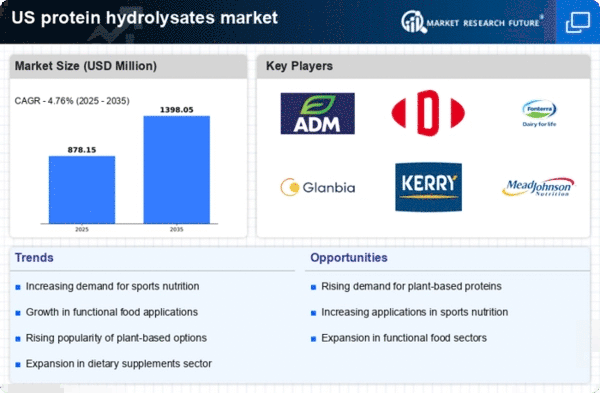
As per Market Research Future analysis, the US protein hydrolysates market size was estimated at 838.25 USD Million in 2024. The US protein hydrolysates market is projected to grow from 878.15 USD Million in 2025 to 1398.05 USD Million by 2035, exhibiting a compound annual growth rate (CAGR) of 4.7% during the forecast period 2025 - 2035

Key Market Trends & Highlights

The US protein hydrolysates market is experiencing robust growth driven by health trends and technological advancements.

  • The demand for plant-based protein hydrolysates is rising, reflecting a shift towards vegetarian and vegan diets.
  • Integration of protein hydrolysates in functional foods is becoming more prevalent, enhancing nutritional profiles.
  • The sports nutrition segment is expanding rapidly, driven by increasing consumer interest in fitness and performance.
  • Key market drivers include growing health consciousness and the rising popularity of clean label products.

Market Size & Forecast

2024 Market Size 838.25 (USD Million)
2035 Market Size 1398.05 (USD Million)
CAGR (2025 - 2035) 4.76%

Major Players

Archer Daniels Midland Company (US), DuPont de Nemours Inc (US), Fonterra Co-operative Group Limited (NZ), Glanbia plc (IE), Kerry Group plc (IE), Mead Johnson Nutrition Company (US), Nestlé S.A. (CH), Royal DSM N.V. (NL), Tate & Lyle PLC (GB)

Our Impact
Enabled $4.3B Revenue Impact for Fortune 500 and Leading Multinationals
Partnering with 2000+ Global Organizations Each Year
30K+ Citations by Top-Tier Firms in the Industry

US Protein Hydrolysates Market Trends

The protein hydrolysates market is currently experiencing notable growth, driven by increasing consumer awareness regarding health and nutrition. This market encompasses a variety of protein sources, including whey, casein, soy, and others, which are processed into hydrolysates to enhance their digestibility and bioavailability. The rising demand for functional foods and dietary supplements is a key factor contributing to this trend. Additionally, the food and beverage industry is increasingly incorporating protein hydrolysates into products aimed at specific dietary needs, such as sports nutrition and weight management. This shift reflects a broader trend towards healthier eating habits and the pursuit of enhanced physical performance. Moreover, the protein hydrolysates market is likely to benefit from advancements in processing technologies that improve the efficiency and quality of hydrolysate production. Innovations in enzymatic hydrolysis and membrane filtration are enhancing the extraction and purification processes, leading to higher yields and better product characteristics. As consumers continue to seek out high-quality protein sources, the market appears poised for sustained growth. The increasing prevalence of lifestyle-related health issues further underscores the importance of protein hydrolysates in promoting overall well-being and supporting active lifestyles. This trend suggests a promising future for the protein hydrolysates market as it adapts to evolving consumer preferences and industry demands.

Rising Demand for Plant-Based Protein Hydrolysates

There is a growing interest in plant-based protein hydrolysates, driven by the increasing number of consumers adopting vegetarian and vegan diets. This trend reflects a shift towards sustainable and environmentally friendly protein sources. As more individuals seek alternatives to animal-derived proteins, manufacturers are responding by developing innovative plant-based hydrolysates that cater to this demographic.

Integration in Functional Foods

The incorporation of protein hydrolysates into functional foods is becoming more prevalent. These ingredients are being used to enhance the nutritional profile of various products, including snacks, beverages, and meal replacements. This trend indicates a broader consumer preference for foods that offer health benefits beyond basic nutrition.

Focus on Sports Nutrition

The protein hydrolysates market is witnessing a surge in demand from the sports nutrition sector. Athletes and fitness enthusiasts are increasingly seeking products that provide quick absorption and improved recovery. This trend highlights the importance of protein hydrolysates in supporting athletic performance and overall physical health.

US Protein Hydrolysates Market Drivers

Growing Health Consciousness

The increasing awareness of health and wellness among consumers is driving the protein hydrolysates market. As individuals seek healthier dietary options, the demand for protein-rich products has surged. This trend is particularly evident in the US, where consumers are gravitating towards functional foods that offer health benefits. According to recent data, the protein hydrolysates market is projected to grow at a CAGR of 7.5% through 2026. This growth is fueled by the rising popularity of protein supplements and fortified foods, which are perceived as essential for maintaining a balanced diet. The protein hydrolysates market is thus witnessing a shift towards products that not only provide nutritional value but also cater to specific health needs, such as muscle recovery and weight management.

Advancements in Food Technology

Technological innovations in food processing are significantly impacting the protein hydrolysates market. Enhanced extraction and hydrolysis techniques have improved the quality and functionality of protein hydrolysates, making them more appealing to manufacturers and consumers alike. These advancements allow for better solubility, digestibility, and flavor profiles, which are crucial for incorporation into various food products. The protein hydrolysates market benefits from these developments, as they enable the creation of high-quality protein ingredients that meet the evolving demands of health-conscious consumers. Furthermore, the integration of these hydrolysates into functional foods and beverages is expected to increase, potentially expanding market opportunities. As a result, the protein hydrolysates market is likely to see a rise in product innovation driven by technological progress.

Rising Popularity of Sports Nutrition

The protein hydrolysates market is experiencing a notable boost from the growing interest in sports nutrition. Athletes and fitness enthusiasts are increasingly seeking high-quality protein sources to support muscle recovery and performance. Protein hydrolysates, known for their rapid absorption and high bioavailability, are becoming a preferred choice among this demographic. The US sports nutrition market is projected to reach $45 billion by 2026, with protein hydrolysates playing a crucial role in this growth. This trend indicates a shift towards specialized nutrition products that cater to the needs of active individuals. The protein hydrolysates market is thus positioned to capitalize on this demand, as manufacturers develop tailored products that enhance athletic performance and recovery.

Increased Demand for Clean Label Products

The clean label movement is significantly influencing the protein hydrolysates market. Consumers are increasingly scrutinizing ingredient lists and seeking products that are free from artificial additives and preservatives. This trend is particularly strong in the US, where transparency in food labeling is becoming a priority for many shoppers. As a result, manufacturers are reformulating their products to include protein hydrolysates that meet clean label standards. This shift not only aligns with consumer preferences but also enhances the marketability of protein-rich products. The protein hydrolysates market is thus adapting to these demands by offering cleaner, more natural protein sources that resonate with health-conscious consumers. This focus on clean labels is likely to drive further growth in the market.

Expansion of the Dietary Supplement Sector

The dietary supplement sector is expanding rapidly, contributing to the growth of the protein hydrolysates market. As more consumers turn to supplements for health benefits, the demand for high-quality protein sources is increasing. Protein hydrolysates are particularly favored in this sector due to their superior absorption rates and effectiveness in promoting muscle growth and recovery. The US dietary supplement market is expected to surpass $70 billion by 2026, with protein hydrolysates playing a pivotal role in this expansion. This trend suggests a growing recognition of the importance of protein in daily nutrition, further solidifying the protein hydrolysates market as a key player in the health and wellness landscape. The potential for innovation in supplement formulations is likely to drive continued interest in protein hydrolysates.


Market Segment Insights

By Source: Animal Protein (Largest) vs. Plant Protein (Fastest-Growing)

In the US protein hydrolysates market, the distribution among different source segments reveals that animal protein constitutes the largest share, driven by its widespread application in sports nutrition and supplements. Conversely, plant protein is gaining traction among consumers seeking plant-based alternatives, reflecting a growing trend towards health-conscious choices. The growth trends in this segment indicate a significant shift, with plant protein outpacing traditional animal protein in terms of growth rate. This surge is attributed to increasing veganism, lifestyle changes, and the rising acceptance of alternative protein sources. Additionally, innovations in extraction and processing methods are enhancing the appeal of plant proteins, making them more competitive in the hydrolysate space.

Animal Protein: Dominant vs. Plant Protein: Emerging

Animal protein is a dominant force in the US protein hydrolysates market, renowned for its high biological value, which makes it a preferred choice for athletes and individuals aiming for muscle recovery. Its versatility allows incorporation into various products, including protein powders and nutritional supplements. In contrast, plant protein, while still emerging, is rapidly capturing market interest due to its sustainable appeal and diversity of sources, such as soy, pea, and rice. These proteins are increasingly used in functional foods and beverages. As formulations improve and consumer awareness rises regarding the health benefits of plant-based diets, the market share of plant protein is expected to witness robust expansion, attracting a new demographic of health-focused consumers.

By Type: Whey Protein Hydrolysates (Largest) vs. Collagen Peptides (Fastest-Growing)

In the US protein hydrolysates market, Whey Protein Hydrolysates hold the largest share, driven by their widespread use in sports nutrition and dietary supplements, appealing to both athletes and health-conscious consumers. Collagen Peptides are rapidly gaining momentum, attributed to growing consumer awareness regarding skin health and joint support, indicating a shift towards functional ingredients in health products. The growth trends reflect an increasing inclination towards personalized nutrition and wellness products. With the rise of fitness culture and the aging population, Whey Protein Hydrolysates benefit from consistent demand, while Collagen Peptides are becoming indispensable in beauty and health formulations. Innovations and product diversification are enhancing the attractiveness of both segments, providing dynamic growth opportunities in the market.

Whey Protein Hydrolysates (Dominant) vs. Collagen Peptides (Emerging)

Whey Protein Hydrolysates are characterized by their high bioavailability and rapid absorption, making them a preferred choice among athletes and fitness enthusiasts. Their dominance is evident in various applications, including protein bars, shakes, and functional foods. On the other hand, Collagen Peptides, while emerging, are establishing a strong foothold in the market due to their unique benefits for skin elasticity and joint health. This segment is rapidly evolving as manufacturers innovate their product offerings to cater to diverse consumer preferences, blending Collagen Peptides into various formats such as powders and functional beverages, reinforcing their position in the booming wellness trend.

By Application: Food (Largest) vs. Beverages (Fastest-Growing)

In the US protein hydrolysates market, the application segment is primarily dominated by the food sector, which holds the largest share due to its extensive use in processed foods for flavor enhancement and nutritional benefits. Beverages also represent a significant portion of the market, leveraging protein hydrolysates for functional advantages, particularly in sports and health drinks. The diversifying consumer preferences have led to notable applications across these segments. Growth trends in the application segment indicate a robust increase in the nutraceuticals and beverages categories, driven by rising health consciousness and demand for functional food products. The ongoing innovation in product formulation and the increased incorporation of protein hydrolysates in food and beverage products cater to the growing fitness and wellness trends among consumers, further propelling market growth.

Food: Dominant vs. Beverages: Emerging

The food application is the dominant player in the US protein hydrolysates market, characterized by its wide integration into various food products to enhance taste and nutritional profile. Key attributes include improved digestibility and amino acid profiles, making it a preferred choice for food manufacturers aiming to meet consumer demands for health-oriented products. In contrast, the beverages segment is emerging rapidly, particularly in health and sports drinks, where protein hydrolysates add functionality and appeal. This segment is characterized by innovative formulations that cater to on-the-go consumers seeking convenient and nutritious options, setting the stage for robust growth driven by lifestyle shifts and increased interest in active living.

By Form: Liquid (Largest) vs. Dry (Fastest-Growing)

In the US protein hydrolysates market, the liquid form currently dominates the market share. This segment is favored due to its versatility in applications ranging from food and beverage to nutritional supplements. With growing health consciousness and demand for convenient food options, the liquid form is expected to continue its stronghold in the market. On the other hand, the dry segment is emerging as the fastest-growing segment. This growth is driven by increasing demand for powdered protein products and dietary supplements. The dry form offers convenience and longer shelf life, making it an attractive choice for consumers looking for portable protein solutions. Enhanced marketing strategies focusing on health benefits are further fueling the growth of this segment.

Form: Liquid (Dominant) vs. Dry (Emerging)

The liquid form of protein hydrolysates is characterized by its easy mixability and quick absorption, making it popular among athletes and health-conscious consumers. It is often used in ready-to-drink products and functional foods. On the other hand, the dry form, while currently smaller in market share, is gaining traction due to its convenience and ease of use in various applications such as baking, snacks, and supplements. The dry segment caters to a growing consumer base that values portability and flexibility in product usage. As more companies invest in product innovation, the competition in both segments is expected to intensify.

Get more detailed insights about US Protein Hydrolysates Market

Key Players and Competitive Insights

The protein hydrolysates market is currently characterized by a dynamic competitive landscape, driven by increasing consumer demand for high-quality protein sources and the growing trend towards health and wellness. Major players such as Archer Daniels Midland Company (US), DuPont de Nemours Inc (US), and Kerry Group plc (IE) are strategically positioning themselves through innovation and partnerships. For instance, Archer Daniels Midland Company (US) has focused on expanding its product portfolio to include plant-based protein hydrolysates, which aligns with the rising consumer preference for plant-derived ingredients. This diversification not only enhances their market presence but also caters to the evolving dietary trends.In terms of business tactics, companies are increasingly localizing manufacturing to reduce supply chain complexities and enhance responsiveness to market demands. The competitive structure of the protein hydrolysates market appears moderately fragmented, with several key players exerting influence over various segments. This fragmentation allows for niche players to thrive, while larger companies leverage their scale to optimize operations and drive innovation.

In September DuPont de Nemours Inc (US) announced a strategic partnership with a leading nutritional brand to develop specialized protein hydrolysates aimed at the sports nutrition segment. This collaboration is likely to enhance DuPont's product offerings and strengthen its foothold in a rapidly growing market segment, reflecting a broader trend of companies seeking to innovate through strategic alliances.Similarly, in October 2025, Kerry Group plc (IE) launched a new line of protein hydrolysates specifically designed for the pet food industry. This move not only diversifies their application areas but also capitalizes on the increasing demand for high-quality protein in pet nutrition. By tapping into this lucrative market, Kerry Group is positioning itself as a leader in protein solutions across multiple sectors.Moreover, in August 2025, Mead Johnson Nutrition Company (US) expanded its production capabilities for protein hydrolysates in response to rising demand in the infant nutrition sector. This expansion is indicative of the company's commitment to meeting consumer needs and enhancing its competitive edge in a market that values quality and safety.

As of November current trends in the protein hydrolysates market are heavily influenced by digitalization, sustainability, and the integration of artificial intelligence in production processes. Strategic alliances are increasingly shaping the competitive landscape, allowing companies to pool resources and expertise. Looking ahead, it appears that competitive differentiation will evolve from traditional price-based competition to a focus on innovation, technological advancements, and supply chain reliability, as companies strive to meet the sophisticated demands of consumers.

Key Companies in the US Protein Hydrolysates Market include

Industry Developments

The US Protein Hydrolysates Market has witnessed significant advancements recently, with key players intensifying their efforts in Research and Development to meet rising consumer demands for functional food ingredients. Notably, in September 2023, DuPont de Nemours Inc announced enhanced innovations in their protein hydrolysate products, targeting the health and wellness segment. Alba Proteins has also been expanding its production capacity to cater to the growing trend of protein supplementation among health-conscious consumers.

In the mergers and acquisitions space, in August 2023, Kerry Group PLC acquired a smaller ingredient manufacturing company to augment their protein offerings, which was widely discussed in various business news outlets. Similarly, in July 2023, Glanbia PLC completed the acquisition of a protein supplement manufacturer, further consolidating its position in the market. Major industry developments over the past two to three years, such as advancements in enzymatic processes and sustainable sourcing practices, have played a crucial role in driving market growth and transforming how protein hydrolysates are produced and utilized.

This evolving landscape is indicative of dynamic shifts in consumer preferences towards more sustainable and health-oriented food products.

Future Outlook

US Protein Hydrolysates Market Future Outlook

The Protein Hydrolysates Market is projected to grow at a 4.76% CAGR from 2025 to 2035, driven by rising demand in food and beverage applications, health supplements, and pet nutrition.

New opportunities lie in:

  • Development of customized protein hydrolysate blends for specific dietary needs.
  • Expansion into emerging markets with tailored marketing strategies.
  • Investment in advanced processing technologies to enhance product quality and yield.

By 2035, the protein hydrolysates market is expected to achieve substantial growth and diversification.

Market Segmentation

US Protein Hydrolysates Market Form Outlook

  • Dry
  • Liquid

US Protein Hydrolysates Market Type Outlook

  • Collagen Peptides
  • Whey Protein Hydrolysates
  • Casein Hydrolysates
  • Soy Protein Hydrolysates

US Protein Hydrolysates Market Source Outlook

  • Animal Protein
  • Plant Protein
  • Microbial Protein

US Protein Hydrolysates Market Application Outlook

  • Food
  • Beverages
  • Nutraceuticals
  • Cosmetics
  • Animal Feed

Report Scope

MARKET SIZE 2024 838.25(USD Million)
MARKET SIZE 2025 878.15(USD Million)
MARKET SIZE 2035 1398.05(USD Million)
COMPOUND ANNUAL GROWTH RATE (CAGR) 4.76% (2025 - 2035)
REPORT COVERAGE Revenue Forecast, Competitive Landscape, Growth Factors, and Trends
BASE YEAR 2024
Market Forecast Period 2025 - 2035
Historical Data 2019 - 2024
Market Forecast Units USD Million
Key Companies Profiled Archer Daniels Midland Company (US), DuPont de Nemours Inc (US), Fonterra Co-operative Group Limited (NZ), Glanbia plc (IE), Kerry Group plc (IE), Mead Johnson Nutrition Company (US), Nestlé S.A. (CH), Royal DSM N.V. (NL), Tate & Lyle PLC (GB)
Segments Covered Source, Type, Application, Form
Key Market Opportunities Growing demand for plant-based protein hydrolysates driven by health-conscious consumer preferences.
Key Market Dynamics Rising demand for clean-label products drives innovation and competition in the protein hydrolysates market.
Countries Covered US
Leave a Comment

FAQs

What is the expected market size of the US Protein Hydrolysates Market in 2024?

The US Protein Hydrolysates Market is expected to be valued at 840.0 million USD in 2024.

What will be the projected market value for the US Protein Hydrolysates Market by 2035?

By 2035, the overall market is projected to reach 1470.0 million USD.

What is the expected CAGR for the US Protein Hydrolysates Market from 2025 to 2035?

The expected CAGR for the US Protein Hydrolysates Market during this period is 5.219%.

Which segment of the US Protein Hydrolysates Market is forecasted to have the highest value in 2035?

Both Animal Protein and Plant Protein segments are forecasted to be valued at 570.0 million USD each in 2035.

What is the market size for Microbial Protein in the US Protein Hydrolysates Market by 2035?

The Microbial Protein segment is expected to be valued at 330.0 million USD by 2035.

Who are the major players in the US Protein Hydrolysates Market?

Key players in this market include DuPont de Nemours Inc, Glanbia PLC, and Kerry Group PLC among others.

How much will the US Protein Hydrolysates Market be valued for Animal Protein in 2024?

The Animal Protein segment is expected to be valued at 336.0 million USD in 2024.

What opportunities exist for growth in the US Protein Hydrolysates Market?

Opportunities exist in product innovation and the rising demand for protein-rich diets.

What challenges might impact the US Protein Hydrolysates Market growth?

Challenges include raw material price volatility and stringent regulations affecting sourcing.

What are the anticipated growth trends in the US Protein Hydrolysates Market?

Emerging trends include increasing consumer awareness of health benefits associated with protein hydrolysates.

Download Free Sample

Kindly complete the form below to receive a free sample of this Report

Compare Licence

×
Features License Type
Single User Multiuser License Enterprise User
Price $4,950 $5,950 $7,250
Maximum User Access Limit 1 User Upto 10 Users Unrestricted Access Throughout the Organization
Free Customization
Direct Access to Analyst
Deliverable Format
Platform Access
Discount on Next Purchase 10% 15% 15%
Printable Versions