×
Request Free Sample ×

Kindly complete the form below to receive a free sample of this Report

* Please use a valid business email

Leading companies partner with us for data-driven Insights

clients tt-cursor
Hero Background

US Organic Juices Market

ID: MRFR/FnB/19555-HCR
127 Pages
Snehal Singh
February 2026

US Organic Juices Market Size, Share, Industry Trend & Analysis Research Report: By Type (Fruits, Vegetables, Blends), By Packaging Type (Bottles, Cartoons, Others) andBy Distribution Channel (Store-Based, Non-Store-Based)- Forecast to 2035

Share:
Download PDF ×

We do not share your information with anyone. However, we may send you emails based on your report interest from time to time. You may contact us at any time to opt-out.

US Organic Juices Market Infographic
Purchase Options

US Organic Juices Market Summary

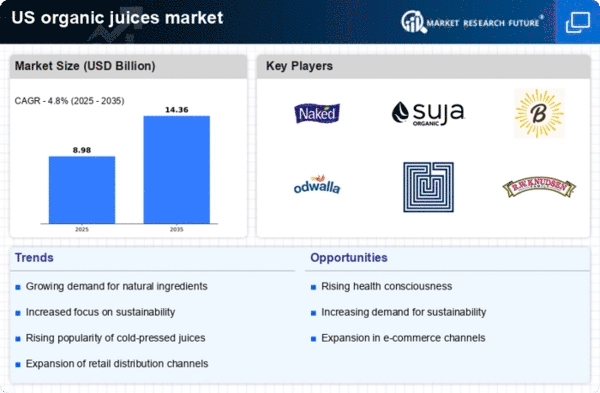
As per Market Research Future analysis, the US organic juices market Size was estimated at 8.57 USD Billion in 2024. The US organic juices market is projected to grow from 8.98 USD Billion in 2025 to 14.36 USD Billion by 2035, exhibiting a compound annual growth rate (CAGR) of 4% during the forecast period 2025 - 2035

Key Market Trends & Highlights

The US organic juices market is experiencing robust growth driven by health trends and sustainability.

  • The market is increasingly oriented towards health and wellness, reflecting a broader consumer shift.
  • Sustainable practices are becoming integral to production, appealing to environmentally conscious consumers.
  • Diverse flavor profiles are emerging, catering to a wide range of taste preferences and dietary needs.
  • Rising health consciousness and the growing demand for functional beverages are key drivers of market expansion.

Market Size & Forecast

2024 Market Size 8.57 (USD Billion)
2035 Market Size 14.36 (USD Billion)
CAGR (2025 - 2035) 4.8%

Major Players

Naked Juice (US), Suja Juice (US), Bolthouse Farms (US), Odwalla (US), BluePrint (US), R.W. Knudsen Family (US), Simply Orange Juice Company (US), Tropicana Products (US)

Our Impact
Enabled $4.3B Revenue Impact for Fortune 500 and Leading Multinationals
Partnering with 2000+ Global Organizations Each Year
30K+ Citations by Top-Tier Firms in the Industry

US Organic Juices Market Trends

The organic juices market is currently experiencing a notable transformation, driven by a growing consumer preference for health-conscious products. This shift is largely influenced by increased awareness regarding the benefits of organic ingredients, which are perceived as healthier alternatives to conventional options. As consumers become more discerning about their dietary choices, the demand for organic juices has surged, reflecting a broader trend towards natural and minimally processed beverages. Additionally, the rise of e-commerce platforms has facilitated easier access to these products, allowing consumers to explore a wider variety of organic juice options from the comfort of their homes. Moreover, sustainability concerns are shaping the organic juices market, as consumers increasingly seek products that align with their values. This trend is evident in the growing emphasis on eco-friendly packaging and sourcing practices among manufacturers. Companies are responding by adopting sustainable practices, which not only appeal to environmentally conscious consumers but also enhance brand loyalty. As the market continues to evolve, it appears poised for further growth, driven by innovation and a commitment to quality and sustainability. The future landscape of the organic juices market suggests a dynamic interplay between consumer preferences and industry practices, indicating a promising trajectory for stakeholders involved in this sector.

Health and Wellness Focus

The organic juices market is witnessing a pronounced emphasis on health and wellness. Consumers are increasingly prioritizing products that offer nutritional benefits, leading to a surge in demand for juices rich in vitamins, minerals, and antioxidants. This trend reflects a broader societal shift towards healthier lifestyles, where organic juices are viewed as essential components of a balanced diet.

Sustainable Practices

Sustainability is becoming a cornerstone of the organic juices market. Manufacturers are adopting eco-friendly practices, including sustainable sourcing and biodegradable packaging. This shift not only caters to environmentally conscious consumers but also enhances brand reputation, as companies strive to align their operations with the values of their target audience.

Diverse Flavor Profiles

The organic juices market is expanding in terms of flavor diversity. Consumers are increasingly seeking unique and exotic flavor combinations, moving beyond traditional options. This trend indicates a growing willingness to experiment with new tastes, prompting manufacturers to innovate and introduce a wider array of organic juice flavors to meet evolving consumer preferences.

US Organic Juices Market Drivers

Rising Health Consciousness

The organic juices market is experiencing a notable surge in demand driven by an increasing awareness of health and wellness among consumers. As individuals become more informed about the benefits of organic products, they are gravitating towards beverages that are perceived as healthier alternatives. This trend is reflected in the market data, which indicates that organic juice sales have grown by approximately 20% over the past year. Consumers are actively seeking products that are free from artificial additives and preservatives, further propelling the organic juices market. The emphasis on natural ingredients aligns with the broader health movement, where consumers prioritize nutrition and wellness in their dietary choices. This shift in consumer behavior is likely to continue, suggesting a sustained growth trajectory for the organic juices market in the coming years.

Innovative Marketing Strategies

The organic juices market is experiencing a transformation driven by innovative marketing strategies that effectively engage consumers. Brands are increasingly leveraging digital platforms and social media to reach their target audiences, creating a more personalized shopping experience. This shift in marketing approach is particularly relevant as younger consumers, who are more inclined to seek out organic products, dominate the market. Data indicates that brands utilizing influencer marketing and targeted online campaigns have seen a notable increase in sales, with some reporting growth rates of up to 25% in specific demographics. By adopting these innovative marketing strategies, companies in the organic juices market can enhance brand visibility and attract a broader consumer base, ultimately contributing to market growth.

Growing Demand for Functional Beverages

The organic juices market is witnessing a growing demand for functional beverages that offer additional health benefits beyond basic nutrition. Consumers are increasingly interested in juices that provide specific health advantages, such as enhanced immunity, improved digestion, or increased energy levels. This trend aligns with the broader shift towards functional foods, where consumers seek products that contribute to their overall well-being. Market data suggests that functional beverages, including organic juices, are projected to account for a substantial share of the beverage market, with an expected growth rate of around 15% annually. This demand for functional organic juices is likely to drive innovation and product development within the organic juices market, as manufacturers strive to meet consumer expectations for health-enhancing beverages.

Environmental Sustainability Initiatives

The organic juices market is increasingly influenced by environmental sustainability initiatives that resonate with eco-conscious consumers. As awareness of environmental issues grows, consumers are more inclined to support brands that prioritize sustainable practices in their production processes. This includes sourcing ingredients from sustainable farms, utilizing eco-friendly packaging, and reducing carbon footprints. Recent surveys indicate that approximately 70% of consumers are willing to pay a premium for products that are environmentally friendly. This trend is likely to shape the organic juices market, as companies that adopt sustainable practices may gain a competitive edge. By aligning with consumer values regarding sustainability, brands can enhance their appeal and foster loyalty among environmentally aware customers.

Increased Availability of Organic Ingredients

The organic juices market is benefiting from a significant increase in the availability of organic ingredients. As more farmers adopt organic farming practices, the supply chain for organic fruits and vegetables has expanded, making it easier for juice manufacturers to source high-quality ingredients. This trend is crucial, as the quality of raw materials directly impacts the final product. According to recent data, the number of certified organic farms in the US has risen by over 10% in the last two years, enhancing the overall supply of organic produce. This increase in availability not only supports the growth of the organic juices market but also allows for greater innovation in product offerings. Manufacturers can experiment with new flavors and combinations, catering to the evolving preferences of health-conscious consumers.


Market Segment Insights

By Type: Fruits (Largest) vs. Blends (Fastest-Growing)

In the US organic juices market, the segment distribution reveals that Fruits hold a substantial market share, significantly outpacing both Vegetables and Blends. Fruits account for the majority share, appealing to consumers' preference for traditional and familiar flavors. In contrast, the Vegetables segment lags behind due to less consumer awareness and acceptance, while Blends are gaining traction as they offer a diverse range of flavors and health benefits that attract health-conscious consumers. The growth trends indicate that the Blends segment is emerging as the fastest-growing category, driven by innovative product offerings that combine various fruits and vegetables. This trend is fueled by increasing consumer demand for functional beverages that promote wellness, convenience, and unique taste experiences. The market is also seeing a rise in consumer education around health, leading to a shift towards blends that incorporate superfoods and functional ingredients, further enhancing their appeal and growth potential in the market.

Fruits (Dominant) vs. Blends (Emerging)

Fruits remain the dominant segment in the US organic juices market, characterized by a well-established consumer base and a wide variety of options ranging from classic apple and orange juices to more exotic flavors. The segment thrives on brand loyalty and the familiarity of fruit flavors, making it a staple choice among consumers. Conversely, the Blends segment is emerging robustly, capitalizing on the trend of healthy living and interest in innovative recipes. Blends often combine the nutritional benefits of various fruits and vegetables, appealing to a diverse consumer demographic seeking new flavor experiences and health benefits. As brands continue to innovate, the Blends segment is expected to grow rapidly, attracting adventurous consumers and those interested in enhanced health functionalities.

By Distribution Channel: Store-Based (Largest) vs. Non-Store-Based (Fastest-Growing)

The distribution channels for the US organic juices market are primarily divided into store-based and non-store-based segments. Store-based channels, including supermarkets and health food stores, account for a significant share of the market. This dominance is attributed to consumers' tendency to prefer shopping in physical locations where they can see and taste the products before purchase. On the other hand, non-store-based channels, which include online retailers and subscription services, are emerging as a crucial driver of growth in the market. With the increasing trend of online shopping, especially accelerated by the pandemic, this segment is becoming the fastest-growing channel as consumers seek convenience and a wider variety of organic juice options available at their fingertips.

Store-Based (Dominant) vs. Non-Store-Based (Emerging)

Store-based distribution remains dominant in the US organic juices market due to established shopping habits and consumer trust in physical retailers. These channels offer a tactile experience, which is essential for products like organic juices, allowing consumers to assess quality before purchasing. Conversely, non-store-based distribution is rapidly emerging, leveraging technological advancements and changing consumer lifestyles. This segment caters to a growing demographic that values convenience and the ability to order products from home. Online platforms are enhancing availability and enabling competitive pricing, positioning non-store-based channels as a key player for future growth in the organic juices sector.

By Packaging Type: Bottles (Largest) vs. Cartons (Fastest-Growing)

In the US organic juices market, the distribution of packaging types reveals that bottles hold the largest market share, predominantly due to consumer preference for convenience and portability. Cartons, while currently smaller in overall share, are gaining traction as brands focus on eco-friendly packaging solutions that meet sustainability demands. Other packaging options account for a minor segment, appealing to niche markets but lacking the mass appeal of bottles and cartons. Growth trends indicate that the cartons segment is the fastest-growing, mainly driven by increasing consumer awareness of environmental issues and a shift toward sustainable choices. Bottles remain dominant, but innovations in carton design and functionality are attracting more health-conscious consumers. As organic juice consumption evolves, packaging will continue to play a crucial role in influencing buyer decisions and market dynamics.

Bottles: Dominant vs. Cartons: Emerging

Bottles are the dominant packaging type in the US organic juices market, favored for their practicality, resealability, and brand visibility. They cater to a broad audience, from casual drinkers to health aficionados, ensuring widespread market penetration. Conversely, cartons represent an emerging trend, appealing to environmentally-conscious consumers through recyclable and space-efficient designs. While bottles capitalize on consumer habits, cartons are catching up swiftly by offering compelling sustainability narratives, making them attractive to both brands and consumers looking for greener choices. The competition between these packaging types signifies important shifts toward healthier lifestyles and environmental responsibility within the market.

Get more detailed insights about US Organic Juices Market

Key Players and Competitive Insights

The organic juices market in the US is characterized by a dynamic competitive landscape, driven by increasing consumer demand for health-conscious products and a growing awareness of sustainability. Major players such as Naked Juice (US), Suja Juice (US), and Bolthouse Farms (US) are strategically positioned to capitalize on these trends. Naked Juice (US) focuses on innovation in product offerings, frequently launching new flavors and blends that cater to evolving consumer preferences. Suja Juice (US), on the other hand, emphasizes organic certification and transparency in sourcing, which resonates well with health-conscious consumers. Bolthouse Farms (US) leverages its strong brand heritage and extensive distribution network to maintain a competitive edge, while also exploring partnerships to enhance its product range. Collectively, these strategies contribute to a competitive environment that is increasingly focused on health, quality, and sustainability.

Key business tactics within the organic juices market include localizing manufacturing and optimizing supply chains to enhance efficiency and reduce costs. The market structure appears moderately fragmented, with several key players holding substantial market shares while numerous smaller brands also compete for consumer attention. This fragmentation allows for diverse product offerings, yet the influence of major players remains significant, as they set trends and standards that smaller brands often follow.
In October 2025, Naked Juice (US) announced the launch of a new line of functional juices aimed at boosting immunity and energy levels. This strategic move is likely to attract health-conscious consumers seeking products that offer additional benefits beyond basic nutrition. By tapping into the growing trend of functional beverages, Naked Juice (US) positions itself as a leader in innovation within the organic juices segment.
In September 2025, Suja Juice (US) expanded its distribution network by partnering with a major national grocery chain, significantly increasing its market reach. This partnership not only enhances Suja Juice's visibility but also aligns with its strategy to make organic juices more accessible to a broader audience. Such strategic alliances are crucial in a competitive market where distribution can greatly influence brand success.
In August 2025, Bolthouse Farms (US) launched a sustainability initiative aimed at reducing its carbon footprint by 30% over the next five years. This initiative underscores the company's commitment to environmental responsibility, which is increasingly important to consumers. By prioritizing sustainability, Bolthouse Farms (US) not only enhances its brand image but also positions itself favorably against competitors who may not prioritize such initiatives.
As of November 2025, current competitive trends in the organic juices market include a strong emphasis on digitalization, sustainability, and the integration of AI technologies in supply chain management. Strategic alliances are shaping the landscape, allowing companies to leverage each other's strengths and expand their market presence. Looking ahead, competitive differentiation is likely to evolve from traditional price-based competition to a focus on innovation, technological advancements, and supply chain reliability. This shift suggests that companies that prioritize these areas will be better positioned to thrive in an increasingly competitive environment.

Key Companies in the US Organic Juices Market include

Industry Developments

The US Organic Juices Market has seen notable developments in recent months, particularly as consumer demand for healthier beverage options continues to rise. CocaCola has expanded its organic juice offerings to cater to health-conscious consumers and compete against brands like Naked Juice and Simply Juices, which have built strong reputations for quality and health benefits. In September 2023, PepsiCo enhanced its distribution network for their organic product lines, which is expected to further penetrate the competitive landscape. Meanwhile, Ocean Spray has introduced new organic juice blends to attract younger demographics.

In terms of mergers and acquisitions, no major transactions have been reported in 2023 among the discussed companies in the organic juices sector. However, the competitive nature of the market suggests ongoing strategic reviews as companies seek growth avenues. The US organic juice market's valuation continues to grow, driven by increasing consumer awareness of health and wellness, with industry reports indicating a significant uptick since 2021. This consistent growth, along with evolving consumer preferences, shapes the current dynamics of the market, presenting both challenges and opportunities for established players like Hain Celestial Group and Suja Juice.


Future Outlook

US Organic Juices Market Future Outlook

The Organic Juices Market is projected to grow at a 4.8% CAGR from 2025 to 2035, driven by health trends, consumer demand for natural products, and innovative distribution methods.

New opportunities lie in:

  • Expansion of subscription-based delivery services for organic juices.
  • Development of functional organic juice blends targeting specific health benefits.
  • Partnerships with health-focused retailers to enhance market reach.

By 2035, the organic juices market is expected to achieve substantial growth and increased consumer engagement.

Market Segmentation

US Organic Juices Market Type Outlook

  • Fruits
  • Vegetables
  • Blends

US Organic Juices Market Packaging Type Outlook

  • Bottles
  • Cartons
  • Others

US Organic Juices Market Distribution Channel Outlook

  • Store-Based
  • Non-Store-Based

Report Scope

MARKET SIZE 2024 8.57(USD Billion)
MARKET SIZE 2025 8.98(USD Billion)
MARKET SIZE 2035 14.36(USD Billion)
COMPOUND ANNUAL GROWTH RATE (CAGR) 4.8% (2025 - 2035)
REPORT COVERAGE Revenue Forecast, Competitive Landscape, Growth Factors, and Trends
BASE YEAR 2024
Market Forecast Period 2025 - 2035
Historical Data 2019 - 2024
Market Forecast Units USD Billion
Key Companies Profiled Naked Juice (US), Suja Juice (US), Bolthouse Farms (US), Odwalla (US), BluePrint (US), R.W. Knudsen Family (US), Simply Orange Juice Company (US), Tropicana Products (US)
Segments Covered Type, Distribution Channel, Packaging Type
Key Market Opportunities Growing consumer demand for health-conscious beverages drives innovation in the organic juices market.
Key Market Dynamics Rising consumer demand for health-conscious beverages drives innovation and competition in the organic juices market.
Countries Covered US
Leave a Comment

FAQs

What is the expected market size of the US Organic Juices Market in 2024?

In 2024, the US Organic Juices Market is expected to be valued at 8.9 billion USD.

What is the projected market size of the US Organic Juices Market by 2035?

By 2035, the market is projected to reach a value of 15.2 billion USD.

What is the expected CAGR for the US Organic Juices Market from 2025 to 2035?

The expected CAGR for the US Organic Juices Market from 2025 to 2035 is 4.986 percent.

Which segment of the US Organic Juices Market is expected to dominate in 2024?

The Fruits segment is expected to dominate, valued at 4.5 billion USD in 2024.

What is the projected value for the Vegetables segment in the US Organic Juices Market by 2035?

The Vegetables segment is projected to be valued at 4.2 billion USD by 2035.

Who are the key players in the US Organic Juices Market?

Major players include CocaCola, PepsiCo, Naked Juice, and Nestle among others.

What is the expected growth rate for the Blends segment in the US Organic Juices Market up to 2035?

The Blends segment is expected to grow to 3.7 billion USD by 2035.

What is the expected market growth rate for the Fruits segment specifically?

The Fruits segment is expected to grow from 4.5 billion USD in 2024 to 7.3 billion USD by 2035.

What challenges are currently impacting the US Organic Juices Market?

Challenges include fluctuating raw material prices and changing consumer preferences.

What opportunities are highlighted for growth within the US Organic Juices Market?

Emerging trends such as health consciousness and demand for natural products present significant growth opportunities.

Download Free Sample

Kindly complete the form below to receive a free sample of this Report

Compare Licence

×
Features License Type
Single User Multiuser License Enterprise User
Price $4,950 $5,950 $7,250
Maximum User Access Limit 1 User Upto 10 Users Unrestricted Access Throughout the Organization
Free Customization
Direct Access to Analyst
Deliverable Format
Platform Access
Discount on Next Purchase 10% 15% 15%
Printable Versions