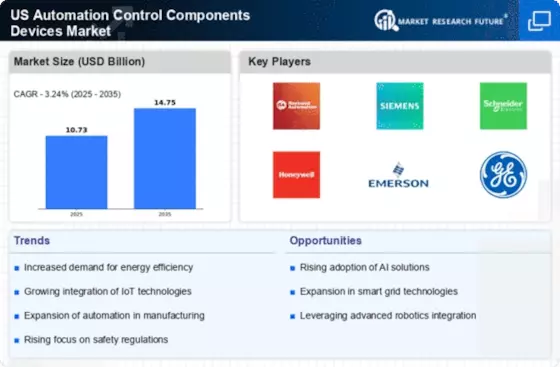
Integration of IoT Technologies
The integration of Internet of Things (IoT) technologies into the US Automation Control Components Devices Market is driving substantial growth. IoT enables real-time monitoring and control of industrial processes, enhancing operational efficiency. As manufacturers increasingly adopt IoT solutions, the demand for automation control components that can seamlessly connect and communicate with IoT devices is rising. According to recent data, the market for IoT-enabled automation devices is projected to grow at a compound annual growth rate (CAGR) of over 20% in the coming years. This trend indicates a shift towards smarter manufacturing environments, where automation control components play a pivotal role in optimizing production and reducing downtime.
Advancements in Robotics and Automation
Advancements in robotics and automation technologies are propelling the US Automation Control Components Devices Market forward. The integration of advanced robotics into manufacturing processes enhances productivity and precision, leading to improved product quality. As industries adopt collaborative robots (cobots) and autonomous systems, the need for sophisticated automation control components that can manage these technologies becomes paramount. The robotics market is projected to grow significantly, with estimates indicating a potential increase of over 15% annually. This growth is likely to drive demand for automation control devices that facilitate the seamless operation of robotic systems, thereby transforming traditional manufacturing paradigms.
Growing Demand for Predictive Maintenance
The growing demand for predictive maintenance within the US Automation Control Components Devices Market is reshaping how companies approach equipment management. Predictive maintenance leverages data analytics and machine learning to anticipate equipment failures before they occur, thereby minimizing downtime and maintenance costs. This trend is particularly relevant in industries such as manufacturing and energy, where unplanned outages can lead to significant financial losses. The market for predictive maintenance solutions is expected to witness a robust growth trajectory, with estimates suggesting a CAGR of around 25% over the next few years. As organizations increasingly recognize the value of proactive maintenance strategies, the demand for automation control components that support these initiatives is likely to surge.
Regulatory Compliance and Safety Standards
The US Automation Control Components Devices Market is significantly influenced by stringent regulatory compliance and safety standards. Government regulations, such as those set by the Occupational Safety and Health Administration (OSHA) and the National Fire Protection Association (NFPA), necessitate the use of advanced automation control devices to ensure workplace safety and operational reliability. Companies are increasingly investing in automation solutions that not only meet these regulations but also enhance safety protocols. This focus on compliance is expected to drive market growth, as organizations seek to avoid penalties and improve their safety records. The market for safety-related automation components is anticipated to expand as businesses prioritize adherence to these regulations.
Focus on Sustainability and Green Technologies
The focus on sustainability and green technologies is becoming increasingly prominent within the US Automation Control Components Devices Market. As companies strive to reduce their carbon footprint and comply with environmental regulations, there is a growing demand for automation solutions that promote energy efficiency and resource conservation. This trend is reflected in the rising adoption of energy-efficient automation control components, which not only help organizations meet sustainability goals but also reduce operational costs. The market for green automation technologies is expected to expand, with projections indicating a growth rate of approximately 18% in the coming years. This shift towards sustainable practices is likely to drive innovation and investment in the automation control components sector.