×
Request Free Sample ×

Kindly complete the form below to receive a free sample of this Report

* Please use a valid business email

Leading companies partner with us for data-driven Insights

clients tt-cursor
Hero Background

UK Human Growth Hormone Market

ID: MRFR/HC/43242-HCR
200 Pages
Rahul Gotadki
February 2026

UK Human Growth Hormone Market Research Report: Size, Share, Trend Analysis By Brand (Norditropin, Genotropin, Humatrope, Saizen, Omnitrope, Skytrofa, Others), By Route of Administration (Subcutaneous, Intramuscular, Intravenous), By Applications (Pediatric Growth Hormone Deficiency, Adult Growth Hormone Deficiency, Idiopathic Growth Hormone Deficiency, Small for Gestational Age, Turner Syndrome, Prader-Willi Syndrome, Others) and By Distribution Channel (Hospital Pharmacies, Retail Pharmacies, Online Pharmacy, Specialty Pharmacy) - Growth Outlook & Industry Forecast 2025 To 2035

Share:
Download PDF ×

We do not share your information with anyone. However, we may send you emails based on your report interest from time to time. You may contact us at any time to opt-out.

UK Human Growth Hormone Market Infographic
Purchase Options

UK Human Growth Hormone Market Summary

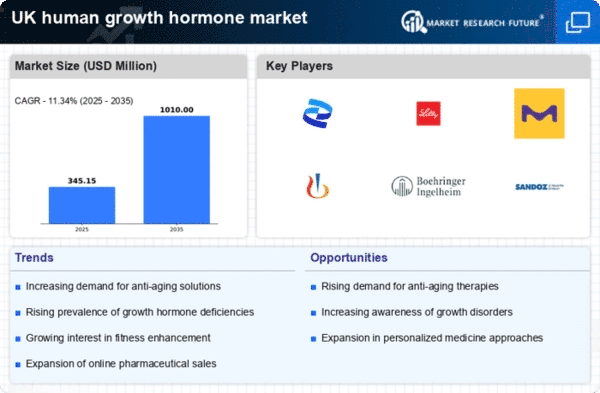
As per Market Research Future analysis, the UK human growth-hormone market size was estimated at 310.0 USD Million in 2024.. The UK human growth-hormone market is projected to grow from 345.15 USD Million in 2025 to 1010.0 USD Million by 2035, exhibiting a compound annual growth rate (CAGR) of 11.3% during the forecast period 2025 - 2035

Key Market Trends & Highlights

The UK human growth-hormone market is experiencing notable growth driven by evolving consumer preferences and technological advancements.

  • The demand for anti-aging treatments is rising, indicating a shift in consumer focus towards longevity and wellness.
  • Technological advancements in production are enhancing the efficiency and quality of human growth hormone formulations.
  • The regulatory landscape is evolving, necessitating compliance that could impact market dynamics and accessibility.
  • Key market drivers include the increasing awareness of growth hormone benefits and the aging population facing related health issues.

Market Size & Forecast

2024 Market Size 310.0 (USD Million)
2035 Market Size 1010.0 (USD Million)
CAGR (2025 - 2035) 11.34%

Major Players

Pfizer (US), Eli Lilly and Company (US), Merck KGaA (DE), Novartis (CH), Boehringer Ingelheim (DE), Sandoz (DE), Hikma Pharmaceuticals (GB), Ferring Pharmaceuticals (CH), Ipsen (FR)

Our Impact
Enabled $4.3B Revenue Impact for Fortune 500 and Leading Multinationals
Partnering with 2000+ Global Organizations Each Year
30K+ Citations by Top-Tier Firms in the Industry

UK Human Growth Hormone Market Trends

the market is currently experiencing notable developments., driven by increasing awareness regarding the benefits of growth hormone therapy. This therapy is often utilized for various medical conditions, including growth disorders in children and hormone deficiencies in adults. The rising prevalence of these conditions, coupled with advancements in biotechnology, appears to be propelling the demand for human growth hormone products. Furthermore, the regulatory landscape is evolving, with authorities emphasizing the importance of safety and efficacy in hormone treatments. This shift may lead to enhanced consumer confidence and a more robust market environment. In addition, the human growth-hormone market is witnessing a surge in interest from the fitness and wellness sectors. Individuals are increasingly seeking growth hormone treatments for anti-aging and performance enhancement purposes. This trend suggests a potential expansion of the market beyond traditional medical applications. As more consumers become informed about the possible benefits, the market may see a diversification of products and services tailored to meet these emerging needs. Overall, the market is poised for growth, influenced by both medical and lifestyle factors..

Rising Demand for Anti-Aging Treatments

There is a growing interest in human growth hormone for its potential anti-aging benefits. Consumers are increasingly seeking therapies that promise to enhance vitality and improve overall well-being. This trend may lead to a broader acceptance of hormone treatments in the wellness industry.

Technological Advancements in Production

Innovations in biotechnology are enhancing the production processes of human growth hormone. These advancements may improve the quality and availability of products, potentially leading to increased market penetration and consumer trust.

Regulatory Changes and Compliance

The regulatory environment surrounding human growth hormone is evolving, with authorities focusing on safety and efficacy. Stricter compliance measures may ensure higher standards in product quality, which could positively influence market growth.

UK Human Growth Hormone Market Drivers

Evolving Regulatory Landscape

The evolving regulatory landscape in the UK is another driver influencing the human growth-hormone market. Regulatory bodies are increasingly focusing on the safety and efficacy of hormone therapies, leading to more stringent approval processes. While this may pose challenges for manufacturers, it also ensures that only high-quality products reach the market. As regulations become clearer and more defined, companies may find it easier to navigate the approval process, potentially leading to an influx of new human growth-hormone products. This regulatory clarity could foster innovation and competition within the market, ultimately benefiting consumers by providing a wider range of options for hormone therapy.

Advancements in Medical Research

Ongoing advancements in medical research are playing a crucial role in shaping the human growth-hormone market. Innovative studies are continuously exploring the therapeutic applications of human growth hormone beyond traditional uses, such as in treating growth disorders and hormone deficiencies. Research into the potential benefits of human growth hormone in areas like cognitive function and metabolic health is expanding the scope of its applications. As new findings emerge, healthcare providers may become more inclined to prescribe human growth hormone therapies, thereby increasing market penetration. The UK is home to several leading research institutions, which may further enhance the human growth-hormone market through the development of novel therapies and treatment protocols.

Rising Fitness and Wellness Trends

The human growth-hormone market is also benefiting from the rising trends in fitness and wellness among the UK population. As more individuals prioritize health and fitness, there is a growing interest in supplements and therapies that can enhance physical performance and recovery. Human growth hormone is often associated with improved athletic performance, muscle growth, and fat loss, making it appealing to fitness enthusiasts. Market Research Future indicates that the fitness industry in the UK is projected to reach £5 billion by 2026, which may correlate with increased interest in human growth hormone therapies. This trend suggests that as fitness culture continues to thrive, the human growth-hormone market could see a corresponding increase in demand.

Aging Population and Related Health Issues

The demographic shift towards an aging population in the UK is significantly impacting the human growth-hormone market. As the population ages, there is an increasing prevalence of age-related health issues, including decreased muscle mass, osteoporosis, and metabolic disorders. This demographic trend creates a heightened demand for human growth hormone therapies, which are perceived to mitigate some of these age-related conditions. According to recent statistics, the proportion of individuals aged 65 and over is expected to reach 23% by 2030, further driving the need for effective treatments. Consequently, pharmaceutical companies are likely to focus on developing targeted therapies to cater to this growing segment, thereby expanding the human growth-hormone market.

Increasing Awareness of Growth Hormone Benefits

there is a notable surge in awareness regarding the benefits of growth hormone therapy.. This awareness is primarily driven by educational campaigns and increased access to information through digital platforms. As individuals become more informed about the potential advantages of human growth hormone, such as improved muscle mass, enhanced recovery, and overall vitality, the demand for these therapies is likely to rise. In the UK, the market is projected to grow at a CAGR of approximately 6.5% over the next five years, reflecting a growing acceptance of hormone treatments among the population. This trend indicates a shift in consumer attitudes, where individuals are more inclined to seek out human growth-hormone therapies as part of their health and wellness regimens.


Market Segment Insights

By Brand: Norditropin (Largest) vs. Somatuline (Fastest-Growing)

In the UK human growth-hormone market, there is a clear distribution of market share among various brands. Norditropin holds the largest share, reflecting its strong market presence and widespread acceptance among healthcare professionals and patients alike. Genotropin and Humatrope also contribute significantly, while Saizen and Omnitrope exhibit steady demand. In contrast, the 'Others' category encapsulates newer entrants aiming to capture niche markets. Growth trends within this segment showcase an increased adoption of human growth hormones due to rising awareness about growth disorders and the therapeutic benefits associated with these treatments. Innovations in delivery methods and product formulations further propel market dynamics, with emerging brands like Skytrofa capitalizing on unmet patient needs, making them notable fast-growing contenders in this market landscape.

Norditropin: Dominant vs. Skytrofa: Emerging

Norditropin is the dominant player in the UK human growth-hormone market, known for its effectiveness and reliability in treating growth-related disorders. The brand has established itself through robust clinical backing and extensive use in pediatric and adult populations. Its strong distribution networks and marketing strategies significantly enhance its visibility among healthcare professionals. On the other hand, Skytrofa, as an emerging brand, offers a unique formulation that caters specifically to children, posing a significant advantage in pediatric care. Its innovative delivery method and formulation appeal directly to parents and caregivers, positioning it favorably against established competitors. As Skytrofa continues to gain traction, it highlights a growing market trend towards more specialized and user-friendly options.

By Route of Administration: Subcutaneous (Largest) vs. Intravenous (Fastest-Growing)

In the UK human growth-hormone market, the route of administration segment showcases a diverse distribution, with subcutaneous administration holding the largest market share. This method is widely preferred due to its ease of use and patient compliance. Intramuscular and intravenous routes follow, each catering to specific therapeutic needs and patient preferences. However, intravenous administration is gaining traction, particularly among healthcare providers seeking rapid effects. Growth trends in this segment are heavily influenced by advancements in delivery technologies and patient-centric approaches. The rising emphasis on personalized medicine has led to an uptick in subcutaneous applications, while intravenous methods are being increasingly adopted for their quick action in clinical settings. Additionally, educational initiatives promoting effective administration techniques contribute to this growth, enhancing overall market dynamics.

Subcutaneous (Dominant) vs. Intramuscular (Emerging)

Subcutaneous administration remains the dominant route in the UK human growth-hormone market because of its user-friendly nature, allowing patients to self-inject easily at home. This method is associated with higher patient satisfaction and adherence levels, making it a preferred choice among users. In contrast, intramuscular administration is emerging, especially in clinical environments where trained professionals administer the hormone. It is often seen in patients with a need for more controlled dosing and those who may experience difficulties with subcutaneous injections. The increasing availability of combination therapies and the focus on improving patient outcomes is expected to further elevate the position of intramuscular administration in the market.

By Application: Pediatric Growth Hormone Deficiency (Largest) vs. Adult Growth Hormone Deficiency (Fastest-Growing)

The application segments in the UK human growth-hormone market reveal a significant distribution of market share. Pediatric Growth Hormone Deficiency holds the largest share given its critical impact on children’s growth and developmental issues. Closely followed by Adult Growth Hormone Deficiency, this segment showcases a robust demand driven by evolving awareness and treatment options. Other segments such as Turner Syndrome and Prader-Willi Syndrome, although important, represent smaller yet vital portions of the market with significant patient populations needing therapy. Growth trends across these applications indicate a rising prevalence of Adult Growth Hormone Deficiency, often linked to lifestyle factors and improved diagnostics. As healthcare professionals increasingly recognize the implications of hormone deficiencies, demand for treatments in this segment is rapidly increasing. Furthermore, advancements in medical technology and research contribute significantly to therapeutic options, enhancing market growth potential. The steady innovation resonates strongly in Pediatric Growth Hormone Deficiency, ensuring that new methodologies continue to emerge and expand their respective share.

Pediatric Growth Hormone Deficiency (Dominant) vs. Adult Growth Hormone Deficiency (Emerging)

Pediatric Growth Hormone Deficiency is positioned as the dominant segment within the UK human growth-hormone market, primarily due to a growing recognition of childhood growth disorders and the necessity for early intervention. This segment encompasses a broad range of disorders impacting height and overall physical development, leading to high patient demand for effective hormone therapies. Conversely, Adult Growth Hormone Deficiency is seen as an emerging segment, accelerated by increasing diagnosis rates and a better understanding of the adverse effects of growth hormone deficiency in adulthood. The treatment landscape for adults is evolving, with physicians now more aware of conditions like fatigue and metabolic syndrome that may benefit from hormone therapy, driving growth and innovation in this area.

By Distribution Channel: Retail Pharmacies (Largest) vs. Online Pharmacy (Fastest-Growing)

In the UK human growth-hormone market, the distribution channel landscape is varied, with hospital pharmacies, retail pharmacies, online pharmacies, and specialty pharmacies all vying for market share. Among these, retail pharmacies hold the largest portion, benefiting from their established customer base and accessibility. Hospital pharmacies also contribute significantly, though they cater primarily to in-patient needs. Online pharmacies have recently begun to carve out a substantial share of the market, catering to the growing demand for convenience and accessibility. Specialty pharmacies, while pivotal in providing specialized care, account for a smaller, yet important segment of the market. The growth trends within the distribution channels reflect changing consumer behaviors and healthcare practices. The online pharmacy segment is rapidly emerging as the fastest-growing channel, propelled by advancements in e-commerce and increased digital health awareness among patients. Retail pharmacies continue to thrive due to their long-standing presence and the trust they have built with consumers. Specialty pharmacies are expected to see moderate growth as they align more closely with personalized medicine trends, fulfilling unique patient needs. The collaborative dynamics among these channels will likely evolve, shaping the overall landscape of the UK human growth-hormone market.

Retail Pharmacies (Dominant) vs. Online Pharmacy (Emerging)

Retail pharmacies have established themselves as the dominant distribution channel in the UK human growth-hormone market, offering easy access and a wide range of products to consumers. These pharmacies provide a familiar environment for patients and often serve as the first point of contact for healthcare consultations regarding growth hormones. Their strategic locations in urban and suburban areas ensure consistent foot traffic, contributing to their leading market position. In contrast, the online pharmacy segment is rapidly emerging, tapping into the digital transformation trend among consumers. Online pharmacies offer convenience and often competitive pricing, expanding their reach beyond geographical limitations. This has resulted in a growing preference for online purchasing among consumers seeking discretion and ease in acquiring human growth-hormones.

Get more detailed insights about UK Human Growth Hormone Market

Key Players and Competitive Insights

The human growth-hormone market is characterized by a competitive landscape that is increasingly shaped by innovation, strategic partnerships, and regional expansion. Key players such as Pfizer (US), Eli Lilly and Company (US), and Merck KGaA (DE) are actively pursuing strategies that emphasize research and development, aiming to enhance their product offerings and market share. Pfizer (US) has focused on expanding its portfolio through innovative therapies, while Eli Lilly and Company (US) has been investing in digital health solutions to improve patient engagement and treatment adherence. Merck KGaA (DE) appears to be leveraging its global presence to optimize supply chains and enhance distribution networks, thereby strengthening its competitive position in the market.The market structure is moderately fragmented, with several players vying for dominance. Key business tactics include localizing manufacturing to reduce costs and improve supply chain efficiency. This approach not only enhances responsiveness to market demands but also aligns with sustainability goals, as companies seek to minimize their carbon footprints. The collective influence of these major players contributes to a dynamic competitive environment, where agility and innovation are paramount.

In October Pfizer (US) announced a strategic partnership with a leading biotechnology firm to co-develop a next-generation growth hormone therapy. This collaboration is expected to accelerate the development timeline and enhance the therapeutic profile of their offerings, potentially positioning Pfizer as a leader in advanced treatment options. The strategic importance of this partnership lies in its potential to leverage combined expertise and resources, thereby enhancing market competitiveness.

In September Eli Lilly and Company (US) launched a new digital platform aimed at improving patient access to growth hormone therapies. This initiative is significant as it reflects a broader trend towards digital transformation in healthcare, enabling better patient management and adherence to treatment regimens. By integrating technology into their service offerings, Eli Lilly and Company (US) is likely to enhance patient outcomes and solidify its market position.

In August Merck KGaA (DE) expanded its manufacturing capabilities in the UK, investing €50 million in a new facility dedicated to the production of growth hormone products. This strategic move is indicative of Merck's commitment to meeting increasing demand while ensuring high-quality standards. The expansion not only enhances production capacity but also positions Merck KGaA (DE) to respond more effectively to regional market needs.

As of November current competitive trends are increasingly defined by digitalization, sustainability, and the integration of artificial intelligence in product development and patient management. Strategic alliances are becoming more prevalent, as companies recognize the value of collaboration in navigating complex market dynamics. Looking ahead, competitive differentiation is likely to evolve from traditional price-based competition towards a focus on innovation, technological advancements, and supply chain reliability. This shift underscores the importance of agility and responsiveness in a rapidly changing market environment.

Key Companies in the UK Human Growth Hormone Market include

Industry Developments

In the UK Human Growth Hormone Market, recent developments indicate a rising interest in biosimilar products, particularly with companies like Sandoz and Merck expanding their portfolios to compete with established names such as Novo Nordisk and Eli Lilly. The market is projected to experience significant growth, driven by an increasing awareness of growth hormone deficiencies and the demand for effective treatments among both adults and children. Reports from the UK government highlight a growing prevalence of growth disorders, which is further fueling market expansion.

As of October 2023, Ferring Pharmaceuticals has been noted for its continued investment in research and development aimed at enhancing therapeutic options. 

Additionally, there have been discussions around potential collaborations, although no significant mergers or acquisitions have been publicly noted among the major players such as Roche and Ipsen in recent months. Notably, the dynamics of regulatory changes are impacting how companies develop and market their products, with a focus on quality and safety standards in line with guidance from UK healthcare authorities. Overall, the UK Human Growth Hormone Market reflects a landscape of innovation, competition, and increased investment.

Future Outlook

UK Human Growth Hormone Market Future Outlook

The Human Growth Hormone Market is projected to grow at 11.34% CAGR from 2025 to 2035, driven by increasing demand for anti-aging therapies and advancements in biotechnology.

New opportunities lie in:

  • Development of personalized growth-hormone therapies for niche markets.
  • Expansion of telehealth services for remote hormone therapy consultations.
  • Investment in advanced delivery systems for improved patient compliance.

By 2035, the market is expected to achieve substantial growth, driven by innovation and strategic investments.

Market Segmentation

UK Human Growth Hormone Market Brand Outlook

  • Norditropin
  • Genotropin
  • Humatrope
  • Saizen
  • Omnitrope
  • Skytrofa
  • Others

UK Human Growth Hormone Market Application Outlook

  • Pediatric Growth Hormone Deficiency
  • Adult Growth Hormone Deficiency
  • Idiopathic Growth Hormone Deficiency
  • Small for Gestational Age
  • Turner Syndrome
  • Prader-Willi Syndrome
  • Others

UK Human Growth Hormone Market Distribution Channel Outlook

  • Hospital Pharmacies
  • Retail Pharmacies
  • Online Pharmacy
  • Specialty Pharmacy

UK Human Growth Hormone Market Route of Administration Outlook

  • Subcutaneous
  • Intramuscular
  • Intravenous

Report Scope

MARKET SIZE 2024 310.0(USD Million)
MARKET SIZE 2025 345.15(USD Million)
MARKET SIZE 2035 1010.0(USD Million)
COMPOUND ANNUAL GROWTH RATE (CAGR) 11.34% (2025 - 2035)
REPORT COVERAGE Revenue Forecast, Competitive Landscape, Growth Factors, and Trends
BASE YEAR 2024
Market Forecast Period 2025 - 2035
Historical Data 2019 - 2024
Market Forecast Units USD Million
Key Companies Profiled Pfizer (US), Eli Lilly and Company (US), Merck KGaA (DE), Novartis (CH), Boehringer Ingelheim (DE), Sandoz (DE), Hikma Pharmaceuticals (GB), Ferring Pharmaceuticals (CH), Ipsen (FR)
Segments Covered Brand, Route of Administration, Application, Distribution Channel
Key Market Opportunities Emerging biotechnologies and personalized therapies drive growth in the human growth-hormone market.
Key Market Dynamics Regulatory changes and technological advancements drive growth in the human growth-hormone market in the UK.
Countries Covered UK
Leave a Comment

FAQs

What is the projected market size of the UK Human Growth Hormone Market in 2024?

The UK Human Growth Hormone Market is expected to be valued at 258.75 million USD in 2024.

What will the UK Human Growth Hormone Market be valued at by 2035?

By 2035, the market is projected to reach a value of 750 million USD.

What is the expected compound annual growth rate (CAGR) for the UK Human Growth Hormone Market from 2025 to 2035?

The market is expected to grow at a CAGR of 10.158% during the forecast period of 2025 to 2035.

What are the leading brands in the UK Human Growth Hormone Market by 2024?

Leading brands include Norditropin, Genotropin, and Humatrope, with Norditropin valued at 75 million USD in 2024.

Which brand will show the highest growth in the UK Human Growth Hormone Market by 2035?

Norditropin is projected to reach 220 million USD by 2035, the highest among the brands.

What is the market value of Genotropin in the UK Human Growth Hormone Market for the year 2024?

Genotropin is valued at 65 million USD in the year 2024.

What is the market size of Humatrope in 2035?

Humatrope is expected to have a market size of 160 million USD by 2035.

What are some key players in the UK Human Growth Hormone Market?

Key players include Ferring Pharmaceuticals, Novo Nordisk, and Roche.

What challenges might affect the growth of the UK Human Growth Hormone Market?

Challenges may include regulatory hurdles and competition from alternative therapies.

How does the UK Human Growth Hormone Market size grow regionally?

The market is experiencing growth across various regions in the UK, driven by increased awareness and demand.

Download Free Sample

Kindly complete the form below to receive a free sample of this Report

Compare Licence

×
Features License Type
Single User Multiuser License Enterprise User
Price $4,950 $5,950 $7,250
Maximum User Access Limit 1 User Upto 10 Users Unrestricted Access Throughout the Organization
Free Customization
Direct Access to Analyst
Deliverable Format
Platform Access
Discount on Next Purchase 10% 15% 15%
Printable Versions