×
Request Free Sample ×

Kindly complete the form below to receive a free sample of this Report

* Please use a valid business email

Leading companies partner with us for data-driven Insights

clients tt-cursor
Hero Background

Japan Human Growth Hormone Market

ID: MRFR/HC/43245-HCR
200 Pages
Garvit Vyas
February 2026

Japan Human Growth Hormone Market Research Report By Brand (Norditropin, Genotropin, Humatrope, Saizen, Omnitrope, Skytrofa, Others), By Route of Administration (Subcutaneous, Intramuscular, Intravenous), By Application (Pediatric Growth Hormone Deficiency, Adult Growth Hormone Deficiency, Idiopathic Growth Hormone Deficiency, Small for Gestational Age, Turner Syndrome, Prader-Willi Syndrome, Others) and By Distribution Channel (Hospital Pharmacies, Retail Pharmacies, Online Pharmacy, Specialty Pharmacy) - Growth & Industry Forecast 2025 To 2035

Share:
Download PDF ×

We do not share your information with anyone. However, we may send you emails based on your report interest from time to time. You may contact us at any time to opt-out.

Japan Human Growth Hormone Market Infographic
Purchase Options

Japan Human Growth Hormone Market Summary

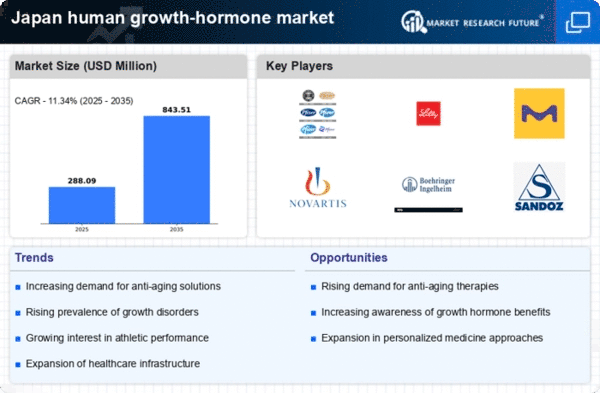
As per Market Research Future analysis, the Japan human growth-hormone market size was estimated at 258.75 USD Million in 2024. The Japan human growth-hormone market is projected to grow from 288.09 USD Million in 2025 to 843.51 USD Million by 2035, exhibiting a compound annual growth rate (CAGR) of 11.3% during the forecast period 2025 - 2035

Key Market Trends & Highlights

The Japan human growth-hormone market is experiencing notable growth driven by various factors.

  • The market is witnessing an increasing demand for anti-aging solutions, particularly among the aging population.
  • Advancements in medical technology are enhancing the efficacy and safety of growth hormone therapies.
  • The largest segment in this market is the therapeutic segment, while the fastest-growing segment is the anti-aging segment.
  • Key market drivers include rising awareness of growth hormone deficiency and increased healthcare spending due to an aging population.

Market Size & Forecast

2024 Market Size 258.75 (USD Million)
2035 Market Size 843.51 (USD Million)
CAGR (2025 - 2035) 11.34%

Major Players

Pfizer Inc (US), Eli Lilly and Company (US), Merck KGaA (DE), Novartis AG (CH), Boehringer Ingelheim GmbH (DE), Sandoz International GmbH (CH), HGH Medical (US), Genotropin (US)

Our Impact
Enabled $4.3B Revenue Impact for Fortune 500 and Leading Multinationals
Partnering with 2000+ Global Organizations Each Year
30K+ Citations by Top-Tier Firms in the Industry

Japan Human Growth Hormone Market Trends

The human growth-hormone market in Japan is currently experiencing notable developments, driven by increasing awareness of the benefits associated with growth hormone therapy. This therapy is often utilized for various medical conditions, including growth disorders in children and hormone deficiencies in adults. The rising prevalence of these conditions, coupled with advancements in medical technology, appears to be propelling the demand for human growth hormone products. Furthermore, the regulatory environment in Japan is evolving, with authorities focusing on ensuring the safety and efficacy of these treatments, which may enhance consumer confidence and market growth. In addition, the demographic shift towards an aging population in Japan is likely to influence the human growth-hormone market. As the population ages, there is a growing interest in anti-aging therapies, which may include the use of growth hormones. This trend suggests a potential expansion of the market as more individuals seek solutions to maintain vitality and health in later years. Overall, the human growth-hormone market in Japan is poised for growth, driven by both medical needs and changing societal attitudes towards health and wellness.

Increasing Demand for Anti-Aging Solutions

There is a rising interest in anti-aging therapies among the aging population in Japan. This trend is likely to drive the demand for human growth hormone products, as individuals seek ways to enhance their quality of life and maintain vitality.

Advancements in Medical Technology

Innovations in medical technology are facilitating the development of more effective human growth hormone therapies. These advancements may lead to improved treatment outcomes and increased adoption among healthcare providers.

Regulatory Developments

The regulatory landscape surrounding human growth hormone products in Japan is evolving. Stricter regulations may enhance product safety and efficacy, potentially boosting consumer trust and market growth.

Japan Human Growth Hormone Market Drivers

Increased Focus on Sports and Fitness

The rising interest in sports and fitness among the Japanese population is contributing to the growth of the human growth-hormone market. Athletes and fitness enthusiasts are increasingly turning to growth hormone therapies to enhance performance, recovery, and overall physical condition. This trend is particularly pronounced in competitive sports, where the demand for performance-enhancing substances is high. The human growth-hormone market is likely to experience growth as more individuals seek legal and safe alternatives to improve their athletic capabilities. Additionally, fitness centers and sports organizations are beginning to recognize the potential benefits of growth hormone treatments, further driving awareness and acceptance within the fitness community.

Regulatory Support for Hormone Treatments

Regulatory support for hormone treatments in Japan is emerging as a significant driver for the human growth-hormone market. The Japanese government has been increasingly supportive of medical advancements that address hormonal deficiencies, leading to streamlined approval processes for new therapies. This regulatory environment encourages pharmaceutical companies to invest in research and development of innovative growth hormone products. The human growth-hormone market is likely to benefit from this supportive framework, as it fosters a conducive atmosphere for the introduction of new therapies. As regulations evolve to accommodate advancements in medical science, the market may see an influx of novel treatments that cater to the diverse needs of patients.

Technological Innovations in Hormone Therapy

Technological advancements in hormone therapy are reshaping the landscape of the human growth-hormone market. Innovations such as more precise delivery systems and improved formulations are enhancing the efficacy and safety of growth hormone treatments. In Japan, the introduction of smart delivery devices and personalized treatment plans is likely to attract more patients seeking effective solutions for growth hormone deficiencies. The human growth-hormone market is expected to see a surge in adoption rates as these technologies become more accessible. Furthermore, the integration of telemedicine in hormone therapy consultations is streamlining patient access to specialists, potentially increasing the market size as more individuals seek out these advanced treatment options.

Rising Awareness of Growth Hormone Deficiency

The increasing awareness of growth hormone deficiency among the Japanese population is a notable driver for the human growth-hormone market. As more individuals recognize the symptoms and potential health impacts of this deficiency, there is a growing demand for diagnostic testing and subsequent treatment options. This awareness is further fueled by educational campaigns and healthcare initiatives aimed at informing the public about the importance of hormonal balance. In Japan, it is estimated that approximately 1 in 3 adults may experience some form of hormonal imbalance, which could lead to a significant market opportunity. The human growth-hormone market is likely to benefit from this trend as healthcare providers become more proactive in diagnosing and treating growth hormone-related conditions.

Aging Population and Increased Healthcare Spending

Japan's aging population is a critical factor influencing the human growth-hormone market. With a significant portion of the population aged 65 and older, there is a heightened focus on health and wellness among older adults. This demographic shift is accompanied by increased healthcare spending, as older individuals seek treatments that enhance their quality of life. The human growth-hormone market stands to gain from this trend, as growth hormone therapies are often sought for their potential to improve vitality and physical performance in aging individuals. Reports indicate that healthcare expenditure in Japan is projected to reach ¥50 trillion by 2025, further driving demand for effective treatments, including those related to growth hormone.


Market Segment Insights

By Brand: Norditropin (Largest) vs. Genotropin (Fastest-Growing)

The Japan human growth-hormone market exhibits a diverse brand landscape with notable players such as Norditropin, which commands the largest market share, followed by Genotropin, Humatrope, and Saizen. Other brands like Omnitrope and Skytrofa also hold a significant presence, while various other products contribute to the overall market dynamics. This distribution highlights both established brands and emerging contenders, illustrating the competitive nature of the market. In recent years, the growth trends within the brand segment have been driven by increasing awareness of hormone therapies and advancements in biotechnology. Innovations in product formulations and delivery mechanisms have enhanced patient experiences, further propelling market growth. Additionally, the rise in lifestyle-related disorders has increased the demand for these products, paving the way for both established and emerging brands to strengthen their market positions.

Norditropin (Dominant) vs. Genotropin (Emerging)

Norditropin remains the dominant player in the Japan human growth-hormone market, primarily due to its established reputation and extensive clinical usage. This brand is often preferred by healthcare providers for its efficacy and safety profile. On the other hand, Genotropin is recognized as an emerging force, gaining traction among consumers and healthcare professionals alike. Its innovative formulations and competitive pricing strategies are contributing to its rapid growth in the market. As both brands navigate the evolving landscape, their ability to adapt to changing consumer needs and regulatory environments will be crucial for sustaining their respective market shares.

By Route of Administration: Subcutaneous (Largest) vs. Intravenous (Fastest-Growing)

In the Japan human growth-hormone market, the subcutaneous route of administration dominates with a significant share due to its ease of use and patient convenience. This method allows for self-administration, making it preferable for patients looking for manageable treatment options. In contrast, intravenous administration, while having a smaller market share, is rapidly gaining traction as it offers precise dosage control and faster action, appealing to healthcare providers who prioritize efficacy. The growth trends in the route of administration segment are indicative of changing patient preferences and medical advancements. The increasing availability of pre-filled syringes and other user-friendly delivery systems for subcutaneous injections is driving its dominance. Meanwhile, the intravenous method's growth is being propelled by ongoing innovations in administration techniques and a rising focus on personalized medicine, ensuring that these delivery methods remain highly relevant in the healthcare landscape.

Subcutaneous (Dominant) vs. Intravenous (Emerging)

The subcutaneous segment plays a pivotal role in the Japan human growth-hormone market, characterized by its significant market presence due to the advantages of patient autonomy and lower associated complications. Patients prefer subcutaneous administration for its convenience, allowing for at-home injections, which aligns with a growing demand for self-administered therapies. Its dominance is sustained by evolving formulations that enhance absorption, making it a user-friendly choice. Conversely, the intravenous method is emerging as a competitive alternative, gaining popularity for its rapid onset of action and enhanced therapeutic outcomes, particularly in clinical settings. This segment is witnessing increased investment as healthcare providers recognize the benefits of intravenous delivery for specific patient populations, paving the way for growth in this route.

By Application: Pediatric Growth Hormone Deficiency (Largest) vs. Adult Growth Hormone Deficiency (Fastest-Growing)

In the Japan human growth-hormone market, the application segment is primarily driven by Pediatric Growth Hormone Deficiency, which holds the largest market share due to rising awareness and diagnosis rates among children. Adult Growth Hormone Deficiency is gaining traction and is becoming a significant focus as aging population trends rise, contributing to a more balanced distribution of market shares with segments like Small for Gestational Age and others gradually gaining ground. Growth trends in this segment are largely influenced by an increased prevalence of growth disorders across demographics, alongside improvements in healthcare access leading to enhanced diagnosis and treatment opportunities. Pediatric Growth Hormone Deficiency remains the dominant force, benefiting from a strong support network of healthcare professionals and dedicated treatments, while Adult Growth Hormone Deficiency is emerging rapidly as lifestyle changes and aging bring attention to hormone therapy solutions for adults.

Pediatric Growth Hormone Deficiency (Dominant) vs. Adult Growth Hormone Deficiency (Emerging)

Pediatric Growth Hormone Deficiency is the leading segment in the Japan human growth-hormone market, characterized by a well-established treatment framework and high efficacy of growth hormone therapies. This condition’s prevalence is frequently highlighted by healthcare providers, leading to increased diagnosis and treatment rates among children. In contrast, Adult Growth Hormone Deficiency is an emerging segment, marked by a growing recognition of its impact on quality of life and metabolic processes in adults. As societal attitudes shift towards health and wellness, treatment adoption in this segment is expected to rise, driven by advancements in therapy options and increased awareness among the adult population.

By Distribution Channel: Hospital Pharmacies (Largest) vs. Specialty Pharmacy (Fastest-Growing)

In the distribution channel segment of the Japan human growth-hormone market, Hospital Pharmacies hold the largest market share, catering primarily to patients requiring immediate and specialized medical intervention. These pharmacies facilitate direct access to prescribed treatments, ensuring that healthcare providers can manage their patients' hormonal needs efficiently. Conversely, Specialty Pharmacy, which is gaining traction, offers tailored services aimed at specific patient populations, thereby contributing to its increasing share in the market. Growth trends indicate a significant shift towards Online Pharmacies, which are emerging as a strong competitor due to their convenience and accessibility. The advent of telemedicine and a growing preference for discreet purchasing options have spurred the growth of this channel, while Retail Pharmacies continue to maintain their relevance by providing localized access to medications. Factors such as rising awareness of human growth hormone benefits and legislative support for pharmacy services are also enhancing market dynamics.

Hospital Pharmacies (Dominant) vs. Specialty Pharmacy (Emerging)

Hospital Pharmacies are crucial in delivering human growth-hormone treatments directly to patients, characterized by their close collaboration with healthcare providers and focus on specialized care. They dominate the distribution channel segment due to their dependable supply chains and ability to respond quickly to patient needs. In contrast, Specialty Pharmacies represent the emerging trend, focusing on complex pharmaceutical care for particular conditions. Their growth is driven by an increasing emphasis on personalized patient care, innovative service offerings, and improved patient adherence programs. This segment is expected to flourish as more patients seek specialized medications tailored to their unique health conditions, reflecting a broader shift towards customized healthcare solutions.

Get more detailed insights about Japan Human Growth Hormone Market

Key Players and Competitive Insights

The human growth-hormone market in Japan is characterized by a competitive landscape that is both dynamic and multifaceted. Key growth drivers include an increasing prevalence of growth hormone deficiency, rising awareness regarding the benefits of hormone therapy, and advancements in biotechnology. Major players such as Pfizer Inc (US), Eli Lilly and Company (US), and Merck KGaA (DE) are strategically positioned to leverage these trends. Pfizer Inc (US) focuses on innovation through research and development, aiming to enhance the efficacy of its growth hormone products. Eli Lilly and Company (US) emphasizes partnerships with healthcare providers to improve patient access, while Merck KGaA (DE) is investing in digital transformation to streamline operations and enhance customer engagement. Collectively, these strategies contribute to a competitive environment that is increasingly centered on innovation and patient-centric solutions.In terms of business tactics, companies are localizing manufacturing to reduce costs and improve supply chain efficiency. The market structure appears moderately fragmented, with several key players holding substantial market shares. This fragmentation allows for a variety of competitive strategies, as companies seek to differentiate themselves through unique offerings and operational efficiencies. The collective influence of these key players shapes market dynamics, fostering an environment where innovation and strategic partnerships are paramount.

In October Pfizer Inc (US) announced a collaboration with a leading Japanese biotechnology firm to develop a new formulation of its growth hormone therapy. This strategic move is likely to enhance Pfizer's market presence in Japan, as it aligns with local regulatory requirements and addresses specific patient needs. The collaboration underscores the importance of localized strategies in enhancing product acceptance and market penetration.

In September Eli Lilly and Company (US) launched a new digital platform aimed at improving patient education and adherence to growth hormone therapy. This initiative is significant as it reflects the growing trend towards digital health solutions, which can potentially improve patient outcomes and foster loyalty to the brand. By investing in digital tools, Eli Lilly positions itself as a forward-thinking leader in the market, likely enhancing its competitive edge.

In August Merck KGaA (DE) expanded its manufacturing capabilities in Japan, focusing on sustainable practices and reducing environmental impact. This expansion is indicative of a broader trend towards sustainability within the pharmaceutical industry, which may resonate well with increasingly eco-conscious consumers and healthcare providers. By prioritizing sustainability, Merck KGaA not only enhances its operational efficiency but also strengthens its brand reputation in a competitive market.

As of November current competitive trends in the human growth-hormone market include a pronounced shift towards digitalization, sustainability, and the integration of artificial intelligence in product development and patient management. Strategic alliances are increasingly shaping the landscape, enabling companies to pool resources and expertise to drive innovation. Looking ahead, competitive differentiation is likely to evolve from traditional price-based competition to a focus on technological advancements, innovative therapies, and reliable supply chains. This shift may redefine market dynamics, compelling companies to prioritize long-term value creation over short-term gains.

Key Companies in the Japan Human Growth Hormone Market include

Industry Developments

The Japan Human Growth Hormone Market has seen notable developments recently, particularly with increasing demand for growth hormone therapies for conditions like growth hormone deficiency and Turner syndrome. Companies such as Genentech and Eli Lilly continue to strengthen their market presence, focusing on innovative drug formulations and delivery methods. Mitsubishi Tanabe Pharma has reported enhancements in its product pipeline, striving for an edge in this competitive market. In terms of mergers and acquisitions, there have been no significant transactions reported among the major players like Pfizer and Ferring Pharmaceuticals within the last few months.

However, the market valuation for these pharmaceutical companies has been positively impacted by an uptick in healthcare expenditure and an aging population in Japan, promoting awareness and acceptance of human growth hormone therapies. Significant market events over the last two years include the approval of new HGH products by the Japanese regulatory agency in March 2022, which has contributed to market growth. This growth aligns with the government's initiatives to improve healthcare access and advance pharmaceutical innovations in Japan’s healthcare system.

Future Outlook

Japan Human Growth Hormone Market Future Outlook

The Human Growth Hormone Market in Japan is projected to grow at 11.34% CAGR from 2025 to 2035, driven by increasing healthcare expenditure, rising awareness, and advancements in biotechnology.

New opportunities lie in:

  • Development of personalized growth-hormone therapies for niche markets.
  • Expansion of telehealth services for remote patient monitoring.
  • Investment in advanced manufacturing technologies for cost reduction.

By 2035, the market is expected to achieve substantial growth, driven by innovation and strategic investments.

Market Segmentation

Japan Human Growth Hormone Market Brand Outlook

  • Norditropin
  • Genotropin
  • Humatrope
  • Saizen
  • Omnitrope
  • Skytrofa
  • Others

Japan Human Growth Hormone Market Application Outlook

  • Pediatric Growth Hormone Deficiency
  • Adult Growth Hormone Deficiency
  • Idiopathic Growth Hormone Deficiency
  • Small for Gestational Age
  • Turner Syndrome
  • Prader-Willi Syndrome
  • Others

Japan Human Growth Hormone Market Distribution Channel Outlook

  • Hospital Pharmacies
  • Retail Pharmacies
  • Online Pharmacy
  • Specialty Pharmacy

Japan Human Growth Hormone Market Route of Administration Outlook

  • Subcutaneous
  • Intramuscular
  • Intravenous

Report Scope

MARKET SIZE 2024 258.75(USD Million)
MARKET SIZE 2025 288.09(USD Million)
MARKET SIZE 2035 843.51(USD Million)
COMPOUND ANNUAL GROWTH RATE (CAGR) 11.34% (2025 - 2035)
REPORT COVERAGE Revenue Forecast, Competitive Landscape, Growth Factors, and Trends
BASE YEAR 2024
Market Forecast Period 2025 - 2035
Historical Data 2019 - 2024
Market Forecast Units USD Million
Key Companies Profiled Pfizer Inc (US), Eli Lilly and Company (US), Merck KGaA (DE), Novartis AG (CH), Boehringer Ingelheim GmbH (DE), Sandoz International GmbH (CH), HGH Medical (US), Genotropin (US)
Segments Covered Brand, Route of Administration, Application, Distribution Channel
Key Market Opportunities Emerging biotechnologies and regulatory support enhance growth potential in the human growth-hormone market.
Key Market Dynamics Rising demand for human growth hormone therapies driven by aging population and increasing health awareness in Japan.
Countries Covered Japan
Leave a Comment

FAQs

What is the projected market size of the Japan Human Growth Hormone Market for the year 2024?

The Japan Human Growth Hormone Market is expected to be valued at 345.0 USD Million in 2024.

What will be the estimated market size by the year 2035?

By 2035, the market is projected to reach a value of 1537.0 USD Million.

What is the expected Compound Annual Growth Rate (CAGR) for the Japan Human Growth Hormone Market from 2025 to 2035?

The expected CAGR for the Japan Human Growth Hormone Market from 2025 to 2035 is 14.548%.

Who are the key players in the Japan Human Growth Hormone Market?

Major players include Genentech, Mitsubishi Tanabe Pharma, and Ferring Pharmaceuticals among others.

Which segment is projected to dominate the market share in the Japan Human Growth Hormone Market?

The Norditropin segment is expected to have a significant market share, valued at 65.0 USD Million in 2024.

How much is the Genotropin segment valued at in 2024?

The Genotropin segment is valued at 70.0 USD Million in 2024.

What are the estimated values for the Humatrope segment in the Japan Human Growth Hormone Market by 2035?

The Humatrope segment is projected to be valued at 215.0 USD Million by 2035.

What is the market value for the Saizen segment in 2024?

In 2024, the Saizen segment is valued at 40.0 USD Million.

How will the Omnitrope segment perform by the year 2035?

The Omnitrope segment is expected to reach 522.0 USD Million by 2035.

What are the growth drivers for the Japan Human Growth Hormone Market from 2025 to 2035?

Key growth drivers include rising healthcare expenditures and increasing awareness of HGH therapy benefits.

Download Free Sample

Kindly complete the form below to receive a free sample of this Report

Compare Licence

×
Features License Type
Single User Multiuser License Enterprise User
Price $4,950 $5,950 $7,250
Maximum User Access Limit 1 User Upto 10 Users Unrestricted Access Throughout the Organization
Free Customization
Direct Access to Analyst
Deliverable Format
Platform Access
Discount on Next Purchase 10% 15% 15%
Printable Versions