Rising Crime Rates
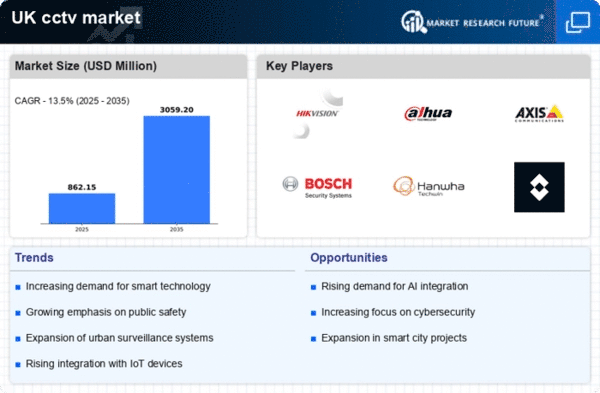
The increasing incidence of crime in urban areas of the UK appears to be a primary driver for the cctv market. As public safety concerns escalate, both residential and commercial sectors are investing in surveillance systems to deter criminal activities. Recent statistics indicate that property crime rates have surged by approximately 10% over the past year, prompting a heightened demand for effective security solutions. This trend suggests that consumers are more inclined to allocate budgets towards advanced cctv systems, thereby stimulating growth within the cctv market. Furthermore, local authorities are also enhancing their surveillance capabilities, which could lead to increased public sector spending on cctv technology.
Public Sector Investment
Government initiatives aimed at enhancing public safety are significantly influencing the cctv market. Local councils and law enforcement agencies are increasingly investing in surveillance infrastructure to combat crime and ensure community safety. Recent government reports indicate that public sector spending on security technologies, including cctv, has risen by 20% in the last fiscal year. This investment is often supported by funding programs aimed at improving urban safety, which could further bolster the cctv market. The collaboration between public entities and private security firms is also fostering innovation and expanding the reach of cctv solutions across various sectors.
Technological Integration
The integration of advanced technologies such as artificial intelligence (AI) and machine learning into cctv systems is transforming the cctv market. These innovations enable features like facial recognition, motion detection, and real-time analytics, which enhance the effectiveness of surveillance. The UK market has seen a notable shift towards smart cctv solutions, with a projected growth rate of 15% annually in the adoption of AI-driven systems. This technological evolution not only improves security measures but also offers businesses and homeowners greater control over their surveillance operations. As a result, the cctv market is likely to experience a surge in demand for these sophisticated systems, reflecting a broader trend towards smart technology in security.
Evolving Regulatory Frameworks
The regulatory landscape surrounding surveillance technologies is evolving, which may impact the cctv market. New guidelines and standards are being established to ensure that cctv systems comply with privacy laws and data protection regulations. The UK government has introduced measures aimed at balancing security needs with individual privacy rights, which could influence purchasing decisions. Companies that adapt to these regulations may find themselves at a competitive advantage, potentially leading to increased market share. As businesses navigate these changes, the cctv market is likely to see a shift towards compliant and ethically responsible surveillance solutions.
Consumer Awareness and Education
There is a growing awareness among consumers regarding the benefits of cctv systems, which is driving the cctv market. Educational campaigns and increased media coverage about security threats have led to a more informed public. As individuals and businesses recognize the value of surveillance in protecting assets, the demand for cctv installations is likely to rise. Surveys indicate that approximately 60% of UK homeowners now consider cctv systems a necessary investment for security. This shift in consumer perception is expected to sustain growth in the cctv market, as more people seek to enhance their security measures.