Regulatory Pressures and Compliance
The Tamper Evident Label Market is significantly influenced by regulatory pressures that mandate the use of tamper evident solutions across various sectors. Governments and regulatory bodies are increasingly enforcing stringent guidelines to ensure product safety and consumer protection. For instance, the pharmaceutical industry is subject to rigorous regulations that require tamper evident packaging to prevent counterfeiting and ensure the authenticity of medications. This regulatory landscape not only compels manufacturers to adopt tamper evident labels but also fosters innovation within the industry. As compliance becomes a critical factor, the market is likely to witness a steady increase in demand for advanced tamper evident solutions that meet these evolving standards.
Rising E-commerce and Online Retail
The Tamper Evident Label Market is experiencing growth fueled by the rise of e-commerce and online retail. As more consumers turn to online shopping, the need for secure packaging solutions has become paramount. Tamper evident labels serve as a critical component in ensuring that products remain secure during transit and delivery. This trend is particularly relevant in sectors such as food delivery and pharmaceuticals, where the integrity of the product is essential. The increasing volume of online transactions is likely to drive demand for tamper evident labels, as retailers and manufacturers seek to protect their products from tampering and ensure customer satisfaction. The market is poised for expansion as e-commerce continues to thrive.
Increasing Demand for Product Security
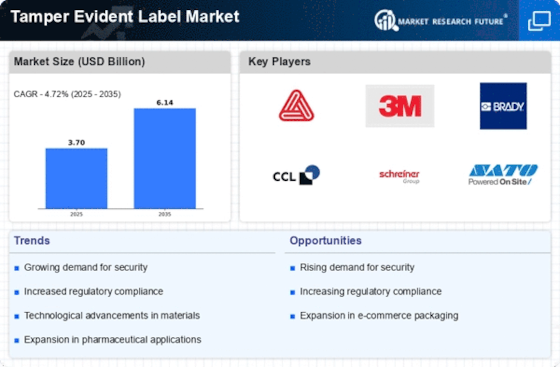
The Tamper Evident Label Market is experiencing a notable surge in demand driven by heightened concerns regarding product security. Consumers are increasingly aware of the risks associated with tampering, leading to a preference for products that utilize tamper evident labels. This trend is particularly pronounced in sectors such as food and beverage, pharmaceuticals, and electronics, where the integrity of the product is paramount. According to recent data, the market for tamper evident labels is projected to grow at a compound annual growth rate of approximately 5.5% over the next several years. This growth is indicative of a broader shift towards ensuring consumer safety and trust, as manufacturers recognize the necessity of implementing robust security measures to protect their products from unauthorized access.
Consumer Preference for Brand Integrity
The Tamper Evident Label Market is significantly shaped by consumer preferences that prioritize brand integrity and safety. As consumers become more discerning, they are increasingly inclined to choose products that demonstrate a commitment to quality and security. Tamper evident labels serve as a visible assurance that products have not been compromised, thereby enhancing brand trust. This trend is particularly evident in the food and beverage sector, where consumers are more likely to purchase items that feature tamper evident packaging. The market is expected to grow as brands recognize the importance of aligning their packaging strategies with consumer expectations for safety and transparency, ultimately driving the adoption of tamper evident labels.
Technological Advancements in Labeling Solutions
The Tamper Evident Label Market is benefiting from rapid technological advancements that enhance the functionality and effectiveness of labeling solutions. Innovations such as smart labels, which incorporate RFID technology, are gaining traction as they offer enhanced security features and real-time tracking capabilities. These advancements not only improve the tamper evident nature of labels but also provide manufacturers with valuable data regarding product handling and distribution. The integration of technology into tamper evident labels is expected to drive market growth, as businesses seek to leverage these innovations to enhance product security and consumer confidence. The market is projected to expand as companies increasingly invest in these advanced labeling technologies.