Surge in Cyber Threats
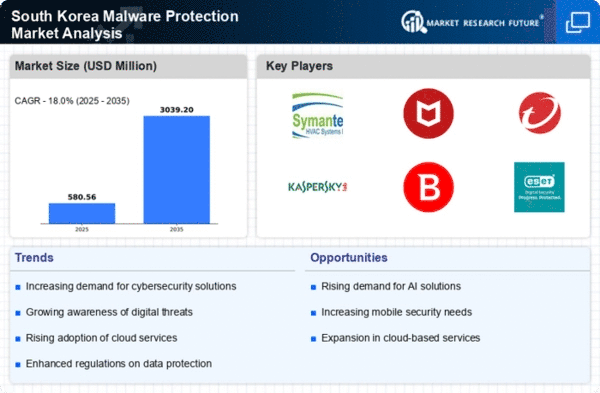
The malware protection market in South Korea experiences a notable surge in demand due to the increasing frequency and sophistication of cyber threats. Recent reports indicate that cybercrime incidents have escalated by approximately 30% over the past year, prompting organizations to prioritize their cybersecurity measures. This trend is particularly evident in sectors such as finance and healthcare, where sensitive data is at risk. As a result, businesses are investing heavily in advanced malware protection solutions to safeguard their assets. The malware protection market is thus witnessing a robust growth trajectory, driven by the urgent need for effective defense mechanisms against evolving cyber threats.
Increase in Remote Work Practices
The shift towards remote work practices in South Korea has created new vulnerabilities that necessitate robust malware protection solutions. As employees access corporate networks from various locations, the risk of cyber threats has escalated. This trend has prompted organizations to invest in comprehensive malware protection strategies to secure remote access points. The malware protection market is adapting to this evolving landscape, with a projected increase in demand for solutions tailored to remote work environments. Approximately 60% of companies are now implementing enhanced security measures to protect their remote workforce, indicating a significant market opportunity.
Growing Awareness of Cybersecurity Risks
In South Korea, there is a growing awareness among businesses and individuals regarding the risks associated with cyber threats. Educational initiatives and high-profile cyber incidents have contributed to this heightened awareness, leading to an increased demand for malware protection solutions. The malware protection market is benefiting from this trend, as organizations recognize the importance of proactive measures to mitigate potential risks. Surveys indicate that approximately 70% of companies are now prioritizing cybersecurity in their strategic planning, reflecting a significant shift in mindset. This growing consciousness is likely to sustain the upward momentum of the malware protection market.
Regulatory Pressures and Compliance Requirements
In South Korea, regulatory pressures and compliance requirements are driving the growth of the malware protection market. Government initiatives aimed at enhancing cybersecurity standards have compelled organizations to adopt stringent security measures. Compliance with regulations such as the Personal Information Protection Act (PIPA) necessitates the implementation of effective malware protection solutions. The malware protection market is responding to these demands, with an increasing number of businesses seeking solutions that ensure compliance while safeguarding sensitive data. This regulatory landscape is likely to continue influencing market dynamics, as organizations strive to meet compliance standards and protect their reputations.
Technological Advancements in Security Solutions
The malware protection market in South Korea is significantly influenced by rapid technological advancements in security solutions. Innovations such as machine learning and behavioral analysis are enhancing the effectiveness of malware detection and prevention. As organizations seek to stay ahead of cybercriminals, they are increasingly adopting these advanced technologies. The malware protection market is projected to grow by 25% annually, driven by the integration of cutting-edge technologies into security frameworks. This trend not only improves the efficacy of malware protection but also fosters a competitive landscape among solution providers, further propelling market growth.