Supportive Regulatory Environment
A supportive regulatory environment is playing a crucial role in the growth of the Self Injection Device Market. Regulatory bodies are increasingly streamlining approval processes for innovative self-injection devices, which encourages manufacturers to bring new products to market. This trend is evident in various regions, where regulatory agencies are adopting more flexible guidelines to facilitate the introduction of advanced technologies. As a result, the market is likely to experience accelerated growth, with an influx of new devices designed to meet evolving patient needs. The proactive stance of regulatory authorities not only enhances market confidence but also fosters innovation within the Self Injection Device Market.
Rising Prevalence of Chronic Diseases
The increasing prevalence of chronic diseases such as diabetes, rheumatoid arthritis, and multiple sclerosis is a primary driver of the Self Injection Device Market. As these conditions require ongoing treatment, the demand for self-administration devices is likely to rise. According to recent estimates, the number of individuals diagnosed with diabetes is projected to reach 700 million by 2045, which underscores the necessity for efficient self-injection solutions. This trend indicates a growing market for devices that facilitate patient autonomy and adherence to treatment regimens. Furthermore, the Self Injection Device Market is expected to benefit from the increasing awareness of self-management among patients, leading to a higher adoption rate of these devices.
Technological Innovations in Device Design
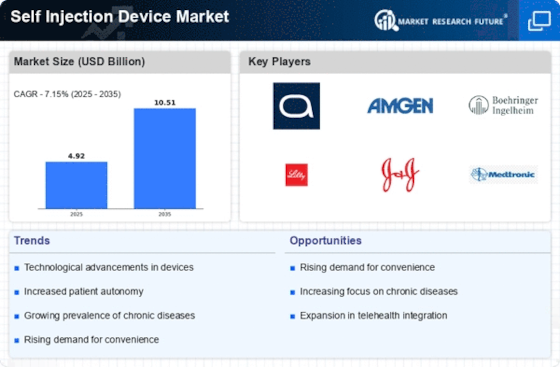
Technological advancements in the design and functionality of self-injection devices are significantly influencing the Self Injection Device Market. Innovations such as smart devices equipped with connectivity features, user-friendly interfaces, and enhanced safety mechanisms are becoming increasingly prevalent. For instance, the integration of mobile applications with injection devices allows for better tracking of medication schedules and dosages. The market is projected to grow at a compound annual growth rate of approximately 8% over the next five years, driven by these innovations. As manufacturers continue to invest in research and development, the Self Injection Device Market is likely to see a surge in new product offerings that cater to diverse patient needs.
Growing Demand for Home Healthcare Solutions
The rising demand for home healthcare solutions is significantly impacting the Self Injection Device Market. As patients increasingly prefer to manage their health from the comfort of their homes, the need for self-injection devices that are safe and easy to use is becoming more pronounced. This trend is supported by the aging population and the desire for cost-effective healthcare options. Market analysts project that the home healthcare segment will witness substantial growth, with self-injection devices playing a pivotal role in this transformation. The Self Injection Device Market is likely to benefit from this shift, as more patients seek devices that enable them to administer their treatments independently and effectively.
Increased Focus on Patient-Centric Healthcare
The shift towards patient-centric healthcare models is reshaping the Self Injection Device Market. Healthcare providers are increasingly recognizing the importance of empowering patients to take control of their treatment. This paradigm shift is leading to a greater emphasis on self-injection devices that enhance patient convenience and comfort. As a result, the market is witnessing a rise in demand for devices that are not only effective but also easy to use. The growing trend of personalized medicine further complements this focus, as patients seek tailored solutions that fit their lifestyles. Consequently, the Self Injection Device Market is expected to expand as more healthcare systems adopt strategies that prioritize patient engagement and satisfaction.