×
Request Free Sample ×

Kindly complete the form below to receive a free sample of this Report

* Please use a valid business email

Leading companies partner with us for data-driven Insights

clients tt-cursor
Hero Background

Romania Cosmetics Market

ID: MRFR/CG/60922-CR
106 Pages
Varsha More
August 2025

Romania Cosmetics Market Size, Share, Industry Trend & Analysis Research Report Information by Product Type (Face Cosmetics (Foundations, Face Powders, Contouring Products, Others), Eye Cosmetics (Eye Shadow, Mascara, Eyeliners, Others), Lip Cosmetics (Lipstick, Lip Balm, Others), Skincare, Fragrance, Others), by Gender (Men, Women, Unisex), by Category (Regular, Organic), by Price Range (Economy/Mass, Premium), by End-user (Residential/Retail, Commercial/Professional), by Distribution Channel (Supermarket/Hypermarket, Specialty Stores, Pharmacy, Drug Stores, Online, Others) and Country (Romania) - Forecast till 2035

Share:
Download PDF ×

We do not share your information with anyone. However, we may send you emails based on your report interest from time to time. You may contact us at any time to opt-out.

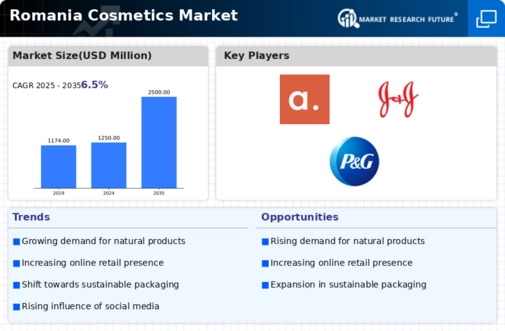
Romania Cosmetics Market  Infographic
Purchase Options

Romania Cosmetics Market Summary

As per analysis, the Europe Cosmetic Products Market is projected to grow from USD 80.0 Million in 2024 to USD 112.5 Million by 2035, exhibiting a compound annual growth rate (CAGR) of 3.15% during the forecast period (2025 - 2035).

Key Market Trends & Highlights

The Europe Cosmetic Products Market is experiencing a transformative shift towards sustainability and digital engagement.

  • Germany remains the largest market for cosmetic products, driven by a strong emphasis on sustainability and regulatory compliance.
  • The UK is emerging as the fastest-growing region, with a notable increase in demand for inclusive and diverse product offerings.
  • Skincare continues to dominate as the largest segment, while makeup is witnessing rapid growth, particularly among younger consumers.
  • Key market drivers include sustainability initiatives and heightened consumer health awareness, influencing purchasing decisions across various segments.

Market Size & Forecast

2024 Market Size 80.0 (USD Million)
2035 Market Size 112.5 (USD Million)
CAGR (2025 - 2035) 3.15%

Major Players

L'Oreal (FR), Unilever (GB), Procter & Gamble (US), Estée Lauder (US), Coty (US), Beiersdorf (DE), Shiseido (JP), Revlon (US), Avon (GB), Henkel (DE)

Our Impact
Enabled $4.3B Revenue Impact for Fortune 500 and Leading Multinationals
Partnering with 2000+ Global Organizations Each Year
30K+ Citations by Top-Tier Firms in the Industry

Romania Cosmetics Market Trends

The Europe Cosmetic Products Market is currently experiencing a dynamic transformation, driven by evolving consumer preferences and increasing awareness regarding sustainability. As individuals become more conscious of the ingredients in their beauty products, there is a noticeable shift towards natural and organic formulations. This trend is not merely a passing phase; it reflects a deeper societal movement towards health and wellness, influencing purchasing decisions across various demographics. Furthermore, the rise of digital platforms has revolutionized how consumers engage with brands, leading to a more personalized shopping experience. This digital shift allows for greater transparency and accessibility, enabling consumers to make informed choices about their cosmetic purchases. In addition to the focus on natural ingredients, the Europe Cosmetic Products Market is witnessing a growing emphasis on inclusivity and diversity. Brands are increasingly recognizing the importance of catering to a wide range of skin tones and types, which is reshaping product offerings. This inclusivity extends beyond just product formulation; it encompasses marketing strategies and brand messaging as well. As the market continues to evolve, it appears that the intersection of sustainability, digital engagement, and inclusivity will play a pivotal role in shaping the future landscape of cosmetic products in Europe.

Sustainability in Product Development

The emphasis on sustainability is becoming a cornerstone of the Europe Cosmetic Products Market. Brands are increasingly prioritizing eco-friendly packaging and ethically sourced ingredients, reflecting a broader commitment to environmental responsibility. This trend resonates with consumers who are seeking products that align with their values, thereby influencing brand loyalty.

Digital Transformation and E-commerce Growth

The rise of e-commerce platforms is significantly altering the landscape of the Europe Cosmetic Products Market. Consumers are now more inclined to shop online, seeking convenience and a wider selection of products. This digital transformation not only enhances accessibility but also allows brands to engage with their audience through targeted marketing strategies.

Inclusivity and Diversity in Offerings

The focus on inclusivity is reshaping the Europe Cosmetic Products Market, as brands strive to cater to a diverse range of consumers. This trend is evident in the expansion of product lines that accommodate various skin tones and types, reflecting a commitment to representation and accessibility in beauty.

Romania Cosmetics Market Drivers

Regulatory Compliance

Regulatory compliance plays a crucial role in shaping the Europe Cosmetic Products Market. The European Union has established stringent regulations regarding product safety, labeling, and ingredient transparency. Compliance with the EU Cosmetics Regulation ensures that products meet safety standards, which is paramount for consumer trust. In 2025, it is estimated that over 80% of cosmetic brands in Europe have adapted their formulations to comply with these regulations. This focus on safety not only protects consumers but also fosters innovation as companies seek to develop compliant yet effective products. The emphasis on regulatory adherence is likely to drive growth in the Europe Cosmetic Products Market, as brands that prioritize compliance can enhance their reputation and market share.

Digital Transformation

The digital transformation of the Europe Cosmetic Products Market is reshaping consumer engagement and purchasing behaviors. E-commerce sales in the beauty sector have surged, with online sales accounting for over 30% of total cosmetic sales in Europe by 2025. This trend is driven by the convenience of online shopping and the rise of social media influencers promoting products. Brands are increasingly investing in digital marketing strategies, utilizing platforms like Instagram and TikTok to reach younger demographics. The integration of augmented reality (AR) in virtual try-ons is also enhancing the online shopping experience. As digital channels continue to expand, companies that effectively leverage technology are likely to thrive in the competitive landscape of the Europe Cosmetic Products Market.

Consumer Health Awareness

Consumer health awareness is a significant driver in the Europe Cosmetic Products Market. As individuals become more informed about the ingredients in their cosmetics, there is a growing demand for products that promote skin health and wellness. In 2025, nearly 70% of European consumers indicated a preference for cosmetics that contain natural and organic ingredients. This trend is prompting brands to reformulate products, focusing on skin-friendly components that cater to health-conscious consumers. Additionally, the rise of clean beauty movements is influencing purchasing decisions, as consumers seek transparency in ingredient sourcing. The increasing emphasis on health and wellness is likely to propel the growth of the Europe Cosmetic Products Market, as brands that align with these values can capture a larger share of the market.

Diversity and Inclusivity

Diversity and inclusivity are becoming pivotal themes within the Europe Cosmetic Products Market. Brands are recognizing the importance of catering to a wide range of skin tones and types, leading to the development of more inclusive product lines. In 2025, it is projected that brands offering diverse shade ranges will capture a significant portion of the market, appealing to consumers from various backgrounds. This shift is not only a response to consumer demand but also reflects broader societal changes towards inclusivity. Companies that prioritize diversity in their marketing and product offerings are likely to enhance brand loyalty and attract a more extensive customer base. The focus on inclusivity is expected to drive growth in the Europe Cosmetic Products Market, as it aligns with the values of modern consumers.

Sustainability Initiatives

The Europe Cosmetic Products Market is increasingly influenced by sustainability initiatives. Consumers are becoming more environmentally conscious, leading to a demand for eco-friendly products. In 2025, approximately 60% of European consumers reported a preference for brands that prioritize sustainable practices. This shift is prompting companies to adopt greener formulations and packaging solutions. Regulatory frameworks, such as the European Union's Green Deal, further encourage sustainable practices within the industry. As a result, brands that align with these values are likely to gain a competitive edge, appealing to a growing segment of eco-aware consumers. The emphasis on sustainability not only enhances brand loyalty but also contributes to the overall growth of the Europe Cosmetic Products Market.

Market Segment Insights

By Product Type: Skincare (Largest) vs. Makeup (Fastest-Growing)

In the Europe Cosmetic Products Market, the product type segment is diverse, with skincare holding the largest market share. This segment encompasses a wide range of products, including moisturizers, cleansers, and serums, appealing to various consumer preferences. Following skincare, makeup products, such as foundations, lipsticks, and eyeshadows, capture a significant portion of the market, reflecting changing beauty standards and preferences among consumers, particularly the younger demographic. The growth trends within the product type segment indicate a notable rise in demand for makeup products, especially among millennials and Gen Z consumers. This demographic is increasingly drawn to innovative and eco-friendly solutions, driving brands to adapt their offerings. Additionally, an emphasis on personal grooming and self-expression through cosmetics continues to propel the makeup segment's expansion in Europe.

Skincare: Dominant vs. Makeup: Emerging

Skincare has established itself as the dominant force in the Europe Cosmetic Products Market, driven by increasing consumer focus on health and wellness. This segment is characterized by a wide variety of products, ranging from anti-aging creams to organic and natural formulations, appealing to eco-conscious consumers. On the other hand, the makeup segment, while emerging, is gaining traction due to innovative product launches and marketing strategies that resonate with younger audiences. The influence of social media in promoting makeup trends and tutorials has significantly enhanced its appeal. As consumers become more experimental with their beauty routines, the emerging makeup segment is expected to sustain its growth trajectory, challenging established categories.

By Distribution Channel: Online Retail (Largest) vs. Supermarkets (Fastest-Growing)

In the Europe Cosmetic Products Market, the distribution of channel shares reveals a competitive landscape. Online Retail stands as the largest segment, capitalizing on the growing trend of digital shopping and consumer preference for convenience. Supermarkets follow, maintaining a significant presence due to their broad reach and affordability. The remaining channels, such as Specialty Stores and Pharmacies, offer targeted sales through expert advice and niche products, yet they command smaller market shares overall. Looking at growth trends, Online Retail continues to expand, driven by the increasing adoption of e-commerce and personalized online shopping experiences. Supermarkets have emerged as the fastest-growing segment, buoyed by consumers seeking a one-stop shopping experience. The demand for convenience, coupled with the rise of health-conscious products, positions these segments favorably, while Specialty Stores and Pharmacies adapt by enhancing their service offerings and product range to compete in this dynamic market.

Online Retail (Dominant) vs. Specialty Stores (Emerging)

Online Retail has established itself as the dominant force in the Europe Cosmetic Products Market, appealing to tech-savvy consumers seeking ease of access and a wide variety of products at competitive prices. This segment benefits from innovative marketing strategies, including influencer partnerships and targeted promotions, which resonate with a broad audience. Meanwhile, Specialty Stores have taken on the role of emerging players, focusing on niche markets and personalized services. They thrive on building customer loyalty through expert recommendations and unique product offerings. While Online Retail operates on scale, Specialty Stores capitalize on providing curated experiences, effectively catering to consumers who value quality and expertise over mere convenience.

By End User: Women (Largest) vs. Men (Fastest-Growing)

In the Europe Cosmetic Products Market, the end user segment is predominantly led by women, who hold the largest share due to their extensive adoption of cosmetic products and grooming routines. Women across various age groups prioritize beauty and skincare, driving significant demand for a wide range of cosmetic offerings. Meanwhile, men are establishing a stronger presence in the market, which is evident in the increasing number of male grooming products, leading to their rapid growth within the segment. The growth trends for the end user segment point towards a shift in traditional norms, with men embracing cosmetics more openly than ever. Additionally, there is an increasing awareness of personal grooming among teenagers and children, which is influencing their purchasing decisions. The unisex segment is also witnessing noteworthy growth, reflecting changing attitudes towards gender-neutral cosmetic products and a broader acceptance of diverse consumer needs.

Women (Dominant) vs. Men (Emerging)

Women represent a dominant force in the Europe Cosmetic Products Market, driven by a historically entrenched desire for beauty and self-expression. They tend to invest heavily in skincare, makeup, and haircare products, often seeking premium offerings that promise enhanced efficacy. Their purchasing habits are influenced by trends, social media endorsements, and brand loyalty. Meanwhile, men are emerging as an influential consumer group, with an increasing number of grooming products tailored specifically for them. This includes skincare, beard care, and hairstyling products, which reflects a growing acceptance of cosmetics within male culture. The emerging male segment is gradually gaining traction, largely driven by changing gender norms and targeted marketing strategies that embrace diversity in beauty and grooming.

By Formulation Type: Organic (Largest) vs. Vegan (Fastest-Growing)

In the Europe Cosmetic Products Market, the formulation type segment reflects a diverse distribution among values such as Organic, Synthetic, Natural, Cruelty-Free, and Vegan. Organic products hold the largest market share, appealing to consumers' increasing demand for eco-friendly and sustainable options. Meanwhile, the growing awareness surrounding ethical consumerism has led to a significant rise in the popularity of Vegan products, which showcase a commitment to cruelty-free practices. This trend aligns with the changing consumer preferences towards transparency and sustainability in cosmetic ingredients. The growth trends within this segment reveal a robust shift as consumers seek formulations that not only enhance beauty but also align with their values. Factors driving this growth include heightened awareness about the benefits of organic and vegan ingredients, as well as the rise of brands focusing on ethical and natural formulation practices. Regulatory changes in Europe further encourage the adoption of cruelty-free and organic standards, further spurring market expansion and innovation in product offerings, particularly for Vegan cosmetics, which are experiencing the fastest growth.

Organic (Dominant) vs. Cruelty-Free (Emerging)

Among the formulation types in the Europe Cosmetic Products Market, Organic formulations represent a dominant force, appealing to health-conscious consumers who prioritize natural ingredients. These products are often associated with superior quality, minimal environmental impact, and a commitment to sustainability. Conversely, Cruelty-Free formulations are emerging as a popular choice for consumers who are increasingly focused on ethical considerations. The rise of the ethical consumer has elevated Cruelty-Free products, pushing brands to innovate and provide more options that align with these values, thus capitalizing on the growing demand for transparency and humane practices in the beauty industry. Together, these segments represent a significant shift in consumer behavior focusing on holistic and conscientious approaches to beauty.

By Price Range: Premium (Largest) vs. Economy (Fastest-Growing)

In the Europe Cosmetic Products Market, the price range segment shows a varied distribution with Premium products occupying the largest share. This segment appeals to consumers looking for high-quality, luxury ingredients and branding that boosts confidence and social status. The Economy segment, while smaller, is witnessing rapid growth as affordability becomes a significant factor for budget-conscious consumers, especially in the wake of economic fluctuations. Market players are strategically positioning themselves to cater to both segments, ensuring a balance between quality and value. The growth trends in this segment are being driven by changing consumer preferences, with a notable shift towards sustainable and ethically produced products. The rise of social media influencers highlights Premium products, enhancing their visibility and desirability. Meanwhile, the Economy segment is expanding its reach, benefiting from increasing retail innovations and the growing demand for affordable yet effective cosmetic solutions, catering to a broader and more diverse consumer base.

Premium (Dominant) vs. Economy (Emerging)

The Premium segment in the Europe Cosmetic Products Market is characterized by high-quality formulations, brand prestige, and often luxurious packaging. Companies in this segment prioritize research and development, leading to innovative products that appeal to affluent consumers seeking effectiveness and exclusivity. This segment sees robust sales from specialty retailers and online platforms. Conversely, the Economy segment is emerging rapidly, targeting a price-sensitive demographic without compromising quality. Brands in this space focus on cost-efficient production while maintaining acceptable standards. The Economy products often leverage mass distribution channels, making them accessible to a wider audience. This contrast creates a dynamic market where companies continually adapt their strategies to meet diverse consumer needs.

Get more detailed insights about Romania Cosmetics Market

Regional Insights

Germany : Innovation and Sustainability Drive Growth

Germany holds a commanding 20.0% share of the European cosmetic products market, valued at approximately €10 billion. Key growth drivers include a strong emphasis on sustainability, with consumers increasingly favoring eco-friendly products. Regulatory policies, such as the EU Cosmetics Regulation, ensure high safety standards, while government initiatives promote innovation in the beauty sector. The robust infrastructure supports both manufacturing and distribution, enhancing market accessibility.

UK : Diverse Preferences Shape Market Trends

The UK cosmetic market accounts for 15.0% of the European share, valued at around €7.5 billion. Growth is driven by a diverse consumer base that seeks personalized products, alongside a rising trend in online shopping. Regulatory frameworks, including the UK Cosmetics Regulation, ensure product safety. The market is supported by a well-developed retail infrastructure, including both physical stores and e-commerce platforms.

France : Luxury and Innovation Define France

France commands a 12.0% share of the European cosmetic market, valued at approximately €6 billion. The growth is fueled by the country's rich heritage in luxury beauty brands and a strong focus on innovation. Regulatory policies are stringent, ensuring high-quality standards. The market benefits from a vibrant retail environment, particularly in cities like Paris, where luxury brands thrive alongside niche players.

Russia : Youthful Demographics Drive Demand

Russia holds a 10.0% share of the European cosmetic market, valued at about €5 billion. The youthful population is a key growth driver, with increasing interest in beauty and personal care products. Regulatory policies are evolving, with a focus on safety and quality. Major cities like Moscow and St. Petersburg are central to market dynamics, where both international and local brands compete vigorously.

Italy : Craftsmanship and Quality at Forefront

Italy represents 8.0% of the European cosmetic market, valued at around €4 billion. The growth is driven by a blend of traditional craftsmanship and modern innovation in beauty products. Regulatory frameworks ensure compliance with EU standards. Key markets include Milan and Rome, where luxury brands coexist with artisanal products, creating a competitive landscape rich in diversity.

Spain : Cultural Influences Shape Preferences

Spain accounts for 7.0% of the European cosmetic market, valued at approximately €3.5 billion. Growth is driven by cultural influences and a rising interest in skincare. Regulatory policies align with EU standards, ensuring product safety. Major cities like Madrid and Barcelona are pivotal, with a mix of local and international brands catering to diverse consumer preferences.

Rest of Europe : Regional Variations in Consumer Behavior

The Rest of Europe holds an 8.0% share of the cosmetic market, valued at about €4 billion. Growth is driven by regional diversity, with varying consumer preferences and trends. Regulatory policies are influenced by EU standards, ensuring product safety across different markets. Key players include both local and international brands, adapting to unique market dynamics in countries like Belgium and the Netherlands.


Key Players and Competitive Insights

The Cosmetic Products Market in Europe is characterized by a dynamic competitive landscape, driven by innovation, sustainability, and digital transformation. Major players such as L'Oreal (FR), Unilever (GB), and Estée Lauder (US) are at the forefront, each adopting distinct strategies to enhance their market positioning. L'Oreal (FR) emphasizes innovation through its investment in research and development, focusing on sustainable product formulations. Unilever (GB) has been actively pursuing regional expansion, particularly in Eastern Europe, while Estée Lauder (US) is leveraging digital channels to enhance consumer engagement and streamline its distribution processes. Collectively, these strategies contribute to a competitive environment that is increasingly focused on meeting consumer demands for sustainability and personalization.

Key business tactics within the market include localizing manufacturing and optimizing supply chains to enhance efficiency and responsiveness. The competitive structure appears moderately fragmented, with a mix of established brands and emerging players vying for market share. The influence of key players is substantial, as they set trends and standards that smaller companies often follow, thereby shaping the overall market dynamics.

In December 2025, L'Oreal (FR) announced a partnership with a leading tech firm to develop AI-driven beauty solutions aimed at personalizing consumer experiences. This strategic move underscores L'Oreal's commitment to integrating technology into its product offerings, potentially enhancing customer satisfaction and loyalty. The collaboration is likely to position L'Oreal as a pioneer in the intersection of beauty and technology, setting a benchmark for competitors.

In November 2025, Unilever (GB) launched a new line of eco-friendly personal care products, reinforcing its sustainability agenda. This initiative not only aligns with growing consumer preferences for environmentally responsible products but also enhances Unilever's brand image as a leader in sustainable practices. The introduction of this product line may attract a broader customer base, particularly among environmentally conscious consumers.

In October 2025, Estée Lauder (US) expanded its e-commerce capabilities by investing in advanced analytics to better understand consumer behavior. This strategic enhancement is expected to improve targeting and personalization in marketing efforts, thereby increasing conversion rates. As e-commerce continues to grow, this investment positions Estée Lauder to capitalize on the shift towards online shopping, potentially driving significant revenue growth.

As of January 2026, current competitive trends in the Cosmetic Products Market are heavily influenced by digitalization, sustainability, and the integration of AI technologies. Strategic alliances are increasingly shaping the landscape, enabling companies to pool resources and expertise to innovate more effectively. Looking ahead, competitive differentiation is likely to evolve from traditional price-based competition to a focus on innovation, technological advancements, and supply chain reliability. This shift suggests that companies that prioritize these areas will be better positioned to thrive in an increasingly competitive market.

Key Companies in the Romania Cosmetics Market include

Industry Developments

December 2023: Farmec partnered with Newpharma Romania, the local subsidiary of the Belgian group, that applies artificial intelligence and digital technologies in the pharma sector, to offer personalized recommendations to customers through a skin scanning application.

August 2024: Avon announced that it has opened its first brand store in Romania, which operates in a franchise system. This expansion helps company’s local presence and is a response to consumer demand and interest for the products in its portfolio.

May 2023: Farmec announced its plans to build a new factory in the commune of Apahida, Cluj County, and relocate its entire production there. The company estimates the total investment worth EUR 40 million (approx.).

Romania Cosmetics Market Segmentation

Cosmetics by Product Type Outlook

  • Face Cosmetics
    • Foundations
    • Face Powders
    • Contouring Products
    • Others
  • Eye Cosmetics
    • Eye Shadow
    • Mascara
    • Eyeliners
    • Others
  • Lip Cosmetics
    • Lipstick
    • Lip Balm
    • Others
  • Skincare
  • Fragrance
  • Others

Cosmetics by Gender Outlook

  • Men
  • Women
  • Unisex

Cosmetics by Category Outlook

  • Regular
  • Organic

Cosmetics by Price Range Outlook

  • Economy/Mass
  • Premium

Cosmetics by End-user Outlook

  • Residential/Retail
  • Commercial/Professional

Cosmetics by Distribution Channel Outlook

  • Supermarket/Hypermarket
  • Specialty Stores
  • Pharmacy
  • Drug Stores
  • Online
  • Others

Future Outlook

Romania Cosmetics Market Future Outlook

The Europe Cosmetic Products Market is projected to grow at a 3.15% CAGR from 2025 to 2035, driven by increasing consumer demand for sustainable and innovative products.

New opportunities lie in:

  • Expansion of e-commerce platforms for personalized beauty products.
  • Development of eco-friendly packaging solutions to attract environmentally conscious consumers.
  • Investment in AI-driven beauty tech for enhanced customer experiences.

By 2035, the market is expected to be robust, reflecting evolving consumer preferences and innovative product offerings.

Market Segmentation

Romania Cosmetics Market End User Outlook

  • Women
  • Men
  • Unisex
  • Teenagers
  • Children

Romania Cosmetics Market Price Range Outlook

  • Premium
  • Mid-Range
  • Economy
  • Luxury
  • Affordable

Romania Cosmetics Market Product Type Outlook

  • Skincare
  • Makeup
  • Haircare
  • Fragrance
  • Personal Care

Romania Cosmetics Market Formulation Type Outlook

  • Organic
  • Synthetic
  • Natural
  • Cruelty-Free
  • Vegan

Romania Cosmetics Market Distribution Channel Outlook

  • Online Retail
  • Supermarkets
  • Specialty Stores
  • Pharmacies
  • Department Stores

Report Scope

MARKET SIZE 202480.0(USD Million)
MARKET SIZE 202582.85(USD Million)
MARKET SIZE 2035112.5(USD Million)
COMPOUND ANNUAL GROWTH RATE (CAGR)3.15% (2024 - 2035)
REPORT COVERAGERevenue Forecast, Competitive Landscape, Growth Factors, and Trends
BASE YEAR2024
Market Forecast Period2025 - 2035
Historical Data2019 - 2024
Market Forecast UnitsUSD Million
Key Companies ProfiledL'Oreal (FR), Unilever (GB), Procter & Gamble (US), Estée Lauder (US), Coty (US), Beiersdorf (DE), Shiseido (JP), Revlon (US), Avon (GB), Henkel (DE)
Segments CoveredProduct Type, Distribution Channel, End User, Formulation Type, Price Range
Key Market OpportunitiesGrowing demand for sustainable and clean beauty products in the Europe Cosmetic Products Market.
Key Market DynamicsRising demand for sustainable and natural ingredients drives innovation in the Europe Cosmetic Products Market.
Countries CoveredGermany, UK, France, Russia, Italy, Spain, Rest of Europe
Leave a Comment

FAQs

What is the current valuation of the Europe Cosmetic Products Market?

The market valuation was 80.0 USD Million in 2024.

What is the projected market size for the Europe Cosmetic Products Market by 2035?

The projected valuation for 2035 is 112.5 USD Million.

What is the expected CAGR for the Europe Cosmetic Products Market during the forecast period?

The expected CAGR for the market from 2025 to 2035 is 3.15%.

Which product type segment holds the highest market value in the Europe Cosmetic Products Market?

The Skincare segment had a valuation of 42.0 USD Million, indicating its leading position.

Download Free Sample

Kindly complete the form below to receive a free sample of this Report

Compare Licence

×
Features License Type
Single User Multiuser License Enterprise User
Price $4,950 $5,950 $7,250
Maximum User Access Limit 1 User Upto 10 Users Unrestricted Access Throughout the Organization
Free Customization
Direct Access to Analyst
Deliverable Format
Platform Access
Discount on Next Purchase 10% 15% 15%
Printable Versions