×
Request Free Sample ×

Kindly complete the form below to receive a free sample of this Report

* Please use a valid business email

Leading companies partner with us for data-driven Insights

clients tt-cursor
Hero Background

Pentylene Glycol Market

ID: MRFR/CnM/35816-HCR
100 Pages
Chitranshi Jaiswal
February 2026

Pentylene Glycol Market Research Report By Application (Cosmetics, Pharmaceuticals, Food Beverages, Polymer Production), By End Use Industry (Personal Care, Healthcare, Food Industry, Chemical Industry), By Formulation (Liquid, Solid, Gel), By Distribution Channel (Online, Offline) and By Regional (North America, Europe, South America, Asia-Pacific, Middle East and Africa) - Forecast to 2035

Share:
Download PDF ×

We do not share your information with anyone. However, we may send you emails based on your report interest from time to time. You may contact us at any time to opt-out.

Pentylene Glycol Market Infographic
Purchase Options

Pentylene Glycol Market Summary

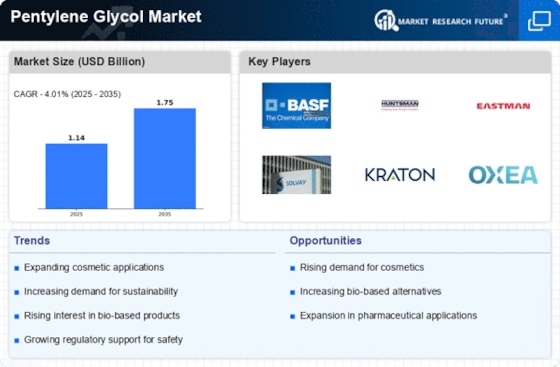
As per Market Research Future analysis, the Pentylene Glycol Market Size was estimated at 1.137 USD Billion in 2024. The Pentylene Glycol industry is projected to grow from 1.182 USD Billion in 2025 to 1.752 USD Billion by 2035, exhibiting a compound annual growth rate (CAGR) of 4.01% during the forecast period 2025 - 2035

Key Market Trends & Highlights

The Pentylene Glycol Market is experiencing a dynamic shift driven by sustainability and innovation.

  • The market is witnessing a pronounced focus on sustainability, influencing production practices and consumer preferences.
  • Technological advancements are enhancing the efficiency of Pentylene Glycol Market applications across various sectors.
  • North America remains the largest market, while Asia-Pacific is emerging as the fastest-growing region for Pentylene Glycol Market.
  • Rising demand in cosmetics and personal care, alongside increased awareness of skin health, are key drivers propelling market growth.

Market Size & Forecast

2024 Market Size 1.137 (USD Billion)
2035 Market Size 1.752 (USD Billion)
CAGR (2025 - 2035) 4.01%

Major Players

BASF SE (DE), Huntsman Corporation (US), Eastman Chemical Company (US), Solvay SA (BE), Kraton Corporation (US), Oxea GmbH (DE), Mitsubishi Chemical Corporation (JP), SABIC (SA)

Our Impact
Enabled $4.3B Revenue Impact for Fortune 500 and Leading Multinationals
Partnering with 2000+ Global Organizations Each Year
30K+ Citations by Top-Tier Firms in the Industry

Pentylene Glycol Market Trends

The Pentylene Glycol Market is currently experiencing a notable transformation, driven by various factors that influence its demand and application across multiple industries. This compound, recognized for its versatility, is increasingly utilized in personal care products, pharmaceuticals, and industrial applications. The growing awareness regarding the benefits of using sustainable and eco-friendly ingredients is propelling manufacturers to explore pentylene glycol as a viable alternative to traditional solvents and humectants. As consumers become more discerning about product formulations, the market appears to be shifting towards greener options, which may enhance the appeal of pentylene glycol in formulations that prioritize safety and environmental impact. Moreover, the Pentylene Glycol Market is likely to witness advancements in production technologies, which could lead to improved efficiency and reduced costs. Innovations in synthesis methods may enhance the quality and purity of pentylene glycol, making it more attractive to manufacturers. Additionally, the increasing regulatory focus on chemical safety and environmental sustainability may further drive the adoption of pentylene glycol in various sectors. As the market evolves, stakeholders must remain vigilant to emerging trends and consumer preferences, ensuring that they adapt their strategies accordingly to maintain competitiveness in this dynamic landscape.

Sustainability Focus

The emphasis on sustainable practices is reshaping the Pentylene Glycol Market. Manufacturers are increasingly seeking eco-friendly alternatives to conventional ingredients, leading to a rise in the use of pentylene glycol in formulations that prioritize environmental responsibility.

Technological Advancements

Innovations in production techniques are likely to enhance the efficiency of pentylene glycol manufacturing. These advancements may result in higher purity levels and lower production costs, making the compound more appealing to various industries.

Regulatory Influences

The evolving regulatory landscape surrounding chemical safety is impacting the Pentylene Glycol Market. Stricter guidelines may encourage the adoption of safer, more sustainable ingredients, positioning pentylene glycol as a favorable option for compliance.

Pentylene Glycol Market Drivers

Increased Awareness of Skin Health

The Pentylene Glycol Market is benefiting from a growing awareness of skin health among consumers. As individuals become more informed about the ingredients in their personal care products, there is a rising preference for formulations that include beneficial compounds like pentylene glycol. This ingredient is known for its hydrating and skin-conditioning properties, making it a desirable choice for consumers seeking effective skin care solutions. The skin care market is anticipated to grow significantly, with an increasing number of consumers prioritizing products that promote skin health. This trend suggests that the demand for pentylene glycol will likely increase, thereby driving growth in the Pentylene Glycol Market.

Innovations in Chemical Manufacturing

The Pentylene Glycol Market is poised for growth due to innovations in chemical manufacturing processes. Advances in production techniques, such as bio-based synthesis and more efficient catalytic processes, are likely to reduce production costs and enhance the sustainability profile of pentylene glycol. As manufacturers strive to meet the increasing demand for eco-friendly products, these innovations may lead to a broader acceptance of pentylene glycol across various industries. The chemical manufacturing sector is undergoing a transformation, with a focus on reducing environmental impact, which could further drive the adoption of pentylene glycol. This evolution in production methods indicates a promising future for the Pentylene Glycol Market.

Growth in the Food and Beverage Sector

The Pentylene Glycol Market is also benefiting from its applications in the food and beverage sector. This compound is recognized for its role as a food additive, where it serves as a humectant and stabilizer. As the food industry increasingly emphasizes product quality and shelf life, the demand for pentylene glycol is likely to rise. The Pentylene Glycol Market is projected to grow at a rate of approximately 4% annually, which could enhance the utilization of pentylene glycol in various food products. This trend suggests that manufacturers are seeking to improve the sensory attributes and longevity of their offerings, thereby driving the growth of the Pentylene Glycol Market.

Expansion in Pharmaceutical Applications

The Pentylene Glycol Market is witnessing an expansion in its applications within the pharmaceutical sector. This compound is utilized as a solvent and stabilizer in various formulations, including topical and injectable drugs. The increasing focus on drug delivery systems that enhance bioavailability and patient compliance is likely to propel the demand for pentylene glycol. Recent data suggests that the pharmaceutical market is expected to reach a valuation of over 1.5 trillion dollars by 2025, which may create substantial opportunities for pentylene glycol as a key ingredient. The versatility of pentylene glycol in improving the solubility of active pharmaceutical ingredients indicates its potential to play a crucial role in the development of innovative therapeutic solutions, thereby driving growth in the Pentylene Glycol Market.

Rising Demand in Cosmetics and Personal Care

The Pentylene Glycol Market is experiencing a notable surge in demand, particularly within the cosmetics and personal care sectors. This compound is increasingly favored for its moisturizing properties and ability to enhance product texture. As consumers gravitate towards products that offer both efficacy and sensory appeal, manufacturers are incorporating pentylene glycol into formulations for skin care, hair care, and makeup. The market for cosmetics is projected to grow at a compound annual growth rate of approximately 5% over the next few years, which could further bolster the demand for pentylene glycol. This trend indicates a shift towards multifunctional ingredients that not only serve a purpose but also improve the overall user experience, thereby driving growth in the Pentylene Glycol Market.


Market Segment Insights

By Application: Cosmetics (Largest) vs. Pharmaceuticals (Fastest-Growing)

In the Pentylene Glycol Market, the application segment showcases varied distributions among cosmetics, pharmaceuticals, food beverages, and polymer production. Cosmetics dominate the landscape, attributed to the rising demand for high-quality skin and hair care products that utilize Pentylene Glycol Market for its humectant properties. This segment holds the largest market share, driven by an increasing focus on organic and natural cosmetic formulations. On the other hand, pharmaceuticals are rapidly expanding their footprint in the market, as Pentylene Glycol Market finds applications in drug formulation and delivery systems, ensuring efficacy and stability in pharmaceutical products.

Cosmetics (Dominant) vs. Pharmaceuticals (Emerging)

The cosmetics segment stands as a dominant force within the Pentylene Glycol Market, with its extensive use in moisturizers, anti-aging products, and other personal care items. This segment's strength lies in its ability to enhance product stability and longevity, offering consumers effective solutions in skincare. Meanwhile, the pharmaceuticals segment is emerging as a vital player, driven by ongoing research and development in drug formulations that require effective solvents and preservatives. The growing emphasis on developing biocompatible and stable pharmaceutical products places Pentylene Glycol Market at the forefront, making it an essential ingredient for innovation in the pharma industry.

By End Use Industry: Personal Care (Largest) vs. Healthcare (Fastest-Growing)

The Pentylene Glycol Market showcases a diverse range of end-use industries, with Personal Care leading the segment. This industry capitalizes on the versatile properties of Pentylene Glycol Market, driving significant adoption in formulations for skin care, hair care, and cosmetics. Meanwhile, the Healthcare sector is emerging rapidly, leveraging Pentylene Glycol Market for its excellent solubility and moisture retention, particularly in pharmaceutical formulations and personal hygiene products. Growth within these segments is influenced by shifting consumer preferences towards natural and effective ingredients, regulatory approvals, and innovations in product formulations. The Personal Care industry remains robust due to its established market presence, while the Healthcare industry is capitalizing on increasing health awareness and demand for high-quality skincare products. These dynamics illustrate a competitive landscape that is poised for further evolution in the coming years.

Personal Care: Dominant vs. Healthcare: Emerging

The Personal Care segment in the Pentylene Glycol Market stands out as a dominant force, characterized by its extensive utilization in a variety of cosmetic and skincare products. Known for its humectant properties, it effectively attracts moisture, making it a preferred ingredient in hydrating formulations. On the other hand, the Healthcare segment is classified as emerging, with its rapid growth driven by the rising demand for effective, skin-friendly solutions in hygiene products and topical medications. The integration of Pentylene Glycol Market in this industry is supported by its safety profile and compatibility with active ingredients. As consumers become increasingly aware of product formulations, both segments are set to thrive, with Personal Care leading and Healthcare following closely behind in growth trajectory.

By Formulation: Liquid (Largest) vs. Gel (Fastest-Growing)

In the Pentylene Glycol Market, the formulation segment is primarily distributed among liquid, solid, and gel variants. The liquid formulation currently holds the largest market share, attributed to its versatile applications in cosmetics, pharmaceuticals, and personal care products. Solid formulations follow, though they represent a smaller portion of the market. Gel formulations, while still emerging, are gaining traction among end-users due to their unique properties and ease of use in various applications.

Formulation: Liquid (Dominant) vs. Gel (Emerging)

The liquid formulation of Pentylene Glycol Market is known for its excellent solvent properties, making it ideal for a variety of applications, including skincare and haircare products. Its dominant position is facilitated by its ease of blending with other ingredients and its effectiveness in enhancing product stability. In contrast, gel formulations are rapidly emerging in the market, particularly due to their light texture and stability, making them favorable for consumers looking for hydrating and non-greasy options. This growing preference is driven by increased demand for multifunctional products that offer convenience and improved sensory experiences.

By Distribution Channel: Online (Largest) vs. Offline (Fastest-Growing)

In the Pentylene Glycol Market, the distribution channels are segmented into online and offline. Currently, online distribution channels dominate the market, driven by the increasing trend of digitalization and e-commerce. This channel offers convenience and a wider reach for consumers and businesses alike, enabling efficient transactions and streamlined supply chains. Meanwhile, offline channels also maintain significant relevance, particularly in regions where direct engagement and customer relationships are prioritized.

Distribution Channels: Online (Dominant) vs. Offline (Emerging)

Online distribution channels are characterized by their ability to cater to a global audience, leveraging advanced digital platforms and marketing strategies to penetrate various market segments effectively. They facilitate quick access to products and allow consumers to make informed purchasing decisions through reviews and comparison shopping. On the other hand, offline distribution channels, while currently seen as emerging, are witnessing robust growth due to the increased consumer preference for personalized experiences and direct purchasing. The offline segment is expanding rapidly as brands invest in physical retail spaces and enhance in-store experiences, appealing to consumers' desire for immediacy and tangible product engagement.

Get more detailed insights about Pentylene Glycol Market

Regional Insights

North America : Innovation and Demand Surge

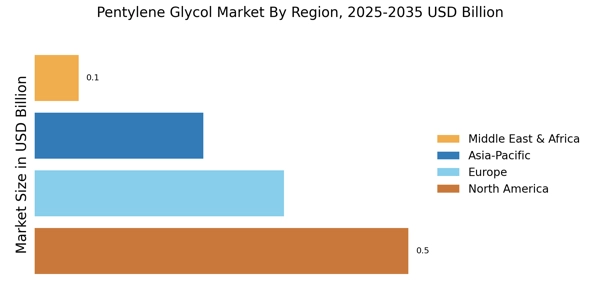
The North American pentylene glycol market is driven by increasing demand in the cosmetics and personal care sectors, alongside stringent regulations promoting sustainable chemicals. The region holds the largest market share at approximately 45%, with the U.S. leading the charge due to its robust manufacturing capabilities and consumer base. Regulatory support for bio-based products further fuels growth, making it a key player in the global market. In North America, the competitive landscape is characterized by the presence of major players such as BASF SE, Huntsman Corporation, and Eastman Chemical Company. These companies are investing in R&D to innovate and expand their product offerings. The U.S. market is particularly dynamic, with a focus on eco-friendly solutions and compliance with environmental regulations, positioning it as a leader in the pentylene glycol sector.

Europe : Sustainability and Innovation Focus

Europe is witnessing significant growth in the pentylene glycol market, driven by increasing consumer awareness regarding sustainability and eco-friendly products. The region holds the second-largest market share at around 30%. Regulatory frameworks such as REACH are pushing manufacturers to adopt greener practices, thereby enhancing market dynamics. The demand for pentylene glycol in pharmaceuticals and cosmetics is also on the rise, contributing to market expansion. Leading countries in Europe include Germany, France, and the UK, where companies like Solvay SA and Oxea GmbH are prominent. The competitive landscape is marked by innovation, with firms focusing on developing bio-based alternatives to meet regulatory standards. The European market is characterized by a strong emphasis on sustainability, making it a hub for green chemistry initiatives and advanced manufacturing practices.

Asia-Pacific : Emerging Market Potential

The Asia-Pacific region is emerging as a significant player in the pentylene glycol market, driven by rapid industrialization and increasing demand from the personal care and pharmaceutical sectors. The region is expected to hold a market share of approximately 20%. Countries like China and India are leading this growth, supported by favorable government policies and investments in chemical manufacturing, which are catalyzing market expansion. China is the largest market in the region, with a growing number of local manufacturers entering the pentylene glycol space. The competitive landscape is evolving, with key players such as Mitsubishi Chemical Corporation and Kraton Corporation focusing on expanding their production capacities. The region's market dynamics are influenced by a shift towards sustainable practices, aligning with global trends in chemical production and consumption.

Middle East and Africa : Resource-Rich Opportunities

The Middle East and Africa region is gradually developing its pentylene glycol market, driven by increasing industrial activities and a growing demand for personal care products. The market share in this region is estimated to be around 5%. Countries like South Africa and Saudi Arabia are at the forefront, leveraging their natural resources to enhance chemical production capabilities, which is expected to boost market growth in the coming years. The competitive landscape in the Middle East and Africa is still emerging, with local players beginning to establish their presence. Companies are focusing on building partnerships and collaborations to enhance their market reach. The region's growth potential is significant, particularly as investments in infrastructure and manufacturing continue to rise, paving the way for a more robust pentylene glycol market.

Pentylene Glycol Market Regional Image

Key Players and Competitive Insights

The Pentylene Glycol Market has shown a significant upward trajectory in recent years, driven by the increasing demand for this versatile compound in various applications, including cosmetics, personal care products, and pharmaceuticals. As industries continue to expand, the competition within the market intensifies, leading to a blend of innovations, strategic partnerships, mergers and acquisitions. The competitive landscape is marked by several key players who focus on product development and sustainability, aiming to capture a larger share by adapting to consumer preferences and regulatory frameworks. Understanding the dynamics of this market involves examining the strengths, market presence, and strategies employed by leading companies in order to identify opportunities and threats.Dow Chemical holds a prominent position within the Pentylene Glycol Market, bolstered by its extensive experience and resource capacity. Known for its commitment to innovation, Dow Chemical has continually enhanced its product portfolio to meet the evolving needs of customers. The company's robust research and development infrastructure allows it to explore new applications and improve the efficacy of its pentylene glycol offerings. Furthermore, Dow Chemical's strong emphasis on sustainability aligns with the growing consumer consciousness towards eco-friendly products, enabling it to establish a competitive edge in an increasingly environmentally aware market. Its global presence ensures that Dow Chemical can effectively serve diverse markets, contributing to its stronghold in the pentylene glycol segment.Mitsubishi Chemical is another significant player in the Pentylene Glycol Market, characterized by its innovative solutions and strategic initiatives. The company excels in producing high-quality pentylene glycol, catering to various industries such as automotive, healthcare, and personal care. Mitsubishi Chemical places a strong emphasis on sustainable practices, focusing on minimizing environmental impact while maximizing product performance. This commitment to sustainability not only aligns with global trends but also resonates well with consumers seeking responsible solutions. With a well-established network of distribution and a strong presence in international markets, Mitsubishi Chemical is well-positioned to capitalize on emerging opportunities in the pentylene glycol space, thereby reinforcing its competitive stance in the market.

Key Companies in the Pentylene Glycol Market include

Industry Developments

The Pentylene Glycol Market has seen significant developments recently, with rising demand for sustainable and bio-based chemicals driving growth. The ongoing shift towards greener solutions has prompted companies like BASF and Greenfield Global to explore eco-friendly production methods. Dow Chemical and LyondellBasell Industries continue to enhance their product portfolios through innovations, catering to the increasing application in cosmetics and pharmaceuticals. Furthermore, companies such as SK Global Chemical and Mitsubishi Chemical are focusing on expanding their manufacturing capabilities to meet the growing global demand effectively.

Notably, the market is experiencing notable investments and expansions, contributing to an expected increase in market valuation. The rise in collaboration among firms to advance research and development is another trend that promises to enhance the competitive landscape. In terms of mergers and acquisitions, there has been interest from various key players looking to expand their market presence, although recent high-profile transactions specifically involving companies like Huntsman Corporation and Eastman Chemical Company remain pivotal in shaping the future landscape.

    •  

Future Outlook

Pentylene Glycol Market Future Outlook

The Pentylene Glycol Market is projected to grow at a 4.01% CAGR from 2025 to 2035, driven by increasing demand in cosmetics, pharmaceuticals, and sustainable products.

New opportunities lie in:

  • Expansion into biodegradable formulations for eco-conscious consumers. Development of pentylene glycol-based formulations for enhanced skin hydration. Strategic partnerships with cosmetic brands to integrate pentylene glycol in new product lines.

By 2035, the Pentylene Glycol Market is expected to solidify its position as a key ingredient across multiple industries.

Market Segmentation

Pentylene Glycol Market Application Outlook

  • Cosmetics
  • Pharmaceuticals
  • Food Beverages
  • Polymer Production

Pentylene Glycol Market Formulation Outlook

  • Liquid
  • Solid
  • Gel

Pentylene Glycol Market End Use Industry Outlook

  • Personal Care
  • Healthcare
  • Food Industry
  • Chemical Industry

Pentylene Glycol Market Distribution Channel Outlook

  • Online
  • Offline

Report Scope

MARKET SIZE 2024 1.137(USD Billion)
MARKET SIZE 2025 1.182(USD Billion)
MARKET SIZE 2035 1.752(USD Billion)
COMPOUND ANNUAL GROWTH RATE (CAGR) 4.01% (2025 - 2035)
REPORT COVERAGE Revenue Forecast, Competitive Landscape, Growth Factors, and Trends
BASE YEAR 2024
Market Forecast Period 2025 - 2035
Historical Data 2019 - 2024
Market Forecast Units USD Billion
Key Companies Profiled BASF SE (DE), Huntsman Corporation (US), Eastman Chemical Company (US), Solvay SA (BE), Kraton Corporation (US), Oxea GmbH (DE), Mitsubishi Chemical Corporation (JP), SABIC (SA)
Segments Covered Application, End Use Industry, Formulation, Distribution Channel, Regional
Key Market Opportunities Growing demand for sustainable ingredients in cosmetics drives innovation in the Pentylene Glycol Market.
Key Market Dynamics Rising demand for sustainable ingredients drives innovation and competition in the Pentylene Glycol market.
Countries Covered North America, Europe, APAC, South America, MEA
Leave a Comment

FAQs

What is the projected market valuation of the Pentylene Glycol Market by 2035?

The Pentylene Glycol Market is projected to reach a valuation of 1.752 USD Billion by 2035.

What was the market valuation of Pentylene Glycol in 2024?

In 2024, the overall market valuation of Pentylene Glycol was 1.137 USD Billion.

What is the expected CAGR for the Pentylene Glycol Market during the forecast period 2025 - 2035?

The expected CAGR for the Pentylene Glycol Market during the forecast period 2025 - 2035 is 4.01%.

Which companies are considered key players in the Pentylene Glycol Market?

Key players in the Pentylene Glycol Market include BASF SE, Huntsman Corporation, Eastman Chemical Company, and Solvay SA.

What are the projected valuations for the Cosmetics segment of the Pentylene Glycol Market by 2035?

The Cosmetics segment is projected to grow from 0.35 USD Billion in 2024 to 0.55 USD Billion by 2035.

How does the Pharmaceuticals segment of the Pentylene Glycol Market perform in terms of valuation?

The Pharmaceuticals segment is expected to increase from 0.3 USD Billion in 2024 to 0.45 USD Billion by 2035.

What is the anticipated growth for the Personal Care end-use industry segment by 2035?

The Personal Care end-use industry segment is projected to grow from 0.4 USD Billion in 2024 to 0.6 USD Billion by 2035.

Download Free Sample

Kindly complete the form below to receive a free sample of this Report

Compare Licence

×
Features License Type
Single User Multiuser License Enterprise User
Price $4,950 $5,950 $7,250
Maximum User Access Limit 1 User Upto 10 Users Unrestricted Access Throughout the Organization
Free Customization
Direct Access to Analyst
Deliverable Format
Platform Access
Discount on Next Purchase 10% 15% 15%
Printable Versions