×
Request Free Sample ×

Kindly complete the form below to receive a free sample of this Report

* Please use a valid business email

Leading companies partner with us for data-driven Insights

clients tt-cursor
Hero Background

Japan Video On Demand Market

ID: MRFR/ICT/63346-HCR
200 Pages
Aarti Dhapte
February 2026

Japan Video On Demand Market Size, Share and Research Report: By Revenue Model (Subscription Video on Demand (SVoD), Transactional Video On Demand (TVoD), Advertisement Based Video On Demand (AVoD)) and By Content Type (Sports, Music, TV Entertainment, Kids, Movies, Others)- Industry Forecast to 2035

Share:
Download PDF ×

We do not share your information with anyone. However, we may send you emails based on your report interest from time to time. You may contact us at any time to opt-out.

Japan Video On Demand Market Infographic
Purchase Options

Japan Video On Demand Market Summary

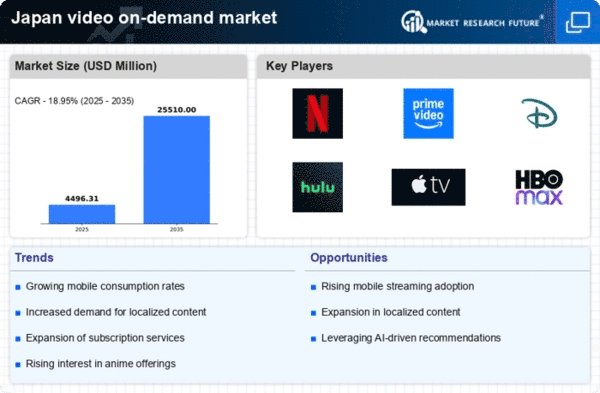
As per Market Research Future analysis, the Japan video on-demand market Size was estimated at 3780.0 USD Million in 2024. The Video On-demand market is projected to grow from 4496.31 USD Million in 2025 to 25510.0 USD Million by 2035, exhibiting a compound annual growth rate (CAGR) of 18.9% during the forecast period 2025 - 2035

Key Market Trends & Highlights

The Japan video on-demand market is experiencing robust growth driven by evolving consumer preferences and technological advancements.

  • The largest segment in the Japan video on-demand market is subscription services, which continue to gain traction among consumers.
  • Local content production is on the rise, reflecting a growing demand for culturally relevant programming.
  • Technological advancements are enhancing user experiences, making streaming services more accessible and efficient.
  • Key market drivers include increasing internet penetration and a shift in consumer viewing habits, which are reshaping the landscape of video consumption.

Market Size & Forecast

2024 Market Size 3780.0 (USD Million)
2035 Market Size 25510.0 (USD Million)
CAGR (2025 - 2035) 18.95%

Major Players

Netflix (US), Amazon Prime Video (US), Disney+ (US), Hulu (US), Apple TV+ (US), HBO Max (US), YouTube (US), Tencent Video (CN), iQIYI (CN)

Our Impact
Enabled $4.3B Revenue Impact for Fortune 500 and Leading Multinationals
Partnering with 2000+ Global Organizations Each Year
30K+ Citations by Top-Tier Firms in the Industry

Japan Video On Demand Market Trends

The video on-demand market in Japan is currently experiencing a dynamic evolution, characterized by a growing consumer base and an increasing variety of content offerings. As digital consumption habits shift, more individuals are opting for on-demand services, which provide flexibility and convenience. This trend is further fueled by advancements in technology, such as improved internet connectivity and the proliferation of smart devices. Consequently, traditional viewing methods are gradually being supplanted by streaming platforms, which cater to diverse preferences and viewing habits. Moreover, the competitive landscape is intensifying, with both domestic and international players vying for market share. Local content production is gaining traction, as creators seek to resonate with Japanese audiences. This focus on culturally relevant programming appears to enhance viewer engagement and loyalty. Additionally, subscription models are becoming increasingly popular, offering consumers a range of pricing options and access to exclusive content. Overall, the video on-demand market is poised for continued growth, driven by innovation and changing consumer preferences.

Rise of Subscription Services

The video on-demand market is witnessing a notable shift towards subscription-based models. Consumers are increasingly favoring platforms that offer unlimited access to a wide array of content for a fixed monthly fee. This trend suggests a preference for predictable spending and the convenience of on-demand viewing.

Local Content Production

There is a growing emphasis on local content creation within the video on-demand market. Producers are focusing on developing shows and films that reflect Japanese culture and societal themes. This strategy appears to resonate well with audiences, fostering a deeper connection and enhancing viewer loyalty.

Technological Advancements

The ongoing advancements in technology are significantly impacting the video on-demand market. Enhanced internet speeds and the proliferation of smart devices are facilitating seamless streaming experiences. This technological evolution is likely to attract more users, further expanding the market.

Japan Video On Demand Market Drivers

Diverse Content Offerings

The video on-demand market in Japan is characterized by a rich variety of content, including anime, dramas, and international films. This diversity appeals to a broad audience, from local viewers to international fans. As of 2025, the market has seen a 30% increase in subscriptions attributed to the availability of niche content that caters to specific interests. The video on-demand market is capitalizing on this trend by investing in local productions and acquiring exclusive rights to popular shows. This strategy not only enhances the attractiveness of platforms but also fosters a loyal subscriber base. The ongoing demand for diverse content suggests that the video on-demand market will continue to thrive, as providers seek to meet the varied tastes of their audiences.

Competitive Pricing Strategies

In the highly competitive landscape of the video on-demand market, pricing strategies play a pivotal role in attracting and retaining subscribers. Many platforms in Japan are adopting flexible pricing models, including tiered subscriptions and promotional offers, to appeal to a wider audience. As of 2025, the average monthly subscription cost has decreased by approximately 15%, making services more accessible to consumers. The video on-demand market is witnessing a surge in new entrants, which intensifies competition and drives innovation in pricing. This trend indicates that as platforms continue to refine their pricing strategies, the market will likely see increased subscriber growth, as consumers are drawn to affordable and value-driven options.

Increasing Internet Penetration

The expansion of high-speed internet access in Japan plays a crucial role in the growth of the video on-demand market. As of 2025, approximately 95% of households have access to the internet, facilitating seamless streaming experiences. This connectivity allows consumers to access a wide array of content from various platforms, thereby increasing viewership. The video on-demand market benefits from this trend, as more users are likely to subscribe to services that offer diverse content. Furthermore, the rise in mobile internet usage, with over 80% of the population owning smartphones, enhances the accessibility of video content. This trend suggests that as internet penetration continues to rise, the video on-demand market will likely experience sustained growth, driven by an expanding user base eager for on-the-go entertainment.

Shift in Consumer Viewing Habits

Japanese consumers are increasingly favoring on-demand viewing over traditional television. This shift is evident in the growing preference for binge-watching series and accessing content at their convenience. Recent surveys indicate that over 60% of viewers in Japan prefer streaming services for their flexibility and variety. The video on-demand market is adapting to these changing preferences by offering tailored content and subscription models that cater to diverse audience segments. This trend is further supported by the rise of original programming, which attracts viewers seeking unique and engaging content. As consumer habits continue to evolve, the video on-demand market is likely to expand, driven by the demand for personalized viewing experiences that align with modern lifestyles.

Integration of Advanced Technologies

The integration of advanced technologies, such as artificial intelligence and machine learning, is transforming the video on-demand market in Japan. These technologies enhance user experience by providing personalized recommendations and improving content delivery. As of 2025, approximately 40% of platforms are utilizing AI-driven algorithms to analyze viewer preferences and optimize content offerings. The video on-demand market is leveraging these advancements to create more engaging and tailored viewing experiences. This technological evolution not only attracts new subscribers but also retains existing ones by ensuring that content remains relevant and appealing. The ongoing adoption of such technologies suggests that the video on-demand market will continue to evolve, driven by the need for innovation and enhanced user satisfaction.


Market Segment Insights

By Content Type: Movies (Largest) vs. TV Shows (Fastest-Growing)

In the Japan video on-demand market, the content type segment showcases a diverse array of preferences among consumers. Movies currently hold the largest market share, driven by their broad appeal and diverse genres available for streaming. Following closely are TV shows, which have seen a surge in popularity due to the rise of original series and binge-watching tendencies, particularly among younger viewers. Growth trends indicate a shift towards TV shows as the fastest-growing segment as consumers increasingly seek serialized content that can engage them over longer periods. The improvements in technology, coupled with robust internet penetration, facilitate the consumption of high-quality TV shows, while sticker prices remain competitive. The drive for interactive content is also fueling the demand for unique viewing experiences, further enhancing growth in this segment.

Movies: Largest vs. TV Shows: Emerging

Movies represent the dominant force in the Japan video on-demand market, resonating significantly with a wide audience due to their singular, compelling storytelling approaches. The availability of various genres ensures a film can cater to all demographics. On the other hand, TV shows are emerging rapidly, driven by the demand for binge-worthy content that encourages loyalty to streaming platforms. They provide users ongoing engagement through episodic storytelling. As platforms invest in original content, this dynamic interplay between movies and TV shows suggests a future where both can coexist, with particular innovations enhancing viewer experiences and broadened access promoting a more segmented yet vibrant viewing landscape.

By Subscription Model: Subscription Video On Demand (Largest) vs. Ad-Supported Video On Demand (Fastest-Growing)

In the Japan video on-demand market, Subscription Video On Demand (SVOD) commands the largest market share, significantly outpacing its counterparts. Transactional Video On Demand (TVOD) holds a smaller portion of the market, while Ad-Supported Video On Demand (AVOD) is gaining traction among consumers, driven by cost-free access to content with advertisements. SVOD continues to be the preferred choice for viewers looking for comprehensive content libraries and exclusive releases. Growth trends indicate that SVOD will maintain its dominance, fueled by increasing consumer preferences for personalized viewing experiences and original programming. Conversely, the AVOD segment is emerging rapidly, driven by wider internet access and acceptance of ad-supported models. TVOD, while stable, is seeing a slower growth rate due to changing consumer habits leaning towards subscription services.

Subscription Video On Demand (Dominant) vs. Ad-Supported Video On Demand (Emerging)

The Subscription Video On Demand (SVOD) segment stands as the dominant force in the Japan video on-demand market, offering consumers a vast array of content options through a flat-fee model. This model attracts customers with convenience and exclusive releases, enhancing user engagement. In contrast, the Ad-Supported Video On Demand (AVOD) segment is emerging, appealing to budget-conscious viewers who prefer free content with advertisements. The rise of AVOD is indicative of changing consumption habits, with more users open to ad interruptions in exchange for access to diverse shows and films without fees. Both segments cater to distinct consumer needs, showcasing the dynamic nature of video consumption preferences.

By Device Type: Smart TVs (Largest) vs. Mobile Devices (Fastest-Growing)

In the Japan video on-demand market, Smart TVs currently hold the largest share among device types, reflecting a shift towards larger screens for enhanced viewing experiences. Mobile devices, including smartphones, follow closely behind, capturing a significant market portion as consumers increasingly opt for on-the-go entertainment options. The growth trends indicate a strong upward trajectory for mobile devices, fueled by advancements in mobile internet infrastructure and the proliferation of affordable smartphones. Meanwhile, Smart TVs are also seeing increased integration of smart technology, driving their sustained dominance. The convergence of content streaming services with traditional viewing habits is reshaping how consumers engage with digital media across all device types.

Smart TVs (Dominant) vs. Laptops (Emerging)

Smart TVs have solidified their dominance in the Japan video on-demand market, characterized by their large screens and smart capabilities that provide seamless access to numerous streaming services. As families utilize these devices in their living rooms, Smart TVs enhance the viewing experience, leading to increased usage time. In contrast, laptops, while traditionally a popular choice for streaming, are emerging with renewed interest due to the rise in remote work and online education. Their portability and versatility make them appealing, especially among younger demographics. The competition between these devices underscores a broader trend towards personalized viewing experiences in a rapidly evolving digital landscape.

By End User: Individual Users (Largest) vs. Corporate Users (Fastest-Growing)

The Japan video on-demand market has seen a diverse array of end users, with individual users holding the majority share. This segment is characterized by a strong preference for on-the-go access to content, with streaming services tailored to personal needs. In contrast, corporate users are gaining traction, driven by demand for training and development resources, as well as for employee engagement tools. Growth in individual users continues to be robust, fueled by increasing smartphone penetration and evolving lifestyles. Meanwhile, corporate users are experiencing the fastest growth due to the rising trend in digital transformation across businesses, where video content serves as a vital communication and training tool. Educational institutions are also expanding their presence, leveraging on-demand video to enhance learning experiences.

Individual Users (Dominant) vs. Corporate Users (Emerging)

The individual users segment is the dominant force in the Japan video on-demand market, representing a wide demographic that values convenience and accessibility. This group often favors subscription models that provide vast libraries of content, ensuring they have a diverse range of entertainment options. In contrast, corporate users are an emerging segment, seeking bespoke video solutions for internal training and marketing purposes. These users appreciate features such as analytics and audience engagement tools, allowing them to leverage video as a strategic asset in their operations. As digital content consumption rises, these two segments differentiate the market, each with unique needs and growth potential.

Get more detailed insights about Japan Video On Demand Market

Key Players and Competitive Insights

The video on-demand market in Japan is characterized by a dynamic competitive landscape, driven by rapid technological advancements and shifting consumer preferences. Major players such as Netflix (US), Amazon Prime Video (US), and Disney+ (US) are actively refining their strategic positioning to capture a larger share of the market. Netflix (US) continues to focus on original content production, which has proven effective in attracting and retaining subscribers. Meanwhile, Amazon Prime Video (US) emphasizes its integration with the broader Amazon ecosystem, enhancing user experience through bundled services. Disney+ (US) leverages its extensive library of beloved franchises, appealing to family-oriented audiences. Collectively, these strategies foster a competitive environment that is increasingly centered on content quality and user engagement.Key business tactics employed by these companies include localized content offerings and strategic partnerships. The market structure appears moderately fragmented, with several key players vying for dominance. This fragmentation allows for diverse content offerings, catering to various audience segments. The influence of these major players is substantial, as they shape consumer expectations and drive innovation within the sector.

In October Netflix (US) announced a partnership with a leading Japanese animation studio to produce exclusive content tailored for local audiences. This strategic move is likely to enhance Netflix's appeal in Japan, where anime holds significant cultural importance. By investing in localized content, Netflix aims to deepen its connection with Japanese viewers, potentially increasing its subscriber base in a competitive market.

In September Amazon Prime Video (US) launched a new feature that allows users to access content in multiple languages, including Japanese, English, and other regional dialects. This initiative reflects Amazon's commitment to enhancing user experience and accessibility, which may lead to increased viewer engagement and satisfaction. Such features are crucial in a market where language preferences can significantly impact content consumption.

In August Disney+ (US) expanded its content library by acquiring rights to several popular Japanese films and series. This acquisition not only diversifies Disney+'s offerings but also positions the platform as a key player in the local market. By incorporating culturally relevant content, Disney+ is likely to attract a broader audience, thereby enhancing its competitive stance against other platforms.

As of November current trends in the video on-demand market include a strong emphasis on digitalization, sustainability, and the integration of artificial intelligence (AI) in content delivery. Strategic alliances among companies are increasingly shaping the competitive landscape, as partnerships enable shared resources and expertise. Looking ahead, competitive differentiation is expected to evolve, with a shift from price-based competition to a focus on innovation, technology, and supply chain reliability. Companies that prioritize these aspects may find themselves better positioned to thrive in an ever-evolving market.

Key Companies in the Japan Video On Demand Market include

Industry Developments

Kasumi Arimura and Kentaro Sakaguchi starred in the eight-episode Japanese original series Beyond Goodbye, which was released by Netflix Japan in December 2024. Netflix's dedication to domestic narrative was further emphasized by the series' premiere on November 14, 2024.Netflix Japan's domestic subscriber base exceeded 10 million in December 2024. 

The platform has verified that it is actively seeking to increase the production of original Japanese content, such as anime and live-action genres that are produced in Japan.Netflix executed a five-year exclusive production and distribution agreement with the esteemed Japanese director Hitoshi One in July 2024. The strategic value of this partnership was underscored by the fact that his successful series Tokyo Swindlers had previously dominated Japan's Netflix charts.

Future Outlook

Japan Video On Demand Market Future Outlook

The Video on Demand Market in Japan is projected to grow at an 18.95% CAGR from 2025 to 2035, driven by technological advancements, increased internet penetration, and changing consumer preferences.

New opportunities lie in:

  • Development of localized content production facilities to cater to regional tastes.
  • Partnerships with telecom providers for bundled subscription services.
  • Implementation of AI-driven recommendation systems to enhance user engagement.

By 2035, the market is expected to achieve substantial growth, solidifying its position as a key entertainment medium.

Market Segmentation

Japan Video On Demand Market End User Outlook

  • Individual Users
  • Corporate Users
  • Educational Institutions

Japan Video On Demand Market Device Type Outlook

  • Smart TVs
  • Mobile Devices
  • Tablets
  • Laptops
  • Desktop Computers

Japan Video On Demand Market Content Type Outlook

  • Movies
  • TV Shows
  • Documentaries
  • Sports
  • Kid's Content

Japan Video On Demand Market Subscription Model Outlook

  • Subscription Video On Demand
  • Transactional Video On Demand
  • Ad-Supported Video On Demand

Report Scope

MARKET SIZE 2024 3780.0(USD Million)
MARKET SIZE 2025 4496.31(USD Million)
MARKET SIZE 2035 25510.0(USD Million)
COMPOUND ANNUAL GROWTH RATE (CAGR) 18.95% (2025 - 2035)
REPORT COVERAGE Revenue Forecast, Competitive Landscape, Growth Factors, and Trends
BASE YEAR 2024
Market Forecast Period 2025 - 2035
Historical Data 2019 - 2024
Market Forecast Units USD Million
Key Companies Profiled Netflix (US), Amazon Prime Video (US), Disney+ (US), Hulu (US), Apple TV+ (US), HBO Max (US), YouTube (US), Tencent Video (CN), iQIYI (CN)
Segments Covered Content Type, Subscription Model, Device Type, End User
Key Market Opportunities Integration of advanced streaming technologies enhances user experience in the video on-demand market.
Key Market Dynamics Rising consumer preference for localized content drives competition among video on-demand platforms in Japan.
Countries Covered Japan
Leave a Comment

FAQs

What is the expected market size of the Japan Video On Demand Market in 2024?

The Japan Video On Demand Market is expected to be valued at 3.79 USD Billion in 2024.

What will be the market value of the Japan Video On Demand Market in 2035?

By 2035, the Japan Video On Demand Market is projected to reach a value of 12.53 USD Billion.

What is the expected CAGR for the Japan Video On Demand Market from 2025 to 2035?

The expected CAGR for the Japan Video On Demand Market from 2025 to 2035 is 11.483%.

Which revenue model segment is the largest in the Japan Video On Demand Market in 2024?

The Subscription Video on Demand (SVoD) segment is the largest, valued at 1.9 USD Billion in 2024.

How much will the Transactional Video On Demand (TVoD) segment be valued in 2035?

The Transactional Video On Demand (TVoD) segment is projected to be valued at 3.68 USD Billion in 2035.

What are the major players in the Japan Video On Demand Market?

Key players in the Japan Video On Demand Market include Netflix, Amazon Prime Video, and Disney+ among others.

What is the estimated value of the Advertisement Based Video On Demand (AVoD) segment in 2024?

The Advertisement Based Video On Demand (AVoD) segment is estimated to be valued at 0.69 USD Billion in 2024.

What growth opportunities exist within the Japan Video On Demand Market?

Growth opportunities are driven by increasing consumer preference for on-demand content and technological advancements.

How does the growth rate of the Japan Video On Demand Market compare to other regions?

The Japan Video On Demand Market is experiencing strong growth, indicated by its expected CAGR of 11.483% from 2025 to 2035.

What are the challenges currently facing the Japan Video On Demand Market?

Challenges include intense competition among service providers and the need for continuous content innovation.

Download Free Sample

Kindly complete the form below to receive a free sample of this Report

Compare Licence

×
Features License Type
Single User Multiuser License Enterprise User
Price $4,950 $5,950 $7,250
Maximum User Access Limit 1 User Upto 10 Users Unrestricted Access Throughout the Organization
Free Customization
Direct Access to Analyst
Deliverable Format
Platform Access
Discount on Next Purchase 10% 15% 15%
Printable Versions