×
Request Free Sample ×

Kindly complete the form below to receive a free sample of this Report

* Please use a valid business email

Leading companies partner with us for data-driven Insights

clients tt-cursor
Hero Background

Japan Dry Mouth Relief Market

ID: MRFR/HC/48231-HCR
200 Pages
Rahul Gotadki
February 2026

Japan Dry Mouth Relief Market Research Report By Type (Over the Counter (OTC), Prescribed), By Product (Spray, Mouthwash, Gel, Lozenges, Device) and By Distribution Channel (Pharmacies, E-Commerce, Supermarket) -Forecast to 2035

Share:
Download PDF ×

We do not share your information with anyone. However, we may send you emails based on your report interest from time to time. You may contact us at any time to opt-out.

Japan Dry Mouth Relief Market Infographic
Purchase Options

Japan Dry Mouth Relief Market Summary

As per Market Research Future analysis, the Japan Dry Mouth Relief Market size was estimated at 89.62 USD Million in 2024. The Dry Mouth-relief market is projected to grow from 93.34 USD Million in 2025 to 140.0 USD Million by 2035, exhibiting a compound annual growth rate (CAGR) of 4.1% during the forecast period 2025 - 2035

Key Market Trends & Highlights

The Japan dry mouth-relief market is experiencing a notable shift towards innovative and natural solutions driven by demographic and health trends.

  • The market shows a rising demand for innovative formulations that cater to diverse consumer needs.
  • There is a growing preference for natural ingredients among consumers seeking safer oral health products.
  • Increased awareness of oral health is driving consumers to seek effective dry mouth relief solutions.
  • The aging population and rising incidence of chronic diseases are key drivers of market growth.

Market Size & Forecast

2024 Market Size 89.62 (USD Million)
2035 Market Size 140.0 (USD Million)
CAGR (2025 - 2035) 4.14%

Major Players

GlaxoSmithKline (GB), Colgate-Palmolive (US), Procter & Gamble (US), Johnson & Johnson (US), Sunstar (JP), MediNatura (US), Eurapharma (FR), PuraPharm (SG)

Our Impact
Enabled $4.3B Revenue Impact for Fortune 500 and Leading Multinationals
Partnering with 2000+ Global Organizations Each Year
30K+ Citations by Top-Tier Firms in the Industry

Japan Dry Mouth Relief Market Trends

The is undergoing notable developments, driven by an increasing awareness of oral health and the prevalence of conditions that lead to dry mouth. Factors such as aging populations and rising incidences of chronic diseases contribute to a growing demand for effective solutions. Consumers are becoming more informed about the importance of maintaining moisture in the mouth, which has led to a surge in the availability of products designed to alleviate discomfort. This trend is further supported by advancements in product formulations, which aim to enhance efficacy and user experience. Moreover, the market is witnessing a shift towards natural and organic ingredients, as consumers express a preference for products that align with their health-conscious lifestyles. This inclination towards natural solutions is prompting manufacturers to innovate and diversify their offerings, catering to a more discerning customer base. As the Japan Dry Mouth Relief Market continues to evolve, it appears poised for sustained growth, with potential opportunities for new entrants and established brands alike. The interplay of consumer preferences and technological advancements suggests a dynamic landscape that may redefine how dry mouth is managed in the future.

Rising Demand for Innovative Formulations

The dry mouth-relief market shows a trend towards innovative formulations that enhance product effectiveness. Manufacturers are focusing on developing new ingredients and delivery systems that provide longer-lasting relief. This shift is likely driven by consumer expectations for higher quality and more effective solutions.

Preference for Natural Ingredients

There is a growing preference among consumers for products containing natural ingredients. This trend reflects a broader movement towards health and wellness, with individuals seeking remedies that are perceived as safer and more beneficial. As a result, companies are increasingly incorporating organic components into their formulations.

Increased Awareness of Oral Health

Awareness of oral health issues is on the rise, leading to greater demand for dry mouth-relief products. Educational campaigns and health initiatives are contributing to this trend, as consumers become more informed about the implications of dry mouth. This heightened awareness is likely to drive market growth.

Japan Dry Mouth Relief Market Drivers

Expansion of Distribution Channels

The expansion of distribution channels in Japan is facilitating greater access to dry mouth-relief products. Traditional retail outlets, pharmacies, and online platforms are increasingly stocking a variety of dry mouth relief solutions, making them more accessible to consumers. The rise of e-commerce has particularly transformed the market landscape, allowing consumers to purchase products conveniently from home. This trend is likely to enhance market penetration and reach, as consumers are more inclined to explore and purchase dry mouth relief products through various channels. As a result, the dry mouth-relief market is expected to experience growth driven by improved availability and consumer convenience.

Rising Incidence of Chronic Diseases

The prevalence of chronic diseases in Japan is another significant driver of the dry mouth-relief market. Conditions such as diabetes, Sjogren's syndrome, and certain cancers can lead to dry mouth as a side effect of medications or the disease itself. With an estimated 7.4 million people living with diabetes in Japan, the demand for dry mouth relief products is expected to rise. Furthermore, the increasing number of cancer patients undergoing treatments that cause dry mouth symptoms is likely to contribute to market growth. As healthcare providers become more aware of the importance of managing oral health in these patients, the dry mouth-relief market is poised to benefit from this heightened focus.

Aging Population and Dry Mouth Relief

The aging population in Japan is a crucial driver for the dry mouth-relief market. As individuals age, they often experience a decline in salivary production, leading to dry mouth, or xerostomia. This condition can significantly impact their quality of life, making effective relief solutions essential. According to recent statistics, approximately 30% of older adults in Japan report experiencing dry mouth symptoms. This demographic shift is prompting an increase in demand for products specifically designed to alleviate dry mouth, such as mouthwashes, lozenges, and sprays. The dry mouth-relief market is likely to expand as manufacturers focus on developing targeted solutions for this growing segment of the population.

Increased Focus on Preventive Healthcare

The growing emphasis on preventive healthcare in Japan is influencing the dry mouth-relief market. Consumers are becoming more proactive about their oral health, seeking products that not only alleviate symptoms but also prevent further complications associated with dry mouth. This trend is reflected in the rising sales of products that promote hydration and oral moisture. The dry mouth-relief market is likely to benefit from this shift, as consumers increasingly prioritize products that offer dual benefits. Moreover, educational campaigns by healthcare professionals about the importance of managing dry mouth can further drive market growth, as awareness leads to increased product adoption.

Technological Advancements in Product Development

Technological advancements in product development are shaping the dry mouth-relief market in Japan. Innovations in formulation and delivery methods are leading to more effective and user-friendly products. For instance, the introduction of bioadhesive gels and sprays that provide longer-lasting relief is gaining traction among consumers. Additionally, the integration of smart technology in oral care products, such as apps that remind users to hydrate or use dry mouth relief products, is emerging. These advancements not only enhance the efficacy of dry mouth relief solutions but also cater to the tech-savvy population in Japan, potentially expanding the market reach and consumer base.


Market Segment Insights

By Type: Over The Counter (OTC) (Largest) vs. Prescribed (Fastest-Growing)

In the Japan dry mouth-relief market, Over The Counter (OTC) products dominate the segment, holding a substantial share. These products are widely available, making them accessible to consumers seeking quick relief from dry mouth symptoms. On the other hand, prescribed solutions, while smaller in market share, are gaining traction as they are tailored for more severe cases, thus appealing to a specific patient demographic. The growth of prescribed dry mouth-relief solutions is driven by increasing awareness of dry mouth conditions and the growing aging population in Japan, which often faces issues related to reduced saliva production. As healthcare professionals become more attuned to these needs, the demand for prescribed options is expected to rise significantly, providing opportunities for growth in this segment.

Over The Counter (OTC) (Dominant) vs. Prescribed (Emerging)

Over The Counter (OTC) products stand as the dominant force in the Japan dry mouth-relief market, attributed to their convenience and immediate availability. Consumers favor OTC solutions as an accessible first line of treatment for dry mouth, which can arise from various causes. Meanwhile, prescribed products, although emerging, are carving out their niche by targeting more complex and severe dry mouth issues that OTC products may not sufficiently address. This has led to a gradual increase in patient referrals to health care providers for tailored treatments. Overall, both segments are vital, with OTC maintaining its dominance while prescribed products show promising growth potential.

By Product: Gel (Largest) vs. Spray (Fastest-Growing)

The product segment of the Japan dry mouth-relief market showcases a varied distribution of consumer preferences, with gel products leading as the largest segment. This indicates a strong consumer inclination towards gels due to their effective moisturizing properties and ease of application. Mouthwash and lozenges also hold significant market shares, highlighting their popularity among users seeking quickly accessible relief options. As awareness about dry mouth conditions rises, these products are becoming more sought-after in everyday healthcare routines. Growth trends in the Japan dry mouth-relief market reveal a promising trajectory for spray products, which have emerged as the fastest-growing segment. Factors driving this growth include the increasing demand for convenient, on-the-go solutions that sprays offer. Innovative formulations that enhance effectiveness and ease of use are attracting a broader audience. Meanwhile, the gel segment continues to thrive as established preferences solidify, suggesting that both segments will see sustained interest moving forward.

Gel (Dominant) vs. Spray (Emerging)

The gel segment stands out as the dominant force in the Japan dry mouth-relief market, favored for its soothing attributes and prolonged hydration benefits. Gels are perceived as highly effective due to their thicker consistency, which provides a lasting coating on dry tissues. In contrast, sprays are emerging rapidly due to their convenience and refreshing experience, appealing to users looking for quick relief. This comparative dynamic between gels and sprays illustrates the diverse consumer needs in the market, where the established presence of gel products faces the challenge of fast-evolving spray solutions. Thus, both segments complement each other, catering to varying preferences while driving overall market growth.

By Distribution Channel: Pharmacies (Largest) vs. E-Commerce (Fastest-Growing)

In the distribution channel segment of the Japan dry mouth-relief market, pharmacies hold the largest share, serving as the primary access point for consumers seeking relief solutions. These establishments benefit from trusted pharmacist recommendations, ensuring higher customer confidence in product effectiveness. E-Commerce is rapidly gaining traction, capturing an increasing amount of market share as consumers seek convenience and access to a wider range of options. The growth trends within this segment indicate a significant shift towards online purchasing, especially post-pandemic. The convenience of home delivery and the ability to compare products easily drive consumers towards E-Commerce platforms. Moreover, the rising smartphone penetration in Japan supports this shift, making it easier for consumers to make informed purchases from the comfort of their homes. This trend highlights a changing preference in shopping behavior that retailers must adapt to.

Pharmacies: Dominant vs. E-Commerce: Emerging

Pharmacies remain the dominant distribution channel within the market, leveraging their established presence and credibility with consumers. They provide personalized recommendations, which are particularly valuable for products addressing health concerns like dry mouth. Conversely, E-Commerce is emerging as a crucial player, appealing to tech-savvy consumers who prefer the convenience of online shopping. This channel offers a broader selection and often better pricing, drawing in younger demographics. As consumers increasingly turn to digital solutions, E-Commerce has the potential to reshape how dry mouth-relief products are marketed and consumed, compelling pharmacies to integrate more digital offerings to stay competitive.

Get more detailed insights about Japan Dry Mouth Relief Market

Key Players and Competitive Insights

The dry mouth-relief market in Japan is characterized by a competitive landscape that is increasingly shaped by innovation and strategic partnerships. Key players such as GlaxoSmithKline (GB), Colgate-Palmolive (US), and Sunstar (JP) are actively pursuing strategies that emphasize product development and market penetration. GlaxoSmithKline (GB) focuses on expanding its portfolio of oral health products, leveraging its strong research capabilities to introduce new formulations that cater to the specific needs of consumers suffering from dry mouth. Meanwhile, Colgate-Palmolive (US) has been enhancing its digital marketing efforts to engage consumers more effectively, indicating a shift towards a more consumer-centric approach. Sunstar (JP), with its deep-rooted presence in the local market, appears to be concentrating on regional expansion and localized product offerings, which collectively contribute to a dynamic competitive environment.The business tactics employed by these companies reflect a nuanced understanding of the market's structure, which is moderately fragmented. Localizing manufacturing and optimizing supply chains are prevalent strategies that enhance operational efficiency and responsiveness to consumer demands. The collective influence of these key players fosters a competitive atmosphere where innovation and customer engagement are paramount, allowing them to navigate the complexities of the market effectively.

In October GlaxoSmithKline (GB) announced the launch of a new line of dry mouth relief products specifically designed for the Japanese market. This strategic move is significant as it not only demonstrates the company's commitment to addressing local consumer needs but also positions it to capture a larger market share amidst growing competition. The introduction of these products is likely to enhance brand loyalty and consumer trust, which are critical in a market where product efficacy is highly valued.

In September Colgate-Palmolive (US) unveiled a digital platform aimed at educating consumers about dry mouth conditions and promoting its product range. This initiative underscores the importance of digital transformation in the current market landscape, as it allows the company to engage directly with consumers and provide tailored solutions. By leveraging technology, Colgate-Palmolive (US) is likely to strengthen its market position and foster deeper connections with its customer base.

In August Sunstar (JP) entered into a strategic partnership with a local health technology firm to develop innovative solutions for dry mouth management. This collaboration is indicative of a broader trend towards integrating technology with healthcare solutions, potentially leading to more effective products. Such partnerships not only enhance product offerings but also reflect a commitment to addressing the evolving needs of consumers in a competitive market.

As of November the competitive trends in the dry mouth-relief market are increasingly defined by digitalization, sustainability, and the integration of artificial intelligence. Strategic alliances are becoming more prevalent, allowing companies to pool resources and expertise to drive innovation. The shift from price-based competition to a focus on technological advancements and supply chain reliability is evident, suggesting that future differentiation will hinge on the ability to innovate and respond to consumer needs effectively.

Key Companies in the Japan Dry Mouth Relief Market include

Industry Developments

Recent developments in the Japan Dry Mouth Relief Market have seen increased interest in products aimed at alleviating symptoms associated with xerostomia. Companies such as Procter and Gamble, GlaxoSmithKline, and Bausch Health Companies have been actively innovating to expand their product ranges. Currently, there is a notable trajectory towards natural ingredients, with firms like Nature’s Way and Sundown Naturals gaining traction.

In recent months, there have been strategic discussions regarding market partnerships among key players to enhance distribution channels and product accessibility.In terms of mergers and acquisitions, there have not been significant public announcements involving notable players within the Japan Dry Mouth Relief Market during the past year. However, the general market valuation for companies such as Colgate-Palmolive and Johnson and Johnson has seen positive growth, attributed to increased awareness surrounding oral health, highlighting an upward shift in consumer preference for dry mouth relief products.

Noteworthy market happenings also include a rise in digital health solutions aimed at educating consumers about dry mouth relief options and promoting wellness, driven by an evolving consumer health landscape in Japan over the past two years.


Future Outlook

Japan Dry Mouth Relief Market Future Outlook

The Dry Mouth Relief Market in Japan is projected to grow at a 4.14% CAGR from 2025 to 2035, driven by increasing awareness and innovative product development.

New opportunities lie in:

  • Development of subscription-based delivery services for dry mouth products.
  • Expansion into e-commerce platforms targeting niche consumer segments.
  • Collaboration with dental professionals for product endorsements and education.

By 2035, the market is expected to achieve substantial growth, reflecting evolving consumer needs and innovative solutions.

Market Segmentation

Japan Dry Mouth Relief Market Type Outlook

  • Over The Counter (OTC)
  • Prescribed

Japan Dry Mouth Relief Market Product Outlook

  • Spray
  • Mouthwash
  • Gel
  • Lozenges
  • Device

Japan Dry Mouth Relief Market Distribution Channel Outlook

  • Pharmacies
  • E-Commerce
  • Others

Report Scope

MARKET SIZE 2024 89.62(USD Million)
MARKET SIZE 2025 93.34(USD Million)
MARKET SIZE 2035 140.0(USD Million)
COMPOUND ANNUAL GROWTH RATE (CAGR) 4.14% (2025 - 2035)
REPORT COVERAGE Revenue Forecast, Competitive Landscape, Growth Factors, and Trends
BASE YEAR 2024
Market Forecast Period 2025 - 2035
Historical Data 2019 - 2024
Market Forecast Units USD Million
Key Companies Profiled GlaxoSmithKline (GB), Colgate-Palmolive (US), Procter & Gamble (US), Johnson & Johnson (US), Sunstar (JP), MediNatura (US), Eurapharma (FR), PuraPharm (SG)
Segments Covered Type, Product, Distribution Channel
Key Market Opportunities Emerging natural ingredients and innovative formulations drive growth in the dry mouth-relief market.
Key Market Dynamics Rising consumer awareness drives demand for innovative dry mouth-relief products amid evolving regulatory standards in Japan.
Countries Covered Japan
Leave a Comment

FAQs

What is the expected market size of the Japan Dry Mouth Relief Market in 2024?

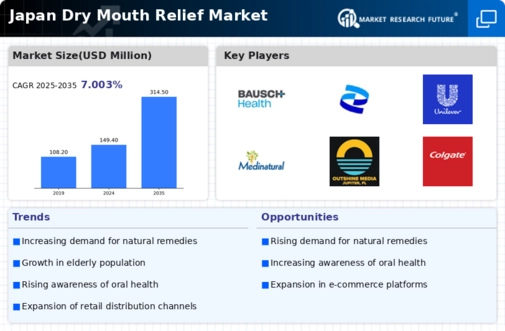
The Japan Dry Mouth Relief Market is expected to be valued at 149.38 USD Million in 2024.

What is the forecasted market size for the Japan Dry Mouth Relief Market by 2035?

By 2035, the Japan Dry Mouth Relief Market is expected to reach a value of 314.5 USD Million.

What is the expected CAGR for the Japan Dry Mouth Relief Market from 2025 to 2035?

The market is projected to grow at a CAGR of 7.003% from 2025 to 2035.

What is the projected market value for Over the Counter (OTC) segment in 2035?

The Over the Counter (OTC) segment is anticipated to be valued at 140.0 USD Million by 2035.

What is the estimated market value for the Prescribed segment in 2024?

The Prescribed segment of the market is estimated to be valued at 84.38 USD Million in 2024.

Who are the key players in the Japan Dry Mouth Relief Market?

Major players include Swedish Biofuels, Nippon Zoki, and GlaxoSmithKline among others.

What is driving the growth of the Japan Dry Mouth Relief Market?

The growth is primarily driven by increasing awareness about dry mouth conditions and rising demand for effective relief products.

Are there any major trends in the Japan Dry Mouth Relief Market?

Emerging trends include the development of innovative formulations and an increase in natural product offerings.

What challenges does the Japan Dry Mouth Relief Market face?

Challenges include competition from alternative therapies and the need for further consumer education.

How does the Japan Dry Mouth Relief Market compare regionally?

Japan represents a significant market within the Asia Pacific region, notable for its advanced healthcare infrastructure and consumer preferences.

Download Free Sample

Kindly complete the form below to receive a free sample of this Report

Compare Licence

×
Features License Type
Single User Multiuser License Enterprise User
Price $4,950 $5,950 $7,250
Maximum User Access Limit 1 User Upto 10 Users Unrestricted Access Throughout the Organization
Free Customization
Direct Access to Analyst
Deliverable Format
Platform Access
Discount on Next Purchase 10% 15% 15%
Printable Versions