×
Request Free Sample ×

Kindly complete the form below to receive a free sample of this Report

* Please use a valid business email

Leading companies partner with us for data-driven Insights

clients tt-cursor
Hero Background

Japan Digital Business Card Market

ID: MRFR/ICT/44338-HCR
200 Pages
Aarti Dhapte
February 2026

Japan Digital Business Card Market Research Report By Type (Individual User, Business User, Enterprise User), By Platform (iOS, Android, Web), By Pricing (Monthly, Yearly, One Time) and By Application (Business Owners, Sales Entrepreneurs, Marketing Agencies, Events and Travels, Software IT, Education and Training, Finance Realtors, Health Beauty, Consultants, Others) - Forecast to 2035

Share:
Download PDF ×

We do not share your information with anyone. However, we may send you emails based on your report interest from time to time. You may contact us at any time to opt-out.

Japan Digital Business Card Market Infographic
Purchase Options

Japan Digital Business Card Market Summary

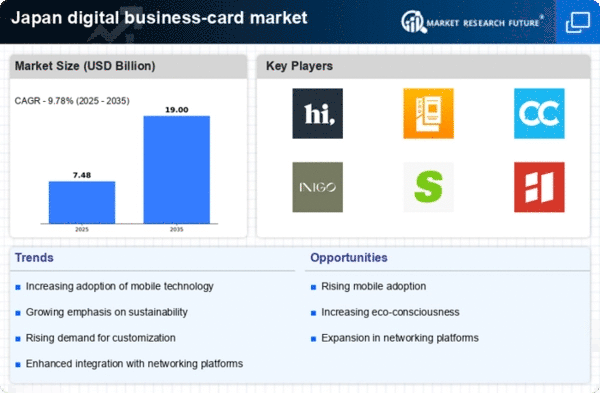
As per Market Research Future analysis, the Japan digital business-card market Size was estimated at 6.81 USD Billion in 2024. The Japan digital business-card market industry is projected to grow from 7.48 USD Billion in 2025 to 19.0 USD Billion by 2035, exhibiting a compound annual growth rate (CAGR) of 9.7% during the forecast period 2025 - 2035

Key Market Trends & Highlights

The Japan digital business-card market is experiencing a transformative shift towards sustainability and technological integration.

  • The market is increasingly characterized by a strong sustainability focus, appealing to environmentally conscious consumers.
  • Integration of advanced technology is enhancing user experience and functionality in digital business cards.
  • Customization and personalization are becoming essential features, allowing users to tailor their cards to individual preferences.
  • Rising demand for contactless solutions and increased adoption of mobile technology are driving market growth.

Market Size & Forecast

2024 Market Size 6.81 (USD Billion)
2035 Market Size 19.0 (USD Billion)
CAGR (2025 - 2035) 9.78%

Major Players

HiHello (US), L-Card (US), CamCard (CN), Inigo (US), Switchit (US), Haystack (US), Blinq (US), Cardhop (US)

Our Impact
Enabled $4.3B Revenue Impact for Fortune 500 and Leading Multinationals
Partnering with 2000+ Global Organizations Each Year
30K+ Citations by Top-Tier Firms in the Industry

Japan Digital Business Card Market Trends

The digital business-card market is experiencing notable growth, driven by the increasing adoption of technology in professional networking. In Japan, businesses and individuals are increasingly recognizing the advantages of digital solutions over traditional paper cards. This shift is largely attributed to the need for sustainable practices and the desire for more efficient networking methods. Digital business cards offer features such as easy sharing, customizable designs, and the ability to integrate multimedia elements, which enhance the overall networking experience. As a result, many professionals are transitioning to digital formats, reflecting a broader trend towards digitization in various sectors. Moreover, the rise of remote work and virtual networking has further accelerated the demand for digital business cards. Professionals are seeking innovative ways to connect with potential clients and partners without the constraints of physical meetings. This trend indicates a significant transformation in how networking is approached, with digital business cards becoming a vital tool for modern professionals. The convenience and versatility of these digital solutions suggest that they will continue to gain traction in the coming years, reshaping the landscape of professional interactions in Japan.

Sustainability Focus

The digital business-card market is increasingly aligned with sustainability initiatives. As environmental concerns grow, many professionals are opting for digital solutions to reduce paper waste. This trend reflects a broader societal shift towards eco-friendly practices, with digital cards offering a viable alternative to traditional paper options.

Integration of Technology

Advancements in technology are significantly influencing the digital business-card market. Features such as QR codes, NFC technology, and integration with social media platforms enhance the functionality of digital cards. This technological integration allows for seamless sharing and connectivity, making networking more efficient.

Customization and Personalization

There is a rising demand for customization in the digital business-card market. Professionals seek unique designs that reflect their personal brand and identity. This trend indicates a shift towards more personalized networking tools, allowing individuals to stand out in a competitive environment.

Japan Digital Business Card Market Drivers

Shift Towards Remote Networking

The digital business-card market in Japan is witnessing a transformation due to the shift towards remote networking. As professionals increasingly engage in virtual meetings and online events, the need for effective digital networking tools becomes paramount. This trend suggests that the digital business-card market industry is adapting to cater to a more digitally-savvy workforce. The convenience of sharing digital cards during virtual interactions enhances networking opportunities, potentially increasing market penetration by 20% in the coming years. Additionally, the integration of features such as video introductions and interactive elements in digital cards may further attract users, making them a vital tool for professional branding in a remote work environment.

Growing Emphasis on Data Privacy

In the context of the digital business-card market, the growing emphasis on data privacy is a critical driver. As consumers become more aware of data security issues, there is a rising demand for solutions that prioritize user privacy. The digital business-card market industry is responding by implementing robust security measures, such as encryption and user-controlled data sharing options. This focus on privacy could potentially enhance consumer trust, leading to increased adoption rates. Market analysts suggest that companies prioritizing data protection may see a competitive advantage, with projections indicating a 15% growth in user engagement for those offering secure digital business-card solutions.

Emergence of Innovative Design Trends

The digital business-card market in Japan is being shaped by the emergence of innovative design trends. As users seek to differentiate themselves in a competitive landscape, the demand for visually appealing and unique digital cards is on the rise. This trend indicates that the digital business-card market industry is evolving to accommodate diverse design preferences, including customizable templates and interactive features. The integration of augmented reality and multimedia elements into digital cards may further enhance user engagement. As a result, businesses that invest in creative design solutions could potentially capture a larger market share, with estimates suggesting a 20% increase in demand for innovative digital business cards over the next few years.

Increased Adoption of Mobile Technology

The proliferation of smartphones in Japan has significantly influenced the digital business-card market. With over 90% of the population owning a smartphone, the accessibility of digital business cards through mobile devices is a key driver. This trend indicates a shift towards mobile-first solutions, where users prefer to manage their professional identities digitally. The digital business-card market industry is poised for growth as mobile applications become more sophisticated, offering features such as analytics and integration with social media platforms. As businesses recognize the importance of mobile technology in enhancing customer engagement, the market could see an increase in investment, potentially leading to a 30% rise in user adoption over the next few years.

Rising Demand for Contactless Solutions

The digital business-card market in Japan is experiencing a notable surge in demand for contactless solutions. As businesses and individuals seek to minimize physical interactions, the convenience of digital business cards becomes increasingly appealing. This shift is reflected in a growing number of users adopting digital formats, with estimates suggesting that the market could expand by approximately 25% annually. The ease of sharing contact information through QR codes and NFC technology enhances user experience, making it a preferred choice for networking. Furthermore, the digital business-card market industry is likely to benefit from the increasing integration of mobile applications that facilitate seamless sharing and storage of digital cards, thereby streamlining professional interactions.


Market Segment Insights

By Type: Business User (Largest) vs. Individual User (Fastest-Growing)

In the Japan digital business-card market, the distribution of market share among segment types is notably skewed. Business User accounts for the largest portion, driven by the demand for efficient networking solutions among corporate professionals. In contrast, Individual User has emerged as the fastest-growing segment, appealing to freelancers and independent professionals who seek innovative ways to connect without traditional business cards. Growth trends indicate a strong inclination towards digital transformation across various user demographics. The surge in Individual User adoption can be attributed to increasing mobile and internet penetration, making digital business cards more accessible. Furthermore, the convenience of sharing contact information electronically is driving user engagement within this segment, highlighting a shift in how relationships are fostered in a tech-centric society.

Business User: Dominant vs. Individual User: Emerging

The Business User segment is characterized by its established presence and significant market share, catering primarily to professionals who prioritize networking efficiency. This segment utilizes features such as bulk sharing and integration with CRM systems, thus enhancing operational capabilities. On the other hand, the Individual User segment is rapidly emerging, especially among younger generations and gig economy workers. This group values personalization and ease of use, often favoring applications that provide unique functionalities like QR code sharing and customizable designs. This dynamic interplay between the two segments showcases a transformative trend where traditional business card approaches are being redefined through digital innovation.

By Platform: iOS (Largest) vs. Android (Fastest-Growing)

In the Japan digital business-card market, the distribution of market share among various platforms reveals a significant dominance of iOS, which caters to a large segment of the user base. Android follows closely, representing a notable portion but with a steadily increasing growth trajectory as more users opt for flexible and customizable solutions. Web platforms, while present, account for a smaller slice of the market as mobile applications gain favor among professionals. The growth trends in this segment are largely driven by technological advancements and the increased adoption of mobile solutions in business networking. The rise of remote work and virtual networking has fueled demand for digital cards, particularly on mobile devices. Consequently, while iOS remains the preferred choice for many users due to its stability and usability, Android is seeing rapid adoption among younger demographics, marking it as a crucial player in future growth.

iOS: Dominant vs. Android: Emerging

The iOS platform is characterized by its robust performance and a loyal user base that appreciates the seamless integration with other Apple devices, making it a dominant force in the Japan digital business-card market. Its stability and user-friendly interface attract professionals seeking efficiency. In contrast, Android is emerging rapidly, appealing to a diverse array of users due to its wide range of affordable devices and customization options. This flexibility is driving its growth, as more individuals and businesses recognize the benefits of digital networking through applications compatible with various Android devices.

By Pricing: Yearly (Largest) vs. Monthly (Fastest-Growing)

In the Japan digital business-card market, the pricing segment shows a diverse distribution among monthly, yearly, and one-time payment options. The yearly subscription model currently commands the largest market share, significantly preferred by businesses looking for long-term investments. Conversely, the monthly payment options have gained traction, particularly among startups and freelancers, who favor flexibility and affordability. One-time payments are present but represent a smaller portion of the overall market share. Growth trends in this segment are largely driven by the increasing digitalization of business interactions and the rising demand for convenient networking solutions. The yearly model remains dominant due to its cost-effectiveness for enterprises, while monthly subscriptions attract a growing base of SMEs seeking to manage overheads effectively. This makes the Japan digital business-card market dynamic, with a compelling interplay between established and emerging pricing strategies.

Yearly (Dominant) vs. Monthly (Emerging)

In the Japan digital business-card market, the yearly pricing model is dominant as it provides significant value to larger enterprises making substantial investments in networking solutions. This model offers users access to premium features, enhanced functionalities, and support, encouraging long-term engagement with service providers. On the other hand, the monthly model is becoming increasingly popular among startups and individual professionals who prefer lower initial costs and the ability to cancel subscriptions without long-term commitments. This emerging preference reflects a shift toward more flexible and adaptive business solutions. Both models cater to distinct user segments, indicating a balanced landscape where established practices coexist with evolving consumer preferences.

By Application: Business Owners (Largest) vs. Sales Entrepreneurs (Fastest-Growing)

The Japan digital business-card market demonstrates diverse applications, with Business Owners leading the pack, capturing a substantial market share due to their increased reliance on digital solutions to streamline networking and client engagement. Following closely, Sales Entrepreneurs are gaining traction, leveraging digital business cards as a robust tool for enhancing their outreach and connectivity in a highly competitive environment. The growth trends indicate a rising adoption among Sales Entrepreneurs, attributed to the increasing emphasis on personal branding and efficient networking strategies. This shift is further propelled by advancements in mobile technology and digital communication, which facilitate easy sharing and customization of business cards. As events and conferences resume, the need for innovative digital tools has surged, positioning Sales Entrepreneurs as a major player in this evolving market.

Business Owners: Dominant vs. Sales Entrepreneurs: Emerging

Business Owners constitute a dominant force in the Japan digital business-card market, primarily driven by their pursuit of brand visibility and professional networking opportunities. They frequently utilize digital cards to represent their brands effectively, enabling easy updates and modifications in real-time. On the other hand, Sales Entrepreneurs are emerging as a crucial segment, characterized by their focus on building connections and expanding their client base. They utilize digital business cards to facilitate networking during events, relying heavily on the ease of sharing and adaptability provided by digital formats. As they harness the advantages of technology, both segments play pivotal roles in shaping the dynamics of the market.

Get more detailed insights about Japan Digital Business Card Market

Key Players and Competitive Insights

The digital business-card market in Japan is characterized by a dynamic competitive landscape, driven by rapid technological advancements and evolving consumer preferences. Key players such as HiHello (US), L-Card (US), and CamCard (CN) are actively shaping the market through innovative solutions and strategic partnerships. HiHello (US) focuses on enhancing user experience by integrating advanced features such as QR code sharing and contact management, while L-Card (US) emphasizes customization and user-friendly interfaces. CamCard (CN), on the other hand, leverages its extensive database to provide users with networking opportunities, indicating a diverse approach to market engagement that collectively intensifies competition.
The market structure appears moderately fragmented, with several players vying for market share. Key business tactics include localizing services to cater to Japanese consumers, optimizing supply chains for efficiency, and leveraging digital marketing strategies to enhance brand visibility. The collective influence of these companies suggests a competitive environment where innovation and customer-centric approaches are paramount, potentially leading to increased market penetration and user adoption.
In October 2025, HiHello (US) announced a partnership with a leading Japanese telecommunications company to enhance its service offerings, allowing users to seamlessly integrate their digital business cards with mobile payment systems. This strategic move is likely to bolster HiHello's market presence in Japan, tapping into the growing trend of mobile commerce and digital transactions, thereby enhancing user convenience and engagement.
In September 2025, L-Card (US) launched a new feature that allows users to create animated digital business cards, setting a new standard for creativity in the market. This innovation not only differentiates L-Card from competitors but also appeals to a younger demographic that values unique and visually appealing networking tools. The introduction of such features may significantly influence user preferences and drive adoption rates.
In August 2025, CamCard (CN) expanded its operations by integrating AI-driven analytics into its platform, enabling users to gain insights into their networking activities. This strategic enhancement is indicative of a broader trend towards data-driven decision-making in the digital business-card space, potentially providing users with a competitive edge in their networking efforts. The integration of AI could also lead to improved user retention and satisfaction.
As of November 2025, current trends in the digital business-card market include a strong emphasis on digitalization, sustainability, and AI integration. Strategic alliances among key players are increasingly shaping the competitive landscape, fostering innovation and collaboration. The shift from price-based competition to a focus on technological advancements and supply chain reliability is evident, suggesting that future differentiation will hinge on the ability to innovate and adapt to changing consumer demands.

Key Companies in the Japan Digital Business Card Market include

Industry Developments

The Japan Digital Business Card Market has seen significant growth and recent developments, particularly among key players such as Sansan, freee, and LinkedIn. In September 2023, Sansan announced a strategic partnership to enhance its digital card services, reflecting an increasing focus on collaboration tools amidst a surge in remote work culture in Japan.

Moreover, in August 2023, freee reported a substantial market valuation increase, focusing on expanding its digital card functionalities. In terms of mergers and acquisitions, no specific activity was reported in recent months for companies like CleverTap or BizCard, indicating a potential focus on organic growth strategies. As of 2021, significant moves were made by companies such as Wantedly to diversify their digital offerings, showcasing a trend toward comprehensive digital solutions. The overall market shift towards contactless and digital networking solutions is a direct response to evolving business needs in Japan, reflecting broader technological advancements and changes in consumer behaviors.


Future Outlook

Japan Digital Business Card Market Future Outlook

The digital business-card market in Japan is projected to grow at a 9.78% CAGR from 2025 to 2035, driven by technological advancements and increasing demand for eco-friendly solutions.

New opportunities lie in:

  • Integration of AI-driven analytics for user engagement insights.
  • Development of customizable templates for niche industries.
  • Partnerships with networking platforms to enhance user reach.

By 2035, the market is expected to achieve substantial growth and innovation.

Market Segmentation

Japan Digital Business Card Market Type Outlook

  • Individual User
  • Business User
  • Enterprise User

Japan Digital Business Card Market Pricing Outlook

  • Monthly
  • Yearly
  • One Time

Japan Digital Business Card Market Platform Outlook

  • iOS
  • Android
  • Web

Japan Digital Business Card Market Application Outlook

  • Business Owners
  • Sales Entrepreneurs
  • Marketing Agencies
  • Events and Travels
  • Software & IT
  • Education and Training
  • Finance & Realtors
  • Health & Beauty
  • Consultants
  • Others

Report Scope

MARKET SIZE 2024 6.81(USD Billion)
MARKET SIZE 2025 7.48(USD Billion)
MARKET SIZE 2035 19.0(USD Billion)
COMPOUND ANNUAL GROWTH RATE (CAGR) 9.78% (2025 - 2035)
REPORT COVERAGE Revenue Forecast, Competitive Landscape, Growth Factors, and Trends
BASE YEAR 2024
Market Forecast Period 2025 - 2035
Historical Data 2019 - 2024
Market Forecast Units USD Billion
Key Companies Profiled HiHello (US), L-Card (US), CamCard (CN), Inigo (US), Switchit (US), Haystack (US), Blinq (US), Cardhop (US)
Segments Covered Type, Platform, Pricing, Application
Key Market Opportunities Integration of augmented reality features enhances user engagement in the digital business-card market.
Key Market Dynamics Rising demand for contactless networking solutions drives innovation in the digital business-card market.
Countries Covered Japan
Leave a Comment

FAQs

What is the expected market size of the Japan Digital Business Card Market in 2024?

The Japan Digital Business Card Market is expected to be valued at 6.8 billion USD in 2024.

What is the projected market size for the Japan Digital Business Card Market by 2035?

By 2035, the market is anticipated to reach a valuation of 22.5 billion USD.

What is the expected CAGR for the Japan Digital Business Card Market from 2025 to 2035?

The market is expected to grow at a CAGR of 11.492% during the forecast period from 2025 to 2035.

What are the major segments within the Japan Digital Business Card Market?

The market comprises three major segments: Individual Users, Business Users, and Enterprise Users.

What is the market size for Individual Users in 2024 within the Japan Digital Business Card Market?

The Individual User segment is valued at 2.5 billion USD in 2024.

What is the projected value of the Business User segment in the Japan Digital Business Card Market by 2035?

The Business User segment is expected to reach 7.4 billion USD by 2035.

Which key players dominate the Japan Digital Business Card Market?

Significant players include Sansan, freee, CleverTap, BizCard, and LinkedIn among others.

What is the market value for Enterprise Users in 2024 in the Japan Digital Business Card Market?

The Enterprise User segment is valued at 2.0 billion USD in 2024.

What are the growth opportunities in the Japan Digital Business Card Market?

Emerging trends include increasing digitalization and the need for efficient networking solutions.

How does the current global scenario affect the Japan Digital Business Card Market?

The ongoing digital transformation and shifts towards remote networking significantly enhance market prospects.

Download Free Sample

Kindly complete the form below to receive a free sample of this Report

Compare Licence

×
Features License Type
Single User Multiuser License Enterprise User
Price $4,950 $5,950 $7,250
Maximum User Access Limit 1 User Upto 10 Users Unrestricted Access Throughout the Organization
Free Customization
Direct Access to Analyst
Deliverable Format
Platform Access
Discount on Next Purchase 10% 15% 15%
Printable Versions