×
Request Free Sample ×

Kindly complete the form below to receive a free sample of this Report

* Please use a valid business email

Leading companies partner with us for data-driven Insights

clients tt-cursor
Hero Background

France Digital Business Card Market

ID: MRFR/ICT/44339-HCR
200 Pages
Aarti Dhapte
February 2026

France Digital Business Card Market Research Report By Type (Individual User, Business User, Enterprise User), By Platform (iOS, Android, Web), By Pricing (Monthly, Yearly, One Time) and By Application (Business Owners, Sales Entrepreneurs, Marketing Agencies, Events and Travels, Software IT, Education and Training, Finance Realtors, Health Beauty, Consultants, Others) - Forecast to 2035

Share:
Download PDF ×

We do not share your information with anyone. However, we may send you emails based on your report interest from time to time. You may contact us at any time to opt-out.

France Digital Business Card Market Infographic
Purchase Options

France Digital Business Card Market Summary

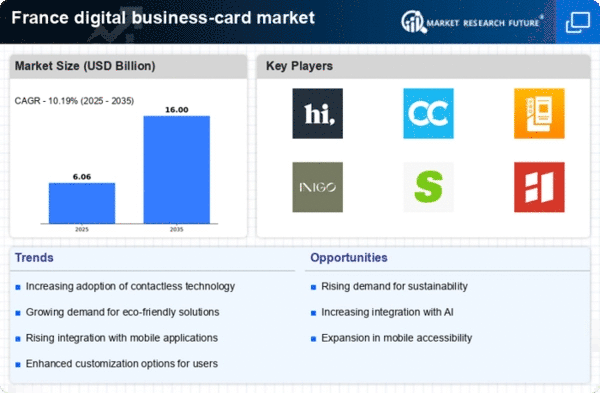
As per Market Research Future analysis, the France Digital Business Card Market size was estimated at 5.5 USD Billion in 2024. The Digital Business-card market is projected to grow from 6.06 USD Billion in 2025 to 16.0 USD Billion by 2035, exhibiting a compound annual growth rate (CAGR) of 10.1% during the forecast period 2025 - 2035

Key Market Trends & Highlights

The France digital business-card market is experiencing a transformative shift towards sustainability and technology integration.

  • The largest segment in the France digital business-card market is the corporate sector, while the fastest-growing segment is the freelance and gig economy.
  • A notable trend is the increasing emphasis on customization and personalization to enhance user experience and brand identity.
  • Sustainability is becoming a focal point, with businesses seeking eco-friendly digital solutions to reduce paper waste.
  • Key market drivers include the rising demand for contactless solutions and the growing emphasis on branding and professional image.

Market Size & Forecast

2024 Market Size 5.5 (USD Billion)
2035 Market Size 16.0 (USD Billion)
CAGR (2025 - 2035) 10.19%

Major Players

HiHello (US), CamCard (CN), L-Card (IN), Inigo (US), Switchit (US), Haystack (US), Blinq (US), CardMunch (US)

Our Impact
Enabled $4.3B Revenue Impact for Fortune 500 and Leading Multinationals
Partnering with 2000+ Global Organizations Each Year
30K+ Citations by Top-Tier Firms in the Industry

France Digital Business Card Market Trends

The France Digital Business Card Market is currently experiencing a notable transformation, driven by advancements in technology and changing consumer preferences. As individuals and businesses increasingly seek efficient and eco-friendly solutions, the demand for digital alternatives to traditional paper cards is on the rise. This shift is not merely a trend but appears to be a fundamental change in how professionals network and share contact information. The convenience of easily updating information and the ability to integrate multimedia elements into digital cards are compelling advantages that resonate with users. Furthermore, the growing emphasis on sustainability is likely to propel the adoption of digital formats, as they significantly reduce paper waste and environmental impact. In addition, the digital business-card market is witnessing a surge in innovative features that enhance user experience. Integration with social media platforms and customer relationship management (CRM) systems seems to be a key focus for developers. This integration allows users to streamline their networking efforts and maintain connections more effectively. As the market evolves, it is essential for stakeholders to remain attuned to these developments, as they may influence future strategies and offerings. Overall, the digital business-card market is poised for continued growth, driven by technological advancements and a shift towards more sustainable practices.

Sustainability Focus

The emphasis on eco-friendly solutions is becoming increasingly prominent within the digital business-card market. As environmental concerns rise, users are gravitating towards digital options that minimize paper waste. This trend reflects a broader societal shift towards sustainability, influencing consumer choices and business practices.

Integration with Technology

The integration of digital business cards with various technological platforms is gaining traction. Users are seeking seamless connections with social media and CRM systems, enhancing networking capabilities. This trend indicates a move towards more interactive and efficient ways of managing professional relationships.

Customization and Personalization

Customization options in the digital business-card market are expanding, allowing users to create unique and personalized cards. This trend caters to individual preferences and branding needs, enabling professionals to stand out in a competitive landscape. Enhanced design features and multimedia integration are likely to play a crucial role in this evolution.

France Digital Business Card Market Drivers

Shift Towards Remote Networking

The digital business-card market is witnessing a shift towards remote networking practices among professionals in France. As remote work becomes more prevalent, traditional networking events are being replaced by virtual meetings and online conferences. This transition necessitates the use of digital business cards, which can be easily shared via email or messaging platforms. The convenience of digital formats allows for quick exchanges of contact information, fostering connections in a virtual environment. Market analysis suggests that the demand for digital business cards could increase by 30% as remote networking continues to gain traction. This trend highlights the adaptability of the digital business-card market, as it aligns with the changing dynamics of professional interactions in a digital-first world.

Increased Mobile Device Penetration

The digital business-card market in France is significantly influenced by the increasing penetration of mobile devices. With over 80% of the population owning smartphones, the accessibility of digital business cards is at an all-time high. This trend suggests that professionals are more inclined to utilize digital formats, as they can easily store and share their cards through mobile applications. The convenience of having contact information readily available on personal devices enhances networking efficiency, making digital business cards a practical choice. Furthermore, the integration of mobile payment systems and digital wallets may further bolster the market, as users seek cohesive solutions for managing their professional interactions. This growing reliance on mobile technology indicates a promising future for the digital business-card market, as it adapts to the evolving landscape of communication.

Rising Demand for Contactless Solutions

The digital business-card market in France is experiencing a notable surge in demand for contactless solutions. As businesses and professionals seek to minimize physical interactions, the convenience of digital business cards becomes increasingly appealing. This shift is reflected in a growing number of users adopting digital formats, with estimates suggesting that the market could expand by approximately 25% annually. The ease of sharing contact information through smartphones and other devices enhances networking opportunities, making digital business cards a preferred choice. Furthermore, the integration of QR codes and NFC technology facilitates seamless exchanges, aligning with the evolving preferences of tech-savvy consumers. This trend indicates a significant transformation in how professionals connect, positioning the digital business-card market as a vital component of modern networking strategies.

Cost Efficiency and Resource Optimization

In the context of the digital business-card market, cost efficiency emerges as a critical driver for adoption among businesses in France. Traditional printing methods incur substantial costs, including design, printing, and distribution expenses. In contrast, digital business cards offer a more economical alternative, allowing users to create and share their cards at a fraction of the cost. Reports indicate that businesses can save up to 70% on networking expenses by transitioning to digital formats. This financial incentive is particularly appealing for startups and small enterprises, which often operate on tight budgets. Additionally, the reduction in paper waste aligns with broader sustainability goals, further enhancing the attractiveness of digital solutions. As companies increasingly prioritize resource optimization, the digital business-card market is likely to witness sustained growth.

Growing Emphasis on Branding and Professional Image

In the digital business-card market, there is a growing emphasis on branding and professional image among individuals and organizations in France. As competition intensifies across various sectors, professionals are increasingly recognizing the importance of a strong personal brand. Digital business cards offer customizable options that allow users to showcase their unique identity and values effectively. This trend is particularly relevant for freelancers and entrepreneurs who rely on networking to establish their presence. Research indicates that 65% of professionals believe that a well-designed digital business card enhances their credibility. Consequently, the digital business-card market is likely to thrive as users seek innovative ways to differentiate themselves and make lasting impressions in their professional endeavors.


Market Segment Insights

By Type: Individual User (Largest) vs. Business User (Fastest-Growing)

In the France digital business-card market, the distribution among the segments reveals that Individual Users hold the largest market share, primarily driven by the increasing demand for personalized networking solutions among freelancers and solo entrepreneurs. This segment's significant adoption rates reflect the desire for easy and accessible digital solutions to replace traditional paper cards. Conversely, the Business User segment is emerging as the fastest-growing category, propelled by the ongoing digital transformation in organizations. Companies are increasingly adopting digital business cards to enhance their branding and improve networking efficiency. This trend highlights the necessity for businesses to stay competitive by utilizing technology that facilitates seamless interactions and improves sustainability efforts.

Individual User (Dominant) vs. Business User (Emerging)

The Individual User segment is characterized by a diverse range of users, including freelancers, consultants, and students, who prioritize customization and ease of use in their digital business cards. This segment's demand is driven by the need for unique, visually appealing options that reflect personal branding. In contrast, the Business User segment, which includes small to medium enterprises, is rapidly evolving as it embraces digital solutions that streamline networking processes. Enterprises are investing in comprehensive digital business card systems that offer analytics and integration with other digital tools, highlighting an emerging trend of efficiency and technological adoption within professional environments.

By Platform: iOS (Largest) vs. Android (Fastest-Growing)

The market share distribution in the segment reveals that iOS holds a significant portion of the France digital business-card market, reflecting its strong presence and user preference. Android, while currently trailing behind, is showing substantial upward movement, indicating a shift in consumer trends and adoption rates among users. Growth trends highlight that Android is rapidly gaining traction due to its increasing accessibility and the expanding base of devices. Meanwhile, iOS continues to thrive owing to its loyal customer base and premium offerings. The competitive landscape is driven by advancements in mobile technology and user-friendly features, appealing to both individual professionals and businesses seeking efficient digital solutions.

iOS (Dominant) vs. Android (Emerging)

iOS stands as the dominant force in the France digital business-card market, characterized by its seamless user experience, robust security features, and integration with other Apple services. This segment caters primarily to professionals seeking reliability and high-quality design. On the other hand, Android is emerging as a key player in the market, offering a diverse range of options at varying price points that attract a broader audience. This versatility and affordability are significant advantages as they tap into various customer segments. Both platforms are essential, yet their strategies differ, with iOS focusing on premium experiences and Android striving for mass-market appeal.

By Pricing: Monthly (Largest) vs. Yearly (Fastest-Growing)

In the France digital business-card market, the pricing segment is distinctly divided among Monthly, Yearly, and One Time options. Monthly subscriptions hold the largest market share due to their flexibility and affordability, appealing to a broader audience. Meanwhile, Yearly subscriptions are rapidly gaining traction, showcasing substantial growth as businesses seek cost-effective solutions for long-term engagement with digital business cards. The One Time option serves a niche market but remains less favored in comparison. Driven by an increasing reliance on digital interactions, the preferences within the pricing segment are shifting. The Monthly model thrives on its convenience and lower upfront costs, attracting freelancers and small businesses. Conversely, the Yearly model is on the rise, appealing to enterprises that prefer long-term investments and enhanced functionality. This dynamic indicates a trend towards sustained usage and comprehensive service offerings in the market.

Monthly (Dominant) vs. Yearly (Emerging)

Monthly pricing models are dominant in the France digital business-card market, characterized by their affordability and adaptability for users. This structure allows customers to maintain flexibility, making it particularly appealing for startups and freelancers who may require scalability. On the other hand, Yearly pricing models represent an emerging trend, gaining popularity among businesses that desire long-term solutions with more extensive features and ongoing support. This approach often includes benefits like enhanced customization options, making it attractive to larger organizations. Despite Monthly subscriptions leading in market share, the shift towards Yearly plans reflects changing consumer preferences towards stability and commitment in digital business-carding.

By Application: Business Owners (Largest) vs. Sales Entrepreneurs (Fastest-Growing)

The market share distribution among the various application segments shows that Business Owners hold a significant portion of the France digital business-card market, reflecting their need for effective networking tools. Sales Entrepreneurs also capture a noteworthy segment, driven by their focus on direct engagement and lead generation. Other segments such as Marketing Agencies and Education and Training are also prominent, contributing to the diverse application landscape. Growth trends indicate that the demand for digital business cards is escalating, particularly among Sales Entrepreneurs, who are recognized as the fastest-growing segment in the market. This growth is propelled by the increasing emphasis on digital transformations across industries. Business Owners continue to prioritize sophisticated networking solutions, while Marketing Agencies leverage digital business cards to enhance brand visibility and connectivity, leading to an overall boost in the market.

Business Owners (Dominant) vs. Sales Entrepreneurs (Emerging)

The Business Owners segment is characterized by a strong reliance on digital tools for networking and promoting business services. Their engagement in the France digital business-card market reflects a strategic approach to enhance business visibility and connectivity. Meanwhile, Sales Entrepreneurs are emerging as a dynamic segment, showing rapid growth due to their agile strategies focused on lead generation and personal branding. As these entrepreneurs adapt to the evolving market, they leverage innovative digital business cards to establish credibility and foster client relationships. The balance between these dominant and emerging segments showcases the diverse needs and strategies that drive the France digital business-card market.

Get more detailed insights about France Digital Business Card Market

Key Players and Competitive Insights

The digital business-card market in France is characterized by a dynamic competitive landscape, driven by technological advancements and evolving consumer preferences. Key players such as HiHello (US), CamCard (CN), and Inigo (US) are actively shaping the market through innovative solutions and strategic initiatives. HiHello (US) focuses on enhancing user experience by integrating advanced features such as QR code sharing and contact management, positioning itself as a leader in user-friendly digital solutions. Meanwhile, CamCard (CN) emphasizes its strong presence in the Asian market while expanding its footprint in Europe, leveraging partnerships to enhance its service offerings. Inigo (US) adopts a unique approach by targeting niche markets, particularly in the creative industries, which allows it to differentiate itself from competitors. Collectively, these strategies contribute to a competitive environment that is increasingly focused on innovation and user engagement.
The business tactics employed by these companies reflect a commitment to optimizing operations and enhancing customer satisfaction. The market structure appears moderately fragmented, with several players vying for market share. This fragmentation is indicative of a competitive environment where localized strategies and supply chain efficiencies are paramount. Companies are increasingly localizing their offerings to cater to regional preferences, which may enhance their market penetration and customer loyalty.
In October 2025, HiHello (US) announced a partnership with a leading CRM provider to integrate its digital business-card solutions into existing customer relationship management systems. This strategic move is likely to enhance user accessibility and streamline the process of managing contacts, thereby increasing HiHello's market appeal. The integration could potentially lead to a significant uptick in user adoption, as businesses seek more efficient ways to manage their networking efforts.
In September 2025, CamCard (CN) launched a new feature that allows users to create personalized digital business cards with augmented reality (AR) elements. This innovative approach not only enhances user engagement but also positions CamCard as a forward-thinking player in the market. The incorporation of AR technology may attract a younger demographic, thereby expanding its user base and reinforcing its competitive edge.
In November 2025, Inigo (US) unveiled a subscription model that offers premium features for businesses, including analytics on networking effectiveness. This strategic pivot towards a subscription-based revenue model indicates a shift in focus towards long-term customer relationships and value-added services. By providing insights into networking success, Inigo may enhance its value proposition and foster customer loyalty.
As of November 2025, the competitive trends in the digital business-card market are increasingly defined by digitalization, sustainability, and the integration of artificial intelligence (AI). Strategic alliances are becoming more prevalent, as companies recognize the importance of collaboration in enhancing their service offerings. The competitive landscape is likely to evolve, with a shift from price-based competition to a focus on innovation, technology, and supply chain reliability. Companies that prioritize these aspects may find themselves better positioned to thrive in an increasingly complex market.

Key Companies in the France Digital Business Card Market include

Industry Developments

In recent months, the France Digital Business Card Market has witnessed significant developments, particularly in the context of technological advancements and sustainability trends. Companies like Vistaprint and Moo have increasingly focused on enhancing their digital offerings to meet consumer demands for eco-friendly solutions. In July 2023, HiHello introduced new features for its digital business card platform, allowing users to integrate social media profiles seamlessly, reflecting the growing trend towards integrated networking solutions in France. 

Meanwhile, in August 2023, Qrlly announced a collaboration with local French startups to promote digital networking at trade shows, enhancing their visibility in the industry.The market has also experienced growth in valuation, with many firms, including Knowee and Blinq, expanding their user bases amid rising interest in contactless networking solutions, largely fueled by the pandemic's lingering effects on traditional business interactions. 

Notably, there have been no recent mergers or acquisitions involving key players like ScanBizCards or Cardly in this domain, indicating a competitive market contention. The overall momentum is driven by a collective push towards innovation and digital transformation, aiming to streamline business communications and reduce environmental impact while adapting to France's robust digital economy.


Future Outlook

France Digital Business Card Market Future Outlook

The digital business-card market in France is projected to grow at a 10.19% CAGR from 2025 to 2035, driven by technological advancements and increasing demand for eco-friendly solutions.

New opportunities lie in:

  • Integration of NFC technology for seamless sharing experiences.
  • Development of customizable templates for niche industries.
  • Partnerships with networking platforms to enhance user engagement.

By 2035, the market is expected to be robust, reflecting substantial growth and innovation.

Market Segmentation

France Digital Business Card Market Type Outlook

  • Individual User
  • Business User
  • Enterprise User

France Digital Business Card Market Pricing Outlook

  • Monthly
  • Yearly
  • One Time

France Digital Business Card Market Platform Outlook

  • iOS
  • Android
  • Web

France Digital Business Card Market Application Outlook

  • Business Owners
  • Sales Entrepreneurs
  • Marketing Agencies
  • Events and Travels
  • Software & IT
  • Education and Training
  • Finance & Realtors
  • Health & Beauty
  • Consultants
  • Others

Report Scope

MARKET SIZE 2024 5.5(USD Billion)
MARKET SIZE 2025 6.06(USD Billion)
MARKET SIZE 2035 16.0(USD Billion)
COMPOUND ANNUAL GROWTH RATE (CAGR) 10.19% (2025 - 2035)
REPORT COVERAGE Revenue Forecast, Competitive Landscape, Growth Factors, and Trends
BASE YEAR 2024
Market Forecast Period 2025 - 2035
Historical Data 2019 - 2024
Market Forecast Units USD Billion
Key Companies Profiled HiHello (US), CamCard (CN), L-Card (IN), Inigo (US), Switchit (US), Haystack (US), Blinq (US), CardMunch (US)
Segments Covered Type, Platform, Pricing, Application
Key Market Opportunities Integration of augmented reality features enhances user engagement in the digital business-card market.
Key Market Dynamics Rising demand for sustainable digital business cards drives innovation and competition among local providers in France.
Countries Covered France
Leave a Comment

FAQs

What is the expected market size of the France Digital Business Card Market in 2024?

The France Digital Business Card Market is expected to be valued at 6.8 billion USD in 2024.

What will the market size be in 2035?

In 2035, the overall market size is forecasted to reach 24.41 billion USD.

What is the expected compound annual growth rate (CAGR) for the market from 2025 to 2035?

The expected CAGR for the France Digital Business Card Market from 2025 to 2035 is 12.313 percent.

Which segment is projected to have the largest market share in 2024?

The Individual User segment is projected to have a significant share, valued at 2.5 billion USD in 2024.

What is the market size for Business Users in 2035?

The Business User segment is expected to reach a market size of 8.5 billion USD by 2035.

Who are the major players in the France Digital Business Card Market?

Key players include Vistaprint, ScanBizCards, Knowee, Haystack, Moo, and HiHello among others.

What is the anticipated market size for Enterprise Users in 2024?

The market size for Enterprise Users is expected to be valued at 1.9 billion USD in 2024.

What growth opportunities exist within the France Digital Business Card Market?

Emerging trends include increased digitalization and environmental awareness, leading to a growth in demand for digital business cards.

How does regionality impact the growth of the France Digital Business Card Market?

The market is expected to see growth primarily in urban areas as individual and business adoption increases.

What challenges might the France Digital Business Card Market face in the coming years?

Challenges include competition from traditional paper business cards and market saturation in mature sectors.

Download Free Sample

Kindly complete the form below to receive a free sample of this Report

Compare Licence

×
Features License Type
Single User Multiuser License Enterprise User
Price $4,950 $5,950 $7,250
Maximum User Access Limit 1 User Upto 10 Users Unrestricted Access Throughout the Organization
Free Customization
Direct Access to Analyst
Deliverable Format
Platform Access
Discount on Next Purchase 10% 15% 15%
Printable Versions