×
Request Free Sample ×

Kindly complete the form below to receive a free sample of this Report

* Please use a valid business email

Leading companies partner with us for data-driven Insights

clients tt-cursor
Hero Background

India Tree Nuts Market

ID: MRFR/FnB/46701-HCR
128 Pages
Snehal Singh
February 2026

India Tree Nuts Market Size, Share, Industry Trend & Analysis Research Report By Product Type (Cashew Nuts, Walnuts, Almonds, Pistachios, Hazelnuts, Chestnuts, Brazil Nuts, Macadamia Nuts, Others), By Form (Whole, Splits, Others), By Application (Direct Consumption/Culinary Purpose, Bakery & Confectionery, Breakfast Cereals, Snacks, Flavored Drinks, Butter & Spreads, Dairy Products, Others) andBy Distribution Channel (B2B, B2C)- Forecast to 2035.

Share:
Download PDF ×

We do not share your information with anyone. However, we may send you emails based on your report interest from time to time. You may contact us at any time to opt-out.

India Tree Nuts Market Infographic
Purchase Options

India Tree Nuts Market Summary

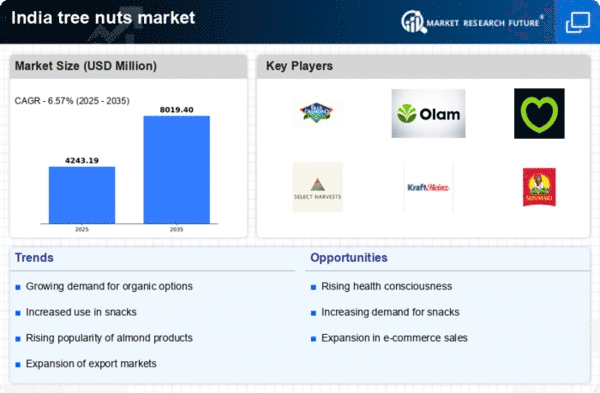
As per Market Research Future analysis, the Tree Nuts market size was estimated at 3981.6 USD Million in 2024. The tree nuts market is projected to grow from 4243.19 USD Million in 2025 to 8019.4 USD Million by 2035, exhibiting a compound annual growth rate (CAGR) of 6.5% during the forecast period 2025 - 2035

Key Market Trends & Highlights

The India tree nuts market is experiencing robust growth driven by health trends and premiumization.

  • Health consciousness is significantly driving demand for tree nuts as consumers increasingly seek nutritious snack options.
  • The premiumization trend is evident as consumers are willing to pay more for high-quality and organic tree nut products.
  • Culinary versatility of tree nuts is enhancing their popularity across various cuisines and food applications.
  • Rising health awareness and increased disposable income are major drivers propelling the growth of the tree nuts market.

Market Size & Forecast

2024 Market Size 3981.6 (USD Million)
2035 Market Size 8019.4 (USD Million)
CAGR (2025 - 2035) 6.57%

Major Players

Blue Diamond Growers (US), Olam International (SG), Wonderful Pistachios (US), Select Harvests (AU), Kraft Heinz (US), Sun-Maid Growers of California (US), Mariani Nut Company (US), Sunkist Growers (US)

Our Impact
Enabled $4.3B Revenue Impact for Fortune 500 and Leading Multinationals
Partnering with 2000+ Global Organizations Each Year
30K+ Citations by Top-Tier Firms in the Industry

India Tree Nuts Market Trends

The tree nuts market in India is experiencing notable growth, driven by increasing consumer awareness regarding health benefits associated with tree nuts. These products are recognized for their rich nutritional profile, including healthy fats, proteins, vitamins, and minerals. As a result, there is a rising demand for tree nuts among health-conscious consumers, particularly in urban areas. Additionally, the trend of incorporating tree nuts into various culinary applications, such as snacks, desserts, and health foods, is gaining traction. This diversification in usage is likely to further enhance market expansion. Moreover, the tree nuts market is witnessing a shift towards premiumization, with consumers showing a preference for high-quality, organic, and sustainably sourced products. This trend aligns with the growing emphasis on clean eating and environmental sustainability. Retailers are increasingly offering a variety of tree nuts, including almonds, cashews, and walnuts, in convenient packaging to cater to the evolving preferences of consumers. The combination of health benefits, culinary versatility, and premium offerings positions the tree nuts market for continued growth in the coming years.

Health Consciousness Driving Demand

The rising awareness of health benefits associated with tree nuts is significantly influencing consumer choices. As individuals seek nutritious snacks, tree nuts are increasingly favored for their rich content of healthy fats, proteins, and essential nutrients.

Premiumization Trend

Consumers are gravitating towards high-quality and organic tree nuts, reflecting a broader trend of premiumization in the food sector. This shift indicates a willingness to invest in superior products that align with health and sustainability values.

Culinary Versatility

Tree nuts are being incorporated into a variety of culinary applications, from snacks to gourmet dishes. This versatility enhances their appeal, making them a staple in both traditional and modern cuisines.

India Tree Nuts Market Drivers

Culinary Innovation

The trend of culinary innovation in India is playing a crucial role in the growth of the tree nuts market. Chefs and home cooks alike are increasingly incorporating tree nuts into a variety of dishes, from traditional Indian sweets to modern fusion cuisine. This creative use of tree nuts is expanding their appeal beyond mere snacks, positioning them as versatile ingredients in cooking. The tree nuts market is benefiting from this trend, as it encourages consumers to experiment with different flavors and textures. As culinary creativity continues to flourish, the demand for tree nuts is expected to rise, further solidifying their place in the Indian food landscape.

E-commerce Expansion

The rapid expansion of e-commerce platforms in India is transforming the way consumers purchase tree nuts. With the convenience of online shopping, consumers can easily access a variety of tree nuts from different regions. This shift is reflected in the market, where online sales of tree nuts have increased by approximately 20% over the past year. The tree nuts market is adapting to this change by enhancing online visibility and offering competitive pricing. As more consumers turn to digital platforms for their grocery needs, the tree nuts market is likely to see sustained growth, driven by the ease of access and the variety of options available.

Rising Health Awareness

The increasing awareness of health and wellness among consumers in India appears to be a primary driver for the tree nuts market. As individuals become more conscious of their dietary choices, the demand for nutritious snacks, such as almonds, walnuts, and cashews, is likely to rise. Reports indicate that the consumption of tree nuts has surged by approximately 15% in recent years, reflecting a shift towards healthier eating habits. This trend is further supported by the growing popularity of plant-based diets, which often incorporate tree nuts as a source of protein and healthy fats. Consequently, the tree nuts market is experiencing a notable expansion, as consumers seek products that align with their health goals.

Increased Disposable Income

The rise in disposable income among the Indian middle class is contributing significantly to the growth of the tree nuts market. As consumers have more financial resources, they are inclined to spend on premium food products, including tree nuts. The market has seen a growth rate of around 10% annually, driven by this demographic shift. Tree nuts, often perceived as luxury items, are becoming more accessible to a broader audience. This trend indicates that the tree nuts market is likely to benefit from the increasing purchasing power of consumers, who are willing to invest in high-quality, nutritious snacks.

Sustainable Sourcing Practices

The growing emphasis on sustainability and ethical sourcing is influencing consumer preferences in the tree nuts market. Indian consumers are becoming more discerning about the origins of their food, favoring products that are sourced responsibly. This trend is prompting companies within the tree nuts market to adopt sustainable practices, such as fair trade and organic certifications. As a result, the market is likely to see an increase in demand for sustainably sourced tree nuts, as consumers align their purchasing decisions with their values. This shift not only supports environmental initiatives but also enhances brand loyalty among consumers who prioritize sustainability.


Market Segment Insights

By Type: Almonds (Largest) vs. Cashew Nuts (Fastest-Growing)

Among various types in the India tree nuts market, almonds hold the largest market share, establishing themselves as the preferred nut due to their health benefits, versatility in culinary applications, and increasing consumer demand. Cashew nuts, while smaller in market share, are noted for their rapid growth, driven by rising awareness of their nutritional value and expanding use in snacks and confectionaries. This distribution is indicative of shifting consumer preferences towards healthier snack options. The growth trends in this segment showcase a heightened interest in both almonds and cashew nuts, with almonds benefiting from their established market presence and consumer loyalty. Cashew nuts are witnessing the fastest expansion as they secure a broader foothold within snack products and health-focused recipes. Factors such as increased health consciousness and innovative marketing approaches play a crucial role in propelling these segments forward in the competitive landscape.

Almonds (Dominant) vs. Cashew Nuts (Emerging)

Almonds remain the dominant force within the India tree nuts market, celebrated for their rich nutrient profile and versatility across various cuisines. With a strong foothold in both the retail and food service sectors, they are widely favored by health-conscious consumers, affirming their market stability. Cashew nuts, on the other hand, are recognized as an emerging player, experiencing rapid growth as they capture the interest of the snack food industry. Their unique flavor, ease of incorporation into recipes, and functional benefits, such as enhancing the nutritional quality of foods, contribute to their rising popularity. The contrast between these two segments exemplifies the evolving consumer aspirations towards healthier eating habits, driving each type's market demand.

By Form: Whole (Largest) vs. Splits (Fastest-Growing)

In the India tree nuts market, the segment distribution by form reveals that Whole nuts account for the largest market share due to their preference among consumers for traditional uses, including snacking and cooking. Splits, while representing a smaller portion of the market, are gaining traction as they cater to health-conscious consumers seeking convenient and ready-to-use options. Others, which include various processed forms, remain niche yet significant in specific applications. The growth trends within the form segment indicate a rising demand for Splits, fueled by an increasing focus on health and wellness. Consumers are leaning towards convenient forms of nuts that require minimal preparation, driving innovation in processing techniques. Whole nuts continue to thrive thanks to their versatility and cultural significance in India, maintaining a stable demand even as Splits emerge as the preferred choice for health-oriented consumers.

Whole (Dominant) vs. Splits (Emerging)

Whole nuts occupy a dominant position in the India tree nuts market, often regarded for their wholesomeness and traditional appeal. They are commonly used for gifting and festive occasions, reinforcing their status as a staple in Indian households. On the other hand, Splits are an emerging segment, driven by modern snack trends and increased health awareness. This form is favored for its convenience, as consumers seek quick and easy snack options that do not compromise on nutritional value. The split nuts are typically included in a variety of dishes, catering to a growing market segment that values both health and convenience.

By Application: Direct Consumption (Largest) vs. Snacks (Fastest-Growing)

In the India tree nuts market, the application segment is quite diverse, with various categories capturing different market shares. Direct consumption holds the largest segment share owing to the increasing consumer preference for healthy snacking and culinary usage. This segment caters to health-conscious consumers seeking natural sources of nutrition. Other categories like bakery and confectionery, breakfast cereals, and flavored drinks also contribute significantly, but none match the dominance of direct consumption. As consumer habits evolve, the snacks segment is emerging as the fastest-growing category. With urbanization and lifestyle changes, there has been a notable demand for convenient snacking options that incorporate tree nuts. Drivers such as increasing health awareness, availability of diverse flavors, and innovative marketing strategies are pushing this segment's growth. The rise of on-the-go snacks provides ample opportunity for tree nut incorporation.

Direct Consumption (Dominant) vs. Snacks (Emerging)

Direct consumption remains the dominant application within the India tree nuts market, anchoring itself in the culinary habits of consumers who favor natural and healthy ingredients. This segment not only includes raw nuts but also processed forms widely used in traditional cooking, enhancing flavor and nutritional value. In contrast, the snacks segment is rapidly emerging, appealing to the young, health-conscious demographic. Snacks made from tree nuts offer a blend of taste, convenience, and health benefits, fitting well into modern lifestyles. Brands are innovating with new flavors and formats to cater to this growing demand, positioning tree nuts as an essential ingredient in the health-focused snack market.

By Distribution Channel: B2B (Largest) vs. B2C (Fastest-Growing)

In the India tree nuts market, the B2B distribution channel holds the largest share, significantly contributing to market revenues. This channel caters primarily to wholesale buyers, retailers, and food service companies, which rely on bulk purchases to meet demand. Conversely, the B2C segment, while smaller, is experiencing rapid growth as consumer preferences shift towards online shopping and direct purchasing from brands. This trend reflects changing lifestyles and increased accessibility to various tree nut products. Growth in the B2C channel is being driven by rising health awareness among consumers, leading to increased consumption of tree nuts as part of healthy diets. As e-commerce continues to expand, more customers are becoming aware of the diverse range of tree nut products available, facilitating faster growth in this segment. Furthermore, marketing strategies focusing on the nutritional benefits and versatility of tree nuts are enhancing their popularity among individual consumers.

B2B (Dominant) vs. B2C (Emerging)

The B2B segment dominates the distribution landscape of the India tree nuts market, primarily serving a wide array of industries from food processing to hospitality, where bulk quantities are essential for operations. Businesses in this segment benefit from established relationships with suppliers and consistent demand from multiple channels. Meanwhile, B2C is emerging as a vital segment, catering directly to consumers who are increasingly turning to online platforms for their tree nut purchases. This channel allows for personalized marketing and offers the convenience of doorstep delivery, which appeals to health-conscious consumers. As e-commerce flourishes, B2C is likely to grow further, targeting younger demographics who prioritize convenience and wellness.

Get more detailed insights about India Tree Nuts Market

Key Players and Competitive Insights

The tree nuts market in India is characterized by a dynamic competitive landscape, driven by increasing consumer demand for healthy snacks and the growing popularity of tree nuts as a source of nutrition. Key players such as Blue Diamond Growers (US), Olam International (SG), and Wonderful Pistachios (US) are strategically positioned to capitalize on these trends. Blue Diamond Growers (US) focuses on innovation in product offerings, particularly in the almond segment, while Olam International (SG) emphasizes sustainable sourcing and supply chain optimization. Wonderful Pistachios (US) leverages its strong brand presence and marketing strategies to enhance consumer engagement. Collectively, these strategies contribute to a competitive environment that is increasingly focused on quality, sustainability, and consumer preferences.In terms of business tactics, companies are localizing manufacturing to reduce costs and improve supply chain efficiency. The market structure appears moderately fragmented, with several players vying for market share. However, the influence of key players is significant, as they set trends in product development and marketing strategies. This competitive structure allows for a diverse range of products, catering to various consumer segments, while also fostering innovation and collaboration among companies.
In October Olam International (SG) announced a partnership with local farmers in India to enhance almond production through sustainable agricultural practices. This initiative not only aims to increase the supply of high-quality almonds but also supports local economies and promotes environmentally friendly farming methods. The strategic importance of this move lies in Olam's commitment to sustainability, which resonates with the growing consumer preference for ethically sourced products.
In September Wonderful Pistachios (US) launched a new marketing campaign targeting health-conscious consumers in India, highlighting the nutritional benefits of pistachios. This campaign is designed to strengthen brand loyalty and expand market reach, particularly among younger demographics. The strategic significance of this initiative is evident in its potential to drive sales growth and enhance brand visibility in a competitive market.
In August Blue Diamond Growers (US) introduced a new line of flavored almond snacks tailored to Indian tastes, aiming to capture a larger share of the snack food segment. This product innovation reflects the company's strategy to diversify its offerings and cater to local preferences, which is crucial in a market where consumer tastes are rapidly evolving. The introduction of these products is likely to bolster Blue Diamond's competitive position and attract new customers.
As of November current trends in the tree nuts market indicate a strong emphasis on digitalization, sustainability, and the integration of AI technologies in supply chain management. Strategic alliances among companies are increasingly shaping the competitive landscape, fostering innovation and collaboration. The shift from price-based competition to a focus on innovation, technology, and supply chain reliability is becoming more pronounced. Companies that can effectively differentiate themselves through unique product offerings and sustainable practices are likely to thrive in this evolving market.

Key Companies in the India Tree Nuts Market include

Industry Developments

The India Tree Nuts Market has witnessed significant developments recently, particularly with major players focusing on growth and innovation. Olam International continues to expand its operations in India with investments aimed at enhancing supply chain efficiency. In September 2023, PepsiCo launched a nut-based product line aimed at tapping into the growing consumer preference for healthy snacks. The market has also seen increasing competition, with companies such as Haldiram Snacks and Dabur India investing in new product formulations that cater to health-conscious consumers. Sambavanam Agro Products has reported growth in demand for organic tree nuts, reflecting a shift towards sustainability.

In terms of mergers and acquisitions, Bunge India announced plans to acquire a local nut processing unit in November 2023, aiming to strengthen its position in the market. Current affairs highlight rising almond and cashew imports owing to increasing consumer demand, while domestic production struggles to keep pace. The tree nuts market in India has reportedly grown at a compound annual growth rate of 9%, driven by the health food trend, with expectations of further enhancement following the government's initiatives to boost agricultural exports.

Future Outlook

India Tree Nuts Market Future Outlook

The Tree Nuts Market in India is projected to grow at a 6.57% CAGR from 2025 to 2035, driven by rising health awareness, increasing demand for snacks, and expanding export opportunities.

New opportunities lie in:

  • Development of premium organic tree nut products for health-conscious consumers. Investment in automated processing facilities to enhance efficiency and reduce costs. Expansion of e-commerce platforms for direct-to-consumer sales of tree nuts.

By 2035, the tree nuts market is expected to achieve substantial growth, driven by innovation and consumer demand.

Market Segmentation

India Tree Nuts Market Form Outlook

  • Whole
  • Splits
  • Others

India Tree Nuts Market Type Outlook

  • Cashew Nuts
  • Walnuts
  • Almonds
  • Pistachios
  • Hazelnuts
  • Chestnuts
  • Brazil Nuts
  • Macadamia Nuts
  • Others

India Tree Nuts Market Application Outlook

  • Direct Consumption/Culinary Purpose
  • Bakery & Confectionery
  • Breakfast Cereals
  • Snacks
  • Flavored Drinks
  • Butter & Spreads
  • Dairy Products
  • Others

India Tree Nuts Market Distribution Channel Outlook

  • B2B
  • B2C

Report Scope

MARKET SIZE 2024 3981.6(USD Million)
MARKET SIZE 2025 4243.19(USD Million)
MARKET SIZE 2035 8019.4(USD Million)
COMPOUND ANNUAL GROWTH RATE (CAGR) 6.57% (2025 - 2035)
REPORT COVERAGE Revenue Forecast, Competitive Landscape, Growth Factors, and Trends
BASE YEAR 2024
Market Forecast Period 2025 - 2035
Historical Data 2019 - 2024
Market Forecast Units USD Million
Key Companies Profiled Blue Diamond Growers (US), Olam International (SG), Wonderful Pistachios (US), Select Harvests (AU), Kraft Heinz (US), Sun-Maid Growers of California (US), Mariani Nut Company (US), Sunkist Growers (US)
Segments Covered Type, Form, Application, Distribution Channel
Key Market Opportunities Growing demand for healthy snacks drives innovation in the tree nuts market.
Key Market Dynamics Rising consumer demand for healthy snacks drives innovation and competition in the tree nuts market.
Countries Covered India
Leave a Comment

FAQs

What is the expected market size of the India Tree Nuts Market in 2024?

The India Tree Nuts Market is anticipated to be valued at 4.5 billion USD in 2024.

What is the projected market size of the India Tree Nuts Market by 2035?

By 2035, the India Tree Nuts Market is expected to reach a valuation of 9.0 billion USD.

What is the expected CAGR for the India Tree Nuts Market from 2025 to 2035?

The expected compound annual growth rate for the India Tree Nuts Market from 2025 to 2035 is approximately 6.504 percent.

Which product segment holds the largest share in the India Tree Nuts Market?

The Cashew Nuts segment is expected to have the largest share in the market, projected to be valued at 1.0 billion USD in 2024.

What is the value of the Almonds segment in the India Tree Nuts Market for 2024?

The Almonds segment is valued at approximately 1.5 billion USD in 2024.

Who are the key players in the India Tree Nuts Market?

Major players in the India Tree Nuts Market include Olam International, PepsiCo, Dabur India, and Haldiram Snacks, among others.

How much is the Walnuts segment expected to grow by 2035?

The Walnuts segment is projected to grow to 1.6 billion USD by 2035, doubling from 0.8 billion USD in 2024.

What is the current outlook for the Pistachios segment in 2024?

The Pistachios segment is estimated to be valued at 0.7 billion USD in 2024.

How does the Hazelnuts segment compare in size from 2024 to 2035?

The Hazelnuts segment is expected to grow from 0.5 billion USD in 2024 to 1.0 billion USD by 2035.

What are the growth drivers for the India Tree Nuts Market?

Key growth drivers for the India Tree Nuts Market include increasing health awareness and demand for healthy snacks.

Download Free Sample

Kindly complete the form below to receive a free sample of this Report

Compare Licence

×
Features License Type
Single User Multiuser License Enterprise User
Price $4,950 $5,950 $7,250
Maximum User Access Limit 1 User Upto 10 Users Unrestricted Access Throughout the Organization
Free Customization
Direct Access to Analyst
Deliverable Format
Platform Access
Discount on Next Purchase 10% 15% 15%
Printable Versions