×
Request Free Sample ×

Kindly complete the form below to receive a free sample of this Report

* Please use a valid business email

Leading companies partner with us for data-driven Insights

clients tt-cursor
Hero Background

Brazil Tree Nuts Market

ID: MRFR/FnB/46707-HCR
128 Pages
Snehal Singh
February 2026

Brazil Tree Nuts Market Size, Share, Industry Trend & Analysis Research Report By Product Type (Cashew Nuts, Walnuts, Almonds, Pistachios, Hazelnuts, Chestnuts, Brazil Nuts, Macadamia Nuts, Others), By Form (Whole, Splits, Others), By Application (Direct Consumption/Culinary Purpose, Bakery & Confectionery, Breakfast Cereals, Snacks, Flavored Drinks, Butter & Spreads, Dairy Products, Others) and By Distribution Channel (B2B, B2C) - Forecast to 2035

Share:
Download PDF ×

We do not share your information with anyone. However, we may send you emails based on your report interest from time to time. You may contact us at any time to opt-out.

Brazil Tree Nuts Market Infographic
Purchase Options

Brazil Tree Nuts Market Summary

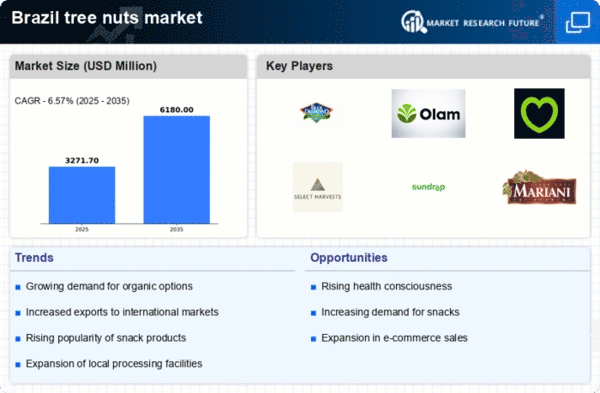
As per Market Research Future analysis, the Tree Nuts market size was estimated at 3070.0 USD Million in 2024. The tree nuts market is projected to grow from 3271.7 USD Million in 2025 to 6180.0 USD Million by 2035, exhibiting a compound annual growth rate (CAGR) of 6.5% during the forecast period 2025 - 2035

Key Market Trends & Highlights

The Brazil tree nuts market is experiencing robust growth driven by health trends and e-commerce.

  • The market is witnessing a strong focus on health and wellness, influencing consumer preferences towards tree nuts.
  • E-commerce is expanding rapidly, providing consumers with greater access to a variety of tree nut products.
  • Sustainability and organic offerings are becoming increasingly popular, reflecting a shift in consumer values.
  • Rising health consciousness and growing vegan diets are key drivers propelling the market forward.

Market Size & Forecast

2024 Market Size 3070.0 (USD Million)
2035 Market Size 6180.0 (USD Million)
CAGR (2025 - 2035) 6.57%

Major Players

Blue Diamond Growers (US), Olam International (SG), Wonderful Pistachios (US), Select Harvests (AU), Sundrop Farms (AU), Mariani Nut Company (US), Diamond Foods (US), Kraft Heinz (US)

Our Impact
Enabled $4.3B Revenue Impact for Fortune 500 and Leading Multinationals
Partnering with 2000+ Global Organizations Each Year
30K+ Citations by Top-Tier Firms in the Industry

Brazil Tree Nuts Market Trends

The tree nuts market is currently experiencing a dynamic phase characterized by evolving consumer preferences and increasing health consciousness. As individuals become more aware of the nutritional benefits associated with tree nuts, demand appears to be on the rise. This trend is likely driven by the growing inclination towards plant-based diets and the recognition of tree nuts as a source of healthy fats, proteins, and essential vitamins. Furthermore, the market seems to be influenced by the expansion of e-commerce platforms, which facilitate easier access to a variety of tree nuts, thereby broadening consumer reach and enhancing market growth. In addition, the tree nuts market is witnessing a shift towards sustainable and organic products. Consumers are increasingly seeking products that align with their values, particularly regarding environmental impact and health. This inclination towards sustainability may lead to a greater emphasis on organic certifications and eco-friendly packaging. As a result, producers are likely to adapt their practices to meet these demands, potentially reshaping the landscape of the market in the coming years. Overall, the tree nuts market appears poised for continued growth, driven by health trends and a commitment to sustainability.

Health and Wellness Focus

The tree nuts market is increasingly influenced by a growing focus on health and wellness. Consumers are becoming more aware of the nutritional advantages of tree nuts, which are rich in healthy fats, proteins, and vitamins. This trend suggests that individuals are incorporating tree nuts into their diets as a means to enhance overall health, potentially leading to increased consumption.

E-commerce Expansion

The rise of e-commerce platforms is transforming the tree nuts market by providing consumers with greater access to a diverse range of products. Online shopping facilitates convenience and allows for the exploration of various brands and types of tree nuts. This trend indicates a shift in purchasing behavior, as more consumers opt for online channels to acquire their preferred products.

Sustainability and Organic Products

There is a noticeable trend towards sustainability within the tree nuts market, with consumers increasingly favoring organic and environmentally friendly options. This shift suggests that producers may need to adapt their practices to meet the demand for sustainable products, potentially leading to changes in sourcing, production, and packaging methods.

Brazil Tree Nuts Market Drivers

Rising Disposable Income

The rise in disposable income among Brazilian consumers is contributing to the expansion of the tree nuts market. As purchasing power increases, consumers are more willing to invest in premium and health-oriented food products, including tree nuts. This trend is particularly evident in urban areas, where the demand for high-quality snacks is growing. In 2025, it is estimated that the premium segment of the tree nuts market will account for nearly 40% of total sales, indicating a shift towards higher-value products. This increase in disposable income is likely to sustain the growth trajectory of the tree nuts market.

Rising Health Consciousness

The increasing awareness of health benefits associated with tree nuts is driving growth in the tree nuts market. Consumers in Brazil are increasingly seeking nutritious snacks, leading to a surge in demand for almonds, walnuts, and cashews. Research indicates that tree nuts are rich in healthy fats, proteins, and essential vitamins, which aligns with the growing trend of health-conscious eating. In 2025, the market for tree nuts in Brazil is projected to reach approximately $1.5 billion, reflecting a compound annual growth rate (CAGR) of around 8%. This rising health consciousness is likely to continue influencing consumer preferences, thereby expanding the tree nuts market significantly.

Increased Export Opportunities

Brazil's strategic position as a leading producer of tree nuts, particularly cashews and Brazil nuts, presents substantial export opportunities. The tree nuts market benefits from favorable trade agreements and growing international demand, particularly in North America and Europe. In 2025, Brazil's exports of tree nuts are expected to exceed $500 million, driven by the increasing popularity of these products in health-focused markets. The potential for growth in export markets encourages local producers to enhance their production capabilities and quality standards, thereby positively impacting the overall tree nuts market.

Innovative Product Development

The tree nuts market in Brazil is witnessing a wave of innovative product development, catering to diverse consumer preferences. Manufacturers are introducing flavored and value-added products, such as nut butters, snacks, and mixes, which appeal to a broader audience. This trend is supported by market data indicating that the demand for convenient and healthy snack options is on the rise. In 2025, the segment of value-added tree nut products is anticipated to account for over 30% of the total market share, reflecting a shift in consumer behavior towards more versatile and convenient food options.

Growing Vegan and Plant-Based Diets

The increasing adoption of vegan and plant-based diets in Brazil is significantly impacting the tree nuts market. As consumers seek alternative protein sources, tree nuts are becoming a staple in many households. The nutritional profile of tree nuts, which includes high protein and healthy fats, aligns well with the dietary preferences of this demographic. Market analysis suggests that the demand for tree nuts as a protein source could lead to a growth rate of approximately 10% in this segment by 2025. This trend not only supports the tree nuts market but also encourages sustainable agricultural practices.


Market Segment Insights

By Type: Cashew Nuts (Largest) vs. Almonds (Fastest-Growing)

In the Brazil tree nuts market, Cashew Nuts dominate the segment, accounting for a significant portion of the total market share. Almonds follow, showcasing a robust consumer preference that places it as one of the substantial contributors to the market dynamics. Each type carries its unique consumer base, significantly influencing market trends and availability. As the demand for health-oriented snacks proliferates, these tree nuts have solidified their place in both retail and bulk sales channels. Growth trends indicate a shift towards healthier snacking options, with Almonds emerging as the fastest-growing segment due to their perceived health benefits and versatility in culinary applications. The increased focus on plant-based diets and natural snacks boosts not only Almonds but also influences other segments like Walnuts and Pistachios, which are gaining popularity for similar reasons. The consumer shift towards organic and sustainably sourced products is further driving this growth, setting the stage for increased competition and innovation among these nut varieties.

Cashew Nuts (Dominant) vs. Almonds (Emerging)

Cashew Nuts are recognized as the dominant player in the Brazil tree nuts market, appealing to a broad audience thanks to their unique taste and culinary versatility. Their rich flavor profile makes them a favorite in snacks, desserts, and various cuisines, establishing a solid market foundation. In contrast, Almonds are emerging rapidly, fueled by a rising health consciousness among consumers. Their benefits, including high nutritional value and adaptability in various dietary preferences, are central to their market appeal. As more consumers seek out nuts for their snacking habits, both these segments reflect vibrant characteristics, with Cashews highlighting tradition and flavor, while Almonds encapsulate modern health trends.

By Form: Whole (Largest) vs. Splits (Fastest-Growing)

In the Brazil tree nuts market, the 'Whole' segment commands a significant share due to its popularity among consumers seeking premium quality. This segment is preferred for its versatility in both direct consumption and culinary applications, making it a dominant player in the overall market landscape. Meanwhile, the 'Splits' category is witnessing rapid growth, appealing to health-conscious consumers looking for convenient snack options that offer ease of use. Its share is gradually increasing as it meets specific consumer preferences for packaged snacks. The growth trends in the Brazil tree nuts market are driven by changing dietary preferences and rising awareness regarding the health benefits of tree nuts. The inclination towards plant-based diets has further fueled the demand for both 'Whole' and 'Splits' segments. Additionally, the increase in disposable incomes enables consumers to opt for higher quality, nutritious snacks, thereby propelling both segments' performance in the market. Consumer education on nutritional benefits, coupled with innovative packaging solutions, enhances their appeal and captures new market opportunities.

Whole (Dominant) vs. Splits (Emerging)

The 'Whole' segment stands out as a dominant force, characterized by its premium quality and appeal to a wide range of consumers, from health enthusiasts to gourmet cooks. Whole tree nuts are often perceived as the epitome of quality, driving their demand in various culinary applications. On the other hand, the 'Splits' segment emerges as a significant player, catering to the fast-paced modern lifestyle, offering convenience and portability. These products are gaining traction among younger demographics who prefer quick and healthy snacks. The versatility of both 'Whole' and 'Splits' formats supports their positions in the market, with 'Whole' being seen as the superior choice for quality and 'Splits' addressing the growing demand for accessible, nutritious options.

By Application: Direct Consumption/Culinary Purpose (Largest) vs. Snacks (Fastest-Growing)

In the Brazil tree nuts market, the application segment displays a diverse distribution among various uses. Direct Consumption/Culinary Purpose represents the largest share, as consumers increasingly opt for healthy snacking and culinary uses. Other applications like Bakery & Confectionery, Breakfast Cereals, and Dairy Products also have significant shares, yet they lag behind the leading segment. As health trends drive consumer choices, the direct consumption segment continues to see an upward trajectory. Growth trends indicate a robust increase in the Snacks segment, which is becoming the fastest-growing application for tree nuts. This growth is fueled by the rising trend of healthy snacking, with consumers seeking nutritious and convenient options. Flavored Drinks and Butter & Spreads are also expanding as consumers experiment with culinary practices, driving demand for innovative products in the segment.

Direct Consumption/Culinary Purpose (Dominant) vs. Snacks (Emerging)

The Direct Consumption/Culinary Purpose segment stands as the dominant application in the Brazil tree nuts market, characterized by its established consumer base and extensive usage in various culinary applications. This segment appeals to health-conscious consumers increasingly aware of nutrition, integrating tree nuts into their diets. Conversely, the Snacks segment is viewed as emerging, showcasing potential for rapid growth due to changing consumer preferences towards healthier snack options. While established brands dominate the Direct Consumption market, innovative startups are vying to capture the attention of health-focused snackers, leading to diversification in product offerings and flavors that could shape the future landscape of tree nut applications.

By Distribution Channel: B2B (Largest) vs. B2C (Fastest-Growing)

In the Brazil tree nuts market, B2B distribution channels dominate, accounting for a substantial share of transactions due to bulk purchasing by businesses such as restaurants, snack manufacturers, and specialty food retailers. This established channel benefits from long-term contracts and strong relationships between suppliers and businesses, reinforcing its market position and stability. Conversely, the B2C segment is the fastest-growing, driven by an increasing trend of health-conscious consumers opting for snack alternatives like tree nuts. Online retailing has further catalyzed this segment's growth, as it offers convenience and a wider variety of product choices reaching a broader audience, particularly among younger demographics. This shift indicates evolving consumer preferences toward direct purchasing options.

B2B (Dominant) vs. B2C (Emerging)

The B2B segment is characterized by large-scale transactions and established customer bases, allowing for significant volume sales. This segment is crucial for supplying businesses that rely on tree nuts as ingredients or snacks. In contrast, the B2C segment is emerging rapidly, driven by direct consumer engagement and the growing popularity of health-centric products. This segment focuses on branding and consumer loyalty, leveraging e-commerce platforms and social media to connect with a broader audience. While B2B remains dominant, B2C's growth potential highlights a shift in market dynamics, emphasizing personalized marketing and unique product offerings.

Get more detailed insights about Brazil Tree Nuts Market

Key Players and Competitive Insights

The tree nuts market in Brazil exhibits a dynamic competitive landscape characterized by a blend of established players and emerging entrants. Key growth drivers include increasing health consciousness among consumers, rising demand for plant-based snacks, and the expanding use of tree nuts in various food applications. Major companies such as Blue Diamond Growers (US), Olam International (SG), and Wonderful Pistachios (US) are strategically positioned to leverage these trends. Blue Diamond Growers (US) focuses on innovation in product development, particularly in creating value-added almond products, while Olam International (SG) emphasizes sustainability and supply chain optimization to enhance its market presence. Wonderful Pistachios (US) continues to invest in marketing campaigns that promote the health benefits of pistachios, thereby shaping the competitive environment through consumer engagement and brand loyalty.The business tactics employed by these companies reflect a concerted effort to localize manufacturing and optimize supply chains. The market structure appears moderately fragmented, with a mix of large multinational corporations and smaller regional players. This fragmentation allows for diverse product offerings and competitive pricing strategies, although the influence of key players remains substantial in shaping market trends and consumer preferences.
In October Olam International (SG) announced a partnership with local Brazilian farmers to enhance sustainable almond production. This initiative not only aims to improve the quality of almonds sourced but also supports local economies, thereby reinforcing Olam's commitment to sustainability. Such strategic moves are likely to bolster Olam's reputation and market share in Brazil, aligning with the growing consumer demand for ethically sourced products.
In September Blue Diamond Growers (US) launched a new line of organic almond snacks tailored for the Brazilian market. This product introduction is significant as it caters to the increasing consumer preference for organic and health-oriented snacks, potentially positioning Blue Diamond as a leader in this niche segment. The focus on organic offerings may also enhance brand loyalty among health-conscious consumers.
In November Wonderful Pistachios (US) expanded its distribution network in Brazil by partnering with major retail chains. This strategic expansion is crucial as it increases product accessibility and visibility, likely driving sales growth. The partnership reflects Wonderful's commitment to capturing a larger market share in the region, particularly among health-conscious consumers seeking convenient snack options.
As of November current competitive trends in the tree nuts market are increasingly defined by digitalization, sustainability, and the integration of artificial intelligence in supply chain management. Strategic alliances among key players are shaping the landscape, fostering innovation and enhancing operational efficiencies. The competitive differentiation is expected to evolve, shifting from traditional price-based competition to a focus on innovation, technology, and supply chain reliability. Companies that can effectively leverage these trends are likely to secure a competitive edge in the market.

Key Companies in the Brazil Tree Nuts Market include

Industry Developments

Recent developments in the Brazil Tree Nuts Market have revealed significant growth potential, particularly with companies such as Olam International and Cargill enhancing their presence. The market has been positively influenced by the increasing demand for health snacks, driving companies like Dandies and Hammond's Candies to innovate their product lines. In April 2023, the merger between Golden Farms and Royal Nut Company marked a notable consolidation in the market, positioning the new entity to leverage combined supply chains for increased efficiency.

These companies are investing in sustainable farming practices that drive Brazil's export competitiveness, especially in a global setting where awareness of health and sustainability is rising. Additionally, Whole Foods Market has seen a rise in demand for organic tree nuts, reflecting consumer preferences shifting toward healthier options. Overall, the valuation of companies in this market continues to rise, impacted by the evolving consumer landscape and the integration of technology into agricultural practices.

In the past two to three years, Mariani Nut Company also expanded its operations in Brazil, aligning with the growing trend of sustainable nut production that resonates well with eco-conscious consumers.

Future Outlook

Brazil Tree Nuts Market Future Outlook

The Tree Nuts Market in Brazil is projected to grow at a 6.57% CAGR from 2025 to 2035, driven by rising health awareness and demand for plant-based snacks.

New opportunities lie in:

  • Expansion of organic tree nut product lines Development of e-commerce platforms for direct sales Investment in sustainable farming practices to enhance yield

By 2035, the tree nuts market is expected to achieve robust growth and increased market share.

Market Segmentation

Brazil Tree Nuts Market Form Outlook

  • Whole
  • Splits
  • Others

Brazil Tree Nuts Market Type Outlook

  • Cashew Nuts
  • Walnuts
  • Almonds
  • Pistachios
  • Hazelnuts
  • Chestnuts
  • Brazil Nuts
  • Macadamia Nuts
  • Others

Brazil Tree Nuts Market Application Outlook

  • Direct Consumption/Culinary Purpose
  • Bakery & Confectionery
  • Breakfast Cereals
  • Snacks
  • Flavored Drinks
  • Butter & Spreads
  • Dairy Products
  • Others

Brazil Tree Nuts Market Distribution Channel Outlook

  • B2B
  • B2C

Report Scope

MARKET SIZE 2024 3070.0(USD Million)
MARKET SIZE 2025 3271.7(USD Million)
MARKET SIZE 2035 6180.0(USD Million)
COMPOUND ANNUAL GROWTH RATE (CAGR) 6.57% (2025 - 2035)
REPORT COVERAGE Revenue Forecast, Competitive Landscape, Growth Factors, and Trends
BASE YEAR 2024
Market Forecast Period 2025 - 2035
Historical Data 2019 - 2024
Market Forecast Units USD Million
Key Companies Profiled Blue Diamond Growers (US), Olam International (SG), Wonderful Pistachios (US), Select Harvests (AU), Sundrop Farms (AU), Mariani Nut Company (US), Diamond Foods (US), Kraft Heinz (US)
Segments Covered Type, Form, Application, Distribution Channel
Key Market Opportunities Growing demand for organic and sustainably sourced products in the tree nuts market presents significant opportunities.
Key Market Dynamics Rising consumer demand for healthy snacks drives innovation and competition in the tree nuts market.
Countries Covered Brazil
Leave a Comment

FAQs

What is the expected market size of the Brazil Tree Nuts Market in 2024?

The Brazil Tree Nuts Market is expected to be valued at 3.4 billion USD in 2024.

What is the projected market size of the Brazil Tree Nuts Market by 2035?

By 2035, the Brazil Tree Nuts Market is anticipated to reach 7.0 billion USD.

What is the expected CAGR for the Brazil Tree Nuts Market from 2025 to 2035?

The expected CAGR for the Brazil Tree Nuts Market from 2025 to 2035 is 6.785%.

Which product type is projected to have the highest market value in 2035?

Almonds are projected to have the highest market value, estimated at 2.1 billion USD in 2035.

What are the main competitors in the Brazil Tree Nuts Market?

Key players in the Brazil Tree Nuts Market include Olam International, JBS, and Dole Food Company.

How much is the market for Cashew Nuts expected to grow by 2035?

The market for Cashew Nuts is expected to grow from 0.85 billion USD in 2024 to 1.75 billion USD in 2035.

What is the forecasted market size for Walnuts in 2035?

The market size for Walnuts is projected to reach 1.5 billion USD by 2035.

Are there any emerging trends in the Brazil Tree Nuts Market?

Emerging trends include increased health consciousness, and driving demand for tree nuts as nutritious snacks.

What market dynamics could impact growth in the Brazil Tree Nuts Market?

Market dynamics, such as shifts in consumer preferences and agricultural challenges, may impact growth.

What is the projected market value for Hazelnuts by 2035?

The projected market value for Hazelnuts is expected to be 0.25 billion USD by 2035.

Download Free Sample

Kindly complete the form below to receive a free sample of this Report

Compare Licence

×
Features License Type
Single User Multiuser License Enterprise User
Price $4,950 $5,950 $7,250
Maximum User Access Limit 1 User Upto 10 Users Unrestricted Access Throughout the Organization
Free Customization
Direct Access to Analyst
Deliverable Format
Platform Access
Discount on Next Purchase 10% 15% 15%
Printable Versions