Corporate Engagement in Education
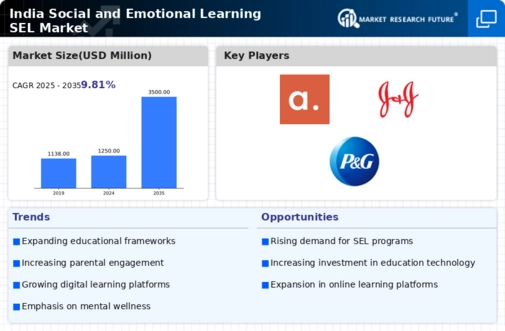
The involvement of corporate entities in the education sector is emerging as a significant driver for the India social emotional learning market. Many companies are recognizing the importance of social responsibility and are investing in educational initiatives that promote SEL. Collaborations between corporations and schools are becoming more common, with businesses providing funding, resources, and expertise to support SEL programs. This trend not only enhances the quality of SEL education but also prepares students for future workplace challenges by fostering essential skills such as teamwork, communication, and emotional intelligence. As corporate engagement continues to grow, it is likely to create a more robust ecosystem for SEL in Indian schools.
Growing Awareness of Mental Health
The increasing awareness of mental health issues among students and educators is a pivotal driver in the India social emotional learning market. As mental health becomes a focal point in educational discussions, schools are recognizing the necessity of integrating social emotional learning (SEL) into their curricula. Reports indicate that approximately 20% of Indian adolescents experience mental health challenges, which underscores the urgency for effective SEL programs. This awareness is prompting educational institutions to adopt SEL frameworks that promote emotional intelligence, resilience, and interpersonal skills. Consequently, the demand for SEL resources and training is likely to rise, fostering a more supportive learning environment that prioritizes mental well-being.
Rise of Digital Learning Platforms
The proliferation of digital learning platforms is reshaping the landscape of the India social emotional learning market. With the advent of technology, educational institutions are leveraging online resources to deliver SEL content effectively. Platforms offering interactive modules, webinars, and virtual workshops are gaining traction, making SEL more accessible to students and educators alike. Data suggests that the online education market in India is projected to reach USD 30 billion by 2025, indicating a robust growth trajectory. This digital shift allows for personalized learning experiences, catering to diverse student needs and promoting emotional well-being in a scalable manner. As a result, the integration of digital tools in SEL initiatives is likely to enhance engagement and effectiveness.
Increased Focus on Holistic Education
The shift towards holistic education is a crucial driver in the India social emotional learning market. Educators and parents are increasingly recognizing that academic success alone does not equate to overall student well-being. This realization is fostering a demand for SEL programs that address emotional, social, and ethical dimensions of learning. Schools are now prioritizing the development of soft skills, empathy, and emotional regulation alongside traditional academic subjects. Research indicates that students who participate in SEL programs demonstrate improved academic performance and better social interactions. Consequently, educational institutions are investing in SEL training for teachers and incorporating SEL practices into their daily routines, thereby enhancing the overall educational experience.
Policy Support and Educational Reforms
The Indian government's commitment to enhancing education quality through policy support is a significant driver for the India social emotional learning market. Initiatives such as the National Education Policy (NEP) 2020 emphasize holistic development, including emotional and social competencies. The NEP advocates for the incorporation of SEL into school curricula, which is expected to transform educational practices across the country. Furthermore, state governments are increasingly aligning their educational policies with these national directives, thereby creating a conducive environment for SEL implementation. This policy backing not only encourages schools to adopt SEL programs but also attracts investments in training educators and developing SEL resources.