Sustainable Building Practices
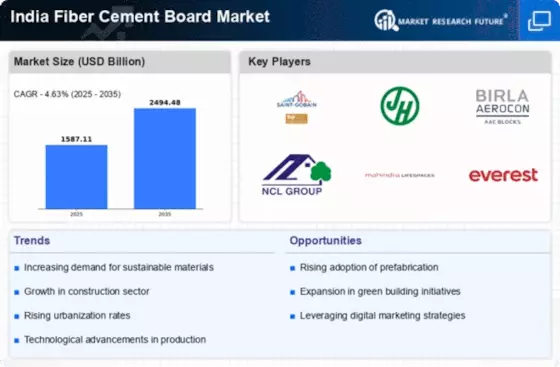
The growing emphasis on sustainable building practices is a pivotal driver for the India Fiber Cement Board Market. As environmental concerns escalate, builders and architects are increasingly opting for eco-friendly materials. Fiber cement boards, known for their durability and low environmental impact, align with these sustainable practices. The Indian government has also introduced various initiatives to promote green building certifications, which further encourages the use of fiber cement boards. According to recent data, the market for sustainable building materials in India is projected to grow at a CAGR of 12% over the next five years. This trend indicates a robust demand for fiber cement boards, as they contribute to energy efficiency and reduced carbon footprints in construction projects.
Government Policies and Regulations
Government policies and regulations play a crucial role in shaping the India Fiber Cement Board Market. The Indian government has implemented various policies aimed at promoting the use of sustainable building materials, including fiber cement boards. Initiatives such as the National Building Code of India encourage the adoption of materials that meet specific environmental and safety standards. Additionally, financial incentives for green building projects have been introduced, which further stimulate the demand for fiber cement boards. As a result, manufacturers are increasingly focusing on compliance with these regulations, leading to enhanced product offerings in the market. The regulatory framework is expected to continue evolving, potentially increasing the market size for fiber cement boards in the coming years.
Technological Advancements in Production
Technological advancements in the production of fiber cement boards are significantly influencing the India Fiber Cement Board Market. Innovations in manufacturing processes, such as the introduction of automated machinery and improved raw material formulations, have enhanced the quality and efficiency of fiber cement boards. These advancements not only reduce production costs but also improve product performance, making fiber cement boards more appealing to builders and contractors. For instance, the adoption of advanced curing techniques has resulted in boards with superior strength and moisture resistance. As a result, the market is witnessing an increase in the adoption of fiber cement boards in both residential and commercial construction, with a projected market growth rate of 10% annually.
Urbanization and Infrastructure Development
Urbanization and infrastructure development are critical drivers of the India Fiber Cement Board Market. With rapid urban growth, there is an escalating demand for housing and commercial spaces, leading to increased construction activities. The Indian government has launched several initiatives, such as the Smart Cities Mission, aimed at enhancing urban infrastructure. This initiative is expected to boost the demand for durable and cost-effective building materials, including fiber cement boards. Recent statistics indicate that urban areas in India are expected to house over 600 million people by 2031, creating a substantial market opportunity for fiber cement boards. The need for sustainable and resilient construction materials in urban settings further propels the growth of this market.
Rising Demand for Aesthetic Building Solutions
The rising demand for aesthetic building solutions is a notable driver for the India Fiber Cement Board Market. As consumers become more discerning about the appearance of their homes and commercial spaces, the demand for visually appealing materials has surged. Fiber cement boards offer a versatile range of designs, textures, and colors, making them an attractive choice for architects and builders. This trend is particularly evident in urban areas, where modern architectural styles are gaining popularity. Market analysis suggests that the aesthetic appeal of fiber cement boards could lead to a market growth rate of approximately 8% over the next few years. This demand for aesthetic solutions is likely to encourage manufacturers to innovate and expand their product lines, further enhancing the market landscape.