×
Request Free Sample ×

Kindly complete the form below to receive a free sample of this Report

* Please use a valid business email

Leading companies partner with us for data-driven Insights

clients tt-cursor
Hero Background

Germany Home Security Camera Market

ID: MRFR/ICT/60138-HCR
200 Pages
Aarti Dhapte
February 2026

Germany Home Security Camera Market Size, Share and Trends Analysis Report By Product (Dome Security Camera, Bullet Security Camera, IP Security Camera), By Type (Indoor Security Camera, Outdoor Security Camera), By Resolution (Non-HD, HD) and By Services (Professional, Managed)- Forecast to 2035

Share:
Download PDF ×

We do not share your information with anyone. However, we may send you emails based on your report interest from time to time. You may contact us at any time to opt-out.

Germany Home Security Camera Market Infographic
Purchase Options

Germany Home Security Camera Market Summary

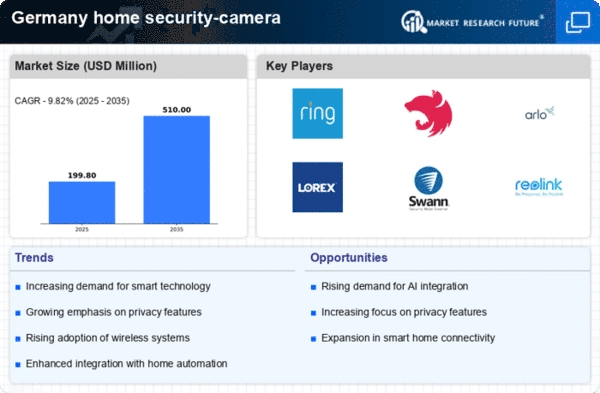
As per Market Research Future analysis, the Germany home security-camera market Size was estimated at 181.93 USD Million in 2024. The Germany home security-camera market is projected to grow from 199.8 USD Million in 2025 to 510.0 USD Million by 2035, exhibiting a compound annual growth rate (CAGR) of 9.8% during the forecast period 2025 - 2035

Key Market Trends & Highlights

The Germany home security-camera market is experiencing robust growth driven by technological advancements and increasing consumer awareness.

  • The market is witnessing a notable integration with smart home systems, enhancing user convenience and functionality.
  • There is a growing emphasis on data privacy, as consumers become more concerned about the security of their personal information.
  • Demand for wireless solutions is on the rise, reflecting a shift towards more flexible and easy-to-install security options.
  • Key market drivers include rising crime rates and increased awareness of home security, which are propelling consumer investment in security technologies.

Market Size & Forecast

2024 Market Size 181.93 (USD Million)
2035 Market Size 510.0 (USD Million)
CAGR (2025 - 2035) 9.82%

Major Players

Ring (US), Nest (US), Arlo (US), Lorex (CA), Swann (AU), Reolink (CN), TP-Link (CN), Eufy (CN)

Our Impact
Enabled $4.3B Revenue Impact for Fortune 500 and Leading Multinationals
Partnering with 2000+ Global Organizations Each Year
30K+ Citations by Top-Tier Firms in the Industry

Germany Home Security Camera Market Trends

The home security-camera market in Germany is currently experiencing a notable transformation, driven by advancements in technology and increasing consumer awareness regarding safety. The proliferation of smart home devices has led to a surge in demand for integrated security solutions. Consumers are increasingly seeking systems that not only provide surveillance but also offer features such as remote access, motion detection, and cloud storage. This shift towards smart technology appears to be reshaping consumer preferences, as individuals prioritize convenience and enhanced security measures in their homes. Moreover, the regulatory landscape in Germany is evolving, with stricter guidelines surrounding data protection and privacy. This has prompted manufacturers to innovate and ensure compliance while maintaining user-friendly interfaces. The emphasis on privacy and data security is likely to influence purchasing decisions, as consumers become more discerning about the products they choose. As a result, the home security-camera market is poised for growth, with a focus on developing solutions that align with both technological advancements and regulatory requirements.

Integration with Smart Home Systems

The trend towards integrating home security cameras with smart home systems is gaining traction. Consumers are increasingly looking for devices that can seamlessly connect with other smart appliances, allowing for centralized control and enhanced functionality. This integration not only improves user experience but also enhances overall security by enabling real-time monitoring and alerts.

Emphasis on Data Privacy

As concerns regarding data privacy continue to rise, manufacturers in the home security-camera market are prioritizing the implementation of robust security measures. This includes encryption technologies and transparent data handling practices. Consumers are becoming more aware of their rights and are likely to favor products that demonstrate a commitment to protecting their personal information.

Demand for Wireless Solutions

The demand for wireless home security cameras is on the rise, as consumers seek flexibility and ease of installation. Wireless systems eliminate the need for extensive wiring, making them more appealing for homeowners. This trend reflects a broader preference for convenience and adaptability in security solutions, aligning with modern lifestyles.

Germany Home Security Camera Market Drivers

Rising Crime Rates

The home security-camera market in Germany is experiencing growth due to rising crime rates in urban areas. According to recent statistics, property crimes have increased by approximately 10% over the past year, prompting homeowners to seek enhanced security measures. This trend indicates a growing awareness of the need for surveillance systems to deter criminal activity. As a result, the demand for home security cameras is likely to rise, with consumers prioritizing features such as high-definition video, night vision, and remote access. The home security-camera market is thus positioned to benefit from this heightened concern for safety, as individuals invest in technology that provides peace of mind and protection for their properties.

Rising Disposable Income

Rising disposable income among German households is contributing to the expansion of the home security-camera market. As economic conditions improve, consumers are more willing to invest in home security solutions. Reports indicate that household disposable income has increased by approximately 5% over the last year, allowing families to allocate funds towards enhancing their home security. This trend suggests a shift in consumer behavior, where security is viewed as a priority rather than an optional expense. The home security-camera market is likely to benefit from this increase in spending power, as more individuals seek to protect their homes with advanced security technologies.

Technological Advancements

Technological advancements play a crucial role in shaping the home security-camera market in Germany. Innovations such as artificial intelligence, motion detection, and cloud storage are becoming increasingly prevalent. These technologies enhance the functionality of security cameras, allowing for real-time alerts and improved image quality. The integration of smart features, such as facial recognition and two-way audio, is also gaining traction among consumers. As these technologies evolve, they are likely to attract more customers, leading to a projected market growth of around 15% annually. The home security-camera market is thus adapting to these advancements, ensuring that products meet the evolving demands of tech-savvy consumers.

Increased Awareness of Home Security

There is a growing awareness of home security among German homeowners, significantly impacting the home security-camera market. Educational campaigns and media coverage regarding burglary and theft have heightened public consciousness about the importance of surveillance systems. Surveys indicate that nearly 60% of homeowners now consider installing security cameras as a necessary precaution. This shift in perception is driving demand for various types of cameras, including indoor, outdoor, and doorbell cameras. The home security-camera market is responding to this trend by offering a diverse range of products that cater to different security needs, thereby expanding its customer base.

Government Initiatives and Regulations

Government initiatives and regulations aimed at enhancing public safety are influencing the home security-camera market in Germany. Local authorities are increasingly encouraging the installation of surveillance systems in residential areas to combat crime. Financial incentives, such as subsidies for security equipment, are being offered to homeowners, making it more affordable to invest in security solutions. Additionally, regulations regarding data protection and privacy are shaping the features and functionalities of security cameras. The home security-camera market must navigate these regulations while providing effective solutions that comply with legal standards, thus fostering consumer trust and encouraging market growth.


Market Segment Insights

By Product: Dome Security Camera (Largest) vs. Bullet Security Camera (Fastest-Growing)

In the Germany home security-camera market, the distribution of market share among product segments reveals that dome security cameras maintain a significant portion, representing the largest segment due to their versatile design and suitability for various residential applications. Following closely, bullet security cameras are emerging strong, appealing to consumers seeking robust outdoor solutions with a rising preference among security-conscious homeowners. Growth trends indicate a shift towards smarter and more integrated surveillance systems within the segment. The increasing demand for advanced features such as remote access, night vision, and motion detection is driving the adoption of bullet security cameras. Additionally, the growing awareness of home security needs and the impact of urbanization contribute to this segment's rapid expansion, with innovations consistently enhancing user experience and operational efficiency.

Dome Security Camera (Dominant) vs. Bullet Security Camera (Emerging)

Dome security cameras are known for their discreet design and 360-degree viewing capabilities, making them a dominant choice among consumers in the Germany home security-camera market. Their ability to blend into various environments and resist tampering adds to their appeal, ensuring they are a trusted option for comprehensive coverage. In contrast, bullet security cameras are gaining traction as an emerging solution, characterized by their elongated shape and robust build, designed primarily for outdoor use. This segment is recognized for its straightforward installation, high-definition video quality, and ability to capture details over extended distances, addressing specific user needs for security and surveillance.

By Type: Indoor Security Camera (Largest) vs. Outdoor Security Camera (Fastest-Growing)

In the Germany home security-camera market, indoor security cameras hold the largest market share, as they cater to consumers seeking enhanced protection within their homes. These cameras have become essential for monitoring daily activities, offering features like real-time alerts and two-way audio, making them highly sought after. On the other hand, outdoor security cameras are rapidly gaining popularity, capturing an increasing share of the market as homeowners prioritize external security. Growing concerns over crime rates and advancements in camera technology drive the demand for outdoor solutions. The growth trends for indoor security cameras remain strong, largely fueled by the rise of smart home integration and increased consumer awareness of home safety. The demand for outdoor security cameras is even more pronounced, as they address consumer concerns related to vandalism and property theft. Innovative features such as AI-driven motion detection and night vision capabilities bolster their appeal. As the technological landscape evolves, both segments showcase promising growth, but outdoor cameras are emerging as the quickest to adapt, catering to a more security-conscious demographic.

Indoor Security Camera (Dominant) vs. Outdoor Security Camera (Emerging)

Indoor security cameras are considered dominant in the Germany home security-camera market, as they blend practicality and advanced technology to meet home security needs. These cameras typically feature high-definition video, cloud storage options, and other smart functionalities that enhance user experience. Consumers appreciate their effectiveness in monitoring children, pets, and home intrusions. In contrast, outdoor security cameras are classified as emerging but gaining traction rapidly. These cameras are designed to withstand weather conditions while offering features such as wide-angle lenses and motion sensors. The growing emphasis on outdoor security has led to an increase in innovative offerings that emphasize ease of installation and user-friendly applications, catering to a diverse range of consumer needs.

By Resolution: HD (Largest) vs. Non-HD (Fastest-Growing)

In the Germany home security-camera market, the distribution of market share shows a pronounced dominance of HD cameras, which are preferred for their superior image quality and enhanced features. Non-HD cameras, while historically notable, are now being overshadowed by the technological advancements and price reductions associated with HD offerings. This shift indicates a clear consumer preference for high-definition technology, which plays a crucial role in overall surveillance effectiveness. As the market evolves, Non-HD cameras are emerging as the fastest-growing segment due to their affordability and appeal to budget-conscious consumers. The rapid adoption of Non-HD solutions can also be attributed to increased awareness of home security needs, particularly in urban areas. Market drivers for both segments include advancements in technology and the rising demand for comprehensive surveillance solutions among homeowners.

Resolution: HD (Dominant) vs. Non-HD (Emerging)

HD cameras are the dominant segment in the Germany home security-camera market, known for delivering high-resolution images that significantly enhance surveillance quality. Their popularity stems from technological advancements that provide features like night vision, motion detection, and remote access capabilities. In contrast, Non-HD cameras are positioned as an emerging market segment, appealing primarily to cost-sensitive consumers who seek basic security solutions without the premium price tag. While they lack the advanced features of HD systems, Non-HD cameras are gaining traction due to their lower cost and ease of installation, making them an attractive option for renters and first-time buyers.

By Service: Professional (Largest) vs. Managed (Fastest-Growing)

In the Germany home security-camera market, the service segment is primarily characterized by the strong presence of professional services, which hold the largest market share. These services are favored for their comprehensive solutions that include installation, maintenance, and support. Managed services are rapidly gaining traction, especially among consumers seeking convenience and lower upfront costs, contributing to a dynamic shift in market preferences. Growth trends indicate a rising demand for managed services among tech-savvy consumers who prioritize efficiency and remote management of security systems. The increasing awareness of home security risks and advancements in technology drive both segments, with managed services appealing to those looking for a hassle-free experience. Factors such as subscription models and service packages further support the growth of managed services, making them increasingly popular in the market.

Service: Professional (Dominant) vs. Managed (Emerging)

The dominant professional service segment in the market is well-established, providing extensive expertise and reliability, which many consumers value highly. This segment offers tailored solutions that meet specific security needs, often incorporating advanced technology and personalized support. In contrast, the emerging managed service segment caters to a new generation of users who favor flexibility and ease of use. Managed services typically involve ongoing subscription models that may include features like remote monitoring and cloud storage, appealing particularly to the younger demographic. As homeowners continue to embrace digital security solutions, the managed service sector is expected to grow swiftly, potentially reshaping the competitive landscape.

Get more detailed insights about Germany Home Security Camera Market

Key Players and Competitive Insights

The home security-camera market in Germany is characterized by a dynamic competitive landscape, driven by technological advancements and increasing consumer demand for enhanced security solutions. Key players such as Ring (US), Nest (US), and Arlo (US) are strategically positioned to leverage innovation and digital transformation. Ring (US) focuses on expanding its ecosystem of smart home devices, while Nest (US) emphasizes integration with Google’s AI capabilities to enhance user experience. Arlo (US) is concentrating on developing advanced AI-driven features, which collectively shape a competitive environment that prioritizes technological differentiation and user-centric solutions.In terms of business tactics, companies are increasingly localizing manufacturing and optimizing supply chains to enhance efficiency and reduce costs. The market appears moderately fragmented, with several players vying for market share. However, the collective influence of major companies like Reolink (CN) and Eufy (CN) is notable, as they introduce competitive pricing strategies and innovative features that challenge established brands. This competitive structure fosters an environment where agility and responsiveness to consumer needs are paramount.

In October Ring (US) announced the launch of its latest security camera model, which integrates advanced facial recognition technology. This strategic move is significant as it not only enhances the product's appeal but also positions Ring (US) as a leader in AI-driven security solutions. The introduction of such features is likely to attract tech-savvy consumers who prioritize cutting-edge technology in their security systems.

In September Arlo (US) unveiled a partnership with a leading cybersecurity firm to bolster the security of its devices against potential cyber threats. This collaboration underscores the growing importance of cybersecurity in the home security-camera market. By prioritizing data protection, Arlo (US) aims to build consumer trust and differentiate itself in a crowded marketplace, potentially leading to increased market share.

In August Eufy (CN) expanded its product line to include solar-powered security cameras, reflecting a growing trend towards sustainability in the industry. This strategic initiative not only caters to environmentally conscious consumers but also positions Eufy (CN) as a forward-thinking brand that embraces eco-friendly technology. Such innovations may resonate well with a demographic increasingly concerned about sustainability.

As of November current trends in the home security-camera market include a strong emphasis on digitalization, AI integration, and sustainability. Strategic alliances are becoming increasingly important, as companies seek to enhance their technological capabilities and market reach. The competitive differentiation is likely to evolve from traditional price-based competition to a focus on innovation, technology, and supply chain reliability. This shift suggests that companies that prioritize these aspects will be better positioned to thrive in an increasingly competitive landscape.

Key Companies in the Germany Home Security Camera Market include

Industry Developments

In recent developments, the Germany Home Security Camera Market has been experiencing notable growth, attributed to rising concerns about home safety and advancements in technology. Companies are leading with innovative solutions that integrate smart technology into their security systems. In July 2023, Bosch Security Systems announced an expansion of their smart camera range tailored for both residential and commercial needs, reinforcing their market presence in Germany. 

Additionally, Hikvision has reported an increase in demand for their high-resolution cameras, aligning with Germany's heightened focus on public safety. Moreover, market valuation has surged, with key players like Dahua Technology reporting significant revenue growth due to an increased shift toward smart home solutions. In the past years, there has been an increased emphasis on data privacy regulations, influencing product designs and consumer preferences in Germany security camera landscape, positively shaping the market dynamics.

Future Outlook

Germany Home Security Camera Market Future Outlook

The Home Security Camera Market in Germany is projected to grow at a 9.82% CAGR from 2025 to 2035, driven by technological advancements and increasing consumer awareness.

New opportunities lie in:

  • Integration of AI-driven analytics for enhanced security insights.
  • Development of subscription-based cloud storage solutions for video footage.
  • Expansion into smart home ecosystems with interoperable devices.

By 2035, the market is expected to achieve substantial growth and innovation.

Market Segmentation

Germany Home Security Camera Market Type Outlook

  • Indoor Security Camera
  • Outdoor Security Camera

Germany Home Security Camera Market Product Outlook

  • Dome Security Camera
  • Bullet Security Camera
  • IP Security Camera

Germany Home Security Camera Market Service Outlook

  • Professional
  • Managed

Germany Home Security Camera Market Resolution Outlook

  • Non-HD
  • HD

Report Scope

MARKET SIZE 2024 181.93(USD Million)
MARKET SIZE 2025 199.8(USD Million)
MARKET SIZE 2035 510.0(USD Million)
COMPOUND ANNUAL GROWTH RATE (CAGR) 9.82% (2025 - 2035)
REPORT COVERAGE Revenue Forecast, Competitive Landscape, Growth Factors, and Trends
BASE YEAR 2024
Market Forecast Period 2025 - 2035
Historical Data 2019 - 2024
Market Forecast Units USD Million
Key Companies Profiled Ring (US), Nest (US), Arlo (US), Lorex (CA), Swann (AU), Reolink (CN), TP-Link (CN), Eufy (CN)
Segments Covered Product, Type, Resolution, Service
Key Market Opportunities Integration of artificial intelligence and smart home compatibility enhances user experience in the home security-camera market.
Key Market Dynamics Rising consumer demand for smart home integration drives innovation in home security-camera technology and features.
Countries Covered Germany
Leave a Comment

FAQs

What is the expected market size of the Germany Home Security Camera Market in 2024?

The Germany Home Security Camera Market is expected to be valued at 196.0 million USD in 2024.

What is the projected market size for the Germany Home Security Camera Market by 2035?

By 2035, the Germany Home Security Camera Market is projected to reach a valuation of 551.0 million USD.

What is the expected compound annual growth rate (CAGR) for the Germany Home Security Camera Market from 2025 to 2035?

The expected CAGR for the Germany Home Security Camera Market from 2025 to 2035 is 9.852%.

Which product segment is the largest within the Germany Home Security Camera Market?

The Dome Security Camera segment is the largest, projected to grow from 70.0 million USD in 2024 to 190.0 million USD by 2035.

What is the expected market value for the Bullet Security Camera segment in 2024?

The Bullet Security Camera segment is expected to be valued at 60.0 million USD in 2024.

What are the key players in the Germany Home Security Camera Market?

Some key players include Nest Labs, Hikvision, Netatmo, Reolink, and Samsung.

What is the forecast market value for IP Security Cameras in 2035?

The IP Security Camera segment is projected to reach 196.0 million USD by 2035.

How is the market for Home Security Cameras expected to grow in Germany from 2025 to 2035?

The market is expected to experience significant growth, driven by increasing security concerns and advancements in technology.

What impact do emerging trends in technology have on the Germany Home Security Camera Market?

Emerging trends in technology are creating opportunities for innovation and enhancing consumer demand within the market.

What challenges does the Germany Home Security Camera Market face currently?

Challenges include competition among key players and the need for continual technological advancements to meet consumer expectations.

Download Free Sample

Kindly complete the form below to receive a free sample of this Report

Compare Licence

×
Features License Type
Single User Multiuser License Enterprise User
Price $4,950 $5,950 $7,250
Maximum User Access Limit 1 User Upto 10 Users Unrestricted Access Throughout the Organization
Free Customization
Direct Access to Analyst
Deliverable Format
Platform Access
Discount on Next Purchase 10% 15% 15%
Printable Versions