Growing Mobile Workforce
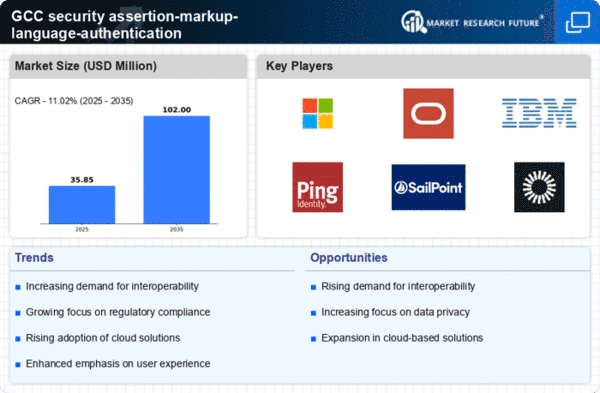
The expansion of the mobile workforce in the GCC is significantly influencing the security assertion-markup-language-authentication market. As more employees work remotely or on-the-go, the need for secure authentication methods that can accommodate various devices and locations has become paramount. Organizations are increasingly adopting mobile-friendly authentication solutions to ensure that employees can securely access corporate resources from anywhere. This shift is expected to drive the market growth by approximately 10% in the coming years, as businesses seek to balance flexibility with security. The ability to implement effective security assertion-markup-language-authentication solutions for mobile access is essential for maintaining productivity while safeguarding sensitive information.
Integration with Emerging Technologies
The integration of security assertion-markup-language-authentication with emerging technologies is transforming the market landscape. Technologies such as artificial intelligence (AI) and machine learning (ML) are being leveraged to enhance authentication processes, making them more efficient and secure. In the GCC, organizations are increasingly adopting these technologies to streamline user verification and reduce the risk of unauthorized access. The market is projected to witness a growth rate of around 12% as businesses recognize the potential of AI and ML in improving security measures. This integration not only enhances the user experience but also strengthens the overall security posture of organizations, making it a crucial driver in the security assertion-markup-language-authentication market.
Focus on User Experience and Convenience
User experience and convenience are becoming critical factors in the security assertion-markup-language-authentication market. Organizations in the GCC are recognizing that overly complex authentication processes can lead to user frustration and decreased productivity. As a result, there is a growing emphasis on developing solutions that provide seamless access while maintaining robust security. This trend is likely to drive innovation in the market, with companies investing in user-friendly authentication methods such as single sign-on (SSO) and biometric verification. The market is anticipated to grow by around 8% as businesses strive to enhance user satisfaction without compromising security. This focus on user experience is reshaping the landscape of the security assertion-markup-language-authentication market.
Increasing Demand for Secure Access Solutions
The rising demand for secure access solutions is a pivotal driver in the security assertion-markup-language-authentication market. Organizations across various sectors in the GCC are increasingly prioritizing the protection of sensitive data and user identities. This trend is largely fueled by the growing number of cyber threats and data breaches, which have prompted businesses to seek robust authentication mechanisms. In 2025, it is estimated that the market for secure access solutions will grow by approximately 15%, reflecting a heightened awareness of cybersecurity risks. As companies adopt cloud services and remote work policies, the need for effective security assertion-markup-language-authentication solutions becomes even more critical, ensuring that only authorized users can access sensitive information.
Regulatory Pressures and Compliance Requirements
Regulatory pressures and compliance requirements are significant drivers in the security assertion-markup-language-authentication market. In the GCC, organizations are increasingly subject to stringent data protection regulations that mandate the implementation of robust authentication measures. Compliance with these regulations is not only essential for avoiding penalties but also for building trust with customers. As businesses navigate the complexities of regulatory frameworks, the demand for effective security assertion-markup-language-authentication solutions is expected to rise. The market is projected to grow by approximately 9% as organizations prioritize compliance and invest in technologies that meet regulatory standards. This focus on regulatory adherence is shaping the strategic direction of the security assertion-markup-language-authentication market.