Advancements in AI Technologies
The Europe Artificial Intelligence Ai In Manufacturing Market is propelled by rapid advancements in AI technologies, which are transforming traditional manufacturing practices. Innovations in machine learning, computer vision, and natural language processing are enabling manufacturers to automate complex tasks and enhance decision-making processes. For example, AI-powered predictive maintenance solutions are helping companies reduce equipment failures and maintenance costs by up to 25%. These technological advancements not only improve operational efficiency but also facilitate the development of new business models within the manufacturing sector. As AI technologies continue to evolve, manufacturers in Europe are increasingly adopting these solutions to stay competitive and meet the growing demands of the market.
Government Initiatives and Funding
The Europe Artificial Intelligence Ai In Manufacturing Market is significantly influenced by various government initiatives and funding programs aimed at promoting AI adoption. European governments are recognizing the potential of AI to transform manufacturing processes and are investing heavily in research and development. For instance, the European Commission has allocated substantial funds to support AI projects that enhance manufacturing capabilities. This financial backing encourages companies to explore AI solutions, thereby accelerating the integration of advanced technologies in their operations. Furthermore, these initiatives often include training programs to upskill the workforce, ensuring that employees are equipped to work alongside AI systems. Consequently, government support plays a pivotal role in driving the growth of the AI in manufacturing sector across Europe.
Increased Focus on Supply Chain Resilience
The Europe Artificial Intelligence Ai In Manufacturing Market is witnessing an increased focus on supply chain resilience, particularly in light of recent disruptions. Manufacturers are leveraging AI technologies to enhance visibility and agility within their supply chains. By utilizing AI-driven analytics, companies can predict demand fluctuations, optimize inventory levels, and mitigate risks associated with supply chain disruptions. Data indicates that organizations implementing AI solutions in their supply chains have reported a 20% improvement in operational efficiency. This emphasis on resilience is not only crucial for maintaining competitiveness but also aligns with the European Union's objectives to create a more robust and sustainable manufacturing ecosystem. As a result, AI is becoming an indispensable tool for manufacturers aiming to navigate the complexities of modern supply chains.
Growing Emphasis on Data Security and Privacy
The Europe Artificial Intelligence Ai In Manufacturing Market is increasingly characterized by a growing emphasis on data security and privacy. As manufacturers adopt AI technologies, they are also becoming more aware of the potential risks associated with data breaches and cyber threats. The implementation of stringent data protection regulations, such as the General Data Protection Regulation (GDPR), has prompted companies to prioritize data security measures. This focus on safeguarding sensitive information not only protects businesses from potential legal repercussions but also builds trust with customers and partners. Consequently, manufacturers are investing in AI solutions that incorporate robust security features, ensuring compliance with regulatory standards while leveraging the benefits of AI technologies. This trend underscores the importance of data security in the ongoing evolution of the AI in manufacturing landscape in Europe.
Rising Demand for Smart Manufacturing Solutions
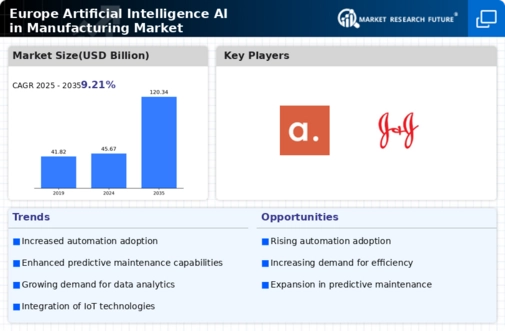
The Europe Artificial Intelligence Ai In Manufacturing Market is experiencing a notable surge in demand for smart manufacturing solutions. This trend is driven by the need for enhanced operational efficiency and productivity. According to recent data, the adoption of AI technologies in manufacturing processes is projected to increase by over 30% in the next five years. Companies are increasingly investing in AI-driven systems to optimize production lines, reduce downtime, and improve product quality. This shift towards smart manufacturing not only streamlines operations but also aligns with the broader European Union initiatives aimed at fostering innovation and competitiveness in the manufacturing sector. As a result, the integration of AI technologies is becoming a critical component for manufacturers seeking to maintain a competitive edge in the evolving market landscape.