E-commerce Expansion
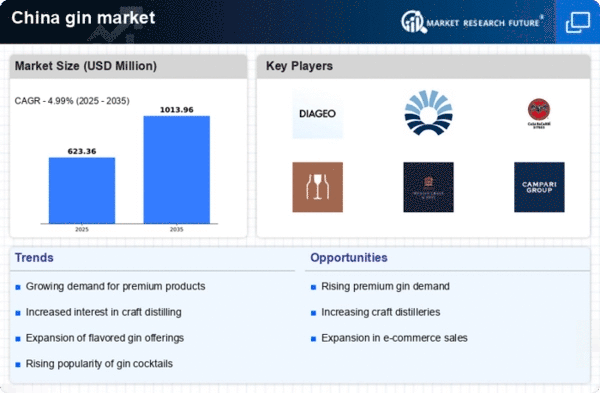
The expansion of e-commerce platforms in China is significantly impacting the gin market. With the increasing penetration of the internet and mobile technology, consumers are more inclined to purchase alcoholic beverages online. This trend is particularly pronounced among younger consumers who prefer the convenience of home delivery and the ability to explore a wider range of products. The gin market is capitalizing on this shift by enhancing online presence and offering exclusive products through e-commerce channels. In 2025, online sales of gin are expected to account for approximately 40% of total sales, indicating a substantial transformation in consumer purchasing behavior.
Growing Urbanization
The rapid urbanization in China is a pivotal driver for the gin market. As more individuals migrate to urban areas, there is an increasing demand for premium alcoholic beverages, including gin. Urban consumers tend to have higher disposable incomes and a growing interest in diverse drinking experiences. This trend is reflected in the rising number of bars and restaurants that offer a wide selection of gin brands and cocktails. In 2025, the urban population in China is projected to reach approximately 65%, further enhancing the market potential for gin. The gin market is likely to benefit from this demographic shift, as urban dwellers seek out unique and high-quality spirits to enjoy in social settings.
Health Consciousness
The rising health consciousness among Chinese consumers is emerging as a notable driver for the gin market. As individuals become more aware of the health implications of alcohol consumption, there is a growing preference for spirits perceived as lower in calories and sugar. Gin, often regarded as a lighter option compared to other spirits, aligns well with this trend. The gin market is adapting by promoting gin as a versatile and healthier alternative for cocktails. In 2025, it is projected that the demand for low-calorie and organic gins will increase by 25%, reflecting the shift towards healthier lifestyle choices among consumers.
Influence of Western Culture
The influence of Western culture in China plays a significant role in shaping consumer preferences within the gin market. As globalization continues to permeate various aspects of life, Chinese consumers are increasingly exposed to Western drinking habits and lifestyle choices. This cultural shift has led to a growing acceptance and appreciation for gin, particularly among younger demographics. The gin market is witnessing a surge in demand for imported and craft gins, as consumers seek authenticity and quality. In 2025, it is estimated that the consumption of gin in urban centers will increase by approximately 30%, driven by this cultural integration and the desire for premium drinking experiences.
Innovative Marketing Strategies
Innovative marketing strategies are becoming a crucial driver for the gin market in China. Brands are increasingly leveraging social media and influencer partnerships to engage with consumers and create brand awareness. This approach resonates particularly well with younger audiences who are more likely to discover new products through digital platforms. The gin market is witnessing a rise in experiential marketing campaigns, such as gin tasting events and cocktail-making workshops, which enhance consumer interaction and brand loyalty. In 2025, it is anticipated that marketing expenditures in the gin sector will increase by 20%, reflecting the industry's commitment to capturing the attention of a dynamic consumer base.