×
Request Free Sample ×

Kindly complete the form below to receive a free sample of this Report

* Please use a valid business email

Leading companies partner with us for data-driven Insights

clients tt-cursor
Hero Background

Japan Gin Market

ID: MRFR/FnB/42822-HCR
128 Pages
Garvit Vyas
February 2026

Japan Gin Market Size, Share, Industry Trend & Analysis Research Report: By Gin Type Outlook (London Dry, Plymouth, Old Tom, Others) andBy Gin Distribution Channel Outlook (Supermarkets and Hypermarkets, Specialty Stores, Others)- Forecast to 2035

Share:
Download PDF ×

We do not share your information with anyone. However, we may send you emails based on your report interest from time to time. You may contact us at any time to opt-out.

Japan Gin Market Infographic
Purchase Options

Japan Gin Market Summary

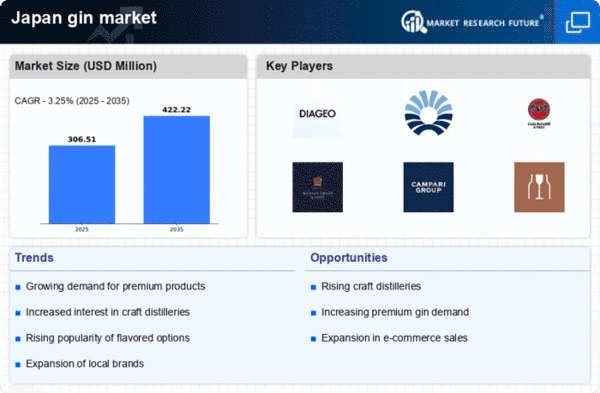
As per Market Research Future analysis, the Japan gin market Size was estimated at 296.87 USD Million in 2024. The Gin market is projected to grow from 306.51 USD Million in 2025 to 422.22 USD Million by 2035, exhibiting a compound annual growth rate (CAGR) of 3.2% during the forecast period 2025 - 2035

Key Market Trends & Highlights

The Japan gin market is experiencing a dynamic shift towards premiumization and craft offerings.

  • The craft gin movement is gaining momentum, appealing to consumers seeking unique flavors and local production.
  • Premiumization is a notable trend, with consumers increasingly willing to pay more for high-quality gin products.
  • The cocktail culture is expanding, driving demand for gin-based cocktails in bars and restaurants across the country.
  • Key market drivers include the emergence of local distilleries and a cultural shift towards premium spirits.

Market Size & Forecast

2024 Market Size 296.87 (USD Million)
2035 Market Size 422.22 (USD Million)
CAGR (2025 - 2035) 3.25%

Major Players

Diageo (GB), Pernod Ricard (FR), Bacardi (BM), William Grant & Sons (GB), Campari Group (IT), Brown-Forman (US), Suntory Holdings (JP), Gordon's (GB)

Our Impact
Enabled $4.3B Revenue Impact for Fortune 500 and Leading Multinationals
Partnering with 2000+ Global Organizations Each Year
30K+ Citations by Top-Tier Firms in the Industry

Japan Gin Market Trends

The gin market in Japan is currently experiencing a notable transformation, driven by evolving consumer preferences and a growing appreciation for craft spirits. The rise of artisanal distilleries has led to an increase in the variety of gins available, with many brands emphasizing local botanicals and traditional production methods. This trend appears to resonate particularly well with younger consumers, who are increasingly seeking unique and authentic drinking experiences. Furthermore, the influence of social media and lifestyle branding has contributed to the popularity of gin-based cocktails, further enhancing the market's appeal. In addition, the gin market is witnessing a shift towards premiumization, as consumers are willing to invest in higher-quality products. This trend suggests a growing awareness of the craftsmanship involved in gin production, as well as a desire for distinctive flavors. The expansion of gin bars and specialty retailers has also facilitated access to a wider range of products, allowing consumers to explore different styles and brands. Overall, the gin market in Japan is poised for continued growth, driven by innovation and a focus on quality.

Craft Gin Movement

The craft gin movement is gaining momentum, with numerous small distilleries emerging across Japan. These producers often highlight local ingredients, creating unique flavor profiles that appeal to discerning consumers. This trend not only fosters regional identity but also encourages experimentation in the gin market.

Premiumization Trend

There is a noticeable shift towards premium products within the gin market. Consumers are increasingly inclined to choose high-quality gins, often characterized by artisanal production methods and distinctive botanicals. This trend indicates a growing appreciation for craftsmanship and flavor complexity.

Cocktail Culture Expansion

The cocktail culture in Japan is expanding, with gin playing a central role in this evolution. Innovative cocktail recipes and the rise of gin-focused bars are enhancing the drink's popularity. This trend suggests that consumers are seeking more sophisticated and diverse drinking experiences.

Japan Gin Market Drivers

Emergence of Local Distilleries

The rise of local distilleries in Japan is reshaping the gin market. These small-scale producers emphasize artisanal methods and unique botanicals, appealing to consumers seeking authenticity. In 2025, local distilleries account for approximately 30% of the market share, reflecting a growing preference for locally sourced products. This trend not only fosters regional identity but also encourages innovation in flavor profiles, as distillers experiment with indigenous ingredients. The gin market in Japan is thus characterized by a diverse range of offerings, from traditional recipes to contemporary interpretations. As consumers become more adventurous, the demand for locally crafted gins is likely to continue its upward trajectory, further enriching the market landscape.

Expansion of Gin-Based Cocktails

The expansion of gin-based cocktails is a notable driver in the gin market, reflecting a broader trend in the beverage industry. As cocktail culture continues to flourish, gin is increasingly featured in innovative and classic recipes alike. In 2025, it is estimated that gin-based cocktails account for approximately 35% of all cocktail sales in Japan. This growth is attributed to the versatility of gin, which pairs well with a variety of mixers and garnishes. Bars and restaurants are capitalizing on this trend by offering diverse cocktail menus that highlight gin's unique characteristics. Consequently, the gin market is likely to benefit from the ongoing popularity of cocktails, as consumers seek new and exciting drinking experiences.

Influence of Social Media Marketing

Social media platforms are playing a pivotal role in shaping consumer perceptions and preferences within the gin market. Brands are leveraging these platforms to engage with younger demographics, utilizing visually appealing content and influencer partnerships to promote their products. In 2025, it is estimated that social media marketing contributes to approximately 40% of brand awareness in the gin market. This digital engagement not only enhances brand visibility but also fosters a sense of community among gin enthusiasts. As consumers increasingly rely on social media for recommendations, the ability of brands to create compelling narratives and connect with their audience is likely to be a key driver of growth in the market.

Health Consciousness Among Consumers

An increasing awareness of health and wellness is influencing consumer choices in the gin market. Many consumers are gravitating towards lower-calorie and lower-alcohol options, reflecting a broader trend towards mindful drinking. In 2025, it is estimated that around 25% of gin sales in Japan are attributed to low-calorie variants. This shift is prompting brands to innovate, creating products that align with health-conscious lifestyles. Additionally, the incorporation of natural ingredients and botanicals is becoming more prevalent, as consumers seek transparency in their beverage choices. The gin market is thus adapting to these changing preferences, with brands focusing on quality and health benefits to attract a discerning clientele.

Cultural Shifts Towards Premium Spirits

The cultural shift towards premium spirits is significantly impacting the gin market in Japan. As consumers become more discerning, there is a growing demand for high-quality, premium gins that offer unique flavor experiences. In 2025, premium gins are projected to represent over 50% of total gin sales, indicating a marked preference for quality over quantity. This trend is further fueled by the increasing availability of craft and artisanal brands, which emphasize superior ingredients and production methods. The gin market is thus witnessing a transformation, where consumers are willing to pay a premium for exceptional products that enhance their drinking experience.


Market Segment Insights

By Type: London Dry (Largest) vs. Old Tom (Fastest-Growing)

In the Japan gin market, the segment values present a diverse landscape with London Dry dominating the market share. This segment is favored for its classic distillation methods and strong botanical flavors, appealing to a wide range of consumers. Conversely, Old Tom is emerging as a vibrant choice, especially among younger drinkers seeking unique and sweeter alternatives. The others category encompasses various niche products, which while smaller, are innovating with flavors and marketing strategies. The growth trends within the Japan gin market indicate that Old Tom is experiencing rapid expansion driven by the craft cocktail culture and an increased interest in mixology. Consumers are more inclined to explore gins that offer unique profiles, making room for Old Tom's resurgence. Furthermore, the innovation in gin production and the popularity of artisanal spirits contribute to the segment's positive outlook for continued growth.

London Dry: Dominant vs. Old Tom: Emerging

London Dry gin remains the dominant player in the Japan gin market, characterized by its robust flavor profile and adherence to traditional gin-making processes. This segment is favored by consumers who appreciate classic cocktails and high-quality spirits. Meanwhile, Old Tom gin exemplifies the emerging trend, appealing to a younger demographic with its sweeter taste and versatility in cocktails. Old Tom's revival is driven by innovative recipes and a push for artisanal spirits, positioning it as a favorite in modern mixology. Together, these segments highlight the dynamic nature of consumer preferences, creating opportunities for both classic and emerging products to thrive.

By Distribution Channel: Supermarkets and Hypermarkets (Largest) vs. Specialty Stores (Fastest-Growing)

In the Japan gin market, distribution through supermarkets and hypermarkets currently represents the largest share, as these retail formats benefit from extensive reach and established customer loyalty. With their ability to offer a wide variety of products under one roof, they cater to diverse consumer preferences, making them a preferred choice for many gin buyers. On the other hand, specialty stores are emerging rapidly, driven by the rising consumer interest in artisanal and craft gins. These stores provide curated products and personalized experiences that attract consumers seeking higher quality or unique offerings. The growing trend of premiumization in the spirits market supports the expansion of specialty stores, allowing them to gain market share against traditional retail formats.

Supermarkets and Hypermarkets (Dominant) vs. Specialty Stores (Emerging)

Supermarkets and hypermarkets dominate the distribution landscape in the Japan gin market due to their extensive product selection, competitive pricing, and convenient shopping environments. They play a crucial role in reaching a broad customer base that includes both casual and frequent gin drinkers. In contrast, specialty stores are labeled as emerging players, focused on niche markets that prioritize premium and craft selections. These stores often engage consumers through expert recommendations and tastings, fostering a unique shopping experience. As consumers become more discerning and seek quality over quantity, specialty stores are positioned to capture a growing segment of the market, even as supermarkets and hypermarkets continue to lead.

Get more detailed insights about Japan Gin Market

Key Players and Competitive Insights

The gin market in Japan is currently characterized by a dynamic competitive landscape, driven by a blend of innovation, consumer preferences for premium products, and a growing interest in craft distilling. Major players such as Diageo (GB), Pernod Ricard (FR), and Suntory Holdings (JP) are actively shaping the market through strategic initiatives that emphasize quality and brand differentiation. Diageo (GB) has focused on expanding its premium gin offerings, while Pernod Ricard (FR) has been enhancing its portfolio through acquisitions and partnerships with local distilleries. Suntory Holdings (JP), leveraging its strong domestic presence, is increasingly investing in sustainable practices and local sourcing, which resonates well with the environmentally conscious consumer base. Collectively, these strategies contribute to a competitive environment that is both fragmented and concentrated, with a notable emphasis on quality and brand loyalty.In terms of business tactics, companies are increasingly localizing manufacturing to reduce costs and enhance supply chain efficiency. This approach not only allows for quicker response times to market demands but also aligns with the growing trend of supporting local economies. The competitive structure of the gin market appears moderately fragmented, with several key players holding substantial market shares while also facing competition from emerging craft brands. The collective influence of these major companies is significant, as they set trends and standards that smaller brands often follow.

In October Diageo (GB) announced the launch of a new line of organic gins, which aims to cater to the rising demand for organic and sustainably produced spirits. This strategic move is likely to enhance Diageo's market position by appealing to health-conscious consumers and those seeking environmentally friendly options. The introduction of organic products not only aligns with current consumer trends but also reinforces Diageo's commitment to sustainability, potentially increasing brand loyalty among eco-aware customers.

In September Pernod Ricard (FR) completed the acquisition of a local Japanese craft gin brand, which is expected to bolster its presence in the premium segment of the market. This acquisition is strategically important as it allows Pernod Ricard to tap into the growing craft gin trend in Japan, thereby diversifying its portfolio and enhancing its competitive edge. By integrating local expertise and flavors, Pernod Ricard can better cater to the unique preferences of Japanese consumers, which may lead to increased market share.

In August Suntory Holdings (JP) launched a new marketing campaign focused on the heritage and craftsmanship of its gin production. This initiative aims to educate consumers about the distillation process and the quality of ingredients used, thereby enhancing brand perception. By emphasizing craftsmanship, Suntory is likely to strengthen its brand identity and appeal to consumers who value authenticity and quality in their spirits. This strategic focus on storytelling and heritage could differentiate Suntory from competitors and foster deeper connections with consumers.

As of November the gin market is witnessing trends that emphasize digitalization, sustainability, and the integration of advanced technologies such as AI in production and marketing. Strategic alliances among key players are increasingly shaping the competitive landscape, allowing for shared resources and knowledge. The shift from price-based competition to a focus on innovation, technology, and supply chain reliability is evident. Companies that prioritize these aspects are likely to thrive in the evolving market, as consumers continue to seek unique and high-quality products.

Key Companies in the Japan Gin Market include

Industry Developments

The Japan Gin Market has seen significant developments, characterized by a growing consumer interest in artisanal and craft gins. In 2022, Kirin Holdings announced a collaboration to create a unique gin blend using local ingredients, reinforcing the focus on regional authenticity. Meanwhile, Suntory Holdings launched a new line of gin products inspired by traditional Japanese botanicals, which has contributed to a surge in popularity among local and international consumers. In recent months, Chichibu Distillery gained attention for its innovative approach to gin production, garnering numerous awards at international spirits competitions.

Notably, the market is experiencing a valuation increase as consumers are increasingly gravitating toward premium spirits, impacting sales trajectories positively across several companies, including Ginza Distillery and Nikka Whisky. Additionally, there were reports about Shiretoko Distillery exploring potential partnerships to broaden its market reach. The Japan Gin Market, particularly influenced by renewed interest in Japanese culture and flavors, is on a growth trajectory that is expected to elevate local distillers and giants like Asahi Group Holdings and Dai Nippon Meiji in the competitive landscape.

Future Outlook

Japan Gin Market Future Outlook

The Gin Market in Japan is projected to grow at a 3.25% CAGR from 2025 to 2035, driven by premiumization, innovative flavors, and increasing consumer interest in craft spirits.

New opportunities lie in:

  • Developing limited-edition gin collaborations with local distilleries.
  • Implementing subscription-based models for exclusive gin deliveries.
  • Expanding e-commerce platforms for direct-to-consumer sales.

By 2035, the gin market in Japan is expected to achieve robust growth and increased market share.

Market Segmentation

Japan Gin Market Type Outlook

  • London Dry
  • Plymouth
  • Old Tom
  • Others

Japan Gin Market Distribution Channel Outlook

  • Supermarkets and Hypermarkets
  • Specialty Stores
  • Others

Report Scope

MARKET SIZE 2024 296.87(USD Million)
MARKET SIZE 2025 306.51(USD Million)
MARKET SIZE 2035 422.22(USD Million)
COMPOUND ANNUAL GROWTH RATE (CAGR) 3.25% (2025 - 2035)
REPORT COVERAGE Revenue Forecast, Competitive Landscape, Growth Factors, and Trends
BASE YEAR 2024
Market Forecast Period 2025 - 2035
Historical Data 2019 - 2024
Market Forecast Units USD Million
Key Companies Profiled Diageo (GB), Pernod Ricard (FR), Bacardi (BM), William Grant & Sons (GB), Campari Group (IT), Brown-Forman (US), Suntory Holdings (JP), Gordon's (GB)
Segments Covered Type, Distribution Channel
Key Market Opportunities Growing consumer interest in premium and craft gin products presents a lucrative opportunity.
Key Market Dynamics Rising consumer interest in premium gin brands drives innovation and competition within the Japanese gin market.
Countries Covered Japan
Leave a Comment

FAQs

What is the expected market size of the Japan Gin Market in 2024?

The Japan Gin Market is expected to be valued at 197.91 million USD in 2024.

What is the projected market size for the Japan Gin Market in 2035?

By 2035, the Japan Gin Market is anticipated to reach a value of 250.0 million USD.

What is the expected compound annual growth rate (CAGR) for the Japan Gin Market from 2025 to 2035?

The expected CAGR for the Japan Gin Market from 2025 to 2035 is 2.147%.

Which segment of the gin type is projected to dominate the Japan Gin Market by 2035?

The London Dry segment is projected to dominate the Japan Gin Market with an expected value of 110.0 million USD by 2035.

What is the market size for the Plymouth gin segment in 2024?

The Plymouth gin segment is valued at 45.0 million USD in 2024.

Who are the key players in the Japan Gin Market?

The key players in the Japan Gin Market include Kirin Holdings, Suntory Holdings, and Chichibu Distillery among others.

What market value is expected for Old Tom gin in 2035?

Old Tom gin is expected to reach a market value of 38.0 million USD by 2035.

What opportunities exist for growth in the Japan Gin Market?

Emerging trends in craft spirits and unique flavor profiles provide significant growth opportunities in the Japan Gin Market.

What is the 2024 market size for the 'Others' gin segment?

'Others' gin segment is valued at 32.91 million USD in 2024.

What challenges does the Japan Gin Market face?

The Japan Gin Market may face challenges related to increasing competition and changing consumer preferences.

Download Free Sample

Kindly complete the form below to receive a free sample of this Report

Compare Licence

×
Features License Type
Single User Multiuser License Enterprise User
Price $4,950 $5,950 $7,250
Maximum User Access Limit 1 User Upto 10 Users Unrestricted Access Throughout the Organization
Free Customization
Direct Access to Analyst
Deliverable Format
Platform Access
Discount on Next Purchase 10% 15% 15%
Printable Versions