×
Request Free Sample ×

Kindly complete the form below to receive a free sample of this Report

* Please use a valid business email

Leading companies partner with us for data-driven Insights

clients tt-cursor
Hero Background

Germany Gin Market

ID: MRFR/FnB/42821-HCR
200 Pages
Garvit Vyas
February 2026

Germany Gin Market Size, Share, Industry Trend & Analysis Research Report: By Gin Type Outlook (London Dry, Plymouth, Old Tom, Others) andBy Gin Distribution Channel Outlook (Supermarkets and Hypermarkets, Specialty Stores, Others)- Forecast to 2035

Share:
Download PDF ×

We do not share your information with anyone. However, we may send you emails based on your report interest from time to time. You may contact us at any time to opt-out.

Germany Gin Market Infographic
Purchase Options

Germany Gin Market Summary

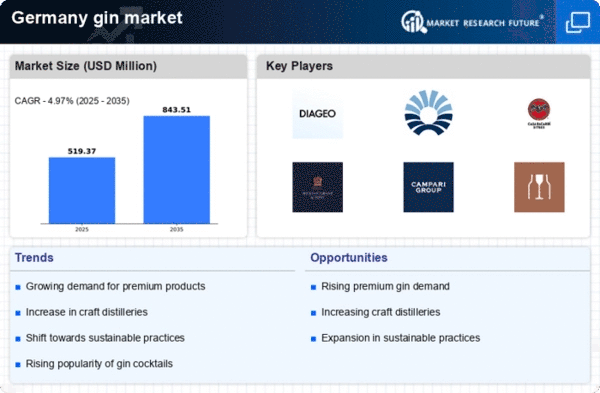
As per Market Research Future analysis, the Germany gin market Size was estimated at 494.77 USD Million in 2024. The Germany gin market is projected to grow from 519.37 USD Million in 2025 to 843.51 USD Million by 2035, exhibiting a compound annual growth rate (CAGR) of 4.9% during the forecast period 2025 - 2035

Key Market Trends & Highlights

The Germany gin market is experiencing a dynamic shift towards premiumization and sustainability.

  • The premiumization trend is driving consumers towards higher-quality gin products, particularly in urban areas.
  • Sustainability focus is becoming increasingly important, with brands adopting eco-friendly practices in production and packaging.
  • The cocktail culture expansion is fostering a growing interest in gin-based cocktails, especially among younger demographics.
  • Craft distillation growth and innovative flavor profiles are major market drivers, enhancing consumer engagement and choice.

Market Size & Forecast

2024 Market Size 494.77 (USD Million)
2035 Market Size 843.51 (USD Million)
CAGR (2025 - 2035) 4.97%

Major Players

Diageo (GB), Pernod Ricard (FR), Bacardi (BM), William Grant & Sons (GB), Campari Group (IT), Brown-Forman (US), Sipsmith (GB), Tanqueray (GB), Hendrick's (GB)

Our Impact
Enabled $4.3B Revenue Impact for Fortune 500 and Leading Multinationals
Partnering with 2000+ Global Organizations Each Year
30K+ Citations by Top-Tier Firms in the Industry

Germany Gin Market Trends

The gin market in Germany is currently experiencing a dynamic evolution, characterized by a growing consumer interest in premium and craft products. This shift appears to be driven by a desire for unique flavors and artisanal production methods, which resonate with a more discerning clientele. As consumers increasingly seek authenticity and quality, distilleries are responding by innovating their offerings, often incorporating local botanicals and traditional techniques. This trend not only enhances the diversity of products available but also fosters a deeper connection between consumers and the heritage of gin production. Moreover, the rise of mixology culture in urban centers is influencing the gin market significantly. Bars and restaurants are increasingly featuring gin-centric cocktails, showcasing the spirit's versatility. This trend suggests that the demand for gin is not merely about consumption but also about the experience surrounding it. As a result, educational initiatives and tasting events are becoming more prevalent, further engaging consumers and enhancing their appreciation for this spirit. Overall, the gin market in Germany is poised for continued growth, driven by innovation, quality, and a vibrant cocktail culture.

Premiumization Trend

There is a noticeable shift towards premium products within the gin market. Consumers are increasingly willing to invest in higher-quality offerings, often seeking out artisanal brands that emphasize craftsmanship and unique flavor profiles. This trend indicates a growing appreciation for the nuances of gin, as well as a desire for products that reflect personal values and lifestyle choices.

Sustainability Focus

Sustainability is becoming a key consideration for consumers in the gin market. Many brands are adopting eco-friendly practices, from sourcing ingredients to packaging. This focus on sustainability not only appeals to environmentally conscious consumers but also enhances brand loyalty, as customers are more inclined to support companies that align with their values.

Cocktail Culture Expansion

The expansion of cocktail culture is significantly impacting the gin market. As more consumers explore mixology at home and in social settings, the demand for gin-based cocktails is rising. This trend encourages brands to develop innovative products tailored for cocktail enthusiasts, further driving growth in the sector.

Germany Gin Market Drivers

E-commerce Expansion

The expansion of e-commerce platforms is significantly impacting the gin market in Germany. With the convenience of online shopping, consumers are increasingly purchasing gin through digital channels. Recent data indicates that online sales of alcoholic beverages, including gin, have surged by nearly 40% in the last year. This shift is particularly relevant for smaller brands that may lack the resources for extensive retail distribution. E-commerce not only provides a broader reach for these brands but also allows consumers to explore a wider variety of products. As digital shopping continues to grow, it is likely to play a crucial role in shaping the future of the gin market.

Social Media Influence

The influence of social media on consumer behavior is a notable driver in the gin market in Germany. Platforms such as Instagram and TikTok are shaping how consumers discover and engage with gin brands. The visual appeal of gin cocktails and the rise of influencer marketing have contributed to heightened brand awareness and consumer interest. Recent studies indicate that brands with a strong social media presence experience a sales increase of up to 30%. This trend underscores the importance of digital marketing strategies in reaching younger demographics. As social media continues to evolve, its impact on the gin market is expected to grow, driving both brand loyalty and consumer engagement.

Craft Distillation Growth

The rise of craft distillation in Germany appears to be a pivotal driver for the gin market. As consumers increasingly seek unique and artisanal products, small distilleries are gaining traction. This trend is reflected in the growing number of craft gin brands, which reportedly increased by over 30% in the last two years. The emphasis on local ingredients and traditional distillation methods resonates with consumers, fostering a sense of authenticity. This shift towards craft products not only enhances consumer engagement but also contributes to the overall growth of the gin market. The craft distillation movement is likely to continue influencing consumer preferences, thereby shaping the competitive landscape.

Innovative Flavor Profiles

Innovation in flavor profiles is emerging as a significant driver within the gin market in Germany. Distillers are experimenting with a variety of botanicals, leading to the introduction of unique flavors that appeal to adventurous consumers. This trend is evidenced by the increasing popularity of flavored gins, which have seen a rise in sales by approximately 25% over the past year. The incorporation of local herbs and spices not only enhances the product's appeal but also aligns with the growing consumer interest in regional authenticity. As consumers continue to seek novel experiences, the demand for innovative flavor profiles is expected to propel the gin market further.

Health-Conscious Consumption

The trend towards health-conscious consumption is influencing the gin market in Germany. As consumers become more aware of their health and wellness, there is a noticeable shift towards lower-calorie and lower-alcohol options. This trend is reflected in the increasing demand for premium gins that offer quality without compromising health. Reports suggest that sales of low-calorie gins have increased by approximately 20% in the past year. This shift not only caters to health-conscious consumers but also aligns with broader lifestyle changes. As the focus on health continues, it is likely to drive innovation and product development within the gin market.


Market Segment Insights

By Type: London Dry (Largest) vs. Old Tom (Fastest-Growing)

In the Germany gin market, the London Dry segment holds the largest market share, benefiting from its traditional production methods and popularity among consumers. Other types such as Plymouth and Old Tom cater to niche markets, with Old Tom emerging due to its unique flavor profile and resurgence in cocktail culture. The market continues to diversify, drawing attention from both new and experienced gin drinkers. The growth trends in this segment are influenced by increased consumer interest in premium and craft spirits. Innovations in flavor offerings and the rise of mixology have driven demand for Old Tom gin, which is perceived as versatile for cocktails. Meanwhile, London Dry remains a staple, appealing to those favoring classic gin styles, thus maintaining its stronghold in the market.

London Dry (Dominant) vs. Old Tom (Emerging)

London Dry gin is characterized by its dry taste and distinct botanical flavors, making it the dominant style in the Germany gin market. Its attributes include a crisp juniper-forward profile, which aligns with consumer preferences for traditional gin experiences. Conversely, Old Tom gin, recognized as an emerging segment, offers a sweeter taste, often seen as a bridge between traditional and contemporary gins. With its increasing popularity in cocktail bars and among home bartenders, Old Tom is gaining traction, showcasing innovative recipes and flavors. The contrast in sweetness and botanical complexity between these two styles exemplifies the broader trends in the gin market, where diversity and unique flavor experiences are becoming essential.

By Distribution Channel: Supermarkets and Hypermarkets (Largest) vs. Specialty Stores (Fastest-Growing)

In the Germany gin market, the distribution of market share among various channels indicates a strong preference for Supermarkets and Hypermarkets, which dominate the landscape due to their wide availability and convenience. These channels capture a significant portion of consumer spending, aided by promotional strategies and the ease of access they provide. Specialty Stores, while smaller in market share, showcase an increasing trend as gin enthusiasts seek curated selections and unique products that are not typically found in larger retail formats. The growth trends within this segment are influenced by changing consumer preferences, with a notable shift towards quality and experience-driven purchases. Specialty Stores are emerging as key players, driven by the rising craft gin movement and a consumer desire for artisanal products. Innovations such as personalized shopping experiences and product tastings in these stores are attracting a niche but expanding customer base, making them the fastest-growing channel in the market.

Supermarkets and Hypermarkets: Dominant vs. Specialty Stores: Emerging

Supermarkets and Hypermarkets serve as the dominant force in the distribution channel of the Germany gin market, leveraging their extensive reach to provide consumers with a wide variety of gin brands and price points. The convenience and the ability to provide large-scale promotions make these outlets highly appealing for everyday shoppers. In contrast, Specialty Stores are seen as emerging players, catering to a more discerning clientele that seeks unique and premium gins. These retailers often emphasize artisanal and craft products, creating a differentiated shopping experience that attracts gin aficionados. The emphasis on quality over quantity is what sets these specialty retailers apart, as they build customer loyalty through exclusive offerings and knowledgeable staff.

Get more detailed insights about Germany Gin Market

Key Players and Competitive Insights

The gin market in Germany is characterized by a dynamic competitive landscape, driven by evolving consumer preferences and a growing inclination towards premium and craft spirits. Major players such as Diageo (GB), Pernod Ricard (FR), and Bacardi (BM) are actively shaping the market through strategic initiatives that emphasize innovation and regional expansion. Diageo (GB), for instance, has focused on enhancing its product portfolio with a range of artisanal gins, while Pernod Ricard (FR) has been investing in local distilleries to cater to the increasing demand for locally sourced products. Bacardi (BM) appears to be leveraging its extensive distribution network to penetrate niche markets, thereby intensifying competition among established brands and emerging craft distillers.The business tactics employed by these companies reflect a concerted effort to optimize supply chains and localize manufacturing processes. The market structure is moderately fragmented, with a mix of large multinational corporations and smaller craft producers. This fragmentation allows for diverse consumer choices, yet the collective influence of key players like Tanqueray (GB) and Hendrick's (GB) remains significant, as they continue to dominate market share through brand loyalty and innovative marketing strategies.

In October Diageo (GB) announced the launch of a new line of organic gins, which underscores its commitment to sustainability and health-conscious consumer trends. This strategic move not only aligns with the growing demand for organic products but also positions Diageo (GB) as a leader in the sustainable spirits segment. The introduction of these products is likely to attract environmentally conscious consumers, thereby enhancing brand equity and market presence.

In September Pernod Ricard (FR) expanded its operations by acquiring a local craft distillery in Germany, which is indicative of its strategy to deepen market penetration and diversify its product offerings. This acquisition allows Pernod Ricard (FR) to tap into the craft gin trend, appealing to consumers seeking unique and locally produced spirits. Such strategic actions may enhance its competitive edge and foster brand loyalty among discerning consumers.

In August Bacardi (BM) launched a digital marketing campaign aimed at engaging younger consumers through social media platforms. This initiative reflects a broader trend towards digitalization in the spirits industry, as brands seek to connect with tech-savvy audiences. By leveraging digital channels, Bacardi (BM) is likely to enhance its brand visibility and consumer engagement, which are crucial for maintaining relevance in a rapidly evolving market.

As of November the gin market is witnessing trends that emphasize digitalization, sustainability, and the integration of technology into production processes. Strategic alliances among key players are increasingly shaping the competitive landscape, fostering innovation and collaboration. The shift from price-based competition to a focus on product differentiation through innovation and supply chain reliability is evident. Moving forward, companies that prioritize these aspects are likely to thrive, as consumer expectations continue to evolve towards quality and sustainability.

Key Companies in the Germany Gin Market include

Industry Developments

Recent developments in the Germany Gin Market have seen a significant rise in the popularity of craft gins, reflecting consumer trends that favor premium and artisanal products. Brands like Monkey 47 and Gin Sul are showcasing their unique flavors, often inspired by local botanicals, attracting both domestic and international consumers. In September 2023, Bacardi announced an expansion of their distribution network for Bombay Sapphire, further tapping into the growing demand for high-quality gin among German consumers.

Additionally, in August 2023, an increase in market valuation for companies like Hendrick's Gin and Tanqueray indicated robust growth in consumer interest, correlating with their innovative marketing strategies that appeal to a younger demographic.Furthermore, the last couple of years seen significant investments and collaborations in the market; for instance, in June 2022, Elephant Gin secured funding to enhance its production capabilities. As per recent reports, mergers and acquisitions appear to be limited among the specified brands currently, maintaining competition at a steady pace.

The German market is also influenced by larger global trends, focusing on sustainability and unique flavor profiles, positioning it as an attractive market for gin enthusiasts.

Future Outlook

Germany Gin Market Future Outlook

The Gin Market in Germany is projected to grow at a 4.97% CAGR from 2025 to 2035, driven by premiumization, innovative flavors, and increasing consumer interest in craft spirits.

New opportunities lie in:

  • Expansion of e-commerce platforms for direct-to-consumer sales.
  • Development of limited-edition gin varieties targeting niche markets.
  • Partnerships with local distilleries to enhance brand authenticity.

By 2035, the gin market in Germany is expected to achieve robust growth and increased market share.

Market Segmentation

Germany Gin Market Type Outlook

  • London Dry
  • Plymouth
  • Old Tom
  • Others

Germany Gin Market Distribution Channel Outlook

  • Supermarkets and Hypermarkets
  • Specialty Stores
  • Others

Report Scope

MARKET SIZE 2024 494.77(USD Million)
MARKET SIZE 2025 519.37(USD Million)
MARKET SIZE 2035 843.51(USD Million)
COMPOUND ANNUAL GROWTH RATE (CAGR) 4.97% (2025 - 2035)
REPORT COVERAGE Revenue Forecast, Competitive Landscape, Growth Factors, and Trends
BASE YEAR 2024
Market Forecast Period 2025 - 2035
Historical Data 2019 - 2024
Market Forecast Units USD Million
Key Companies Profiled Diageo (GB), Pernod Ricard (FR), Bacardi (BM), William Grant & Sons (GB), Campari Group (IT), Brown-Forman (US), Sipsmith (GB), Tanqueray (GB), Hendrick's (GB)
Segments Covered Type, Distribution Channel
Key Market Opportunities Growing consumer preference for premium and craft gin products presents a lucrative opportunity.
Key Market Dynamics Growing consumer preference for premium gin brands drives innovation and competition in the local market.
Countries Covered Germany
Leave a Comment

FAQs

What is the projected market value of the Germany Gin Market in 2024?

The Germany Gin Market is expected to be valued at approximately 618.47 million USD in 2024.

What will be the market value of the Germany Gin Market by 2035?

By 2035, the Germany Gin Market is projected to reach a value of around 865.0 million USD.

What is the expected CAGR for the Germany Gin Market from 2025 to 2035?

The Germany Gin Market is expected to grow at a CAGR of 3.097 percent from 2025 to 2035.

Which gin type is expected to dominate the Germany Gin Market by value in 2024?

London Dry gin is expected to dominate the market with a value of 240.0 million USD in 2024.

What is the forecasted value for Plymouth gin in the Germany Gin Market by 2035?

Plymouth gin is projected to reach a market value of about 180.0 million USD by 2035.

Who are some of the key players in the Germany Gin Market?

Major players in the Germany Gin Market include The Botanist, Gordon's, Monkey 47, and Hendrick's Gin, among others.

What is the expected market value for Old Tom gin in 2024?

Old Tom gin is expected to have a market value of 80.0 million USD in 2024.

How much is the 'Others' segment of the gin market expected to be valued at in 2035?

The 'Others' segment is anticipated to be valued at approximately 245.0 million USD by 2035.

What challenges might impact the growth of the Germany Gin Market?

Potential challenges include increasing competition and changing consumer preferences impacting market dynamics.

What opportunities exist for growth in the Germany Gin Market?

Emerging trends such as premium and craft gin varieties present significant growth opportunities in the market.

Download Free Sample

Kindly complete the form below to receive a free sample of this Report

Compare Licence

×
Features License Type
Single User Multiuser License Enterprise User
Price $4,950 $5,950 $7,250
Maximum User Access Limit 1 User Upto 10 Users Unrestricted Access Throughout the Organization
Free Customization
Direct Access to Analyst
Deliverable Format
Platform Access
Discount on Next Purchase 10% 15% 15%
Printable Versions