E-commerce Growth
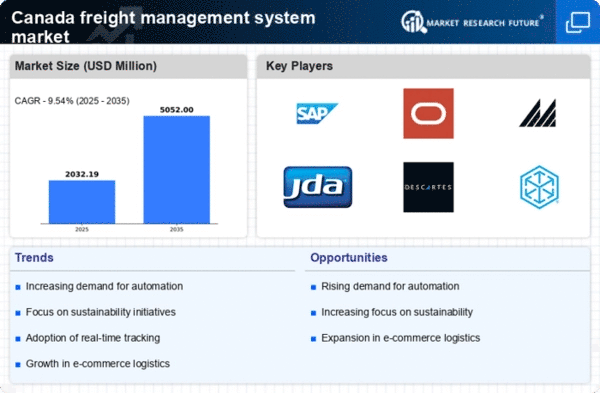
The rapid expansion of e-commerce in Canada is a pivotal driver for the freight management system. As online shopping continues to gain traction, logistics and freight services must adapt to meet the increasing demand for efficient delivery solutions. In 2025, e-commerce sales in Canada are projected to reach approximately $60 billion, necessitating advanced freight management systems to handle the complexities of last-mile delivery. This growth compels companies to invest in technology that enhances tracking, inventory management, and customer service. Consequently, The freight management system is likely to experience significant growth as businesses seek to optimize their supply chains and improve delivery times.
Rising Fuel Costs
Rising fuel costs are a critical factor impacting the freight management-system market. Fluctuations in fuel prices can significantly affect transportation expenses, prompting logistics companies to seek more efficient solutions. In 2025, fuel prices in Canada are projected to remain volatile, which may lead companies to invest in freight management systems that optimize fuel consumption and improve route efficiency. By leveraging advanced analytics and real-time data, these systems can help reduce costs associated with fuel, thereby enhancing profitability. Consequently, the freight management-system market is likely to see increased demand as companies strive to mitigate the impact of rising fuel costs.
Regulatory Compliance
The freight management system is significantly influenced by the evolving regulatory landscape in Canada. Compliance with transportation regulations, safety standards, and environmental policies is crucial for logistics companies. In recent years, the Canadian government has implemented stricter regulations regarding emissions and safety protocols, which necessitates the adoption of advanced freight management systems. These systems help companies ensure compliance while optimizing their operations. As regulations become more stringent, the demand for sophisticated freight management solutions is expected to rise, driving market growth. Companies that can effectively navigate these regulations will likely gain a competitive edge in the freight management-system market.
Technological Advancements
Technological advancements are reshaping the freight management-system market in Canada. Innovations such as artificial intelligence, machine learning, and blockchain technology are enhancing operational efficiency and transparency in logistics. For instance, AI-driven analytics can optimize route planning and reduce fuel consumption, which is increasingly important as fuel prices fluctuate. In 2025, it is estimated that the adoption of these technologies could lead to a 20% reduction in operational costs for logistics companies. As businesses recognize the potential of these technologies, investment in freight management systems that incorporate these advancements is likely to surge, further propelling market growth.
Consumer Demand for Transparency
Consumer demand for transparency in the supply chain is increasingly influencing the freight management-system market. As customers become more aware of the logistics processes behind their purchases, they expect real-time tracking and updates on their shipments. This trend is particularly pronounced in Canada, where consumers are willing to pay a premium for enhanced visibility and reliability in delivery services. In response, logistics companies are investing in freight management systems that provide comprehensive tracking capabilities and customer communication tools. This shift towards transparency not only improves customer satisfaction but also drives growth in the freight management-system market as companies adapt to meet these evolving consumer expectations.