×
Request Free Sample ×

Kindly complete the form below to receive a free sample of this Report

* Please use a valid business email

Leading companies partner with us for data-driven Insights

clients tt-cursor
Hero Background

Brazil Freight Management System Market

ID: MRFR/ICT/58092-HCR
200 Pages
Aarti Dhapte
February 2026

Brazil Freight Management System Market Size, Share and Research Report: By Components (Solutions, Services), By End Users (Third-party Logistics, Forwarders, Brokers, Shippers, Carriers) and By Transportations Mode (Road Freight, Ocean Freight, Air Freight, Rail Freight) - Industry Forecast to 2035

Share:
Download PDF ×

We do not share your information with anyone. However, we may send you emails based on your report interest from time to time. You may contact us at any time to opt-out.

Brazil Freight Management System Market Infographic
Purchase Options

Brazil Freight Management System Market Summary

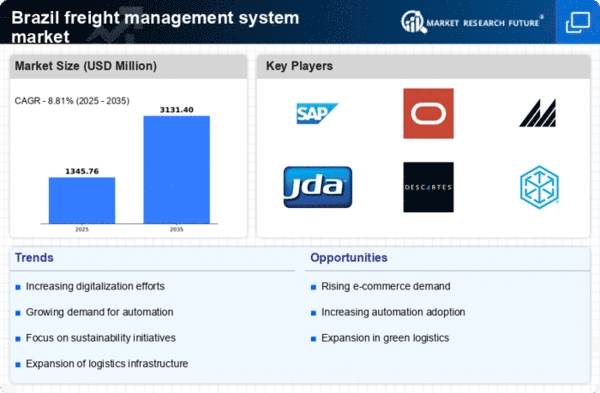
As per Market Research Future analysis, the Brazil freight management system market size was estimated at 1236.8 USD Million in 2024. The Brazil freight management-system market is projected to grow from 1345.76 USD Million in 2025 to 3131.4 USD Million by 2035, exhibiting a compound annual growth rate (CAGR) of 8.8% during the forecast period 2025 - 2035

Key Market Trends & Highlights

The Brazil freight management-system market is experiencing a transformative shift towards digitalization and sustainability.

  • Digital transformation is reshaping the Brazil freight management-system market, enhancing operational efficiency.
  • Sustainability initiatives are increasingly influencing logistics strategies, reflecting a growing environmental consciousness.
  • The largest segment in this market is the e-commerce sector, while the fastest-growing segment is the technology-driven logistics solutions.
  • Technological advancements in logistics and rising fuel costs are key drivers propelling market growth.

Market Size & Forecast

2024 Market Size 1236.8 (USD Million)
2035 Market Size 3131.4 (USD Million)
CAGR (2025 - 2035) 8.81%

Major Players

SAP (DE), Oracle (US), Manhattan Associates (US), JDA Software (US), Descartes Systems Group (CA), C.H. Robinson (US), Kuebix (US), Transporeon (DE), Project44 (US)

Our Impact
Enabled $4.3B Revenue Impact for Fortune 500 and Leading Multinationals
Partnering with 2000+ Global Organizations Each Year
30K+ Citations by Top-Tier Firms in the Industry

Brazil Freight Management System Market Trends

The freight management-system market is currently experiencing notable transformations, driven by advancements in technology and evolving consumer demands. In Brazil, the integration of digital solutions into logistics operations appears to enhance efficiency and reduce operational costs. Companies are increasingly adopting cloud-based platforms, which facilitate real-time tracking and data analysis, thereby improving decision-making processes. Furthermore, the emphasis on sustainability is becoming more pronounced, as businesses seek to minimize their environmental impact while optimizing supply chain performance. This shift towards greener practices may lead to the adoption of innovative solutions that align with regulatory requirements and consumer expectations. In addition, the freight management-system market is witnessing a rise in collaboration among stakeholders. Partnerships between logistics providers, technology firms, and regulatory bodies seem to foster a more cohesive ecosystem. This collaboration could potentially streamline processes and enhance service delivery, ultimately benefiting end-users. As the market continues to evolve, it is essential for companies to remain agile and responsive to changes in consumer behavior and regulatory landscapes. The future of the freight management-system market in Brazil appears promising, with opportunities for growth and innovation on the horizon.

Digital Transformation

The freight management-system market is increasingly influenced by digital technologies. Companies are adopting cloud-based solutions to enhance operational efficiency and provide real-time visibility into logistics processes. This trend indicates a shift towards data-driven decision-making, which may improve overall supply chain performance.

Sustainability Initiatives

There is a growing focus on sustainability within the freight management-system market. Businesses are exploring eco-friendly practices to reduce their carbon footprint. This trend suggests that companies are not only complying with regulations but also responding to consumer demand for greener logistics solutions.

Collaborative Ecosystems

The market is seeing an increase in collaboration among various stakeholders. Partnerships between logistics providers, technology developers, and regulatory agencies are becoming more common. This trend indicates a move towards integrated solutions that enhance service delivery and operational efficiency.

Brazil Freight Management System Market Drivers

Regulatory Compliance and Standards

In Brazil, the freight management-system market is significantly influenced by regulatory compliance and standards. The government has implemented various regulations aimed at improving safety, environmental sustainability, and operational efficiency within the logistics sector. Compliance with these regulations often necessitates the adoption of advanced freight management systems that can ensure adherence to legal requirements. For example, the National Agency of Land Transport (ANTT) mandates specific documentation and tracking for freight operations, which can be efficiently managed through modern systems. As companies strive to meet these standards, the freight management-system market is likely to see increased investment, potentially leading to a market growth rate of 15% annually.

Technological Advancements in Logistics

The freight management-system market in Brazil is experiencing a surge due to rapid technological advancements in logistics. Innovations such as artificial intelligence (AI), machine learning, and the Internet of Things (IoT) are transforming traditional freight operations. These technologies enhance route optimization, reduce operational costs, and improve delivery times. For instance, AI-driven analytics can lead to a 20% reduction in fuel consumption, which is crucial for cost management in the freight management-system market. Furthermore, the integration of IoT devices allows for real-time tracking of shipments, thereby increasing transparency and efficiency. As logistics companies adopt these technologies, the demand for sophisticated freight management systems is likely to grow, indicating a robust future for the market in Brazil.

Increased Focus on Supply Chain Resilience

The freight management-system market in Brazil is witnessing a heightened focus on supply chain resilience. Companies are increasingly aware of the vulnerabilities within their supply chains and are seeking solutions to mitigate risks associated with disruptions. This awareness drives the demand for robust freight management systems that can provide real-time visibility and flexibility in logistics operations. By implementing these systems, businesses can better respond to unforeseen challenges, such as delays or capacity shortages. As a result, the freight management-system market is expected to grow as companies prioritize resilience and adaptability in their logistics strategies.

E-commerce Growth and Demand for Efficiency

The rapid growth of e-commerce in Brazil is a pivotal driver for the freight management-system market. As online shopping continues to expand, logistics companies face increasing pressure to deliver goods quickly and efficiently. This demand for speed and reliability compels businesses to invest in advanced freight management systems that can streamline operations and enhance customer satisfaction. Reports indicate that e-commerce sales in Brazil are projected to reach $30 billion by 2025, further intensifying the need for efficient logistics solutions. Consequently, the freight management-system market is likely to benefit from this trend, as companies seek to optimize their supply chains and improve delivery performance.

Rising Fuel Costs and Operational Efficiency

The freight management-system market in Brazil is also driven by the rising fuel costs that logistics companies face. As fuel prices fluctuate, there is an increasing need for operational efficiency to maintain profitability. Freight management systems that offer features such as route optimization and load planning can significantly reduce fuel consumption and overall operational costs. For instance, companies utilizing these systems may achieve up to a 25% reduction in fuel expenses. This financial incentive encourages logistics providers to adopt advanced freight management solutions, thereby propelling market growth. The focus on cost efficiency is likely to remain a critical factor influencing the freight management-system market in Brazil.


Market Segment Insights

By Components: Solutions (Largest) vs. Services (Fastest-Growing)

In the Brazil freight management-system market, Solutions dominate the Components segment, capturing a significant share due to their comprehensive features and integration capabilities. These solutions encompass a range of software and technology offerings, which streamline logistical operations, enhance visibility, and improve decision-making processes. Meanwhile, Services have emerged as the fastest-growing segment, reflecting the increasing demand for specialized support and consulting in logistics operations, particularly as companies seek to optimize their freight management strategies. The growth trends within this segment are driven by the rapid digital transformation in logistics and supply chain management. Companies are increasingly investing in technology-driven solutions to enhance operational efficiency, leading to a corresponding rise in service demand. Factors like the growing e-commerce market and the need for real-time data are propelling the growth of Services, as they provide essential support for businesses adapting to new market dynamics. The increased focus on cost-efficiency and streamlined operations further emphasizes the critical role of both Solutions and Services in the evolving landscape of freight management.

Solutions (Dominant) vs. Services (Emerging)

In the Components segment, Solutions are recognized as the dominant force, providing comprehensive platforms that integrate various functions of freight management. These Solutions enhance operational efficiency through automated processes and data analytics, allowing businesses to make informed decisions quickly. Clients favor these systems for their scalability and adaptability, which are essential for navigating complex supply chains. On the other hand, Services are increasingly viewed as an emerging segment, characterized by a shift towards personalized support and consultancy. This trend reflects the necessity for businesses to not only implement technology but also leverage expertise to maximize its benefits. The demand for customized solutions and strategic insights positions Services as a vital complement to Solutions, catering to the unique needs of firms in the freight management landscape.

By End-Users: Third-party Logistics (Largest) vs. Forwarders (Fastest-Growing)

In the Brazil freight management-system market, the distribution of market share among end-users reveals that Third-party Logistics (3PL) holds a dominant position, accounting for a significant portion of the total market. This segment serves as a crucial component within the logistics chain, enabling businesses to optimize their supply chain operations. Meanwhile, Forwarders, while smaller in share, are rapidly gaining traction due to the increasing demand for efficient freight services that cater to both domestic and international markets. The growth trends in the end-users segment underscore a shift towards digital transformation and technology adoption. As businesses focus on improving operational efficiencies, logistics solutions that enhance transparency and real-time tracking are becoming vital. Additionally, market drivers such as e-commerce expansion and a growing need for customized logistics solutions are propelling the Forwarders segment to witness the fastest growth, as companies seek agile partners to navigate complex supply chains.

Third-party Logistics (Dominant) vs. Brokers (Emerging)

Third-party Logistics (3PL) stands as the dominant end-user segment in the Brazil freight management-system market, characterized by its ability to offer comprehensive logistics services that enhance supply chain efficiency. This segment encompasses a range of activities, including transportation, warehousing, and inventory management, which are critical for businesses aiming to streamline operations. Meanwhile, Brokers represent an emerging segment, leveraging technology to connect shippers with carriers effectively. They play a pivotal role in facilitating freight transactions and providing valuable insights into market dynamics. As the logistics landscape evolves, both segments are adapting to meet the demands for flexibility, but 3PL remains established as the go-to solution for integrated logistics services.

By Transportation Mode: Road Freight (Largest) vs. Air Freight (Fastest-Growing)

In the Brazil freight management-system market, the transportation mode segment is primarily dominated by road freight, capturing a significant share of the market. This is attributed to the extensive road network and the flexibility of road transportation, which allows for timely and efficient delivery of goods. Conversely, ocean freight holds a notable position, facilitating the bulk transport of goods internationally, whereas air freight is emerging rapidly due to the increasing demand for expedited shipping options, primarily for high-value goods. Growth trends in this segment highlight a robust increase in air freight services, driven by the e-commerce boom and the need for faster delivery times. Companies are investing in advanced freight management technologies to optimize routes and improve efficiency across all transportation modes. As environmental concerns continue to rise, there is also a noticeable shift towards more sustainable practices in road and rail freight, further shaping the competitive landscape.

Road Freight (Dominant) vs. Rail Freight (Emerging)

Road freight remains the dominant mode of transportation in the Brazil freight management-system market, characterized by its unparalleled flexibility and extensive reach. It is the preferred choice for most logistics companies due to its ability to provide door-to-door service, accommodating a wide variety of goods, including perishable items. Meanwhile, rail freight is emerging as a viable alternative, particularly for bulk commodities and long-distance transit, as it offers a more sustainable option with lower carbon emissions compared to road transport. The integration of technology and infrastructure improvements is enhancing rail freight's competitiveness, positioning it as a growing choice among shippers looking to balance cost, efficiency, and environmental responsibility.

Get more detailed insights about Brazil Freight Management System Market

Key Players and Competitive Insights

The freight management-system market in Brazil is characterized by a dynamic competitive landscape, driven by the increasing demand for efficient logistics solutions and the ongoing digital transformation across industries. Major players such as SAP (DE), Oracle (US), and C.H. Robinson (US) are strategically positioned to leverage their technological capabilities and extensive networks. SAP (DE) focuses on integrating advanced analytics and cloud solutions to enhance operational efficiency, while Oracle (US) emphasizes its robust database management systems to optimize supply chain processes. C.H. Robinson (US) is enhancing its service offerings through strategic partnerships, thereby expanding its market reach and operational capabilities. Collectively, these strategies contribute to a competitive environment that is increasingly reliant on innovation and technological advancements.
Key business tactics within this market include localization of services and supply chain optimization, which are essential for meeting the unique demands of Brazilian logistics. The market structure appears moderately fragmented, with several key players exerting influence over various segments. This fragmentation allows for a diverse range of solutions, catering to different customer needs while fostering competition among established and emerging firms.
In October 2025, SAP (DE) announced a partnership with a leading Brazilian logistics provider to enhance its freight management capabilities. This collaboration aims to integrate SAP's advanced analytics with local expertise, potentially improving service delivery and operational efficiency. Such strategic alliances are crucial for adapting to regional market dynamics and customer preferences, thereby strengthening SAP's competitive position.
In September 2025, Oracle (US) launched a new suite of cloud-based logistics solutions tailored specifically for the Brazilian market. This initiative is likely to enhance Oracle's appeal to local businesses seeking to modernize their supply chain operations. By focusing on cloud technology, Oracle positions itself as a forward-thinking player, capable of addressing the evolving needs of Brazilian enterprises.
In August 2025, C.H. Robinson (US) expanded its operations in Brazil by acquiring a regional freight brokerage firm. This acquisition is expected to bolster C.H. Robinson's service offerings and market presence, allowing for greater flexibility and responsiveness to customer demands. Such strategic moves indicate a trend towards consolidation in the market, as companies seek to enhance their competitive edge through expanded capabilities.
As of November 2025, the freight management-system market is witnessing significant trends such as digitalization, sustainability initiatives, and the integration of artificial intelligence (AI) into logistics operations. These trends are reshaping the competitive landscape, with companies increasingly forming strategic alliances to enhance their technological capabilities and service offerings. The shift from price-based competition to a focus on innovation, technology, and supply chain reliability is evident, suggesting that future competitive differentiation will hinge on the ability to adapt to these evolving market dynamics.

Key Companies in the Brazil Freight Management System Market include

Industry Developments

In recent months, the Brazil Freight Management System Market has witnessed significant developments, particularly the continued rise of e-commerce, which has led to a surge in logistics innovation. Companies like Mercado Livre and B2W Digital are enhancing their logistics capabilities to meet the increasing demand for efficient delivery services. In November 2022, Frete Rápido announced a strategic collaboration with Loggi to optimize freight routes, solidifying their market presence. 

Notably, DHL Supply Chain Brazil expanded its warehousing capabilities by opening a new facility in So Paulo, which aims to enhance supply chain efficiency for local businesses. The aggressive investments in technology and infrastructure reflect increasing market valuations for key players and point toward a promising growth trajectory. 

Additionally, in March 2023, Rappi launched new logistics services to complement its grocery delivery operations, further intensifying competition among carriers and tech-enabled logistics companies in Brazil. The past few years have emphasized the importance of adaptability as consumer preferences continue to shift dramatically within the logistics sector.

Future Outlook

Brazil Freight Management System Market Future Outlook

The freight management-system market in Brazil is projected to grow at an 8.81% CAGR from 2025 to 2035, driven by technological advancements and increasing demand for efficiency.

New opportunities lie in:

  • Integration of AI-driven analytics for predictive logistics management.
  • Development of blockchain solutions for enhanced supply chain transparency.
  • Expansion of cloud-based platforms for real-time freight tracking and management.

By 2035, the market is expected to achieve substantial growth, driven by innovation and efficiency.

Market Segmentation

Brazil Freight Management System Market End-Users Outlook

  • Third-party Logistics
  • Forwarders
  • Brokers
  • Shippers
  • Carriers

Brazil Freight Management System Market Components Outlook

  • Solutions
  • Services

Brazil Freight Management System Market Transportation Mode Outlook

  • Road Freight
  • Ocean Freight
  • Air Freight
  • Rail Freight

Report Scope

MARKET SIZE 2024 1236.8(USD Million)
MARKET SIZE 2025 1345.76(USD Million)
MARKET SIZE 2035 3131.4(USD Million)
COMPOUND ANNUAL GROWTH RATE (CAGR) 8.81% (2025 - 2035)
REPORT COVERAGE Revenue Forecast, Competitive Landscape, Growth Factors, and Trends
BASE YEAR 2024
Market Forecast Period 2025 - 2035
Historical Data 2019 - 2024
Market Forecast Units USD Million
Key Companies Profiled SAP (DE), Oracle (US), Manhattan Associates (US), JDA Software (US), Descartes Systems Group (CA), C.H. Robinson (US), Kuebix (US), Transporeon (DE), Project44 (US)
Segments Covered Components, End-Users, Transportation Mode
Key Market Opportunities Integration of advanced analytics and automation enhances efficiency in the freight management-system market.
Key Market Dynamics Rising demand for digital solutions in freight management systems drives competitive innovation and regulatory adaptation in Brazil.
Countries Covered Brazil
Leave a Comment

FAQs

What is the expected market size of the Brazil Freight Management System Market in 2024?

The Brazil Freight Management System Market is expected to be valued at 865.76 million USD in 2024.

What will be the market size of the Brazil Freight Management System Market in 2035?

By the year 2035, the market is anticipated to reach a value of 2418.0 million USD.

What is the expected compound annual growth rate (CAGR) for the Brazil Freight Management System Market from 2025 to 2035?

The market is projected to have a CAGR of 9.787% during the period from 2025 to 2035.

Who are the key players in the Brazil Freight Management System Market?

Major players in the market include Frete Rápido, Nuvemshop, Cianet, Transloc, and Mercado Livre, among others.

What is the expected market size for the Solutions component of the Brazil Freight Management System Market in 2024?

The Solutions component is expected to be valued at 430.0 million USD in 2024.

What will the Services component of the Brazil Freight Management System Market be valued at in 2035?

The Services component is anticipated to be valued at 1198.0 million USD by 2035.

What are the growth drivers for the Brazil Freight Management System Market?

Growth drivers include increasing e-commerce activities and the need for efficient supply chain management.

Are there any emerging trends in the Brazil Freight Management System Market?

Emerging trends include the adoption of advanced technologies and increased automation in freight management.

What challenges does the Brazil Freight Management System Market face?

Challenges include regulatory hurdles and the need for significant investment in technology.

How do current global scenarios impact the Brazil Freight Management System Market?

Current global scenarios affect logistics costs and operational efficiencies within the freight management sector.

Download Free Sample

Kindly complete the form below to receive a free sample of this Report

Compare Licence

×
Features License Type
Single User Multiuser License Enterprise User
Price $4,950 $5,950 $7,250
Maximum User Access Limit 1 User Upto 10 Users Unrestricted Access Throughout the Organization
Free Customization
Direct Access to Analyst
Deliverable Format
Platform Access
Discount on Next Purchase 10% 15% 15%
Printable Versions