×
Request Free Sample ×

Kindly complete the form below to receive a free sample of this Report

* Please use a valid business email

Leading companies partner with us for data-driven Insights

clients tt-cursor
Hero Background

Brazil Vitamin Supplements Market

ID: MRFR/FnB/46672-HCR
128 Pages
Snehal Singh
February 2026

Brazil Vitamin Supplements Market Size, Share, Industry Trend & Analysis Research Report By Type (Vitamin B, Vitamin C, Vitamin D, Multivitamins, others), By Form (Tablets, Capsules & Soft Gels, Powder, Others) and By Distribution Channel (Store-Based, Non-Store-Based) - Forecast to 2035

Share:
Download PDF ×

We do not share your information with anyone. However, we may send you emails based on your report interest from time to time. You may contact us at any time to opt-out.

Brazil Vitamin Supplements Market Infographic
Purchase Options

Brazil Vitamin Supplements Market Summary

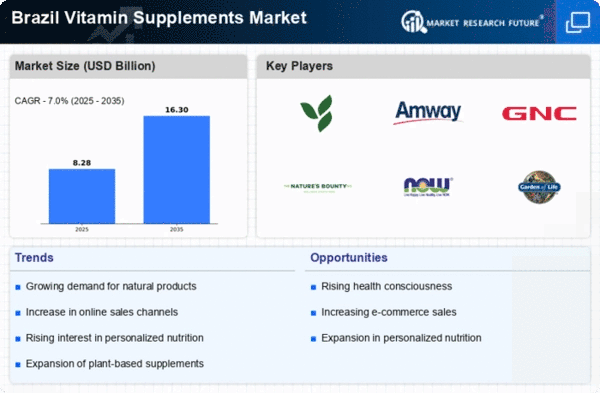
As per Market Research Future analysis, the Brazil vitamin supplements market Size was estimated at 7.74 USD Billion in 2024. The Brazil vitamin supplements market is projected to grow from 8.28 USD Billion in 2025 to 16.3 USD Billion by 2035, exhibiting a compound annual growth rate (CAGR) of 7% during the forecast period 2025 - 2035

Key Market Trends & Highlights

The Brazil vitamin supplements market is experiencing robust growth driven by health consciousness and e-commerce expansion.

  • Rising health consciousness among consumers is propelling the demand for vitamin supplements across Brazil.
  • The e-commerce segment is rapidly expanding, making vitamin supplements more accessible to a broader audience.
  • The largest segment in the market is the multivitamins category, while the fastest-growing segment is natural and organic supplements.
  • Key market drivers include the increasing demand for preventive healthcare and the aging population's nutritional needs.

Market Size & Forecast

2024 Market Size 7.74 (USD Billion)
2035 Market Size 16.3 (USD Billion)
CAGR (2025 - 2035) 7.0%

Major Players

Herbalife (US), Amway (US), GNC Holdings (US), Nature's Bounty (US), NOW Foods (US), Garden of Life (US), Solgar (US), Swanson Health Products (US), NutraBlast (US)

Our Impact
Enabled $4.3B Revenue Impact for Fortune 500 and Leading Multinationals
Partnering with 2000+ Global Organizations Each Year
30K+ Citations by Top-Tier Firms in the Industry

Brazil Vitamin Supplements Market Trends

The vitamin supplements market is currently experiencing notable growth, driven by increasing health awareness among consumers. Individuals are becoming more proactive about their well-being, leading to a surge in demand for various vitamin products. This trend is particularly evident among younger demographics, who are more inclined to incorporate supplements into their daily routines. Additionally, the rise of e-commerce platforms has facilitated easier access to a wide range of vitamin options, allowing consumers to make informed choices based on their specific health needs. As a result, manufacturers are expanding their product lines to cater to diverse preferences, including vegan and organic options. Moreover, the regulatory environment surrounding the vitamin supplements market is evolving. Authorities are implementing stricter guidelines to ensure product safety and efficacy, which may enhance consumer trust. This shift could lead to a more competitive landscape, as brands that prioritize quality and transparency are likely to gain a competitive edge. Furthermore, educational initiatives aimed at informing the public about the benefits of vitamins are becoming more prevalent, potentially influencing purchasing decisions. Overall, the vitamin supplements market is poised for continued expansion, reflecting changing consumer attitudes and regulatory developments.

Rising Health Consciousness

There is a growing trend of health awareness among consumers, leading to increased interest in vitamin supplements. Individuals are actively seeking ways to enhance their well-being, which drives demand for various products.

E-commerce Growth

The expansion of online shopping platforms is transforming how consumers access vitamin supplements. This trend allows for greater convenience and a wider selection of products, catering to diverse health needs.

Regulatory Changes

The evolving regulatory landscape is impacting the vitamin supplements market. Stricter guidelines are being introduced to ensure product safety and efficacy, which may enhance consumer confidence in purchasing decisions.

Brazil Vitamin Supplements Market Drivers

Focus on Mental Health and Wellness

There is a growing recognition of the importance of mental health, which is influencing the vitamin supplements market in Brazil. Consumers are increasingly seeking supplements that support cognitive function and emotional well-being. This trend is reflected in the rising sales of products containing ingredients like omega-3 fatty acids and B vitamins, which are known to promote brain health. Market analysis shows that the segment focused on mental wellness has expanded by approximately 18% in the past year. This focus on mental health indicates a potential area of growth for the vitamin supplements market, as more individuals prioritize their mental well-being alongside physical health.

Aging Population and Nutritional Needs

Brazil's aging population is significantly influencing the vitamin supplements market. As the demographic shifts towards an older age group, there is a heightened focus on meeting the nutritional needs of seniors. Older adults often require specific vitamins and minerals to maintain their health, which has led to a growing market for supplements tailored to this demographic. Recent statistics suggest that the segment of consumers aged 60 and above accounts for nearly 30% of the total vitamin supplements market in Brazil. This trend indicates a substantial opportunity for growth within the vitamin supplements market, as companies develop products that cater to the unique health requirements of older individuals.

Increasing Demand for Preventive Healthcare

The vitamin supplements market in Brazil is experiencing a notable surge in demand driven by a growing awareness of preventive healthcare. Consumers are increasingly seeking ways to enhance their overall well-being and prevent chronic diseases through dietary supplements. This trend is reflected in the market data, which indicates that the sales of vitamin supplements have risen by approximately 15% in the last year alone. The Brazilian population is becoming more proactive about health, leading to a shift in consumer behavior towards preventive measures. This increasing demand is likely to propel the vitamin supplements market forward, as more individuals prioritize their health and wellness.

Influence of Social Media and Digital Marketing

The rise of social media and digital marketing is playing a pivotal role in shaping the vitamin supplements market in Brazil. Brands are leveraging platforms like Instagram and Facebook to engage with consumers, promote their products, and educate them about the benefits of vitamin supplementation. This digital engagement has led to increased brand visibility and consumer trust, which is crucial in a market where informed choices are paramount. Recent data indicates that online sales of vitamin supplements have increased by 25% in the last year, highlighting the effectiveness of digital marketing strategies in driving growth within the vitamin supplements market.

Rising Popularity of Natural and Organic Products

The Brazilian consumer base is increasingly gravitating towards natural and organic products, which is reshaping the vitamin supplements market. This shift is driven by a desire for clean-label products that are perceived as healthier and safer. Market Research Future indicates that organic vitamin supplements have seen a growth rate of around 20% over the past year, reflecting a strong consumer preference for products free from synthetic additives. This trend suggests that the vitamin supplements market must adapt to these changing consumer preferences by offering a wider range of natural and organic options to remain competitive.


Market Segment Insights

By Type: Multivitamins (Largest) vs. Vitamin Gummies (Fastest-Growing)

In the Brazil vitamin supplements market, Multivitamins hold the largest market share among the various type segments, showcasing their widespread acceptance and demand among consumers looking for comprehensive nutritional support. Single Vitamins and Vitamin Blends follow, catering to specific health needs or deficiencies. Vitamin Gummies, while smaller in overall share, have been increasingly popular, especially among younger demographics seeking convenient and tasty options for their vitamin intake. Growth trends indicate a rising interest in health and wellness, driving consumers towards vitamin supplements, particularly among the urban population. The demand for easy-to-consume forms like Vitamin Gummies is on the rise, contributing to their recognition as the fastest-growing segment, while the established Multivitamins continue to dominate sales due to their proven benefits and brand loyalty.

Multivitamins: Dominant vs. Vitamin Gummies: Emerging

Multivitamins are considered the dominant force in the Brazil vitamin supplements market, renowned for their all-in-one benefits that attract a diverse customer base seeking health enhancement. Primarily marketed towards adults of all ages, these supplements are often associated with overall well-being and immunity support. On the other hand, Vitamin Gummies represent an emerging trend that appeals particularly to children and young adults, driven by their palatability and attractive presentation. As consumer preferences shift towards convenience and taste, the popularity of Vitamin Gummies is expected to significantly increase, marking them as a key player in future market dynamics.

By Formulation: Tablets (Largest) vs. Powder (Fastest-Growing)

In the Brazil vitamin supplements market, the formulation segment showcases a diverse array of options, with tablets dominating the market share. Their convenience and long shelf life have made this format a favorite among consumers. Capsules hold a significant position as well, appealing to those seeking a more easily digestible option. Liquid formulations attract a niche market, often preferred by children and individuals who have difficulty swallowing pills, while powders garner attention for their versatility and customizable dosages. The growth trends within the formulation segment indicate a burgeoning interest in health and wellness, prompting consumers to explore various product types. The increasing awareness about dietary supplementation drives the demand for different formulations, with powders emerging as particularly popular due to their adaptability for mixing with beverages and smoothies. Additionally, innovations in capsule technology are enhancing product offerings, while the rise of e-commerce is making diverse formulations more accessible to a broader audience.

Tablets (Dominant) vs. Powder (Emerging)

Tablets remain the dominant formulation in the Brazil vitamin supplements market, favored for their practicality and extended shelf life. In contrast, powders are emerging as a trendy alternative, particularly popular among fitness enthusiasts who appreciate the ability to mix supplements into shakes and drinks. Tablets offer a more traditional approach to supplementation, often seen as a reliable choice for consumers wanting a straightforward solution. On the other hand, powders are highly adaptable and allow for personalized dosage adjustments, which cater to the growing consumer desire for tailored health solutions. The distinction between these two formats highlights a shifting consumer preference towards convenience and versatility in dietary supplements.

By Distribution Channel: Online Retail (Largest) vs. Pharmacies (Fastest-Growing)

The distribution of the Brazil vitamin supplements market among different channels shows that Online Retail holds the largest share, driven by the increasing shift towards e-commerce among consumers seeking convenience and a wider range of choices. Pharmacies follow closely, having a significant presence due to their established trust and easy accessibility, attracting consumers who prefer professional advice when selecting supplements. Growth trends indicate that Online Retail is expanding rapidly as more consumers become tech-savvy and prefer shopping from home. On the other hand, Pharmacies are also witnessing a surge in demand, especially post-pandemic, as health consciousness increases and more people rely on professionals for health-related purchases. This has positioned both channels favorably in the market.

Online Retail (Dominant) vs. Pharmacies (Emerging)

Online Retail has emerged as a dominant channel in the Brazil vitamin supplements market, fueled by the rise of digital shopping habits and enhanced online platforms that provide convenience and extensive product variety. This channel appeals significantly to younger consumers who prefer purchasing supplements online for reasons of efficiency and discretion. Conversely, Pharmacies, while labeled as emerging, have been adapting to recent trends by establishing online ordering systems and curbside pickups, making health supplements more accessible than ever. This dual approach allows Pharmacies to capture a loyal customer base who values face-to-face consultation while also catering to the growing demand for online shopping. As such, both segments display unique strengths that contribute to their competitive positioning.

By End User: Adults (Largest) vs. Children (Fastest-Growing)

In the Brazil vitamin supplements market, the segment distribution reveals that adults constitute the largest user group, capturing a significant share of the market. This demographic places a high value on health and wellness, driving the sustained demand for various dietary supplements tailored to their specific needs. Following closely are children, who represent the fastest-growing segment as parents increasingly prioritize nutritional supplements for their children’s development. Growth trends within this segment are influenced by rising health consciousness among all age groups, especially post-pandemic, where consumers have become more mindful of their dietary intake. The expanding range of vitamin supplements, specifically designed for children, aligns with a greater emphasis on preventive healthcare. Innovative marketing strategies targeting parents further amplify the demand, highlighting the safety and efficacy of these products for children’s health outcomes.

Adults: Dominant vs. Children: Emerging

Adults represent the dominant segment within the Brazil vitamin supplements market, characterized by their diverse health needs ranging from general wellness to specific concerns like immunity and energy. This demographic often seeks products that offer tailored nutrition with a focus on lifestyle enhancement. On the other hand, the children segment is emerging rapidly, driven by increasing parental awareness of nutrition's role in growth and development. These emerging products are often marketed with a focus on fun and flavor, making them more appealing to younger consumers. The nutritional needs for children, combined with effective marketing strategies emphasizing quality and effectiveness, are positioning this segment as a vital area for growth in the overall market.

Get more detailed insights about Brazil Vitamin Supplements Market

Key Players and Competitive Insights

The vitamin supplements market in Brazil is characterized by a dynamic competitive landscape, driven by increasing health consciousness among consumers and a growing demand for preventive healthcare solutions. Major players such as Herbalife (US), Amway (US), and GNC Holdings (US) are strategically positioned to capitalize on these trends. Herbalife (US) focuses on innovation in product formulations, emphasizing natural ingredients and personalized nutrition, which resonates well with the health-oriented Brazilian consumer base. Meanwhile, Amway (US) leverages its extensive distribution network to enhance accessibility, while GNC Holdings (US) emphasizes a robust online presence to cater to the rising trend of e-commerce in the region. Collectively, these strategies contribute to a competitive environment that is increasingly focused on consumer engagement and product differentiation.Key business tactics within this market include localizing manufacturing and optimizing supply chains to enhance efficiency and reduce costs. The competitive structure appears moderately fragmented, with numerous players vying for market share. However, the influence of key players is substantial, as they set trends and standards that smaller companies often follow. This competitive dynamic fosters an environment where innovation and responsiveness to consumer needs are paramount.
In October GNC Holdings (US) announced a partnership with a local Brazilian health and wellness influencer to launch a new line of vitamin supplements tailored specifically for the Brazilian market. This strategic move is likely to enhance brand visibility and credibility among local consumers, tapping into the influencer's established audience and fostering trust in GNC's offerings. Such collaborations may prove essential in a market where personal recommendations significantly impact purchasing decisions.
In September Herbalife (US) expanded its product line to include plant-based protein supplements, responding to the growing trend of veganism and plant-based diets in Brazil. This expansion not only diversifies Herbalife's portfolio but also positions the company to attract a broader consumer base that prioritizes sustainability and health. The introduction of these products may strengthen Herbalife's market position by aligning with evolving consumer preferences.
In August Amway (US) launched a new digital platform aimed at enhancing customer engagement through personalized nutrition plans and virtual consultations. This initiative reflects a broader trend towards digitalization in the vitamin supplements market, where companies are increasingly leveraging technology to provide tailored solutions. By investing in digital transformation, Amway is likely to improve customer loyalty and retention, which are critical in a competitive landscape.
As of November current trends in the vitamin supplements market include a pronounced shift towards digitalization, sustainability, and the integration of artificial intelligence in product development and consumer engagement. Strategic alliances are becoming increasingly important, as companies seek to enhance their competitive edge through collaboration. Looking ahead, it appears that competitive differentiation will evolve from traditional price-based strategies to a focus on innovation, technological advancements, and supply chain reliability, reflecting a more sophisticated approach to meeting consumer demands.

Key Companies in the Brazil Vitamin Supplements Market include

Industry Developments

Recent developments in the Brazil Vitamin Supplements Market have highlighted significant growth trends and company activities. Notably, there has been a growing consumer demand for multivitamins and dietary supplements, driven by health awareness amid the ongoing wellness trends. Companies like Herbalife and Nature's Bounty are adapting their product offerings to cater to this demand, emphasizing natural and organic ingredients. Recent acquisitions include the purchase of GNC Brazil by a subsidiary of a larger international group in August 2023, aimed at expanding its footprint in the local market and enhancing product distribution.

Additionally, in June 2022, Swisse announced a partnership with local retailers to improve the visibility and accessibility of its vitamin products across Brazil. Market valuations for firms such as Amway and Nutrilite have witnessed upward trends attributed to innovative R&D and effective marketing strategies. Over the past two years, Brazil's regulatory landscape has also evolved, with new guidelines introduced in January 2023 to ensure the safety and effectiveness of dietary supplements. These changes are fostering a competitive market environment and encouraging companies to invest more in quality and consumer education initiatives.

Future Outlook

Brazil Vitamin Supplements Market Future Outlook

The Vitamin Supplements Market in Brazil is projected to grow at a 7.0% CAGR from 2025 to 2035, driven by increasing health awareness and demand for preventive healthcare solutions.

New opportunities lie in:

  • Development of personalized vitamin subscription services Expansion of e-commerce platforms for direct-to-consumer sales Investment in innovative delivery formats like gummies and powders

By 2035, the market is expected to be robust, reflecting strong consumer demand and diverse product offerings.

Market Segmentation

Brazil Vitamin Supplements Market Type Outlook

  • Multivitamins
  • Single Vitamins
  • Vitamin Blends
  • Vitamin Gummies

Brazil Vitamin Supplements Market End User Outlook

  • Children
  • Adults
  • Pregnant Women
  • Elderly

Brazil Vitamin Supplements Market Formulation Outlook

  • Tablets
  • Capsules
  • Powder
  • Liquid

Brazil Vitamin Supplements Market Distribution Channel Outlook

  • Online Retail
  • Pharmacies
  • Supermarkets
  • Health Stores

Report Scope

MARKET SIZE 2024 7.74(USD Billion)
MARKET SIZE 2025 8.28(USD Billion)
MARKET SIZE 2035 16.3(USD Billion)
COMPOUND ANNUAL GROWTH RATE (CAGR) 7.0% (2025 - 2035)
REPORT COVERAGE Revenue Forecast, Competitive Landscape, Growth Factors, and Trends
BASE YEAR 2024
Market Forecast Period 2025 - 2035
Historical Data 2019 - 2024
Market Forecast Units USD Billion
Key Companies Profiled Herbalife (US), Amway (US), GNC Holdings (US), Nature's Bounty (US), NOW Foods (US), Garden of Life (US), Solgar (US), Swanson Health Products (US), NutraBlast (US)
Segments Covered Type, Formulation, Distribution Channel, End User
Key Market Opportunities Growing consumer interest in personalized nutrition drives innovation in the vitamin supplements market.
Key Market Dynamics Rising consumer awareness drives demand for natural vitamin supplements amid evolving regulatory standards in Brazil.
Countries Covered Brazil
Leave a Comment

FAQs

What is the expected market size of the Brazil Vitamin Supplements Market in 2024?

The Brazil Vitamin Supplements Market is expected to reach a value of 5.81 USD Billion in 2024.

What is the projected market size of the Brazil Vitamin Supplements Market by 2035?

By 2035, the market is projected to grow to 12.26 USD Billion.

What is the expected compound annual growth rate (CAGR) for the Brazil Vitamin Supplements Market from 2025 to 2035?

The expected CAGR for the Brazil Vitamin Supplements Market from 2025 to 2035 is 7.028%.

Which type of vitamin supplement is expected to dominate the market in terms of value in 2024?

In 2024, Multivitamins are expected to dominate the market, valued at 2.01 USD Billion.

What will be the market value for Vitamin C by the year 2035?

The market value for Vitamin C is anticipated to be 2.47 USD Billion by 2035.

Who are the key players in the Brazil Vitamin Supplements Market?

Major players include Amway, Herbalife, Nature's Bounty, and GNC, among others.

What is the projected market value for Vitamin B in 2035?

Vitamin B is projected to reach a market value of 1.85 USD Billion by 2035.

How much is the Vitamin D segment expected to grow from 2024 to 2035?

The Vitamin D segment is expected to grow from 0.76 USD Billion in 2024 to 1.59 USD Billion by 2035.

What is driving the growth of the Brazil Vitamin Supplements Market?

The growth is driven by increasing health consciousness and demand for nutritional supplements.

How does the competition among key players affect the market landscape in Brazil?

Intense competition among key players fosters innovation and better product offerings, influencing market dynamics.

Download Free Sample

Kindly complete the form below to receive a free sample of this Report

Compare Licence

×
Features License Type
Single User Multiuser License Enterprise User
Price $4,950 $5,950 $7,250
Maximum User Access Limit 1 User Upto 10 Users Unrestricted Access Throughout the Organization
Free Customization
Direct Access to Analyst
Deliverable Format
Platform Access
Discount on Next Purchase 10% 15% 15%
Printable Versions