×
Request Free Sample ×

Kindly complete the form below to receive a free sample of this Report

* Please use a valid business email

Leading companies partner with us for data-driven Insights

clients tt-cursor
Hero Background

US Vitamin Supplements Market

ID: MRFR/FnB/19450-HCR
128 Pages
Snehal Singh
February 2026

US Vitamin Supplements Market Size, Share, Industry Trend & Analysis Research Report: By Type (Multivitamins,Single Vitamins,Vitamin Blends,Vitamin Gummies), By End User (Children,Adults,Pregnant Women,Elderly), By Formulation (Tablets,Capsules,Powder,Liquid) and By Distribution Channel (Online Retail,Pharmacies,Supermarkets,Health Stores) - Forecast to 2035

Share:
Download PDF ×

We do not share your information with anyone. However, we may send you emails based on your report interest from time to time. You may contact us at any time to opt-out.

US Vitamin Supplements Market Infographic
Purchase Options

US Vitamin Supplements Market Summary

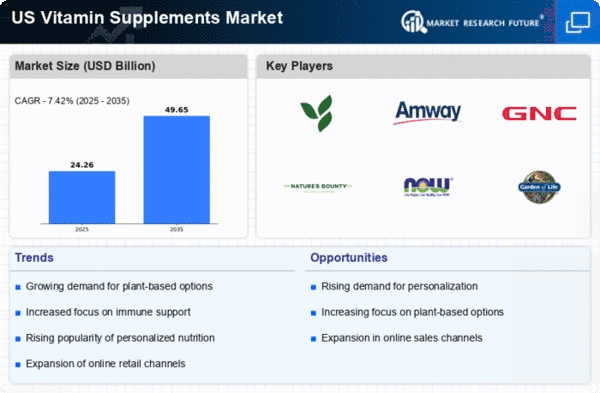
As per Market Research Future analysis, the US vitamin supplements market Size was estimated at 22.58 USD Billion in 2024. The US vitamin supplements market is projected to grow from 24.26 USD Billion in 2025 to 49.65 USD Billion by 2035, exhibiting a compound annual growth rate (CAGR) of 7.4% during the forecast period 2025 - 2035

Key Market Trends & Highlights

The US vitamin supplements market is experiencing a dynamic shift towards personalized and sustainable solutions.

  • The largest segment in the US vitamin supplements market is the multivitamins category, which continues to dominate sales.
  • The fastest-growing segment is the plant-based supplements, reflecting a rising consumer preference for natural ingredients.
  • Digital health integration is becoming increasingly prevalent, as consumers seek convenient ways to manage their health through technology.
  • Key market drivers include growing health consciousness and the expansion of e-commerce, which are significantly influencing purchasing behaviors.

Market Size & Forecast

2024 Market Size 22.58 (USD Billion)
2035 Market Size 49.65 (USD Billion)
CAGR (2025 - 2035) 7.42%

Major Players

Herbalife (US), Amway (US), GNC Holdings (US), Nature's Bounty (US), NOW Foods (US), Garden of Life (US), Solgar (US), Swanson Health Products (US), NutraBlast (US)

Our Impact
Enabled $4.3B Revenue Impact for Fortune 500 and Leading Multinationals
Partnering with 2000+ Global Organizations Each Year
30K+ Citations by Top-Tier Firms in the Industry

US Vitamin Supplements Market Trends

The vitamin supplements market is currently experiencing a notable transformation, driven by evolving consumer preferences and increasing awareness regarding health and wellness. Individuals are becoming more proactive about their nutritional intake, leading to a surge in demand for various vitamin products. This shift is influenced by a growing understanding of the role that vitamins play in maintaining overall health, as well as the desire for preventive healthcare solutions. As a result, manufacturers are expanding their product lines to cater to diverse consumer needs, including formulations targeting specific demographics such as children, seniors, and athletes. Moreover, the rise of e-commerce platforms has significantly altered the purchasing landscape for vitamin supplements. Consumers now have greater access to a wide array of products, allowing for informed choices based on reviews and ingredient transparency. This trend is further supported by the increasing popularity of personalized nutrition, where individuals seek tailored vitamin solutions that align with their unique health goals. Consequently, the vitamin supplements market is poised for continued growth, as innovation and consumer engagement remain at the forefront of industry developments.

Personalized Nutrition Solutions

There is a growing trend towards personalized nutrition within the vitamin supplements market. Consumers are increasingly seeking products tailored to their specific health needs and preferences. This shift is prompting manufacturers to develop customized formulations that consider individual dietary requirements, lifestyle factors, and health goals.

Sustainability and Clean Labeling

Sustainability has emerged as a key consideration for consumers in the vitamin supplements market. There is a rising demand for products that are not only effective but also environmentally friendly. Clean labeling, which emphasizes transparency in ingredient sourcing and production processes, is becoming a priority for many consumers.

Digital Health Integration

The integration of digital health technologies is transforming the vitamin supplements market. Consumers are utilizing apps and wearable devices to track their nutritional intake and health metrics. This trend is encouraging brands to develop digital platforms that enhance consumer engagement and provide personalized recommendations.

US Vitamin Supplements Market Drivers

E-commerce Expansion

The rapid growth of e-commerce platforms is reshaping the vitamin supplements market. Consumers increasingly prefer the convenience of online shopping, which offers a wider selection of products and competitive pricing. In 2025, online sales are expected to account for over 30% of total vitamin supplement sales in the US. This shift is facilitated by advancements in technology and the proliferation of mobile devices, allowing consumers to easily access product information and reviews. Additionally, the vitamin supplements market benefits from targeted online marketing strategies that reach specific demographics. As more consumers turn to online channels for their health needs, the market is likely to see continued growth driven by e-commerce.

Growing Health Consciousness

The increasing awareness of health and wellness among consumers is a primary driver for the vitamin supplements market. As individuals become more informed about the benefits of vitamins and minerals, they are more likely to incorporate these supplements into their daily routines. This trend is reflected in the rising sales figures, with the market projected to reach approximately $50 billion by 2026. The focus on preventive healthcare and the desire to maintain optimal health are influencing purchasing decisions. Furthermore, the aging population in the US is contributing to this trend, as older adults often seek supplements to support their health needs. The vitamin supplements market is thus experiencing a surge in demand, driven by a collective shift towards healthier lifestyles.

Innovative Product Development

Innovation in product formulation and delivery methods is a significant driver in the vitamin supplements market. Companies are increasingly focusing on developing unique products that cater to specific health concerns, such as immunity support, digestive health, and mental well-being. The introduction of gummies, powders, and liquid supplements has broadened the appeal of vitamins, particularly among younger consumers. In 2025, the market for gummy vitamins alone is projected to exceed $10 billion. This trend indicates a shift towards more palatable and convenient options, which is likely to attract a wider audience. The vitamin supplements market is thus evolving, with innovation playing a crucial role in meeting consumer demands.

Rising Demand for Natural Ingredients

The trend towards natural and organic products is significantly influencing the vitamin supplements market. Consumers are increasingly seeking supplements made from natural sources, free from artificial additives and preservatives. This demand is reflected in the growing popularity of plant-based vitamins and minerals, which are perceived as healthier alternatives. In 2025, the market for natural vitamin supplements is expected to grow by over 15%. This shift is driven by a desire for transparency and clean labeling, as consumers become more discerning about the ingredients in their supplements. The vitamin supplements market is thus adapting to these preferences, with manufacturers reformulating products to meet the rising demand for natural ingredients.

Increased Focus on Preventive Healthcare

The growing emphasis on preventive healthcare is driving the vitamin supplements market. Consumers are increasingly recognizing the importance of maintaining health rather than merely treating illnesses. This proactive approach is leading to higher consumption of dietary supplements, as individuals seek to enhance their overall well-being. The market is projected to grow at a CAGR of 7% through 2026, reflecting this shift in consumer behavior. Health professionals are also advocating for the use of vitamins to support immune function and overall health, further legitimizing their use. The vitamin supplements market is thus benefiting from this trend, as more individuals prioritize preventive measures in their health regimens.


Market Segment Insights

By Type: Multivitamins (Largest) vs. Vitamin Gummies (Fastest-Growing)

The US vitamin supplements market exhibits significant segmentation, with multivitamins commanding a substantial share, appealing to a broad audience seeking comprehensive nutritional benefits. Following multivitamins, single vitamins and vitamin blends cater to more specific health needs, while vitamin gummies have surged in popularity, particularly among younger consumers due to their appealing taste and convenience. Growth trends in this segment are driven by increasing health consciousness and the rising preference for preventive health measures among consumers. The demand for multivitamins remains strong, however, vitamin gummies have emerged as the fastest-growing category, capturing the attention of health-focused millennials and Generation Z, which is boosting innovation in flavors and formulations.

Multivitamins (Dominant) vs. Vitamin Gummies (Emerging)

Multivitamins serve as a dominant force in the US vitamin supplements market, providing consumers with a convenient option to fulfill their daily nutritional requirements. They are known for their comprehensive formulation that typically includes a range of essential vitamins and minerals. In contrast, vitamin gummies are an emerging segment, favored particularly by those who find traditional supplements unpalatable. The chewable format and enjoyable flavors resonate particularly well with younger users, driving vibrant growth in this area. Manufacturers are keenly aware of these shifting preferences, leading to innovative product launches and marketing strategies that highlight the benefits and fun aspect of vitamin gummies, positioning them as a compliance-friendly alternative to standard pills.

By Formulation: Tablets (Largest) vs. Powder (Fastest-Growing)

The formulation segment of the US vitamin supplements market is dominated by tablets, which maintain a significant market share due to their convenience and ease of consumption. Capsules follow closely, offering an alternative that appeals to consumers looking for quicker digestion. Meanwhile, liquids and powders account for smaller shares but cater to specific consumer preferences, such as those seeking rapid absorption or tailored nutrition. Overall, tablets remain the favorite choice among consumers, driving their dominant market position. Growth trends indicate a rising interest in powder formulations, which are increasingly recognized for their versatility and effectiveness in delivering nutrients. The convenience of using powders in smoothies and shakes, along with their appeal to fitness enthusiasts, contributes to their status as the fastest-growing segment. As health and wellness trends evolve, the demand for innovative delivery forms, including effervescent and flavored powders, is expected to accelerate further, boosting their market presence.

Tablets: Dominant vs. Powder: Emerging

Tablets stand as the dominant formulation in the US vitamin supplements market, largely due to their stability, long shelf life, and consumer familiarity. They are preferred for daily vitamin intake due to their portability and variety in formulations. On the other hand, powders represent an emerging trend, gaining traction among younger demographics and fitness-oriented consumers. Their ability to be easily mixed into beverages makes them appealing for on-the-go lifestyles. Unlike tablets, powders facilitate a higher dose of nutrients per serving and are frequently marketed with added flavors and health benefits, making them a popular choice among those looking for convenience and enhanced nutritional value.

By Distribution Channel: Online Retail (Largest) vs. Pharmacies (Fastest-Growing)

The distribution of market share in the US vitamin supplements market is significantly influenced by various channels. Online retail commands a substantial portion of the market, driven by the ease of access and convenience it offers consumers. Pharmacies also play a crucial role, catering to health-conscious individuals who prefer purchasing supplements alongside prescriptions. Supermarkets and health stores contribute to the diversity of distribution, but they remain smaller players in comparison to the leading channels. Growth trends within the distribution channel reveal a fascinating shift towards online retail, fueled by an increase in e-commerce adoption, particularly post-pandemic. Pharmacies are emerging as the fastest-growing segment due to their trusted health recommendations and broader product assortments. As consumers become more health-oriented, the collaboration between pharmacies and health supplement brands is expected to intensify, further driving growth in this channel.

Online Retail: Dominant vs. Pharmacies: Emerging

Online retail stands as the dominant channel in the US vitamin supplements market, representing a significant share due to the increasing consumer preference for shopping from home. Its advantages include vast product selections, competitive pricing, and efficient delivery options, catering to a broad demographic. In contrast, pharmacies are emerging as an essential player in the market, capitalizing on their established trust and convenience for health-related purchases. These establishments not only provide essential supplements but also offer essential guidance from pharmacists, enhancing consumer confidence. As both segments evolve, their roles will become more defined, with online retail focusing on accessibility and convenience while pharmacies emphasize personalized customer service and expert advice.

By End User: Children (Largest) vs. Adults (Fastest-Growing)

In the US vitamin supplements market, the segment distribution reveals that Children hold the largest share, as parents increasingly prioritize nutritional supplements for their children's growth and development. This focus is driven by rising health awareness among parents and a persistent concern about dietary deficiencies in younger populations. Following closely, the Adults segment is rapidly gaining traction as more individuals recognize the importance of maintaining their health through dietary supplementation, particularly in the face of modern lifestyle challenges. Growth trends indicate that the Adults segment is currently the fastest-growing category, fueled by an increasing number of health-conscious consumers and the aging population seeking preventive health measures. The Pregnant Women segment also shows significant growth, driven by heightened awareness of maternal health and the benefits of specific supplements during pregnancy. The Elderly segment remains stable, yet it experiences steady demand as the aging demographic seeks to enhance their overall wellbeing with targeted vitamin solutions.

Children (Dominant) vs. Adults (Emerging)

The Children segment in the US vitamin supplements market is characterized by its dominant market position, largely due to robust marketing strategies targeting parents and caregivers. Popular products often include multivitamins and immune support supplements that cater to key nutritional needs during critical growth phases. This segment is supported by increasing awareness around childhood nutrition and safety standards that boost consumer confidence. Conversely, the Adults segment is emerging rapidly as a focal area, with a growing demand for specialized supplements, including those aimed at fitness and wellness. Adults are becoming increasingly proactive about health, resulting in a diverse range of products that cater to varying lifestyles, such as weight management, energy enhancement, and stress reduction.

Get more detailed insights about US Vitamin Supplements Market

Key Players and Competitive Insights

The vitamin supplements market is characterized by a dynamic competitive landscape, driven by increasing consumer awareness regarding health and wellness. Key players such as Herbalife (US), GNC Holdings (US), and Nature's Bounty (US) are strategically positioned to leverage this trend. Herbalife (US) focuses on innovation in product formulations, emphasizing plant-based ingredients and personalized nutrition solutions. GNC Holdings (US) has adopted a multi-channel retail strategy, enhancing its online presence while optimizing in-store experiences. Nature's Bounty (US) emphasizes sustainability in sourcing and packaging, appealing to environmentally conscious consumers. Collectively, these strategies contribute to a competitive environment that prioritizes innovation and consumer engagement.In terms of business tactics, companies are increasingly localizing manufacturing to reduce supply chain vulnerabilities and enhance responsiveness to market demands. The market structure appears moderately fragmented, with a mix of established brands and emerging players. This fragmentation allows for diverse product offerings, yet the influence of key players remains substantial, shaping consumer preferences and market trends.

In October GNC Holdings (US) announced a partnership with a leading e-commerce platform to enhance its digital sales capabilities. This strategic move is likely to bolster GNC's market presence, enabling it to reach a broader audience and adapt to the growing trend of online shopping. By integrating advanced analytics into its operations, GNC aims to personalize customer experiences, thereby increasing customer loyalty and retention.

In September Herbalife (US) launched a new line of vegan protein supplements, reflecting its commitment to innovation and consumer health trends. This product introduction not only diversifies Herbalife's portfolio but also positions the company favorably within the growing vegan market segment. The emphasis on plant-based nutrition aligns with consumer preferences for healthier, sustainable options, potentially enhancing brand loyalty and market share.

In August Nature's Bounty (US) unveiled a new sustainability initiative aimed at reducing its carbon footprint by 30% by 2030. This initiative underscores the company's commitment to environmental responsibility, which is increasingly becoming a key differentiator in the market. By prioritizing sustainability, Nature's Bounty may attract a growing segment of eco-conscious consumers, thereby enhancing its competitive edge.

As of November current trends in the vitamin supplements market indicate a strong shift towards digitalization, sustainability, and the integration of AI technologies. Strategic alliances are becoming more prevalent, allowing companies to pool resources and expertise to enhance product offerings and market reach. Looking ahead, competitive differentiation is likely to evolve from traditional price-based strategies to a focus on innovation, technological advancements, and supply chain reliability. This shift suggests that companies that prioritize these areas will be better positioned to thrive in an increasingly competitive landscape.

Key Companies in the US Vitamin Supplements Market include

Future Outlook

US Vitamin Supplements Market Future Outlook

The Vitamin Supplements Market is projected to grow at a 7.42% CAGR from 2025 to 2035, driven by increasing health awareness, aging populations, and innovative product formulations.

New opportunities lie in:

  • Development of personalized vitamin subscription services
  • Expansion into e-commerce platforms with targeted marketing
  • Investment in research for plant-based and organic supplements

By 2035, the market is expected to achieve robust growth, reflecting evolving consumer preferences and increased health consciousness.

Market Segmentation

US Vitamin Supplements Market Type Outlook

  • Multivitamins
  • Single Vitamins
  • Vitamin Blends
  • Vitamin Gummies

US Vitamin Supplements Market End User Outlook

  • Children
  • Adults
  • Pregnant Women
  • Elderly

US Vitamin Supplements Market Formulation Outlook

  • Tablets
  • Capsules
  • Powder
  • Liquid

US Vitamin Supplements Market Distribution Channel Outlook

  • Online Retail
  • Pharmacies
  • Supermarkets
  • Health Stores

Report Scope

MARKET SIZE 2024 22.58(USD Billion)
MARKET SIZE 2025 24.26(USD Billion)
MARKET SIZE 2035 49.65(USD Billion)
COMPOUND ANNUAL GROWTH RATE (CAGR) 7.42% (2025 - 2035)
REPORT COVERAGE Revenue Forecast, Competitive Landscape, Growth Factors, and Trends
BASE YEAR 2024
Market Forecast Period 2025 - 2035
Historical Data 2019 - 2024
Market Forecast Units USD Billion
Key Companies Profiled Herbalife (US), Amway (US), GNC Holdings (US), Nature's Bounty (US), NOW Foods (US), Garden of Life (US), Solgar (US), Swanson Health Products (US), NutraBlast (US)
Segments Covered Type, Formulation, Distribution Channel, End User
Key Market Opportunities Growing consumer demand for personalized vitamin supplements tailored to individual health needs.
Key Market Dynamics Rising consumer awareness drives demand for transparency and quality in vitamin supplements, influencing market dynamics.
Countries Covered US
Leave a Comment
Download Free Sample

Kindly complete the form below to receive a free sample of this Report

Compare Licence

×
Features License Type
Single User Multiuser License Enterprise User
Price $4,950 $5,950 $7,250
Maximum User Access Limit 1 User Upto 10 Users Unrestricted Access Throughout the Organization
Free Customization
Direct Access to Analyst
Deliverable Format
Platform Access
Discount on Next Purchase 10% 15% 15%
Printable Versions