×
Request Free Sample ×

Kindly complete the form below to receive a free sample of this Report

* Please use a valid business email

Leading companies partner with us for data-driven Insights

clients tt-cursor
Hero Background

Vinyl Window Market

ID: MRFR/PCM/29625-HCR
111 Pages
Snehal Singh
February 2026

Vinyl Window Market Research Report: By Vinyl Composition (Standard Vinyl, Reinforced Vinyl, Gasketed Vinyl), By Window Type (Casement Windows, Sliding Windows, Double-Hung Windows, Single-Hung Windows, Picture Windows), By Frame Thickness (Standard Frame, Thick Frame, Ultra-Thick Frame), By Insulation Type (Single Pane, Double Pane, Triple Pane), By Market Application (Residential, Commercial, Industrial) and By Regional (North America, Europe, South America, Asia Pacific, Middle East and Africa) - Forecast to 2035.

Share:
Download PDF ×

We do not share your information with anyone. However, we may send you emails based on your report interest from time to time. You may contact us at any time to opt-out.

Vinyl Window Market Infographic
Purchase Options

Vinyl Window Market Summary

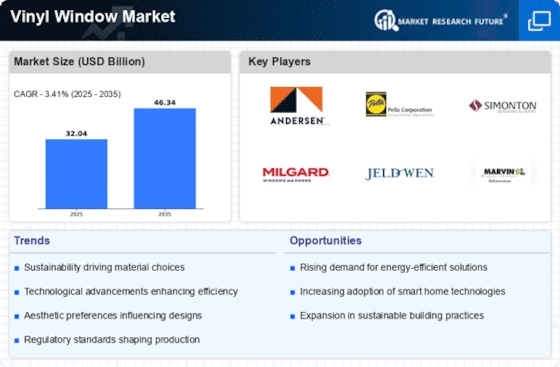
As per Market Research Future analysis, the Vinyl Window Market Size was estimated at 32.04 USD Billion in 2024. The Vinyl Window industry is projected to grow from 33.13 USD Billion in 2025 to 46.34 USD Billion by 2035, exhibiting a compound annual growth rate (CAGR) of 3.41% during the forecast period 2025 - 2035

Key Market Trends & Highlights

The Vinyl Window Market is experiencing a dynamic shift towards sustainability and technological advancements.

  • The North American region remains the largest market for vinyl windows, driven by a robust construction sector.
  • Asia-Pacific is emerging as the fastest-growing region, reflecting increasing urbanization and housing demand.
  • Standard vinyl windows dominate the market, while reinforced vinyl windows are gaining traction due to their enhanced durability.
  • Key market drivers include rising energy efficiency demand and regulatory support, which are propelling the adoption of vinyl windows.

Market Size & Forecast

2024 Market Size 32.04 (USD Billion)
2035 Market Size 46.34 (USD Billion)
CAGR (2025 - 2035) 3.41%

Major Players

Andersen Corporation (US), Pella Corporation (US), Simonton Windows (US), Milgard Windows and Doors (US), Jeld-Wen Holding, Inc. (US), Marvin Windows and Doors (US), Atrium Windows and Doors (US), Alside (US), Therma-Tru Doors (US)

Our Impact
Enabled $4.3B Revenue Impact for Fortune 500 and Leading Multinationals
Partnering with 2000+ Global Organizations Each Year
30K+ Citations by Top-Tier Firms in the Industry

Vinyl Window Market Trends

The Vinyl Window Market is currently experiencing a notable transformation, driven by a combination of aesthetic preferences, energy efficiency demands, and advancements in manufacturing technologies. As consumers increasingly prioritize sustainability, the market appears to be shifting towards products that not only enhance the visual appeal of homes but also contribute to energy savings. This trend is further supported by a growing awareness of environmental issues, prompting manufacturers to innovate and offer eco-friendly solutions. Additionally, the integration of smart technologies into window designs is becoming more prevalent, suggesting a potential shift in consumer expectations regarding functionality and convenience. Moreover, the Vinyl Window Market is likely to witness a rise in demand for customizable options, as homeowners seek personalized solutions that reflect their unique styles. This inclination towards customization may lead to increased competition among manufacturers, who must adapt to evolving consumer preferences. Furthermore, the ongoing urbanization and the expansion of residential construction projects could provide additional momentum for the market, as new developments often incorporate modern window solutions. Overall, the Vinyl Window Market seems poised for growth, driven by a blend of innovation, sustainability, and changing consumer behaviors.

Sustainability Focus

The Vinyl Window Market is increasingly aligning with sustainability trends, as consumers demand eco-friendly products. This shift is prompting manufacturers to explore materials and processes that minimize environmental impact, potentially leading to a broader range of green options.

Technological Integration

Advancements in technology are influencing the Vinyl Window Market, with smart features becoming more common. These innovations may enhance energy efficiency and user convenience, suggesting a future where windows are not just functional but also intelligent.

Customization Demand

There is a growing trend towards customization within the Vinyl Window Market, as homeowners seek unique designs that reflect personal tastes. This demand for tailored solutions could drive competition among manufacturers, encouraging them to offer diverse options.

Vinyl Window Market Drivers

Regulatory Support

Regulatory frameworks promoting energy efficiency and sustainability are significantly influencing the Vinyl Window Market. Governments worldwide are implementing stricter building codes and energy performance standards, which often favor the use of vinyl windows due to their energy-saving capabilities. For instance, regulations that mandate the use of low-emissivity (Low-E) glass in windows have led to increased adoption of vinyl windows, as they can easily accommodate such technologies. This regulatory support not only encourages manufacturers to innovate but also drives consumers towards compliant products. As these regulations become more prevalent, the Vinyl Window Market is expected to expand, with manufacturers adapting to meet new standards and consumer preferences.

Aesthetic Versatility

The aesthetic versatility of vinyl windows serves as a compelling driver in the Vinyl Window Market. Homeowners and builders are increasingly drawn to the wide range of styles, colors, and finishes that vinyl windows offer, allowing for customization that aligns with various architectural designs. This adaptability is particularly appealing in renovation projects, where matching existing aesthetics is crucial. Market data indicates that the demand for customizable window solutions is on the rise, with vinyl windows being favored for their ability to blend seamlessly with different home styles. As the trend towards personalized home design continues, the Vinyl Window Market is likely to benefit from this growing preference for aesthetic flexibility.

Energy Efficiency Demand

The increasing emphasis on energy efficiency is a pivotal driver in the Vinyl Window Market. Consumers are increasingly seeking windows that not only enhance aesthetic appeal but also contribute to energy savings. Vinyl windows, known for their superior insulation properties, help reduce heating and cooling costs, making them an attractive option for homeowners. According to recent data, energy-efficient windows can reduce energy bills by up to 15%. This trend is further supported by government incentives aimed at promoting energy-efficient home improvements, which bolster the demand for vinyl windows. As energy costs continue to rise, the Vinyl Window Market is likely to experience sustained growth driven by this demand for energy-efficient solutions.

Durability and Low Maintenance

The durability and low maintenance requirements of vinyl windows are key factors driving the Vinyl Window Market. Unlike traditional materials such as wood, vinyl does not require regular painting or staining, making it a cost-effective choice for homeowners. The inherent resistance of vinyl to rot, corrosion, and fading contributes to its long lifespan, which is appealing to consumers looking for long-term investments. Market analysis suggests that the longevity of vinyl windows can exceed 30 years, further enhancing their attractiveness. As homeowners prioritize low-maintenance solutions, the Vinyl Window Market is poised for growth, with vinyl windows emerging as a preferred option for both new constructions and renovations.

Rising Construction Activities

The resurgence in construction activities is a significant driver for the Vinyl Window Market. As urbanization accelerates and housing demands increase, the need for efficient and aesthetically pleasing window solutions becomes paramount. Vinyl windows are often chosen for new residential and commercial projects due to their cost-effectiveness and energy efficiency. Recent statistics indicate that the construction sector is experiencing a robust recovery, with residential building permits rising steadily. This uptick in construction not only boosts the demand for vinyl windows but also encourages manufacturers to innovate and expand their product lines. As construction activities continue to rise, the Vinyl Window Market is likely to see sustained growth, driven by the increasing need for modern window solutions.


Market Segment Insights

By Vinyl Composition: Standard Vinyl (Largest) vs. Reinforced Vinyl (Fastest-Growing)

In the Vinyl Window Market, Standard Vinyl holds the largest market share among the vinyl composition segments, attributed to its established reputation for durability and cost-effectiveness. Reinforced Vinyl follows as the fastest-growing segment, gaining traction due to its enhanced performance characteristics, particularly in strength and insulation properties, appealing to a market increasingly focused on energy efficiency.

Standard Vinyl (Dominant) vs. Reinforced Vinyl (Emerging)

Standard Vinyl is known for its reliability and affordability, making it the go-to choice for budget-conscious consumers and builders. Its market dominance stems from its versatility and ease of maintenance. However, Reinforced Vinyl is emerging as a competitor, with heightened demand for windows that offer superior structural integrity and security. This segment is gaining momentum, particularly among environmentally conscious buyers looking for energy-efficient options. The growth in this area is driven by innovations in material science, leading to designs that not only improve thermal performance but also extend the life cycle of the product.

By Window Type: Double-Hung Windows (Largest) vs. Casement Windows (Fastest-Growing)

In the Vinyl Window Market, Double-Hung Windows hold the largest market share, favored for their traditional aesthetic and ease of use. Following closely are Casement Windows, which have begun to carve out a significant portion of the market due to their superior energy efficiency and ventilation capabilities. Other segment values like Sliding and Picture Windows also contribute, but to a lesser extent, catering to specific consumer preferences and architectural designs.

Double-Hung Windows (Dominant) vs. Casement Windows (Emerging)

Double-Hung Windows are characterized by their versatility and appeal to a wide demographic, making them a staple in many homes. This segment offers enhanced ventilation and energy efficiency, positioning it as the dominant choice for renovations and new builds alike. In contrast, Casement Windows have emerged as a popular choice, especially in modern designs. Their hinged design provides unobstructed views and excellent airflow, attracting environmentally conscious consumers and those seeking contemporary aesthetics. This shift reflects a growing preference for energy-efficient home solutions in the vinyl window market.

By Frame Thickness: Standard Frame (Largest) vs. Ultra-Thick Frame (Fastest-Growing)

In the Vinyl Window Market, the frame thickness segment is characterized by significant market share distribution among three main categories: Standard Frame, Thick Frame, and Ultra-Thick Frame. The Standard Frame holds a dominant position, appealing to a wide array of consumers due to its balance of cost-effectiveness and durability. Meanwhile, the Thick Frame segment has carved out a solid niche, offering enhanced structural integrity and energy efficiency, further supporting its growth in select markets. The growth trends within this segment indicate a notable shift towards Ultra-Thick Frames, which are increasingly preferred for their superior insulation properties and modern aesthetic appeal. Factors driving this growth include rising energy costs, consumer demand for eco-friendly solutions, and an increasing awareness of the long-term benefits of investing in thicker, more robust window frames.

Standard Frame (Dominant) vs. Ultra-Thick Frame (Emerging)

The Standard Frame has established itself as the backbone of the Vinyl Window Market, catering to a vast customer base that prioritizes affordability without compromising quality. Its well-rounded features, including adequate insulation and ease of installation, make it the go-to choice for many homeowners. In contrast, the Ultra-Thick Frame segment is gaining momentum as an emerging player, appealing particularly to environmentally conscious consumers seeking energy-efficient solutions. These frames provide superior thermal performance, thus reducing heating and cooling costs. Their modern design also aligns with contemporary architectural trends, making them attractive for new builds and renovations alike. As the market evolves, the balance between these two segments will likely shape future offerings in the vinyl window industry.

By Insulation Type: Double Pane (Largest) vs. Triple Pane (Fastest-Growing)

In the Vinyl Window Market, the insulation type segments demonstrate varying levels of market share distribution. Double Pane windows currently hold the largest share, significantly favored for their balance of efficiency and cost-effectiveness. Single Pane options, while traditional, are decreasing due to a growing preference for more energy-efficient solutions. Meanwhile, Triple Pane windows are gaining traction, appealing to consumers keen on maximizing insulation and energy savings.

Insulation Type: Double Pane (Dominant) vs. Triple Pane (Emerging)

Double Pane windows are recognized for their excellent energy efficiency, creating a sealed air space that serves as an insulating barrier. This makes them the dominant choice among homeowners looking to enhance comfort while minimizing energy costs. Conversely, Triple Pane windows are emerging as the preferred option for energy-conscious consumers. They offer even greater thermal resistance and soundproofing, making them attractive for both residential and commercial applications. As environmental concerns rise and energy efficiency standards become stricter, the demand for Triple Pane windows is expected to grow significantly, positioning them as a formidable competitor in the market.

By Application: Residential (Largest) vs. Commercial (Fastest-Growing)

In the Vinyl Window Market, the application segment is predominantly driven by the residential sector, which has established itself as the largest contributor to overall market share. This growth in residential applications is attributed to the increasing demand for energy-efficient homes and aesthetic enhancements. Meanwhile, the commercial segment is experiencing rapid expansion as businesses increasingly prioritize sustainability and modern aesthetics in their buildings, thereby fueling the demand for vinyl windows. The growth trends within the Vinyl Window Market indicate that while the residential segment remains dominant, the commercial sector is quickly catching up. Factors such as urbanization, increased disposable income, and a strong focus on energy efficiency are propelling the residential market, whereas the commercial sector is benefiting from a surge in new constructions and renovations. This dual momentum highlights the growing relevance and versatility of vinyl windows across various applications, promoting innovation within the market.

Residential (Dominant) vs. Commercial (Emerging)

The residential sector in the Vinyl Window Market is characterized by a robust demand for customizable and energy-efficient window solutions. Homeowners are increasingly investing in vinyl windows due to their durability, low maintenance needs, and versatile design options. The dominant position of residential applications is reinforced by a shift towards sustainable building practices and renovations, where vinyl windows play a crucial role in achieving energy efficiency. On the other hand, the commercial segment represents an emerging opportunity, with businesses looking to enhance their property values and appeal. This segment is witnessing a rise in renovations and new constructions focusing on architectural style and energy savings, which positions vinyl windows as an attractive option for commercial builders and property developers.

Get more detailed insights about Vinyl Window Market

Regional Insights

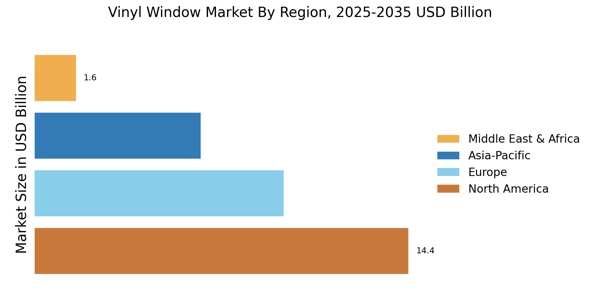
The growth reflects a compound annual growth rate (CAGR) of approximately 3.41% from 2024 to 2032. North America leads the market, driven by increasing demand for energy-efficient construction and renovation projects. Europe follows closely, with a focus on sustainability and eco-friendly building practices enhancing vinyl window adoption.

The Asia-Pacific (APAC) region is witnessing rapid urbanization and a growing middle-class population, creating substantial opportunities for vinyl window sales. South America is gradually expanding in this market, fueled by infrastructure development and increased housing projects.

The Middle East and Africa (MEA) present potential growth avenues as economic diversification in several countries encourages investments in modern building technologies.

Overall, the market dynamics are influenced by a variety of factors, including trends towards enhanced energy efficiency, regulatory pressures, and innovations in manufacturing processes, presenting numerous challenges and opportunities for stakeholders in the vinyl window market. 

Vinyl Window Market Regional Image

Key Players and Competitive Insights

The Vinyl Window Market is currently characterized by a dynamic competitive landscape, driven by factors such as increasing consumer demand for energy-efficient solutions, aesthetic versatility, and durability. Major players like Andersen Corporation (US), Pella Corporation (US), and Jeld-Wen Holding, Inc. (US) are strategically positioning themselves through innovation and regional expansion. Andersen Corporation (US) has focused on enhancing its product line with sustainable materials, while Pella Corporation (US) emphasizes digital transformation to improve customer engagement and streamline operations. Jeld-Wen Holding, Inc. (US) is also investing in advanced manufacturing technologies, which collectively shape a competitive environment that prioritizes sustainability and technological advancement.Key business tactics within the Vinyl Window Market include localizing manufacturing to reduce costs and optimize supply chains. The market appears moderately fragmented, with several key players exerting influence over regional markets. This fragmentation allows for niche players to thrive, while larger companies leverage their scale to implement cost-effective strategies. The collective influence of these key players fosters a competitive structure that encourages innovation and responsiveness to consumer preferences.

In August Andersen Corporation (US) announced the launch of a new line of energy-efficient vinyl windows designed to meet the latest energy standards. This strategic move not only enhances their product offerings but also positions them favorably in a market increasingly focused on sustainability. By aligning with regulatory trends, Andersen Corporation (US) is likely to capture a larger share of environmentally conscious consumers.

In September Pella Corporation (US) unveiled a digital platform aimed at enhancing customer experience through virtual consultations and augmented reality tools. This initiative reflects a broader trend towards digitalization in the industry, allowing Pella Corporation (US) to engage customers more effectively and streamline the purchasing process. Such advancements may provide a competitive edge in attracting tech-savvy consumers who prioritize convenience and innovation.

In July Jeld-Wen Holding, Inc. (US) completed a strategic acquisition of a regional vinyl window manufacturer, which is expected to bolster its market presence and expand its product portfolio. This acquisition not only enhances Jeld-Wen's operational capabilities but also allows for greater market penetration in underserved regions. The strategic importance of this move lies in its potential to increase market share and improve supply chain efficiencies.

As of October current competitive trends in the Vinyl Window Market are increasingly defined by digitalization, sustainability, and the integration of artificial intelligence in manufacturing processes. Strategic alliances among key players are shaping the landscape, fostering innovation and collaboration. Looking ahead, competitive differentiation is likely to evolve from traditional price-based competition to a focus on innovation, technology, and supply chain reliability, as companies strive to meet the growing expectations of environmentally conscious consumers.

Key Companies in the Vinyl Window Market include

Industry Developments

Recent developments in the vinyl window market have been shaped by a growing emphasis on energy efficiency and sustainability. Increasing regulations aimed at curbing energy consumption have prompted manufacturers to innovate their product lines, integrating advanced technologies like low-E glass and insulation materials.

Additionally, the demand for eco-friendly building materials is raising awareness of the benefits of vinyl windows, which offer durability and lower maintenance costs compared to traditional options. The market is also witnessing a shift due to rising consumer interest in aesthetic customization, leading to a broader range of styles and colors.

Moreover, geopolitical factors and supply chain disruptions have affected the raw materials needed for production, raising costs and prompting businesses to explore alternative sourcing strategies.

Despite these challenges, the industry's growth trajectory remains supported by the robust construction and renovation markets, particularly in North America and Europe, where vinyl windows are increasingly favored for both residential and commercial projects.

As manufacturers adapt to these trends, the future outlook for the vinyl window market appears poised for steady expansion through 2032.

Future Outlook

Vinyl Window Market Future Outlook

The Vinyl Window Market is projected to grow at a 3.41% CAGR from 2025 to 2035, driven by energy efficiency demands, aesthetic preferences, and technological advancements.

New opportunities lie in:

  • Expansion into smart window technologies for energy management.
  • Development of eco-friendly vinyl materials to attract sustainability-focused consumers.
  • Strategic partnerships with construction firms for integrated window solutions.

By 2035, the Vinyl Window Market is expected to solidify its position as a leader in energy-efficient building solutions.

Market Segmentation

Vinyl Window Market Application Outlook

  • Residential
  • Commercial
  • Industrial

Vinyl Window Market Window Type Outlook

  • Casement Windows
  • Sliding Windows
  • Double-Hung Windows
  • Single-Hung Windows
  • Picture Windows

Vinyl Window Market Frame Thickness Outlook

  • Standard Frame
  • Thick Frame
  • Ultra-Thick Frame

Vinyl Window Market Insulation Type Outlook

  • Single Pane
  • Double Pane
  • Triple Pane

Vinyl Window Market Vinyl Composition Outlook

  • Standard Vinyl
  • Reinforced Vinyl
  • Gasketed Vinyl

Report Scope

MARKET SIZE 202432.04(USD Billion)
MARKET SIZE 202533.13(USD Billion)
MARKET SIZE 203546.34(USD Billion)
COMPOUND ANNUAL GROWTH RATE (CAGR)3.41% (2025 - 2035)
REPORT COVERAGERevenue Forecast, Competitive Landscape, Growth Factors, and Trends
BASE YEAR2024
Market Forecast Period2025 - 2035
Historical Data2019 - 2024
Market Forecast UnitsUSD Billion
Key Companies ProfiledAndersen Corporation (US), Pella Corporation (US), Simonton Windows (US), Milgard Windows and Doors (US), Jeld-Wen Holding, Inc. (US), Marvin Windows and Doors (US), Atrium Windows and Doors (US), Alside (US), Therma-Tru Doors (US)
Segments CoveredVinyl Composition, Window Type, Frame Thickness, Insulation Type, Market Application, Regional
Key Market OpportunitiesGrowing demand for energy-efficient solutions drives innovation in the Vinyl Window Market.
Key Market DynamicsRising consumer preference for energy-efficient solutions drives innovation and competition in the vinyl window market.
Countries CoveredNorth America, Europe, APAC, South America, MEA
Leave a Comment

FAQs

What is the current valuation of the Vinyl Window Market?

The Vinyl Window Market was valued at 32.04 USD Billion in 2024.

What is the projected market valuation for the Vinyl Window Market in 2035?

The market is projected to reach 46.34 USD Billion by 2035.

What is the expected CAGR for the Vinyl Window Market during the forecast period 2025 - 2035?

The expected CAGR for the Vinyl Window Market during 2025 - 2035 is 3.41%.

Which companies are considered key players in the Vinyl Window Market?

Key players in the market include Andersen Corporation, Pella Corporation, and Simonton Windows, among others.

What are the main segments of the Vinyl Window Market?

The main segments include Vinyl Composition, Window Type, Frame Thickness, Insulation Type, and Application.

How does the valuation of Standard Vinyl compare to other vinyl compositions?

Standard Vinyl was valued at 12.0 USD Billion in 2024 and is projected to reach 17.0 USD Billion by 2035.

What is the market performance of Double-Hung Windows in the Vinyl Window Market?

Double-Hung Windows had a valuation of 8.02 USD Billion in 2024, expected to grow to 11.34 USD Billion by 2035.

What is the projected growth for the Residential application segment in the Vinyl Window Market?

The Residential application segment was valued at 12.0 USD Billion in 2024 and is projected to reach 17.0 USD Billion by 2035.

Download Free Sample

Kindly complete the form below to receive a free sample of this Report

Compare Licence

×
Features License Type
Single User Multiuser License Enterprise User
Price $4,950 $5,950 $7,250
Maximum User Access Limit 1 User Upto 10 Users Unrestricted Access Throughout the Organization
Free Customization
Direct Access to Analyst
Deliverable Format
Platform Access
Discount on Next Purchase 10% 15% 15%
Printable Versions