×
Request Free Sample ×

Kindly complete the form below to receive a free sample of this Report

* Please use a valid business email

Leading companies partner with us for data-driven Insights

clients tt-cursor
Hero Background

US Red Rice Market

ID: MRFR/FnB/19701-HCR
200 Pages
Snehal Singh
February 2026

US Red Rice Market Size, Share, Industry Trend & Analysis Research Report: By Product Type (Rakthashali, Thai Red Cargo rice, Bhutanese red rice, Others), By End-use (Organic, Conventional) andBy Distribution Channel (Super & hypermarket, Municipal Corporation stores, Convenience Stores, Specialty store, Online Store)- Forecast to 2035

Share:
Download PDF ×

We do not share your information with anyone. However, we may send you emails based on your report interest from time to time. You may contact us at any time to opt-out.

US Red Rice Market Infographic
Purchase Options

US Red Rice Market Summary

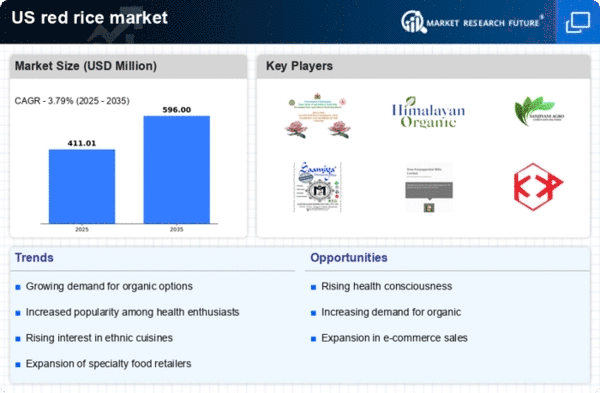
As per Market Research Future analysis, the US red rice market Size was estimated at 396.0 USD Million in 2024. The US red rice market is projected to grow from 411.01 USD Million in 2025 to 596.0 USD Million by 2035, exhibiting a compound annual growth rate (CAGR) of 3.7% during the forecast period 2025 - 2035

Key Market Trends & Highlights

The US red rice market is experiencing a notable upward trajectory driven by health trends and consumer preferences.

  • Health consciousness is significantly driving demand for red rice as consumers seek nutritious food options.
  • The expansion of distribution channels is enhancing the availability of red rice across various retail platforms.
  • Educational initiatives are increasing visibility and awareness of red rice's health benefits among consumers.
  • Nutritional benefits and sustainability practices are key drivers propelling the growth of the red rice market.

Market Size & Forecast

2024 Market Size 396.0 (USD Million)
2035 Market Size 596.0 (USD Million)
CAGR (2025 - 2035) 3.79%

Major Players

Karnataka State Agricultural Marketing Board (IN), Himalayan Organic Rice (IN), Sanjivani Agro Foods (IN), Swarna Rice Mill (IN), Sree Karpagambal Mills (IN), Kumar Organic Products (IN), Sambavanam Organic (IN), Sanjay Agro Industries (IN)

Our Impact
Enabled $4.3B Revenue Impact for Fortune 500 and Leading Multinationals
Partnering with 2000+ Global Organizations Each Year
30K+ Citations by Top-Tier Firms in the Industry

US Red Rice Market Trends

The red rice market is currently experiencing a notable shift in consumer preferences, driven by an increasing awareness of health benefits associated with whole grains. This variety of rice, characterized by its reddish-brown hue, is often perceived as a healthier alternative to white rice due to its higher fiber content and nutritional value. As consumers become more health-conscious, the demand for red rice is likely to rise, particularly among those seeking organic and natural food options. Additionally, the growing trend of plant-based diets may further bolster the appeal of red rice, as it serves as a versatile ingredient in various culinary applications. Moreover, the red rice market is witnessing a gradual expansion in distribution channels, with more retailers and online platforms offering this product. This increased accessibility may contribute to a broader consumer base, as individuals become more familiar with the unique taste and texture of red rice. Furthermore, educational initiatives aimed at promoting the benefits of red rice could enhance its visibility in the marketplace. As the market evolves, it appears that the combination of health trends and improved availability will play a crucial role in shaping the future landscape of red rice consumption.

Health Consciousness Driving Demand

The rising awareness of health benefits associated with whole grains is significantly influencing the red rice market. Consumers are increasingly seeking nutritious alternatives to traditional grains, leading to a heightened interest in red rice due to its fiber content and overall health advantages.

Expansion of Distribution Channels

The red rice market is experiencing an expansion in distribution channels, with more retailers and online platforms making this product accessible. This trend may facilitate a wider consumer base, as individuals become more acquainted with red rice and its culinary versatility.

Educational Initiatives Enhancing Visibility

Educational initiatives aimed at promoting the benefits of red rice are likely to enhance its visibility in the marketplace. As consumers become more informed about its nutritional value, the demand for red rice may continue to grow, further shaping market dynamics.

US Red Rice Market Drivers

Culinary Versatility of Red Rice

The culinary versatility of red rice is another significant driver for the red rice market. Chefs and home cooks alike are increasingly incorporating red rice into a variety of dishes, ranging from salads to stir-fries. Its unique flavor and texture make it an appealing choice for diverse cuisines, which is likely to expand its market presence. The red rice market is benefiting from this trend, as restaurants and food service providers seek to offer innovative menu options that cater to evolving consumer preferences. Additionally, the rise of food blogs and social media platforms has contributed to the popularity of red rice recipes, further driving consumer interest. As culinary trends continue to evolve, the demand for red rice is expected to grow, potentially leading to increased market share.

Nutritional Benefits of Red Rice

The red rice market is experiencing a surge in demand due to the growing awareness of the nutritional benefits associated with red rice. Rich in antioxidants, vitamins, and minerals, red rice is perceived as a healthier alternative to white rice. Studies indicate that red rice contains higher levels of fiber, which aids in digestion and promotes heart health. As consumers increasingly prioritize health and wellness, the market for red rice is projected to grow by approximately 15% annually. This trend is particularly evident in urban areas where health-conscious consumers are willing to pay a premium for nutritious food options. The red rice market is thus likely to benefit from this shift towards healthier eating habits, as more individuals seek to incorporate red rice into their diets.

Increased Awareness of Gluten-Free Options

The red rice market is benefiting from the increased awareness of gluten-free options among consumers. With a growing number of individuals diagnosed with gluten intolerance or celiac disease, there is a heightened demand for gluten-free grains. Red rice, being naturally gluten-free, presents a viable alternative for those seeking to avoid gluten-containing products. Market Research Future indicates that the gluten-free food market is expected to reach $7 billion by 2026, with specialty grains like red rice playing a crucial role in this growth. As more consumers become aware of the health implications of gluten, the red rice market is likely to see a corresponding increase in demand. This trend not only caters to health-conscious individuals but also aligns with the broader movement towards inclusive dietary options.

Sustainability and Organic Farming Practices

The red rice market is also influenced by the rising trend of sustainability and organic farming practices. As consumers become more environmentally conscious, there is a growing preference for products that are cultivated using sustainable methods. Organic red rice, which is grown without synthetic fertilizers or pesticides, is gaining traction among eco-friendly consumers. The market for organic rice in the US has seen a notable increase, with sales reaching approximately $1 billion in recent years. This shift towards organic products is expected to drive the red rice market forward, as more farmers adopt sustainable practices to meet consumer demand. The emphasis on sustainability not only appeals to health-conscious consumers but also aligns with broader environmental goals, potentially enhancing the market's growth prospects.

Rising Disposable Income and Consumer Spending

The red rice market is positively impacted by the rising disposable income and consumer spending in the US. As economic conditions improve, consumers are more willing to invest in premium food products, including specialty grains like red rice. This trend is particularly evident among millennials and Gen Z consumers, who are increasingly seeking high-quality, nutritious food options. Market data suggests that the organic and specialty grain segments are projected to grow by approximately 20% over the next five years. This increase in consumer spending power is likely to drive the red rice market, as more individuals prioritize health and quality in their food choices. The willingness to pay a premium for red rice reflects a broader shift towards mindful consumption.


Market Segment Insights

By Product Type: Rakthashali (Largest) vs. Thai Red Cargo Rice (Fastest-Growing)

The US red rice market exhibits distinct preferences among its product types. Rakthashali rice holds the largest share due to its unique flavor, appealing to a niche consumer base focused on health benefits and culinary diversity. In contrast, Thai Red Cargo Rice enjoys a rapidly rising demand, attributed to the growing interest in international cuisines and a shift towards organic and wholesome food options. This trend is bolstered by increasing consumer awareness around nutrition and the benefits of whole grains. Growth trends for these product types reveal that while Rakthashali remains a staple, the fastest growth is seen in Thai Red Cargo Rice. This surge is driven by culinary trends that favor exotic ingredients and health-conscious eating. The expansion of specialty grocery stores and platforms that promote diverse culinary experiences has further amplified the presence and appeal of Thai Red Cargo Rice in the market. The 'Others' category shows potential for innovation and unique offerings, although it currently lags behind the primary segments.

Rakthashali (Dominant) vs. Thai Red Cargo Rice (Emerging)

Rakthashali rice, known for its fragrant aroma and unique red hue, dominates the segment due to its traditional significance in various cuisines, particularly among health-conscious consumers. Its rich nutritional profile and culinary versatility make it a staple in many households. On the other hand, Thai Red Cargo Rice represents an emerging segment, increasingly appreciated for its nutty flavor and chewy texture. This rice variety not only meets the demand for organic produce but also aligns with the growing trend of incorporating whole grains into diets. As consumers seek authentic culinary experiences, both Rakthashali and Thai Red Cargo Rice are poised to capture market attention, albeit with Rakthashali leading in overall presence.

By Source: Organic (Largest) vs. Conventional (Fastest-Growing)

In the US red rice market, the organic segment commands a significant share, demonstrating strong consumer preference for sustainably sourced products. This trend is fueled by a rising awareness of health and environmental benefits associated with organic agriculture. Meanwhile, the conventional segment, while smaller in market share, is experiencing rapid growth due to increased production efficiency and widespread availability, appealing to cost-sensitive consumers. The US red rice market is witnessing a notable shift as consumers become more discerning about their food sources. The organic segment continues to attract attention for its health benefits and premium pricing, while conventional rice is gaining momentum from robust distribution networks and competitive pricing strategies. The expansion of organic farming practices and growing health trends are key drivers behind the organic segment's dominance and the conventional segment's quick rise in demand.

Organic (Dominant) vs. Conventional (Emerging)

The organic segment of the US red rice market is characterized by its focus on sustainable farming practices, appealing to health-conscious consumers who prioritize natural ingredients. This segment enjoys a premium positioning, often leading to higher profit margins for producers. On the other hand, the conventional segment is catching up, marked by improved agricultural technologies that enhance yield and lower costs, allowing it to cater to a larger segment of the market. While organic rice tends to attract niche markets seeking quality and sustainability, the conventional market has the potential for vast expansion, leveraging lower prices and broader distribution to appeal to mass consumers.

By Distribution Channel: Supermarket & Hypermarket (Largest) vs. Online Store (Fastest-Growing)

In the US red rice market, the distribution of sales across various channels indicates that Supermarkets & Hypermarkets hold the largest share due to their extensive reach and consumer preference for physical shopping experiences. Municipal Corporation Stores follow, serving a niche audience, while Specialty Stores attract customers looking for premium or organic red rice options. Convenience Stores offer quick shopping solutions, though their share remains limited compared to the larger outlets. Growing trends point towards a significant rise in online shopping, with Online Stores being the fastest-growing channel. This shift is driven by increasing internet penetration, user-friendly platforms, and a growing trend towards convenience and home delivery. As consumers look for quick and easy solutions, this sector of the market is expected to grow dramatically, potentially reshaping how red rice is sold over the coming years.

Supermarket & Hypermarket: Dominant vs. Online Store: Emerging

Supermarket & Hypermarket channels play a dominant role in the US red rice market, providing a wide variety of products and often dominating consumer choices due to scale and accessibility. These outlets are favored for their comprehensive selections, allowing consumers to easily compare options. In contrast, Online Stores are emerging as a significant player, appealing to modern consumers who value convenience and efficiency in purchasing. The rapid growth in this channel is attributed to the increasing reliance on e-commerce, making it particularly attractive for younger demographics and those who prioritize time-saving shopping methods. Online platforms also allow for a wider distribution of niche products, including organic and specialty red rice varieties that may not be available in traditional retail settings.

Get more detailed insights about US Red Rice Market

Key Players and Competitive Insights

The red rice market exhibits a dynamic competitive landscape characterized by a blend of traditional practices and modern innovations. Key growth drivers include increasing consumer awareness regarding health benefits, rising demand for organic products, and a growing inclination towards sustainable agricultural practices. Major players such as Karnataka State Agricultural Marketing Board (IN), Himalayan Organic Rice (IN), and Sanjivani Agro Foods (IN) are strategically positioned to leverage these trends. Karnataka State Agricultural Marketing Board (IN) focuses on enhancing its supply chain efficiency, while Himalayan Organic Rice (IN) emphasizes organic certification and product diversification. Sanjivani Agro Foods (IN) is actively pursuing partnerships to expand its market reach, collectively shaping a competitive environment that is increasingly focused on quality and sustainability.In terms of business tactics, companies are localizing manufacturing to reduce costs and optimize supply chains. The market structure appears moderately fragmented, with several players vying for market share. This fragmentation allows for niche players to thrive, while larger companies consolidate their positions through strategic initiatives. The collective influence of these key players fosters a competitive atmosphere where innovation and quality are paramount.

In October Karnataka State Agricultural Marketing Board (IN) announced a new initiative aimed at increasing the production of organic red rice by 30% over the next two years. This strategic move is likely to enhance their market share and cater to the growing demand for organic products, positioning them as a leader in sustainable agriculture. The initiative underscores the importance of aligning production capabilities with consumer preferences, thereby reinforcing their competitive edge.

In September Himalayan Organic Rice (IN) launched a new line of premium red rice products, targeting health-conscious consumers. This product diversification strategy not only broadens their portfolio but also positions them to capture a larger segment of the market. By focusing on health benefits and premium quality, the company aims to differentiate itself from competitors, potentially increasing brand loyalty among consumers.

In August Sanjivani Agro Foods (IN) entered into a strategic partnership with a leading e-commerce platform to enhance its distribution channels. This collaboration is expected to significantly improve their market penetration and accessibility to consumers, particularly in urban areas. By leveraging digital platforms, Sanjivani Agro Foods (IN) is likely to increase its sales volume and brand visibility, reflecting a broader trend towards digital transformation in the food industry.

As of November current competitive trends in the red rice market are increasingly defined by digitalization, sustainability, and the integration of advanced technologies. Strategic alliances are becoming more prevalent, allowing companies to pool resources and expertise to enhance their competitive positioning. The shift from price-based competition to a focus on innovation, technology, and supply chain reliability is evident. Companies that prioritize these aspects are likely to thrive in an evolving market landscape, where consumer preferences are rapidly changing.

Key Companies in the US Red Rice Market include

Industry Developments

Recent developments in the US Red Rice Market indicate an increased interest in sustainable agricultural practices and the rising demand for organic products among consumers. Companies like American Rice Inc and Lundberg Family Farms have been focusing on eco-friendly cultivation methods to align with consumer preferences. The market valuation of key players such as Mahatma Rice and Ceres Global Ag Corp has also seen a positive shift due to heightened consumer awareness regarding health and nutrition, leading to a competitive landscape.

In August 2023, Kraft Heinz Company announced its strategic partnership with Tropical Agriculture to enhance its product range and reach more health-conscious customers. Meanwhile, Uncle Ben's is making strides in introducing innovative rice products that cater to diverse culinary needs, further promoting the versatility of red rice. From a merger and acquisition standpoint, there have been no reported significant transactions involving these companies recently. However, high demands for red rice have led to discussions about potential collaborations or acquisitions that could reshape the market landscape.

The focus continues to be on improving crop yields and supply chain efficiencies while responding to the evolving consumer preferences in the sector.

Future Outlook

US Red Rice Market Future Outlook

The Red Rice Market is projected to grow at a 3.79% CAGR from 2025 to 2035, driven by increasing health awareness and demand for organic products.

New opportunities lie in:

  • Develop premium organic red rice product lines
  • Implement direct-to-consumer online sales platforms
  • Expand distribution through health food retailers and specialty stores

By 2035, the red rice market is expected to achieve robust growth and increased market penetration.

Market Segmentation

US Red Rice Market Source Outlook

  • Organic
  • Conventional

US Red Rice Market Product Type Outlook

  • Rakthashali
  • Thai Red Cargo Rice
  • Bhutanese Red Rice
  • Others

US Red Rice Market Distribution Channel Outlook

  • Supermarket & Hypermarket
  • Municipal Corporation Stores
  • Convenience Stores
  • Specialty Store
  • Online Store

Report Scope

MARKET SIZE 2024 396.0(USD Million)
MARKET SIZE 2025 411.01(USD Million)
MARKET SIZE 2035 596.0(USD Million)
COMPOUND ANNUAL GROWTH RATE (CAGR) 3.79% (2025 - 2035)
REPORT COVERAGE Revenue Forecast, Competitive Landscape, Growth Factors, and Trends
BASE YEAR 2024
Market Forecast Period 2025 - 2035
Historical Data 2019 - 2024
Market Forecast Units USD Million
Key Companies Profiled Karnataka State Agricultural Marketing Board (IN), Himalayan Organic Rice (IN), Sanjivani Agro Foods (IN), Swarna Rice Mill (IN), Sree Karpagambal Mills (IN), Kumar Organic Products (IN), Sambavanam Organic (IN), Sanjay Agro Industries (IN)
Segments Covered Product Type, Source, Distribution Channel
Key Market Opportunities Growing consumer preference for organic and health-focused products enhances opportunities in the red rice market.
Key Market Dynamics Rising consumer preference for organic products drives demand and innovation in the red rice market.
Countries Covered US
Leave a Comment

FAQs

What is the expected market size of the US Red Rice Market in 2024?

The US Red Rice Market is expected to be valued at 396.0 million USD in the year 2024.

What is the projected market size of the US Red Rice Market by 2035?

By 2035, the US Red Rice Market is projected to reach a value of 608.0 million USD.

What is the expected CAGR for the US Red Rice Market from 2025 to 2035?

The expected CAGR for the US Red Rice Market from 2025 to 2035 is 3.975%.

Which product type is the largest segment in the US Red Rice Market in 2024?

In 2024, Rakthashali is the largest segment with a value of 110.0 million USD.

What value is expected for Thai Red Cargo rice in the US Red Rice Market by 2035?

Thai Red Cargo rice is expected to reach a value of 145.0 million USD in 2035.

Who are the key players in the US Red Rice Market?

Key players in the US Red Rice Market include American Rice Inc, Mahatma Rice, and Sunrise Commodities.

What is the market size for Bhutanese red rice in 2024?

In 2024, the market size for Bhutanese red rice is valued at 85.0 million USD.

What is the estimated value for the 'Others' segment in 2035?

The 'Others' segment is expected to be valued at 164.0 million USD by the year 2035.

What are the growth drivers for the US Red Rice Market?

Key growth drivers for the US Red Rice Market include rising consumer preferences for healthy foods and increasing demand for specialty rice.

What challenges does the US Red Rice Market face currently?

Current challenges for the US Red Rice Market include competition from other rice varieties and fluctuations in supply chain dynamics.

Download Free Sample

Kindly complete the form below to receive a free sample of this Report

Compare Licence

×
Features License Type
Single User Multiuser License Enterprise User
Price $4,950 $5,950 $7,250
Maximum User Access Limit 1 User Upto 10 Users Unrestricted Access Throughout the Organization
Free Customization
Direct Access to Analyst
Deliverable Format
Platform Access
Discount on Next Purchase 10% 15% 15%
Printable Versions