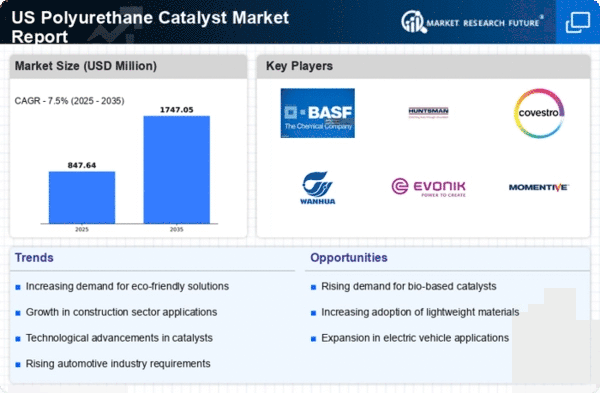
The polyurethane catalyst market exhibits a dynamic competitive landscape characterized by innovation and strategic maneuvering among key players. Major companies such as BASF SE (Germany), Huntsman Corporation (US), and DOW Inc (US) are actively shaping the market through various strategies. BASF SE (Germany) focuses on sustainability and digital transformation, aiming to enhance its product offerings while reducing environmental impact. Huntsman Corporation (US) emphasizes regional expansion and partnerships, particularly in North America, to strengthen its market presence. DOW Inc (US) is investing in advanced manufacturing technologies to optimize production efficiency and meet growing demand. Collectively, these strategies contribute to a competitive environment that prioritizes innovation and sustainability.The business tactics employed by these companies include localizing manufacturing and optimizing supply chains to enhance responsiveness to market demands. The market structure appears moderately fragmented, with several players vying for market share. However, the influence of key players is substantial, as their strategic initiatives often set industry standards and drive competitive dynamics.
In September Huntsman Corporation (US) announced a strategic partnership with a leading technology firm to develop next-generation polyurethane catalysts. This collaboration is expected to leverage advanced digital technologies, enhancing product performance and sustainability. The strategic importance of this partnership lies in its potential to position Huntsman as a leader in innovative solutions, catering to the increasing demand for eco-friendly products.
In October DOW Inc (US) unveiled a new line of bio-based polyurethane catalysts aimed at reducing carbon emissions during production. This initiative aligns with global sustainability goals and reflects DOW's commitment to environmental stewardship. The introduction of these products is likely to enhance DOW's competitive edge, appealing to environmentally conscious consumers and industries.
In August BASF SE (Germany) expanded its production capacity for polyurethane catalysts in North America, responding to the rising demand in the automotive and construction sectors. This expansion not only strengthens BASF's market position but also demonstrates its commitment to meeting customer needs through localized production. The strategic importance of this move lies in its potential to enhance supply chain reliability and reduce lead times for customers.
As of November current competitive trends in the polyurethane catalyst market are increasingly defined by digitalization, sustainability, and the integration of artificial intelligence. Strategic alliances are becoming more prevalent, as companies recognize the value of collaboration in driving innovation. The competitive landscape is shifting from traditional price-based competition to a focus on technological advancements and supply chain reliability. This evolution suggests that companies that prioritize innovation and sustainability will likely emerge as leaders in the market.