E-commerce Influence
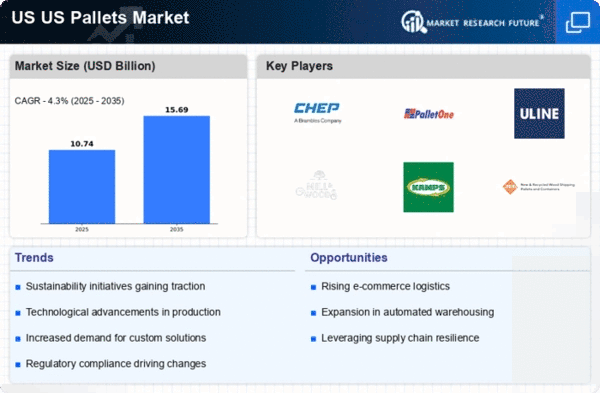
The rapid growth of e-commerce is reshaping the US Pallets Market. With online shopping becoming increasingly prevalent, the demand for efficient logistics and supply chain solutions has surged. E-commerce companies require durable and versatile pallets to facilitate the movement of goods, leading to a notable increase in pallet usage. Data indicates that the e-commerce sector is expected to account for a significant portion of pallet demand, with projections suggesting a rise of approximately 20% in pallet consumption over the next few years. This trend compels manufacturers to innovate and produce pallets that cater specifically to the needs of e-commerce businesses, such as lightweight designs and enhanced load capacities. Consequently, the influence of e-commerce is a pivotal driver, prompting the US Pallets Market to adapt and evolve in response to changing consumer behaviors.
Global Trade Dynamics
The Pallets Industry. As trade agreements evolve and international shipping practices change, the demand for pallets is affected by fluctuations in import and export activities. The US is a major player in global trade, and any shifts in tariffs or trade policies can have a direct impact on pallet usage. For example, recent trade agreements have facilitated smoother logistics operations, leading to an uptick in pallet demand for shipping goods overseas. Data suggests that the export market for pallets is projected to grow, with estimates indicating a potential increase of 10% in the next few years. This growth presents opportunities for manufacturers to expand their offerings and cater to international markets. Thus, global trade dynamics are a vital driver, shaping the landscape of the US Pallets Market.
Regulatory Compliance
Regulatory compliance is a critical driver in the US Pallets Market. Various regulations govern the manufacturing and use of pallets, particularly concerning safety and environmental standards. Compliance with these regulations is essential for companies to avoid penalties and maintain their market position. For instance, the Federal Maritime Commission has established guidelines that impact pallet specifications for shipping and logistics. Additionally, state-level regulations may impose specific requirements for pallet materials and treatments, particularly in industries such as food and pharmaceuticals. As companies strive to meet these regulatory demands, they are likely to invest in higher-quality materials and processes, which can drive up costs but also enhance product reliability. Consequently, regulatory compliance serves as a significant motivator for innovation and quality improvement within the US Pallets Market.
Sustainability Initiatives
The US Pallets Market is increasingly influenced by sustainability initiatives. Companies are adopting eco-friendly practices, which include the use of recyclable and reusable pallets. This shift is driven by consumer demand for environmentally responsible products. According to recent data, the market for sustainable pallets is projected to grow significantly, with estimates suggesting a compound annual growth rate of over 5% in the coming years. Additionally, regulations promoting sustainable practices are being implemented at both state and federal levels, further encouraging businesses to transition to greener alternatives. As a result, manufacturers are investing in innovative materials and designs that reduce waste and enhance the lifecycle of pallets. This trend not only aligns with corporate social responsibility goals but also offers potential cost savings in the long run, making sustainability a key driver in the US Pallets Market.
Technological Advancements
Technological advancements are playing a crucial role in transforming the US Pallets Market. Innovations such as automated pallet handling systems and smart pallets equipped with tracking technology are enhancing operational efficiency. These advancements allow for better inventory management and real-time monitoring of pallet conditions, which can lead to reduced losses and improved supply chain transparency. Recent statistics suggest that the adoption of technology in pallet management could lead to cost reductions of up to 15% for companies in the industry. Furthermore, the integration of Internet of Things (IoT) technology is enabling businesses to gather valuable data on pallet usage patterns, which can inform future production and design decisions. As technology continues to evolve, it is likely to remain a significant driver in the US Pallets Market, fostering innovation and improving overall performance.