×
Request Free Sample ×

Kindly complete the form below to receive a free sample of this Report

* Please use a valid business email

Leading companies partner with us for data-driven Insights

clients tt-cursor
Hero Background

US Organic Cocoa Market

ID: MRFR/FnB/18256-HCR
200 Pages
Snehal Singh
February 2026

US Organic Cocoa Market Size, Share, Industry Trend & Analysis Research Report By Form (Powder, Liquor, Butter), By Application (Food & Beverages, Cosmetics, Pharmaceuticals, Confectionery, Baking), By Certification (USDA Organic, EU Organic, Non-GMO), By Distribution Channel (Online Retail, Supermarkets, Specialty Stores, Direct Sales) Forecast to 2035

Share:
Download PDF ×

We do not share your information with anyone. However, we may send you emails based on your report interest from time to time. You may contact us at any time to opt-out.

US Organic Cocoa Market Infographic
Purchase Options

US Organic Cocoa Market Summary

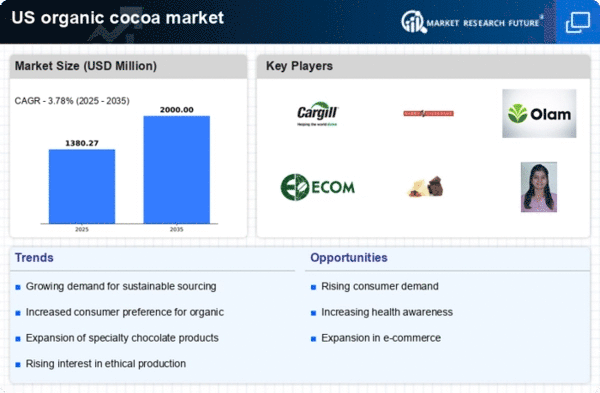
As per Market Research Future analysis, the US organic cocoa market Size was estimated at 1330.0 USD Million in 2024. The US organic cocoa market industry is projected to grow from 1380.27 USD Million in 2025 to 2000.0 USD Million by 2035, exhibiting a compound annual growth rate (CAGR) of 3.7% during the forecast period 2025 - 2035

Key Market Trends & Highlights

The US organic cocoa market is experiencing robust growth driven by sustainability and health trends.

  • The largest segment in the US organic cocoa market is the confectionery sector, which continues to dominate sales.
  • The fastest-growing segment is organic cocoa powder, reflecting a shift towards healthier baking options.
  • Rising demand for sustainable products is evident as consumers increasingly seek ethically sourced ingredients.
  • Key market drivers include increasing consumer awareness and regulatory support for organic farming, which bolster market expansion.

Market Size & Forecast

2024 Market Size 1330.0 (USD Million)
2035 Market Size 2000.0 (USD Million)
CAGR (2025 - 2035) 3.78%

Major Players

Cargill (US), Barry Callebaut (CH), Olam International (SG), Ecom Agroindustrial Corp (CH), Cocoa Supply (US), Sambavanam (IN), Tropical Foods (GH), Cocoa Processing Company (GH)

Our Impact
Enabled $4.3B Revenue Impact for Fortune 500 and Leading Multinationals
Partnering with 2000+ Global Organizations Each Year
30K+ Citations by Top-Tier Firms in the Industry

US Organic Cocoa Market Trends

The organic cocoa market is currently experiencing a notable shift driven by increasing consumer awareness regarding health and sustainability. As individuals become more conscious of their food choices, the demand for organic products has surged. This trend is reflected in the growing preference for cocoa sourced from sustainable farms that adhere to organic farming practices. The emphasis on ethical sourcing and environmental responsibility is reshaping purchasing behaviors, leading to a rise in the popularity of organic cocoa among consumers who prioritize quality and sustainability in their diets. Moreover, the organic cocoa market is likely to benefit from the expansion of product offerings that incorporate organic cocoa as a key ingredient. This includes a variety of confectionery items, beverages, and health-focused snacks. As manufacturers respond to consumer preferences, they are increasingly formulating products that highlight organic cocoa, thereby enhancing its visibility in the marketplace. The intersection of health trends and ethical consumption appears to be a driving force, suggesting that the organic cocoa market will continue to evolve in response to these dynamics, potentially leading to further growth and innovation in the sector.

Rising Demand for Sustainable Products

There is a growing trend towards sustainability in the organic cocoa market, as consumers increasingly seek products that are ethically sourced. This shift is prompting manufacturers to adopt sustainable practices, ensuring that their cocoa is produced in an environmentally friendly manner.

Health-Conscious Consumer Behavior

The organic cocoa market is witnessing a surge in interest from health-conscious consumers. As individuals become more aware of the health benefits associated with organic cocoa, such as its antioxidant properties, the demand for organic options is likely to increase.

Innovation in Product Development

Manufacturers are focusing on innovation within the organic cocoa market, creating new products that cater to evolving consumer preferences. This includes the introduction of organic cocoa in various forms, such as powders, bars, and beverages, appealing to a broader audience.

US Organic Cocoa Market Drivers

Increasing Consumer Awareness

The organic cocoa market industry is experiencing a notable shift as consumers become increasingly aware of the benefits associated with organic products. This heightened awareness is driven by a growing understanding of the environmental and health implications of conventional cocoa farming practices. As consumers seek transparency in sourcing and production methods, the demand for organic cocoa has surged. Recent data indicates that the organic food market in the US has grown by approximately 10% annually, with organic cocoa being a significant contributor. This trend suggests that consumers are willing to pay a premium for products that align with their values, thereby propelling the organic cocoa market industry forward.

Innovative Marketing Strategies

The organic cocoa market industry is increasingly characterized by innovative marketing strategies that resonate with health-conscious consumers. Brands are leveraging social media and influencer partnerships to promote the benefits of organic cocoa, emphasizing its nutritional advantages and versatility in various culinary applications. This approach not only enhances brand visibility but also educates consumers about the value of organic cocoa. Recent surveys indicate that nearly 60% of consumers are influenced by social media when making purchasing decisions related to food products. This trend suggests that effective marketing can significantly impact the growth of the organic cocoa market industry, as brands strive to connect with their target audience.

Expansion of E-commerce Platforms

The organic cocoa market industry is witnessing a significant transformation due to the expansion of e-commerce platforms. Online retail has become a vital channel for organic cocoa products, allowing consumers to access a wider variety of options from the comfort of their homes. This shift is particularly relevant in the context of changing shopping behaviors, where convenience and variety are paramount. Recent statistics indicate that online sales of organic food products have surged by over 20% in the past year, with organic cocoa being a notable segment. This trend suggests that e-commerce is likely to play a crucial role in the growth trajectory of the organic cocoa market industry.

Rising Interest in Ethical Sourcing

The organic cocoa market industry is increasingly influenced by the rising interest in ethical sourcing practices. Consumers are becoming more discerning about the origins of their food, leading to a demand for cocoa that is not only organic but also sourced from fair trade practices. This trend is reflected in the growing number of brands that emphasize ethical sourcing in their marketing strategies. According to industry reports, sales of fair trade certified cocoa have seen an increase of around 15% in the past year. This shift suggests that consumers are willing to support brands that prioritize social responsibility, thereby enhancing the appeal of organic cocoa products.

Regulatory Support for Organic Farming

The organic cocoa market industry benefits from robust regulatory frameworks that support organic farming practices. In the US, the USDA has established stringent guidelines for organic certification, which enhances consumer trust in organic cocoa products. These regulations not only ensure the integrity of organic claims but also promote sustainable agricultural practices. As a result, the number of certified organic cocoa farms has increased, contributing to a more stable supply chain. The USDA reported that organic farming operations have expanded by over 5% in recent years, indicating a favorable environment for the organic cocoa market industry. This regulatory support is likely to continue fostering growth in the sector.


Market Segment Insights

By Application: Food & Beverages (Largest) vs. Confectionery (Fastest-Growing)

The application segment in the US organic cocoa market is characterized by a diverse distribution of market share across various industries. Food & Beverages holds the largest portion of this market, owing to the increasing demand for organic cocoa in chocolate products, beverages, and health-focused food items. Conversely, the Confectionery sector shows a rapidly growing trend as more consumers seek out organic and healthier options, pushing manufacturers to innovate and expand their product lines. Growth trends in this segment are driven by a rising health consciousness among consumers, leading to an increased preference for organic ingredients across applications. The Cosmetics and Pharmaceuticals sectors are also gaining traction, albeit at a slower pace, as consumers embrace the benefits of cocoa in skincare products and supplements. This shift indicates a broader trend where organic cocoa is becoming a staple in multiple areas beyond traditional food applications, reflecting changing consumer preferences.

Baking: Food & Beverages (Dominant) vs. Confectionery (Emerging)

In the US organic cocoa market, the Baking sector is emerging as a key player, showcasing its ability to adapt to evolving consumer tastes. Food & Beverages continues to hold dominance, representing a significant portion of the market due to its established presence and widespread usage in various food products. However, the Confectionery sector is quickly gaining recognition as an emerging area, with consumers increasingly looking for organic options. This duality highlights the dynamic nature of the market, where traditional sectors continue to thrive while new segments seek to capture the interest of health-conscious consumers. Brands focusing on innovation and quality can capitalize on these trends, ensuring relevance in a competitive landscape.

By Form: Powder (Largest) vs. Liquor (Fastest-Growing)

The market share distribution in the segment reveals that powder holds the largest portion of the US organic cocoa market, serving as a staple ingredient across various applications such as baking and confectionery. Its established presence and versatility make it a preferred choice among manufacturers. In contrast, cocoa liquor is gaining traction, representing a significant part of the segment as demand rises for high-quality chocolate products. Growth trends indicate an increasing preference for organic products, with consumers seeking healthier alternatives and sustainable sourcing. The rise of dark chocolate consumption is further propelling the liquor segment, which is considered essential for premium chocolate production. These trends reflect a shift towards natural ingredients, influencing the dynamics of the market.

Powder: Dominant vs. Liquor: Emerging

In the US organic cocoa market, powder is recognized as the dominant segment due to its widespread use and adaptability across different food products. It is often used in baking, beverages, and snacks, making it a favorite among consumers and manufacturers alike. On the other hand, cocoa liquor is an emerging segment that is quickly gaining popularity, particularly among artisanal chocolate makers. The growing inclination towards premium and craft chocolate is driving interest in cocoa liquor, which is essential for creating high-quality chocolate. As a result, while powder retains its stronghold in the market, liquor is positioned for significant growth, benefitting from trends favoring organic and sustainable ingredients.

By Distribution Channel: Supermarkets (Largest) vs. Online Retail (Fastest-Growing)

In the US organic cocoa market, distribution channels play a critical role in shaping consumer access and purchasing behavior. Supermarkets dominate this segment, accounting for a significant share of sales due to their extensive reach and established consumer trust. Specialty stores and direct sales also hold considerable market presence, but their shares are not as substantial as that of supermarkets. Online retail emerges as a strong competitor, steadily capturing market share as consumer shopping habits shift towards digital platforms. The growth trends within the distribution channels indicate a robust expansion for online retail due to increased internet penetration and consumer preference for convenience. Supermarkets continue to leverage their physical presence, but the rise of e-commerce presents an evolving landscape. As consumers demand organic cocoa products, retailers that adapt quickly to changing preferences are likely to thrive. This trend suggests a dynamic future, where traditional retailers must innovate to retain market share against rapid online growth.

Supermarkets: Dominant vs. Online Retail: Emerging

Supermarkets are the dominant distribution channel in the US organic cocoa market, providing comprehensive product ranges and a convenient shopping experience for consumers. Their ability to stock a variety of organic cocoa products, coupled with enticing promotions and in-store visibility, solidifies their position as a go-to destination for consumers. In contrast, online retail is emerging as a significant player, driven by evolving consumer preferences for convenience and direct access to a broader range of product options. This channel is characterized by its flexible shopping experience, competitive pricing, and the ability to tailor offerings to specific consumer preferences. As these two channels evolve, supermarkets must enhance their offerings while online platforms continue to grow, creating a diverse landscape in the distribution of organic cocoa.

By Certification: USDA Organic (Largest) vs. EU Organic (Fastest-Growing)

In the US organic cocoa market, the certification landscape is primarily dominated by USDA Organic, which holds the largest market share. This certification is highly recognized and trusted by consumers, leading to an increase in demand for products that bear this label. On the other hand, EU Organic certification, while currently smaller in market share, is experiencing rapid growth as consumer awareness regarding organic products expands. This trend is driven by rising health consciousness and a preference for sustainable farming practices. Growth trends in the certification segment highlight a significant rise in consumer preference for organic options, particularly those that carry reliable certifications. The emergence of EU Organic certification as a favorite among environmentally conscious consumers showcases a shift in buying patterns. Additionally, Non-GMO certification is gaining traction as more buyers seek assurance that their cocoa does not include genetically modified organisms, thus contributing to the segment's overall growth. This reflects a broader trend towards transparency and better sourcing practices in the organic cocoa market.

USDA Organic (Dominant) vs. EU Organic (Emerging)

USDA Organic certification stands out as the dominant force in the certification segment of the organic cocoa market due to its strong consumer recognition and regulatory backing. This certification ensures that products meet strict standards regarding organic farming practices, which appeals to health-oriented consumers. Comparatively, EU Organic certification is emerging as a notable alternative, particularly among consumers who prioritize environmental sustainability and ethical sourcing. This certification is gaining popularity as it aligns with increasing consumer demand for transparency in production methods. Both certifications play critical roles in shaping consumer buying decisions, with USDA Organic leading in market presence and EU Organic capturing attention as an innovative certification that addresses modern consumer preferences.

Get more detailed insights about US Organic Cocoa Market

Key Players and Competitive Insights

The organic cocoa market is currently characterized by a dynamic competitive landscape, driven by increasing consumer demand for sustainable and ethically sourced products. Major players such as Cargill (US), Barry Callebaut (CH), and Olam International (SG) are strategically positioned to leverage their extensive supply chains and innovation capabilities. Cargill (US) focuses on enhancing its sustainability initiatives, aiming to improve traceability and reduce environmental impact, while Barry Callebaut (CH) emphasizes product innovation and premium offerings to cater to evolving consumer preferences. Olam International (SG) is actively pursuing regional expansion and partnerships to strengthen its market presence, indicating a collective strategy among these companies to shape a competitive environment that prioritizes sustainability and quality.
Key business tactics within the organic cocoa market include localizing manufacturing and optimizing supply chains to enhance efficiency and responsiveness to market demands. The market structure appears moderately fragmented, with a mix of large multinational corporations and smaller niche players. This fragmentation allows for diverse offerings and competitive pricing, although the influence of key players remains significant in setting industry standards and practices.
In October 2025, Cargill (US) announced a new partnership with a leading technology firm to develop a blockchain-based traceability system for its organic cocoa supply chain. This strategic move is likely to enhance transparency and build consumer trust, aligning with the growing demand for ethically sourced products. By integrating advanced technology, Cargill (US) positions itself as a leader in sustainability, potentially setting a benchmark for competitors.
In September 2025, Barry Callebaut (CH) launched a new line of organic cocoa products aimed at the premium segment of the market. This initiative reflects the company's commitment to innovation and meeting the demands of health-conscious consumers. By diversifying its product portfolio, Barry Callebaut (CH) not only strengthens its market position but also addresses the increasing consumer preference for organic and high-quality ingredients.
In August 2025, Olam International (SG) expanded its operations in South America by acquiring a local organic cocoa processing facility. This acquisition is strategically significant as it enhances Olam's capacity to meet the rising demand for organic cocoa in North America. By increasing its production capabilities, Olam International (SG) is likely to improve its supply chain efficiency and responsiveness, further solidifying its competitive edge in the market.
As of November 2025, current competitive trends in the organic cocoa market are increasingly defined by digitalization, sustainability, and the integration of artificial intelligence in supply chain management. Strategic alliances among key players are shaping the landscape, fostering innovation and collaboration. The shift from price-based competition to a focus on technological advancement and supply chain reliability is evident, suggesting that future competitive differentiation will hinge on the ability to innovate and adapt to changing consumer preferences.

Key Companies in the US Organic Cocoa Market include

Future Outlook

US Organic Cocoa Market Future Outlook

The Organic Cocoa Market is projected to grow at a 3.78% CAGR from 2025 to 2035, driven by increasing consumer demand for sustainable products and health-conscious choices.

New opportunities lie in:

  • Developing premium organic cocoa product lines for health-focused consumers.
  • Implementing blockchain technology for supply chain transparency and traceability.
  • Expanding e-commerce platforms to reach niche markets and enhance customer engagement.

By 2035, the organic cocoa market is expected to achieve robust growth, driven by innovation and consumer trends.

Market Segmentation

US Organic Cocoa Market Form Outlook

  • Powder
  • Liquor
  • Butter

US Organic Cocoa Market Application Outlook

  • Food & Beverages
  • Cosmetics
  • Pharmaceuticals
  • Confectionery
  • Baking

US Organic Cocoa Market Certification Outlook

  • USDA Organic
  • EU Organic
  • Non-GMO

US Organic Cocoa Market Distribution Channel Outlook

  • Online Retail
  • Supermarkets
  • Specialty Stores
  • Direct Sales

Report Scope

MARKET SIZE 2024 1330.0(USD Million)
MARKET SIZE 2025 1380.27(USD Million)
MARKET SIZE 2035 2000.0(USD Million)
COMPOUND ANNUAL GROWTH RATE (CAGR) 3.78% (2025 - 2035)
REPORT COVERAGE Revenue Forecast, Competitive Landscape, Growth Factors, and Trends
BASE YEAR 2024
Market Forecast Period 2025 - 2035
Historical Data 2019 - 2024
Market Forecast Units USD Million
Key Companies Profiled Cargill (US), Barry Callebaut (CH), Olam International (SG), Ecom Agroindustrial Corp (CH), Cocoa Supply (US), Sambavanam (IN), Tropical Foods (GH), Cocoa Processing Company (GH)
Segments Covered Application, Form, Distribution Channel, Certification
Key Market Opportunities Growing consumer demand for sustainable and ethically sourced products drives expansion in the organic cocoa market.
Key Market Dynamics Rising consumer demand for sustainable products drives growth in the organic cocoa market.
Countries Covered US
Leave a Comment
Download Free Sample

Kindly complete the form below to receive a free sample of this Report

Compare Licence

×
Features License Type
Single User Multiuser License Enterprise User
Price $4,950 $5,950 $7,250
Maximum User Access Limit 1 User Upto 10 Users Unrestricted Access Throughout the Organization
Free Customization
Direct Access to Analyst
Deliverable Format
Platform Access
Discount on Next Purchase 10% 15% 15%
Printable Versions